Digitalization of public services in regional tax management through the PAKINTA application in Makassar City, Indonesia
DOI:
https://doi.org/10.31947/gs.v3i1.53069Keywords:
Smart Governance, Local Tax Digitalization, Public Service, PAKINTA ApplicationAbstract
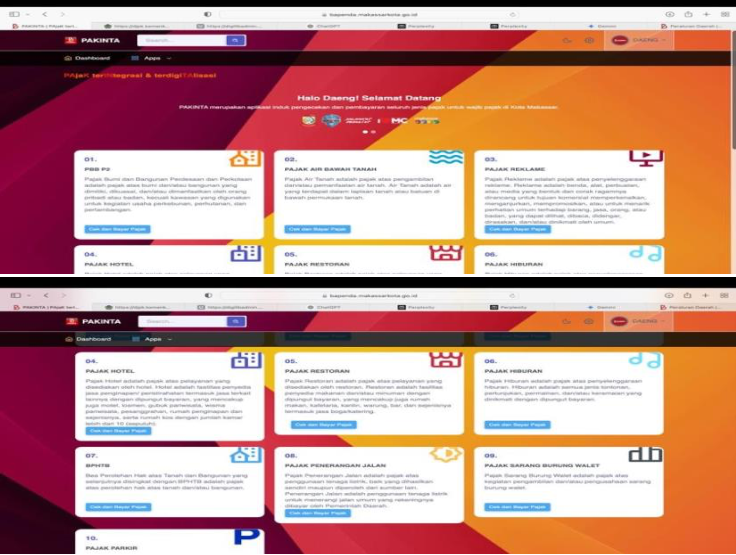
Digitalization of local tax administration has become an essential component of Smart Governance, enabling improved efficiency, transparency, and taxpayer compliance. This study examines the implementation of the PAKINTA (Digitalized Integrated Tax) application developed by the Makassar City Regional Revenue Agency (Bapenda) as a centralized platform for checking, paying, and reporting local taxes. Using a qualitative descriptive approach, data were collected through interviews, observations, and document analysis involving Bapenda officials and PAKINTA users. The findings reveal that PAKINTA significantly enhances service efficiency by automating administrative procedures, reducing manual workloads, and minimizing processing time. The system also strengthens transparency and accountability through real-time data, digital documentation, and reduced face-to-face interactions. Furthermore, PAKINTA improves taxpayer compliance by providing accessible information, automated reminders, and simplified payment procedures. However, challenges remain, including varying levels of digital literacy, occasional technical disruptions, and digital inclusion gaps among users. Institutional readiness—encompassing staff training, workflow restructuring, and leadership support—emerges as a critical factor enabling successful digital transformation. Overall, the study demonstrates that PAKINTA contributes to stronger local fiscal governance, though continuous technological improvements and inclusive service strategies are needed to ensure sustainability and equitable access.
Downloads
Published
Issue
Section
License
Copyright (c) 2026 Glocal Society Journal

This work is licensed under a Creative Commons Attribution 4.0 International License.