



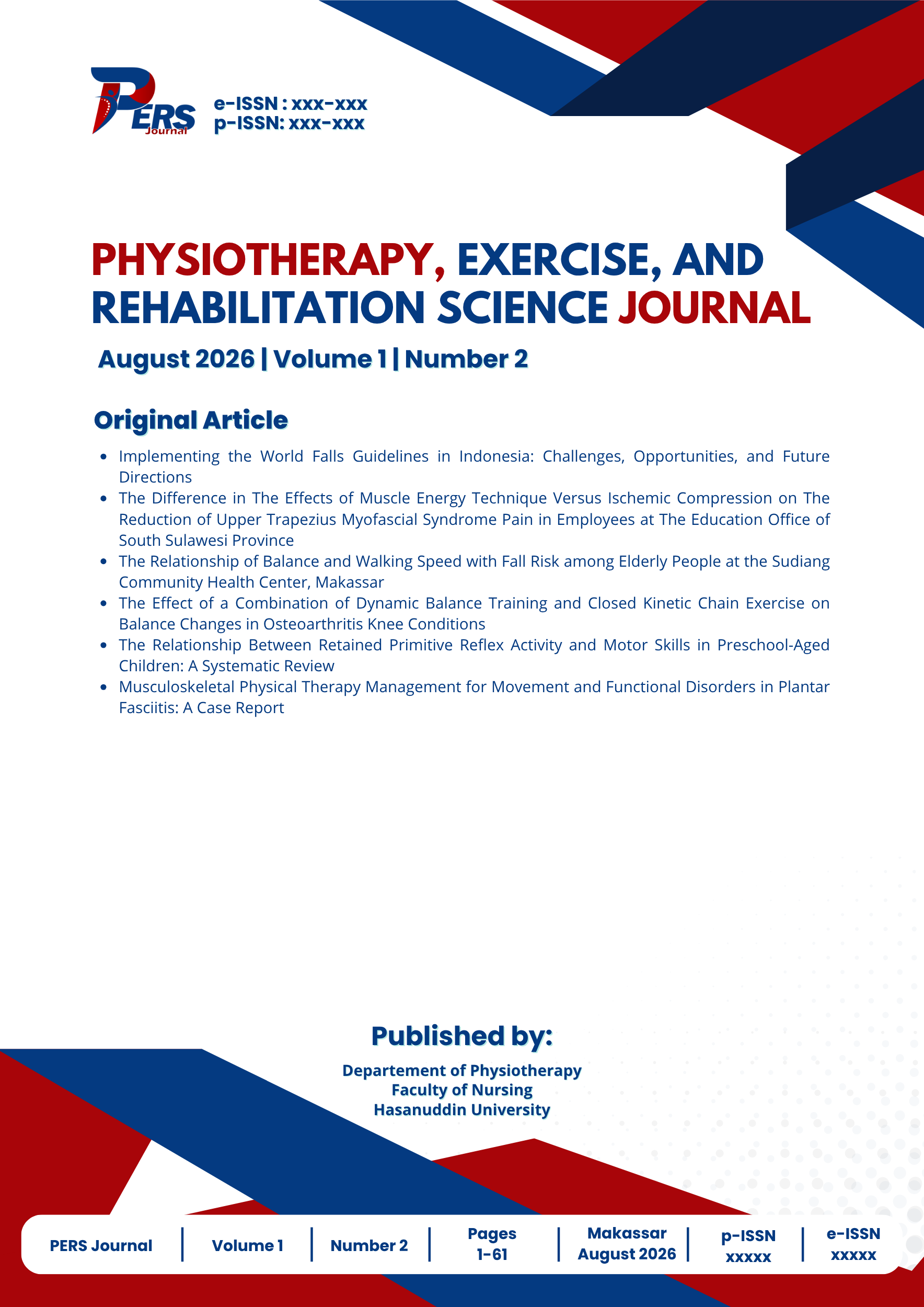
This issue highlights contemporary developments in physiotherapy and rehabilitation across the lifespan, with a particular focus on prevention, functional assessment, musculoskeletal management, therapeutic exercise, pediatric motor development, and evidence-based clinical practice.
The featured articles address the implementation of the World Falls Guidelines in Indonesia, fall risk among older adults, manual therapy for upper trapezius myofascial pain, exercise-based rehabilitation for knee osteoarthritis, the relationship between retained primitive reflexes and motor skills in preschool children, and physiotherapy management of plantar fasciitis.
Together, these contributions demonstrate the expanding role of physiotherapy in preventing disability, improving movement and functional performance, managing musculoskeletal disorders, and translating evidence into contextually relevant clinical practice. The issue provides perspectives spanning pediatric, adult, occupational, musculoskeletal, and geriatric rehabilitation and underscores the importance of patient-centered, evidence-informed, and function-oriented physiotherapy care.
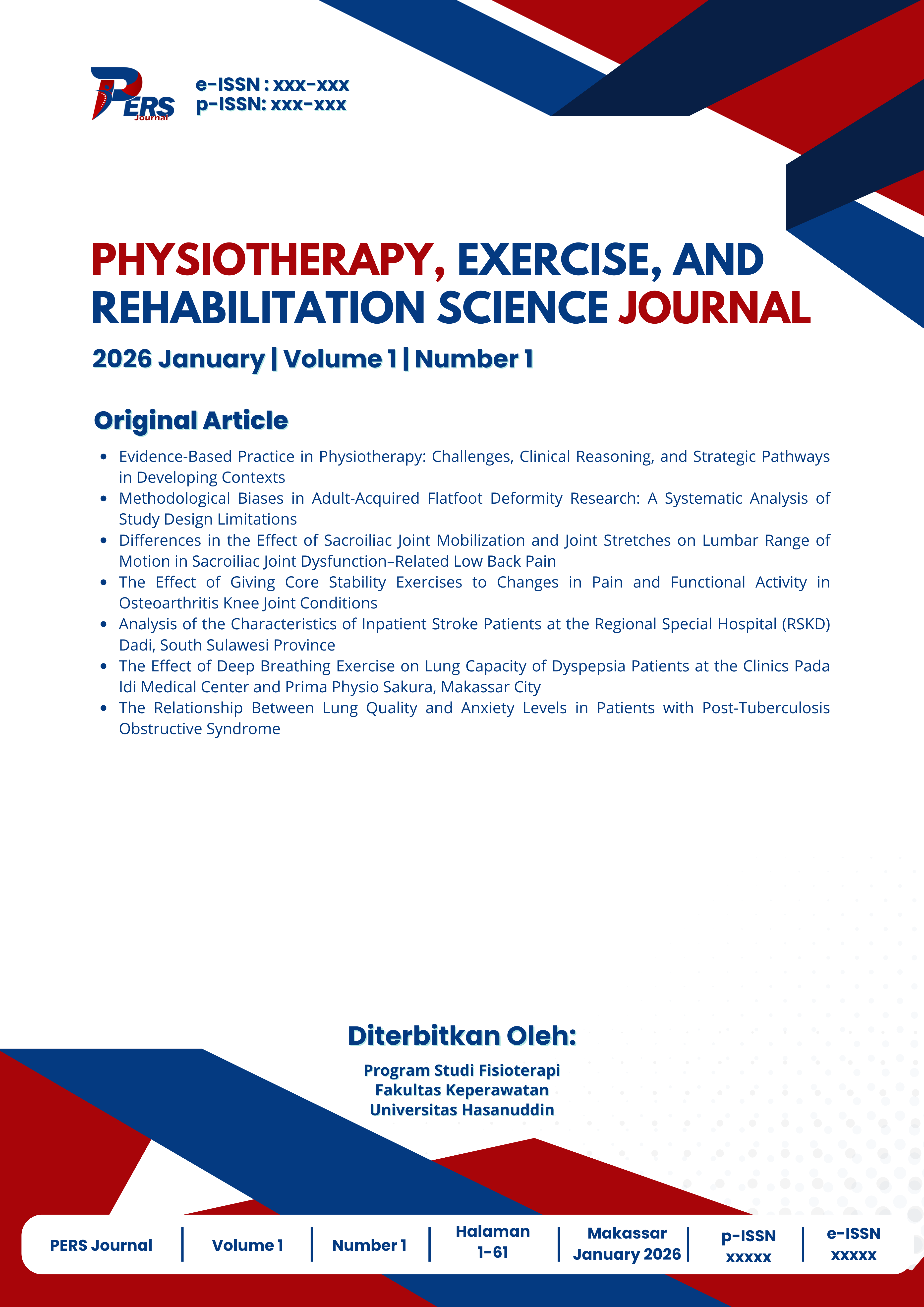
The Physiotherapy, Exercise, and Rehabilitation Science Journal is pleased to announce the release of its inaugural publication as an international, open-access, peer-reviewed scientific journal dedicated to the advancement of knowledge in physiotherapy, rehabilitation, and exercise science. This first issue represents a significant milestone in promoting rigorous academic discourse that integrates clinical practice, research, and education across diverse health systems. By welcoming original research, systematic reviews, and evidence-based clinical perspectives, the journal aspires to serve as a credible platform for disseminating high-quality scientific work that fosters innovation and excellence in global physiotherapy and rehabilitation practice.
Emphasizing comparative and international perspectives, the journal invites scholarly contributions that reflect the diversity of populations, settings, and professional practices globally. Through open access dissemination, it aims to eliminate barriers to knowledge sharing and facilitate the translation of research findings into clinical and community-based applications. The inaugural publication of The Physiotherapy, Exercise, and Rehabilitation Science Journal highlights a commitment to enhancing global collaboration, enriching professional discourse, and contributing significantly to the improvement of health, function, and quality of life through physiotherapy and exercise-based rehabilitation.