Importance of red beans in artificial diets for Troides helena (Linnaeus) larvae: A review
DOI:
https://doi.org/10.64128/wppj.v1i2.47262Keywords:
Bantimurung-Bulusaraung, Butterfly, Conservation, Insect nutrition, Mass-rearing, Wheat germ substituteAbstract
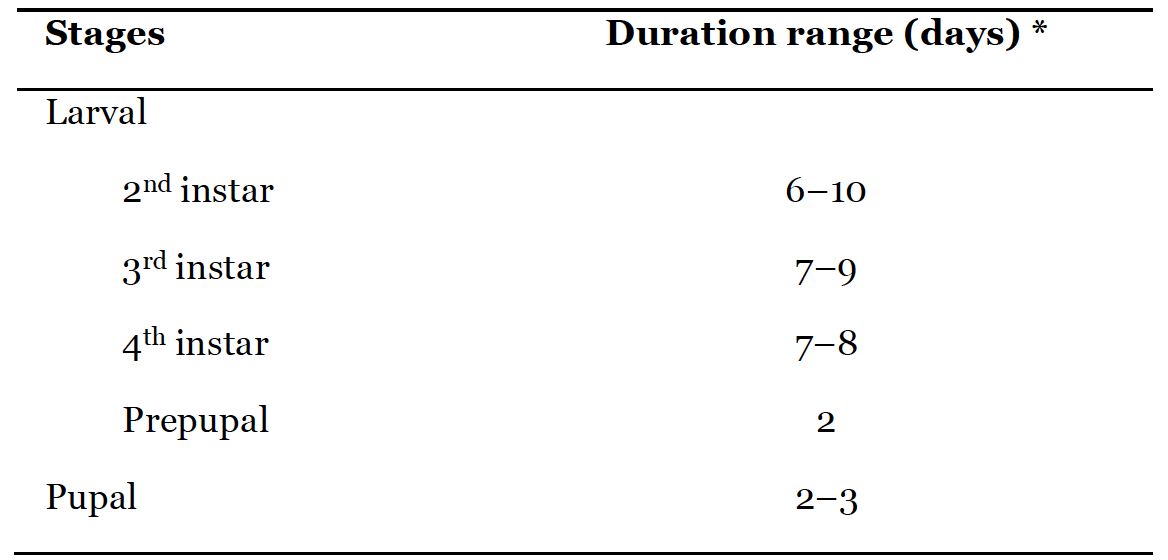
The common problem in insect artificial diet for Lepidopteran, especially Troides helena (Linnaeus) (Lepidoptera: Papilionidae) larvae is preparing wheat germ to cover the nutritional needs of the insect target. All of the material formulated in the artificial diet has different textures, water content, and nutritional composition compared to the natural diet from the butterflies host plant, Aristolochia leaves. The ability to choose and control the nutritional component of the artificial diet gives the best results for the mass-rearing of insect targets. Larvae of T. helena have been successfully mass-reared in artificial diet-based red beans as a substitute for wheat germ. Artificial diet incorporating red beans or kidney beans have been shown to increase longevity and the successful emergence of the adults from the pupal stage. An artificial diet was given to T. helena larvae from the 2nd instar until they formed a pupal. Previous research showed that T. helena adults, while hatching normally a males, often remained crippling butterflies. In the future, the artificial diet of butterflies is the solution increasing population of insects in Bantimurung-Bulusaraung National Park, South Sulawesi.
References
Ahmed, A. M., Alhilifi, A. Z. A. Q., Khoso, F. N., Kubar, M. I., Shah, T. N., & Ahmed, T. (2023). Development of protien based artificial diet for mass rearing of Spodoptera frugiperda J.E. Smith (Lepidoptera: Noctuidae). Pakistan Journal of Agricultural Research, 36(4). https://doi.org/10.17582/journal.pjar/2023/36.4.350.359
Akinneye, & And, A. O. M. 0. (n.d.). Evaluation of different diets for rearing cocoa moth, Ephestia cautella (Walker) [Lepidoptera: Pyralidae]. Nigerian Journal of Entomology, 26, 29–33.
Ali, H. M. S., Mirza, J. H., Kamran, M., & Alatawi, F. J. (2024). Assessing different artificial diets to improve the life history parameters of the almond moth, Ephestia cautella (Walker) (Lepidoptera: Pyralidae). Agriculture, 14(12), 2295. https://doi.org/10.3390/agriculture14122295
Altermatt, F. (2010). Tell me what you eat and I’ll tell you when you fly: diet can predict phenological changes in response to climate change. Ecology Letters, 13(12), 1475–1484. https://doi.org/10.1111/j.1461-0248.2010.01534.x
Aminah, S. N. (2023). Story of Tegosept in the insects artificial diet: Challenge for the future research. AIP Conference Proceedings. 2596. 100016. https://doi.org/10.1063/5.0120014
Aminah, S. N. (2024). Insect artificial diet composition based red bean for mass rearing larvae Troides helena Linn (Indonesian patent IDS000008164).
Aminah, S. N., Saranga, A. P., Agus, N., Achmad, A., & Ridwan, I. (2014). Two artificial diet formulations for Troides helena Linne larvae (Lepidoptera: Papilionidae) in Bantimurung-Bulusaraung National Park, South Sulawesi. International Journal of Scientific & Technology Research, 3(7).
Becher, P. G., & Guerin, P. M. (2009). Oriented responses of grapevine moth larvae Lobesia botrana to volatiles from host plants and an artificial diet on a locomotion compensator. Journal of Insect Physiology, 55(4), 384–393. https://doi.org/10.1016/j.jinsphys.2009.01.006
Blanco, C. A., Portilla, M., Abel, C. A., Winters, H., Ford, R., & Streett, D. (2009). Soybean flour and wheat germ proportions in artificial diet and their effect on the growth rates of the tobacco budworm, Heliothis virescens. Journal of Insect Science, 9(59), 1–9. https://doi.org/10.1673/031.009.5901
Cahenzli, F., & Erhardt, A. (2012). Host plant defence in the larval stage affects feeding behaviour in adult butterflies. Animal Behaviour, 84(4), 995–1000. https://doi.org/10.1016/j.anbehav.2012.07.025
Chen, B., Mason, C. J., Peiffer, M., Zhang, D., Shao, Y., & Felton, G. W. (2022). Enterococcal symbionts of caterpillars facilitate the utilization of a suboptimal diet. Journal of Insect Physiology, 138, 104369. https://doi.org/10.1016/j.jinsphys.2022.104369
Cohen, A. C. (2001). Formalizing insect rearing and artificial diet technology. American Entomologist, 47(4), 198–206. https://doi.org/10.1093/ae/47.4.198
Defilippo, F., Gemmellaro, M. D., Grisendi, A., Tranquillo, V., Lavazza, A., Dottori, M., & Moreno, A. (2025). Formulation and evaluation of the efficacy of an artificial larval diet for rearing various species of flies under laboratory conditions. Frontiers in Insect Science, 5. https://doi.org/10.3389/finsc.2025.1630472
Force, E., Couzi, P., Dacher, M., & Debernard, S. (2023). Diet impacts the reproductive system’s maturation in the male moth Agrotis ipsilon (Noctuidae, Lepidoptera). Journal of Insect Physiology, 148, 104532. https://doi.org/10.1016/j.jinsphys.2023.104532
Gupta, G. P., Rani, S., Birah, A., & Raghuraman, M. (2005). Improved artificial diet for mass rearing of the tobacco caterpillar, Spodoptera litura (Lepidoptera: Noctuidae). International Journal of Tropical Insect Science, 25(01). https://doi.org/10.1079/IJT200551
Hervet, V. A. D., Laird, R. A., & Floate, K. D. (2016). A review of the McMorran diet for rearing Lepidoptera species with addition of a further 39 species. Journal of Insect Science, 16(1), 19. https://doi.org/10.1093/jisesa/iev151
Kurnia, D., Dahelmi, F., Herwina, H., & Wandi, Y. (2021). Effect of artificial diet on immature stage of the great eggfly, Hypolimnas bolina (Lepidoptera: Nymphalidae). Pakistan Journal of Biological Sciences, 24(11), 1110–1118. https://doi.org/10.3923/pjbs.2021.1110.1118
Lisboa, H. M., Andrade, R., Lima, J., Batista, L., Costa, M. E., Sarinho, A., & Pasquali, M. B. (2025). Harnessing insects as novel food ingredients: Nutritional, functional, and processing perspectives. Insects, 16(8), 783. https://doi.org/10.3390/insects16080783
Mahmoud, A. A., Mohdaly, A. A. A., & Elneairy, N. A. A. (2015). Wheat germ: An overview on nutritional value, antioxidant potential and antibacterial characteristics. Food and Nutrition Sciences, 06(02), 265–277. https://doi.org/10.4236/fns.2015.62027
Meng, G., & Ma, C.-Y. (2002). Characterization of globulin from Phaseolus angularis (red bean). International Journal of Food Science and Technology, 37(6), 687–695. https://doi.org/10.1046/j.1365-2621.2002.00601.x
Molleman, F., Ding, J., Boggs, C. L., Carey, J. R., & Arlet, M. E. (2009). Does dietary restriction reduce life span in male fruit-feeding butterflies?. Experimental Gerontology, 44(9), 601–606. https://doi.org/10.1016/j.exger.2009.06.008
Moore, S. D., Richards, G. I., Chambers, C., & Hendry, D. (2014). An improved larval diet for commercial mass rearing of the false codling moth, Thaumatotibia leucotreta (Meyrick) (Lepidoptera: Tortricidae). African Entomology, 22(1), 216–219. https://doi.org/10.4001/003.022.0125
Mukhametov, A., Benin, D., Mutalibova, G., Snegirev, D., & Pshidatok, S. (2023). The impact of entomophages on the population dynamics of major greenhouse cucumber pests. Crop, Forage & Turfgrass Management, 9(1). https://doi.org/10.1002/cft2.20196
Niogret, J., Savantil, A. B., Ekayanti, A., Jaus, M. P., Wulan, W., Mitzo, E., Marelli, J.-P., & Conlong, D. (2023). Development of a diet production system for Conopomorpha cramerella (Lepidoptera: Gracillariidae), a major cocoa production pest in Southeast Asia and the Pacific Islands. Insects, 14(8), 708. https://doi.org/10.3390/insects14080708
Novita, R., Buchori, D., Istiaji, B., & Seminar, A. (2023). Mapping biological control research: A systematic review of 20 years of research in Indonesia. IOP Conference Series: Earth and Environmental Science, 1133(1), 012028. https://doi.org/10.1088/1755-1315/1133/1/012028
Olowoyeye, J. C. (2025). Insect-based feed ingredients in poultry nutrition: Entomological innovations and nutritional implications for sustainable livestock production. International Journal of Entomology Research. 10(05), 75–80.
Pereira, D. A., Ramos, M. V., Souza, D. P., Portela, T. C. L., Guimarães, J. A., Madeira, S. V. F., & Freitas, C. D. T. (2010). Digestibility of defense proteins in latex of milkweeds by digestive proteases of Monarch butterflies, Danaus plexippus L.: A potential determinant of plant–herbivore interactions. Plant Science, 179(4), 348–355. https://doi.org/10.1016/j.plantsci.2010.06.009
Pinto, J. R. L., Torres, A. F., Truzi, C. C., Vieira, N. F., Vacari, A. M., & De Bortoli, S. A. (2019). Artificial corn-based diet for rearing Spodoptera frugiperda (Lepidoptera: Noctuidae). Journal of Insect Science, 19(4). https://doi.org/10.1093/jisesa/iez052
Ramos, B. de C. M., Trigo, J. R., & Rodrigues, D. (2019). The specialization continuum: Decision-making in butterflies with different diet requirements. Behavioural Processes, 165, 14–22. https://doi.org/10.1016/j.beproc.2019.06.006
Rojas, M. G., & Morales-Ramos, J. A. (2010). A new type of solid, semi-solid, and semi-liquid arthropod artificial diets using colloids to replace gelling agents.
Ryne, C., Nilsson, P. A., & Siva-Jothy, M. T. (2004). Dietary glycerol and adult access to water: effects on fecundity and longevity in the almond moth. Journal of Insect Physiology, 50(5), 429–434. https://doi.org/10.1016/j.jinsphys.2004.02.010
Sahasakul, Y., Aursalung, A., Thangsiri, S., Wongchang, P., Sangkasa-ad, P., Wongpia, A., Polpanit, A., Inthachat, W., Temviriyanukul, P., & Suttisansanee, U. (2022). Nutritional compositions, phenolic contents, and antioxidant potentials of ten original lineage aeans in Thailand. Foods, 11(14), 2062. https://doi.org/10.3390/foods11142062
Sørensen, J. G., Addison, M. F., & Terblanche, J. S. (2012). Mass-rearing of insects for pest management: Challenges, synergies and advances from evolutionary physiology. Crop Protection, 38, 87–94. https://doi.org/10.1016/j.cropro.2012.03.023
Strydom, E., Erasmus, A., Plessis, H. du, & van den Berg, J. (2024). Suitability of different artificial diets for mass rearing of six Lepidopteran pest species. International Journal of Tropical Insect Science, 44(5), 2403–2415. https://doi.org/10.1007/s42690-024-01292-8
Téllez-Mazzocco, D., Herrera-Arrieta, Y., Alejandre-Iturbide, G., Correa-Ramírez, M. M., Rojas-López, M., & Bermúdez-Torres, K. (2025). Morphometric, phenological, and nutritional characterization of five wild bean species from Durango, Mexico. Diversity, 17(9), 645. https://doi.org/10.3390/d17090645
Truzi, C. C., Vieira, N. F., de Souza, J. M., & De Bortoli, S. A. (2021). Artificial diets with different protein levels for rearing Spodoptera frugiperda (Lepidoptera: Noctuidae). Journal of Insect Science, 21(4). https://doi.org/10.1093/jisesa/ieab041
USDA. (2019). Wheat germ and crude. https://fdc.nal.usda.gov/fdc-app.html#/food-details/168892/nutrients
Vanderzant, E. S. (1969). Physical aspects of artificial diets. Entomologia Experimentalis et Applicata, 12(5), 642–650. https://doi.org/10.1111/j.1570-7458.1969.tb02559.x
Wang, X.-Q., Güncan, A., Ou, H.-D., Li, H.-X., Wei, L., & Yang, M.-F. (2021). Artificial diet significantly enhance fitness and be applicable in mass-rearing of Ephestia elutella (Hübner) (Lepidoptera: Pyralidae). Crop Protection, 147, 105684. https://doi.org/10.1016/j.cropro.2021.105684
Weidner, L. M., Nigoghosian, G., Hanau, C. G., & Jennings, D. E. (2020). Analysis of alternative food sources for rearing entomological evidence. Journal of Medical Entomology, 57(5), 1407–1410. https://doi.org/10.1093/jme/tjaa060
Downloads
Published
Issue
Section
License
Copyright (c) 2025 Sri Nur Aminah

This work is licensed under a Creative Commons Attribution 4.0 International License.