Environmental and agronomic factors affecting mealybug populations in papaya
DOI:
https://doi.org/10.64128/wppj.v1i2.47965Keywords:
Carica papaya, cultivation practices, environmental factors, pest population dynamics, Tarakan City, Mealybug infestationAbstract
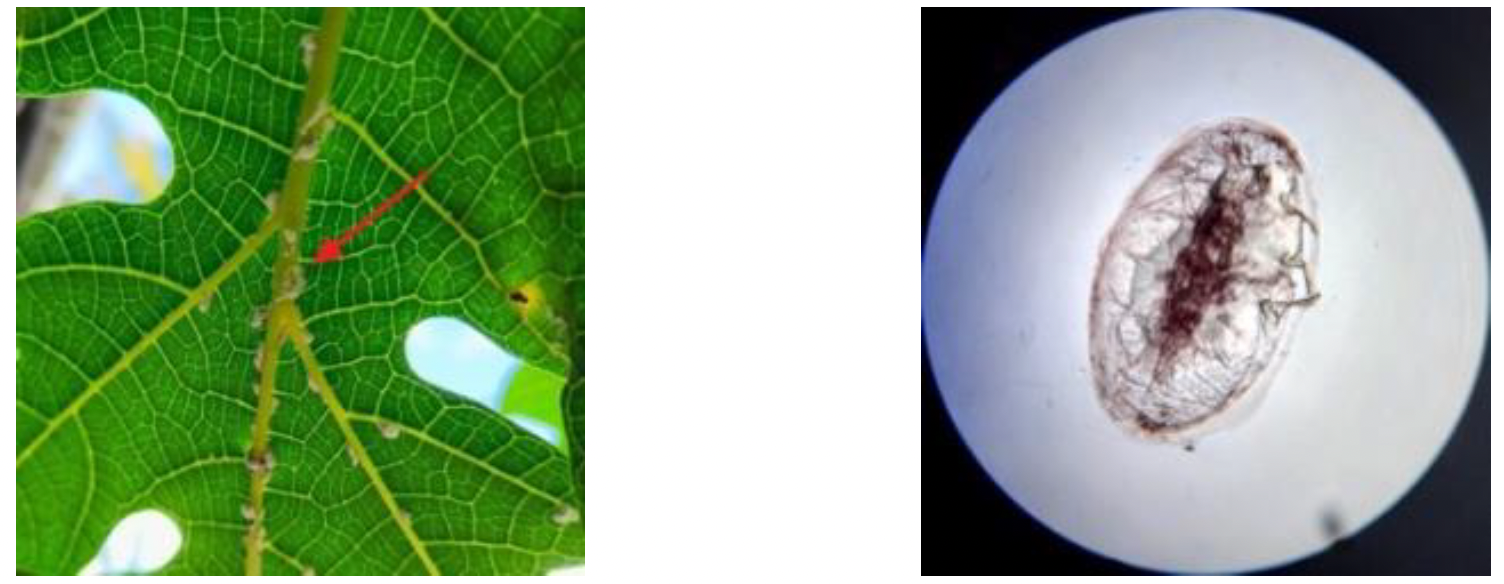
Mealybug infestations are a growing concern in tropical horticulture due to their rapid population increase and the significant damage they cause to fruit crops. This research examined the severity of attack and population density of mealybugs (Pseudococcidae) on papaya (Carica papaya L.), and analysed their relationship with environmental conditions and cultivation practices in several locations in Tarakan City, North Borneo. The study was conducted from January to April 2025 at seven papaya cultivation sites, including Juata Laut 1–5, Juata Permai, and Karang Harapan. A field survey combined with purposive sampling was applied to assess a minimum of 100 papaya trees over one year old at each site. Data collected included the number of infested trees, mealybug population per plant, types of fertilizers and pesticides used, plant age, and surrounding land conditions. The percentage of trees infested with mealybugs ranged from 25.07% to 38.89%, while the average mealybug population on infested trees ranged from 199.52 to 224.59 individuals per plant. Sites characterized by intensive application of chemical fertilizers and pesticides—such as Juata Laut 2 and Juata Laut 4—showed higher infestation levels than those managed with organic practices, such as Juata Permai. Environmental factors, particularly high humidity and inadequate drainage, were also associated with increased mealybug population growth. These findings indicate that environmental conditions and cultivation techniques play a substantial role in shaping the population dynamics of mealybugs. The results highlight the importance of implementing Integrated Pest Management (IPM) strategies that emphasise ecological approaches and environmentally sustainable cultivation practices to mitigate mealybug infestations in humid tropical regions such as Tarakan City.
References
Ahmed, M. Z., He, R. R., Wu, M. T., Gu, Y. J., Ren, J. M., Liang, F., Li, H. L., Hu, X. N., Qiu, B. L., & Mannion, C. M. (2015). First report of the papaya mealybug, Paracoccus marginatus (Hemiptera: Pseudococcidae), in China and genetic record for its recent invasion in Asia and Africa. Florida Entomologist, 98(4), 1157–1162. https://doi.org/10.1653/024.098.0420
Amelia, S. (2021). Tingkat Serangan dan Kepadatan Populasi Kutu Putih (Paracoccus marginatus Williams and Granara de Willink) Pada Tanaman Pepaya Di Kabupaten Padang Pariaman. Skripsi. Universitas Andalas.
Biratu, W. (2022). Papaya Fruit pests and development of integrated pest managements: Critical review. Journal of Biology, Agriculture and Healthcare, 12(15), 1-10.
Chuai, H. Y., Shi, M. Z., Li, J. Y., Zheng, L. Z., & Fu, J. W. (2022). Fitness of the papaya mealybug, Paracoccus marginatus (Hemiptera: Pseudococcidae), after transferring from Solanum tuberosum to Carica papaya, Ipomoea batatas, and Alternanthera philoxeroides. Insects, 13(9), 804. https://doi.org/10.3390/insects13090804
Constantine, K., Makale, F., Mugambi, I., Rware, H., Chacha, D., Lowry, A., Rwomushana, I., & Williams, F. (2023). Smallholder farmers’ knowledge, attitudes and practices towards biological control of papaya mealybug in Kenya. CABI Agriculture and Bioscience, 4(1), 1–15. https://doi.org/10.1186/s43170-023-00161-7
Fanani, M. Z., & Maryana, N. (2024). Population dynamics of papaya mealybug, Paracoccus marginatus Williams & Granara de Willink (Hemiptera: Pseudococcidae) and its natural enemies on cassava. Djuanda International Conference, 8(1).
Kansiime, M. K., Rwomushana, I., Mugambi, I., Makale, F., Lamontagne-Godwin, J., Chacha, D., Kibwage, P., Oluyali, J., & Day, R. (2023). Crop losses and economic impact associated with papaya mealybug (Paracoccus marginatus) infestation in Kenya. International Journal of Pest Management, 69(2), 150–163. https://doi.org/10.1080/09670874.2020.1861363
Mwanauta, R. W., Ndakidemi, P. A., & Venkataramana, P. B. (2022). Characterization of farmer’s knowledge and management practices of papaya mealybug Paracoccus magnatus (Hemiptera: Pseudococcidae) in Tanzania. Saudi Journal of Biological Sciences, 29(5), 3539–3545. https://doi.org/10.1016/j.sjbs.2022.02.037
Rakhesh, S., Hanchinal, S. G., Kumar, A., Naik, K., & Santhosha, K. M. (2023). Mealybugs and scales: Significance in agriculture and their management. In Latest Trends in Agricultural Entomology (Vol. 10, pp. 133-161). Integrated Publications.
Rizwan, M., Raza, A. B. M., Majeed, M. Z., & Arshad, M. (2022). Population dynamics of mealybug Drosicha mangiferae (Green) (Hemiptera: Pseudococcidae) in citrus orchards of district Sargodha (Punjab, Pakistan). Punjab University Journal of Zoology, 37(1), 23–28. https://dx.doi.org/10.17582/journal.pujz/2022.37.1.23.28
Saeed, F., Arshad, M. U., Pasha, I., Naz, R., Batool, R., Khan, A. A., Nasir, M. A., & Shafique, B. (2014). Nutritional and phyto-therapeutic potential of papaya (Carica papaya Linn.): An overview. International Journal of Food Properties, 17(7), 1637–1653. https://doi.org/10.1080/10942912.2012.709210
Sarma, A. K., Bhattacharyya, D., & Bhattacharyya, S. (2024). Present status of papaya mealybug, Paracoccus marginatus Williams and Granara de Willink, in Assam, India, after a decade of its first invasion. The Journal of Basic and Applied Zoology, 85(1), 34. https://doi.org/10.1186/s41936-024-00387-5
Subramanian, S., Boopathi, T., Nebapure, S.M., Yele, Y., Shankarganesh, K. (2021). Mealybugs. In: Omkar (eds) Polyphagous Pests of Crops. Springer, Singapore. https://doi.org/10.1007/978-981-15-8075-8_5
Tanwar, R. K., Jeyakumar, P., & Vennila, S. (2010). Papaya mealybug and its management strategies (Vol. 22). National Centre for Integrated Pest Management New Delhi.
Zhao, Q., Li, H., Chen, C., Fan, S., Wei, J., Cai, B., & Zhang, H. (2024). Potential global distribution of Paracoccus marginatus, under climate change conditions, using MaxEnt. Insects, 15(2), 98. https://doi.org/10.3390/insects15020098
Downloads
Published
Issue
Section
License
Copyright (c) 2025 Albert Fredrick, Abdul Rahim, Muh Adiwena

This work is licensed under a Creative Commons Attribution 4.0 International License.