Comparative antifungal efficacy of Zinnia elegans and Tithonia diversifolia extracts against Fusarium verticillioides: In-vitro study
DOI:
https://doi.org/10.64128/wppj.v1i2.48421Keywords:
Botanical pesticide, Fusarium spp., Plant extract, Tithonia diversifolia, Zinnia elegansAbstract
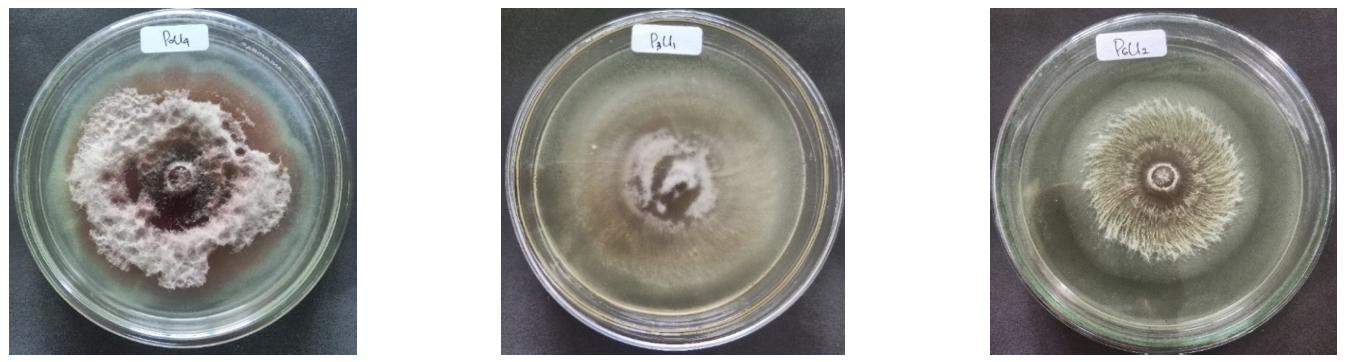
Fusarium verticillioides are broad-spectrum pathogens with extensive host ranges and represent a major constraint in agricultural production. Synthetic pesticides are commonly used by farmers to manage Fusarium-induced diseases; however, their intensive application poses serious risks to environmental sustainability and human health. Consequently, the development of eco-friendly disease management strategies is urgently required. Botanical pesticides derived from plant extracts represent a promising alternative. This study evaluated the antifungal effectiveness of Mexican sunflower (Tithonia diversifolia) and zinnia (Zinnia elegans) extracts at different concentrations against Fusarium wilt. The experiment was conducted from September to December 2024 using a completely randomized design (CRD) with six extract treatments (1800, 3600, and 5400 ppm for each plant species) and an untreated control. Antifungal activity was assessed based on the percentage of mycelial growth inhibition. The results demonstrated that both extract type and concentration significantly affected fungal inhibition (p ≤ 0.05). Extract of Z. elegans at 5400 ppm exhibited the highest inhibitory effect, suppressing Fusarium growth by 32.0%, which was significantly higher than all other treatments. In contrast, T. diversifolia extract showed moderate inhibition, with a maximum of 16.5% inhibition at 5400 ppm. The increasing inhibition with higher concentrations indicates a clear dose-dependent response. These findings highlight the scientific significance of plant-based extracts as natural antifungal agents and demonstrate the superior efficacy of Z. elegans extract at higher concentrations. Overall, this study underscores the strong potential of zinnia-based extracts as eco-friendly biofungicide candidates for sustainable management of Fusarium wilt diseases.
References
Agidew, M. G. (2022). Phytochemical analysis of some selected traditional medicinal plants in Ethiopia. Bulletin of the National Research Centre, 46(1), 87. https://doi.org/10.1186/s42269-022-00770-8
Akter, M. S., Siddique, S. S., Momotaz, R., Arifunnahar, M., Alam, K. M., & Mohiuddin, S. J. (2019). Biological control of insect pests of agricultural crops through habitat management was discussed. Journal of Agricultural Chemistry and Environment, 08(01), 1–13. https://doi.org/10.4236/jacen.2019.81001
Ali, Md. A., Ahmed, T., Ibrahim, E., Rizwan, M., Chong, K. P., & Yong, J. W. H. (2024). A review on mechanisms and prospects of endophytic bacteria in biocontrol of plant pathogenic fungi and their plant growth-promoting activities. Heliyon, 10(11), e31573. https://doi.org/10.1016/j.heliyon.2024.e31573
Cenobio-Galindo, A. de J., Hernández-Fuentes, A. D., González-Lemus, U., Zaldívar-Ortega, A. K., González-Montiel, L., Madariaga-Navarrete, A., & Hernández-Soto, I. (2024). Biofungicides based on plant extracts: On the road to organic farming. International Journal of Molecular Sciences, 25(13), 6879. https://doi.org/10.3390/ijms25136879
Chatri, M., Jumjunidang, J., Aini, Z., & Suryendra, F. D. (2022). Aktivitas antifungi ekstrak daun Melastoma malabathricum terhadap Fusarium oxysporum dan Sclerotium rolfsii secara in vitro. Jurnal Agrotek Tropika, 10(3), 395. https://doi.org/10.23960/jat.v10i3.5713
da Costa Inácio, G., Alves, J. V. B., Santos, M. F. C., Vacari, A. M., Figueiredo, G. P., Bernardes, W. A., Veneziani, R. C. S., & Ambrósio, S. R. (2020). Feeding deterrence towards Helicoverpa armigera by Tithonia diversifolia tagitinin C-enriched extract. Arabian Journal of Chemistry, 13(5), 5292–5298. https://doi.org/10.1016/j.arabjc.2020.03.008
Dada, A. O., Inyinbor, A. A., Idu, E. I., Bello, O. M., Oluyori, A. P., Adelani-Akande, T. A., Okunola, A. A., & Dada, O. (2018). Effect of operational parameters, characterization and antibacterial studies of green synthesis of silver nanoparticles using Tithonia diversifolia. PeerJ, 6, e5865. https://doi.org/10.7717/peerj.5865
Divekar, P. A., Narayana, S., Divekar, B. A., Kumar, R., Gadratagi, B. G., Ray, A., Singh, A. K., Rani, V., Singh, V., Singh, A. K., Kumar, A., Singh, R. P., Meena, R. S., & Behera, T. K. (2022). Plant secondary metabolites as defense tools against herbivores for sustainable crop protection. International Journal of Molecular Sciences, 23(5), 2690. https://doi.org/10.3390/ijms23052690
Djaenuddin, N., Mirsam, H., Yusnawan, E., Nasruddin, A., Patandjengi, B., & Kuswinanti, T. (2025). Biological control activities of Trichoderma asperellum AC.3 in inducing maize resistance against downy mildew disease. Physiological and Molecular Plant Pathology, 136, 102564. https://doi.org/10.1016/j.pmpp.2025.102564
Duba, A., Goriewa-Duba, K., & Wachowska, U. (2018). A review of the interactions between wheat and wheat pathogens: Zymoseptoria tritici, Fusarium spp. and Parastagonospora nodorum. International Journal of Molecular Sciences, 19(4), 1138. https://doi.org/10.3390/ijms19041138
Fatma, M., Chatri, M., Fifendy, M., & Handayani, D. (2021). Effect of papaya leaf extract (Carica papaya L.) on colony diameter and percentage of growth inhibition of Fusarium oxysporum. Jurnal Serambi Biologi, 6(2), 9–14.
Gabriel, B., Loredana, A. S., Șopterean, L., Crișan, I., & Duda, M. M. (2021). Intensity of Fusarium sp. attack in maize (Zea mays L.) under different fertilization treatments in conditions from transylvanian plain. ProEnvironment Promediu, 41–47.
Han, E.-J., Baek, S.-H., & Park, J.-H. (2024). Impact of Zinnia elegans cultivation on the control efficacy and distribution of Aphidius colemani Viereck (Hymenoptera: Braconidae) against Aphis gossypii Glover (Hemiptera: Aphididae) in cucumber greenhouses. Insects, 15(10), 807. https://doi.org/10.3390/insects15100807
Kato-Noguchi, H., & Kato, M. (2025). Defensive compounds involved in the invasiveness of Tithonia diversifolia. Molecules, 30(9), 1946. https://doi.org/10.3390/molecules30091946
Kerebba, N., Oyedeji, A. O., Byamukama, R., Kuria, S. K., & Oyedeji, O. O. (2019). Pesticidal activity of Tithonia diversifolia (Hemsl.) A. Gray and Tephrosia vogelii (Hook. f.); phytochemical isolation and characterization: A review. South African Journal of Botany, 121, 366–376. https://doi.org/10.1016/j.sajb.2018.11.024
Li, X., Liao, Q., Zeng, S., Wang, Y., & Liu, J. (2025). The use of Trichoderma species for the biocontrol of postharvest fungal decay in fruits and vegetables: Challenges and opportunities. Postharvest Biology and Technology, 219, 113236. https://doi.org/10.1016/j.postharvbio.2024.113236
Lin, Y.-H., Su, C.-C., Chao, C.-P., Chen, C.-Y., Chang, C.-J., Huang, J.-W., & Chang, P.-F. L. (2013). A molecular diagnosis method using real-time PCR for quantification and detection of Fusarium oxysporum f. sp. cubense race 4. European Journal of Plant Pathology, 135(2), 395–405. https://doi.org/10.1007/s10658-012-0096-0
Ma, L.-J., Geiser, D. M., Proctor, R. H., Rooney, A. P., O’Donnell, K., Trail, F., Gardiner, D. M., Manners, J. M., & Kazan, K. (2013). Fusarium pathogenomics. Annual Review of Microbiology, 67(1), 399–416. https://doi.org/10.1146/annurev-micro-092412-155650
Mahmood, I., Imadi, S. R., Shazadi, K., Gul, A., & Hakeem, K. R. (2016). Effects of pesticides on environment. In Plant, soil and microbes (pp. 253–269). Springer International Publishing.
Marisa, M., Chatri, M., Advinda, L., & Fifendy, M. (2022). Effect of sungkai leaf extract (Peronema canescens J.) on colony diameter and percentage of growth of inhibition Fusarium oxysporum. Jurnal Serambi Biologi, 7(3), 244–250.
Mohammadi, M., Nezamdoost, D., Khosravi Far, F., Zulfiqar, F., Eghlima, G., & Aghamir, F. (2024). Exogenous putrescine application imparts salt stress-induced oxidative stress tolerance via regulating antioxidant activity, potassium uptake, and abscisic acid to gibberellin ratio in Zinnia flowers. BMC Plant Biology, 24(1), 865. https://doi.org/10.1186/s12870-024-05560-0
Muslim, A., Hyakumachi, M., Kageyama, K., Suwandi, S., & Pratama, R. (2019). A rapid bioassay to evaluate efficacy of hypovirulent binucleate Rhizoctonia in reducing Fusarium crown and root rot of tomato. The Open Agriculture Journal, 13(1), 27–33. https://doi.org/10.2174/1874331501913010027
Poudel, S., Poudel, B., Acharya, B., & Poudel, P. (2020). Pesticide use and its impacts on human health and environment. Environment & Ecosystem Science, 4(1), 47–51. https://doi.org/10.26480/ees.01.2020.47.51
Sampaio, A. M., Rubiales, D., & Vaz Patto, M. C. (2021). Grass pea and pea phylogenetic relatedness reflected at Fusarium oxysporum host range. Crop Protection, 141, 105495. https://doi.org/10.1016/j.cropro.2020.105495
Samy, M. N., Gomaa, A. A.-R., Attia, E. Z., Ibrahim, M. A. A., Desoukey, S. Y., & Kamel, M. S. (2022). Flavonoids of Zinnia elegans: Chemical profile and in vitro antioxidant and in silico anti-COVID-19 activities. South African Journal of Botany, 147, 576–585. https://doi.org/10.1016/j.sajb.2022.02.024
Schoss, K., Kočevar Glavač, N., Dolenc Koce, J., & Anžlovar, S. (2022). Supercritical CO2 plant extracts show antifungal activities against crop-borne fungi. Molecules, 27(3), 1132. https://doi.org/10.3390/molecules27031132
Torres-Cruz, T. J., Whitaker, B. K., Proctor, R. H., Broders, K., Laraba, I., Kim, H.-S., Brown, D. W., O’Donnell, K., Estrada-Rodríguez, T. L., Lee, Y.-H., Cheong, K., Wallace, E. C., McGee, C. T., Kang, S., & Geiser, D. M. (2022). FUSARIUM-ID v.3.0: An updated, downloadable resource for Fusarium species identification. Plant Disease, 106(6), 1610–1616. https://doi.org/10.1094/PDIS-09-21-2105-SR
Wahyuni, D., Mawardika, H., & Masruroh, A. (2022). Uji aktivitas repellent ekstrak etanol daun bunga kertas (Zinnia elegans) terhadap nyamuk Aedes aegypti. Pengembangan Ilmu Dan Praktik Kesehatan, 1(4), 10–18. https://doi.org/10.56586/pipk.v1i4.236
Downloads
Published
Issue
Section
License
Copyright (c) 2025 Asmila Asmila, Asti Irawanti Azis, Eka Lestari Ariyanti, Ade Sugiarti Kumalasari

This work is licensed under a Creative Commons Attribution 4.0 International License.