
Occurrence and identification of aphid (Hemiptera: Aphididae) species on several host plants in the main campus of Hasanuddin University, Makassar
DOI:
https://doi.org/10.64128/wppj.v2i1.51279Keywords:
Alternative host, Aphis gossypii, Morphological identification, Integrated pest management, Qualitative survey, WeedsAbstract
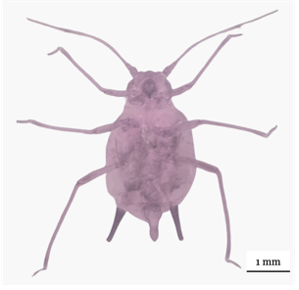
Aphids (Hemiptera: Aphididae) are important agricultural pests that damage host plants and transmit plant viruses. A qualitative survey was conducted from March to May 2026 across various zones of the Hasanuddin University campus, Makassar, Indonesia to document aphid occurrence and host associations. Aphid colonies were collected purposively from agricultural crops, ornamental plants, and weeds, and species identification was performed through microscopic examination of diagnostic morphological characters. Only one species, Aphis gossypii Glover, was identified from the collected aphid colonies. This species was associated with Capsicum annuum, C. frutescens, Melothria pendula, and Ficus benjamina. These observations provide baseline information on the occurrence and host associations of A. gossypii within the campus environment and highlight the potential role of weeds and ornamental plants as alternative hosts supporting aphid persistence. The present inventory provides preliminary information for future monitoring and integrated pest management studies.
References
Adjalla, C., Omondi, B. A., Ogwal, G., Ocimati, W., Wasswa, P., & Blomme, G. (2025). Aphid control using natural enemies: Lessons for fine-tuning banana-aphid management. Biological Control, 210, 105905. https://doi.org/10.1016/j.biocontrol.2025.105905
Ali, J., Bayram, A., Mukarram, M., Zhou, F., Karim, M. F., Hafez, M. M. A., Mahamood, M., Yusuf, A. A., King, P. J. H., Adil, M. F., Ma, Z., & Shamsi, I. H. (2023). Peach–potato aphid Myzus persicae: Current management strategies, challenges, and proposed solutions. Sustainability, 15(14), 11150. https://doi.org/10.3390/su151411150
Alotaibi, N. J., Alsufyani, T., M’sakni, N. H., Almalki, M. A., Alghamdi, E. M., & Spiteller, D. (2023). Rapid identification of aphid species by headspace GC-MS and discriminant analysis. Insects, 14(7), 589. https://doi.org/10.3390/insects14070589
Batz, P., Will, T., Thiel, S., Ziesche, T. M., & Joachim, C. (2023). From identification to forecasting: the potential of image recognition and artificial intelligence for aphid pest monitoring. Frontiers in Plant Science, 14. https://doi.org/10.3389/fpls.2023.1150748
Ben-Issa, R., Gomez, L., & Gautier, H. (2017). Companion plants for aphid pest management. Insects, 8(4), 112. https://doi.org/10.3390/insects8040112
Blackman, R. L., & Eastop, V. F. (2000). Aphids on the world’s crops. Wiley.
Carr, J. P., Tungadi, T., Donnelly, R., Bravo-Cazar, A., Rhee, S.-J., Watt, L. G., Mutuku, J. M., Wamonje, F. O., Murphy, A. M., Arinaitwe, W., Pate, A. E., Cunniffe, N. J., & Gilligan, C. A. (2020). Modelling and manipulation of aphid-mediated spread of non-persistently transmitted viruses. Virus Research, 277, 197845. https://doi.org/10.1016/j.virusres.2019.197845
Dhillon, M. K., Singh, N., & Yadava, D. K. (2022). Preventable yield losses and management of mustard aphid, Lipaphis erysimi (Kaltenbach) in different cultivars of Brassica juncea (L.) Czern & Coss. Crop Protection, 161, 106070. https://doi.org/10.1016/j.cropro.2022.106070
Dong, W., Sun, L., Jiao, B., Zhao, P., Ma, C., Gao, J., & Zhou, S. (2024). Evaluation of aphid resistance on different rose cultivars and transcriptome analysis in response to aphid infestation. BMC Genomics, 25(1), 232. https://doi.org/10.1186/s12864-024-10100-z
Forman, R. T. T. (1995). Land mosaics: The ecology of landscapes and regions. Cambridge University Press.
Gebretsadik, K. G., Liu, Z., Yang, J., Liu, H., Qin, A., Zhou, Y., Guo, E., Song, X., Gao, P., Xie, Y., Vincent, N., Tran, L.-S. P., & Sun, X. (2025). Plant-aphid interactions: recent trends in plant resistance to aphids. Stress Biology, 5(1), 28. https://doi.org/10.1007/s44154-025-00214-z
Guan, M., Sun, L., Ye, C., Li, J., Shan, S., Li, X., Du, J., & Wu, D. (2026). Genome-Wide identification and functional characterization of chitinase genes in the sorghum aphid (Melanaphis sacchari). Journal of Insect Physiology, 169, 104943. https://doi.org/10.1016/j.jinsphys.2026.104943
Hartl, T., Srivastava, V., Prager, S., & Wist, T. (2024). Evaluating climate change scenarios on global pea aphid habitat suitability using species distribution models. Climate Change Ecology, 7, 100084. https://doi.org/10.1016/j.ecochg.2024.100084
Irsan, C., Anggraini, E., & Ramadhani, W. (2024). Species of aphids found in ornamental and wild plants in Pagar Alam District, South Sumatra, Indonesia. Biodiversitas Journal of Biological Diversity, 24(12). https://doi.org/10.13057/biodiv/d241222
Jalalizand, A. R., Mirhendi, H., Karimi, A., Modaresi, M., & Mahmoodi, E. (2012). Morphological and molecular identification aphids of rosae. APCBEE Procedia, 4, 12–15. https://doi.org/10.1016/j.apcbee.2012.11.003
Klinnert, A., Barbosa, A. L., Catarino, R., Fellmann, T., Baldoni, E., Beber, C., Hristov, J., Paracchini, M. L., Rega, C., Weiss, F., Witzke, P., & Rodriguez-Cerezo, E. (2024). Landscape features support natural pest control and farm income when pesticide application is reduced. Nature Communications, 15(1), 5384. https://doi.org/10.1038/s41467-024-48311-3
Kök, Ş., Tomanović, Ž., Karabacak, E., & Kasap, İ. (2023). Do primary and secondary host plants affect aphid- parasitoid interactions in fruit orchards? Bulletin of Entomological Research, 113(3), 326–334. https://doi.org/10.1017/S0007485322000608
Liu, X.-D., Xu, T.-T., & Lei, H.-X. (2017). Refuges and host shift pathways of host-specialized aphids Aphis gossypii. Scientific Reports, 7(1), 2008. https://doi.org/10.1038/s41598-017-02248-4
Liu, Y., Yan, Y., Ma, L., Cao, D., & Jin, X. (2024). Physiological and metabolomic analyses reveal the resistance response mechanism to tea aphid infestation in new shoots of tea plants (Camellia sinensis). Plant Stress, 13, 100545. https://doi.org/10.1016/j.stress.2024.100545
Loxdale, H. D., & Balog, A. (2018). Aphid specialism as an example of ecological–evolutionary divergence. Biological Reviews, 93(1), 642–657. https://doi.org/10.1111/brv.12361
Ma, L., Li, M.-Y., Chang, C.-Y., Chen, F.-F., Hu, Y., & Liu, X.-D. (2019). The host range of Aphis gossypii is dependent on aphid genetic background and feeding experience. PeerJ, 7, e7774. https://doi.org/10.7717/peerj.7774
Maharani, Y., & Hidayat, P. (2023). Kutudaun pada pertanaman pertanian dan gulma di Jawa Barat. IPB Press.
Mahas, J. W., Hamilton, F. B., Roberts, P. M., Ray, C. H., Miller, G. L., Sharman, M., Conner, K., Bag, S., Blythe, E. K., Toews, M. D., & Jacobson, A. L. (2022). Investigating the effects of planting date and Aphis gossypii management on reducing the final incidence of cotton leafroll dwarf virus. Crop Protection, 158, 106005. https://doi.org/10.1016/j.cropro.2022.106005
Priya, S. S., Suganthy, M., Renukadevi, P., & Murugan, M. (2025). Insight into the efficient transmission of cucurbit aphid-borne yellows virus (Polerovirus CABYV) by Aphis gossypii Glover in bitter gourd. Physiological and Molecular Plant Pathology, 138, 102669. https://doi.org/10.1016/j.pmpp.2025.102669
Rand, T. A., Tylianakis, J. M., & Tscharntke, T. (2006). Spillover edge effects: the dispersal of agriculturally subsidized insect natural enemies into adjacent natural habitats. Ecology Letters, 9(5), 603–614. https://doi.org/10.1111/j.1461-0248.2006.00911.x
Rashedi, A., Rajabpour, A., Rasekh, A., & Zandi-Sohani, N. (2019). Interactions between host plant, Aphis fabae, and its natural enemies, Orius albidipennis and Lysiphlebus fabarum in a tritrophic system. Journal of Asia-Pacific Entomology, 22(3), 847–852. https://doi.org/10.1016/j.aspen.2019.07.001
Rim, H., Park, H., & Seo, M. (2023). The effects of host plant cultivars on the functional response of Binodoxys communis and biological control against Aphis gossypii. Journal of Asia-Pacific Entomology, 26(2), 102078. https://doi.org/10.1016/j.aspen.2023.102078
Simelton, E., Carew-Reid, J., Coulier, M., Damen, B., Howell, J., Pottinger-Glass, C., Tran, H. V., & Van Der Meiren, M. (2021). NBS framework for agricultural landscapes. Frontiers in Environmental Science, 9. https://doi.org/10.3389/fenvs.2021.678367
Suganthi, M., Abirami, G., Jayanthi, M., Kumar, K. A., Karuppanan, K., & Palanisamy, S. (2023). A method for DNA extraction and molecular identification of Aphids. MethodsX, 10, 102100. https://doi.org/10.1016/j.mex.2023.102100
Tian, M., Li, L.-K., Zhu, F., & Zhang, S.-Z. (2025). The effects of six Brassica napus cultivars on the life table parameters of the green peach aphid Myzus persicae (Sulzer) (Hemiptera: Aphididae). Insects, 16(7), 726. https://doi.org/10.3390/insects16070726
Wieczorek, K., Bugaj-Nawrocka, A., Borowiak-Sobkowiak, B., Endrestøl, A., Ravn, H. P., Solarz, W., & Durak, R. (2025). Adapting to change: exploring the distribution dynamics of the alien and potentially invasive aphid species Cinara curvipes (Hemiptera: Aphididae) in the context of global warming. The European Zoological Journal, 92(1), 258–279. https://doi.org/10.1080/24750263.2024.2449152
Yates, A. D., & Michel, A. (2018). Mechanisms of aphid adaptation to host plant resistance. Current Opinion in Insect Science, 26, 41–49. https://doi.org/10.1016/j.cois.2018.01.003
Zhao, C., Escalante, C., Jacobson, A. L., Balkcom, K. S., Conner, K. N., & Martin, K. M. (2025). Metatranscriptomic and metagenomic analyses of cotton aphids (Aphis gossypii) collected from cotton fields in Alabama, USA. Frontiers in Insect Science, 5. https://doi.org/10.3389/finsc.2025.1461588
Downloads
Published
Issue
Section
License
Copyright (c) 2026 Rahmat Rahmat, M. Takwa, Athiyyah Salsabilla Lalisu, A. M. Bintang Ramadhan Galigo, Wardani Syahrani, Ravindra Chandra Joshi, Ito Fernando, Ahwiyah Ekawaty Said, Yani Maharani, M. Bayu Mario

This work is licensed under a Creative Commons Attribution 4.0 International License.