Field evaluation of the olfactory response of Leptocorisa spp. to shrimp and invasive apple snail carcass baits
DOI:
https://doi.org/10.64128/wppj.v2i1.51302Keywords:
Attraction rate, Damage intensity, Organic attractant, Pomacea canaliculata, Rice bugs, Sustainable management strategiesAbstract
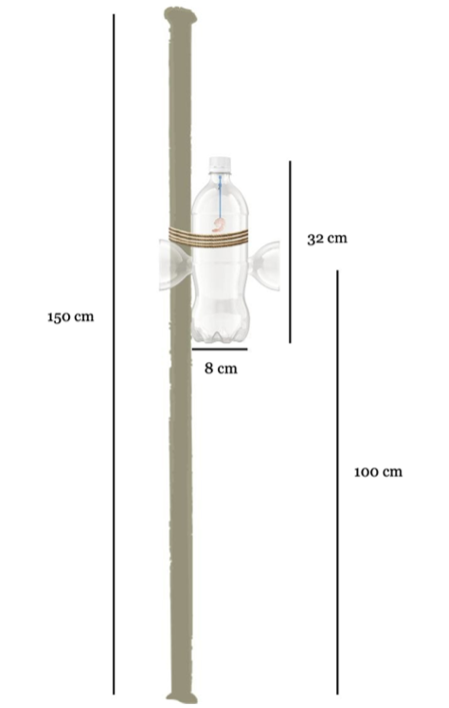
Rice bugs (Leptocorisa spp.) are destructive agricultural pests that inflict severe damage on paddy crops from the flowering stage through the milk ripening stage. Heavy infestations often result in devastating crop failure, compromised grain quality, and reduced overall agricultural yield. To mitigate these economic losses, developing environmentally sustainable management strategies that suppress pest populations without disrupting the surrounding ecosystem is crucial. This study evaluated the field efficacy of olfaction-based traps baited with decaying animal carcasses to actively lure and capture rice bugs. The field experiment was conducted on a 30 × 15 m rice field plot cultivated with the Ciliwung Super cultivar using a direct-seeding system. The custom traps were fabricated from 1,500 mL plastic bottles, each loaded with 150 g of bait consisting of either decaying shrimp or invasive apple snail (Pomacea spp.) carcasses, with ten experimental replications per treatment. Capture rates were recorded at three-day intervals, whereas damage intensity was assessed at seven-day intervals. The experimental results demonstrated that both shrimp and invasive apple snail carcass baits effectively attracted Leptocorisa spp. adults. Although the difference was not statistically significant, shrimp carcass bait showed a numerically higher attraction rate than invasive apple snail bait, suggesting its potential as an organic attractant for rice bugs monitoring and management.
References
Abirami, S., Nagarajan, D., Samrot, A. V., Mini Varsini, A., Sugasini, A., & Anand, D. A. (2021). Extraction, characterization, and utilization of shrimp waste chitin derived chitosan in antimicrobial activity, seed germination, preservative, and microparticle formulation. Biointerface Research in Applied Chemistry, 11(2), 8725–8739. https://doi.org/10.33263/BRIAC112.87258739
Ali, M., Kusnadi, J., Aulanni’am, A. A., & Yunianta, Y. (2020). Amino acids, fatty acids and volatile compounds of terasi udang, an Indonesian shrimp paste, during fermentation. AACL Bioflux, 13(2), 938–950.
Arfan, A. G., Muhamad, R., Omar, D., Nor Azwady, A. A., & Manjeri, G. (2015). Comparative life cycle studies of Pomacea maculata and Pomacea canaliculata on rice (Oryza sativa). Pakistan Journal of Agricultural Sciences, 52(4), 1075–1079.
Barrion, A. T., & Litsinger, J. A. (1981). Leptocorisa acuta vs oratorius: a clarification of rice bug species. International Rice Research Newsletter, 6(1), 20–21. https://doi.org/10.5281/zenodo.6880251
Baz, A., Cifrián, B., Martín-Vega, D., & Baena, M. (2010). Phytophagous insects captured in carrion-baited traps in central Spain. Bulletin of Insectology, 63(1), 21–30.
Bisen, D., Bisen, U., & Bisen, S. (2019). Studies on major insect pests of rice crop (Oryza sativa) at Balaghat district of Madhya Pradesh. Journal of Entomology and Zoology Studies, 7(2), 625–629.
Cowie, R. H., Hayes, K. A., & Thiengo, S. C. (2006). What are apple snails? Confused taxonomy and some preliminary resolution. In R. C. Joshi & L. S. Sebastian (Eds.), Global advances in ecology and management of golden apple snails (pp. 3–23). Philippine Rice Research Institute.
Cowie, R. H., Hayes, K. A., Strong, E. E., & Thiengo, S. C. (2017). Non-native apple snails: systematics, distribution, invasion history and reasons for introduction. Philippine Rice Research Institute.
Eger, J. E., Brailovsky, H., & Henry, T. J. (2015). Heteroptera attracted to butterfly traps baited with fish or shrimp carrion. Florida Entomologist, 98(4), 1030–1035. https://doi.org/10.1653/024.098.0404
Estruch, J. J., Carozzi, N. B., Desai, N., Duck, N. B., Warren, G. W., & Koziel, M. G. (1997). Transgenic plants: An emerging approach to pest control. Nature Biotechnology, 15(2), 137–141. https://doi.org/10.1038/nbt0297-137
Fisher, P., Wall, R., & Ashworth, J. R. (1998). Attraction of the sheep blowfly, Lucilia sericata (Diptera: Calliphoridae) to carrion bait in the field. Bulletin of Entomological Research, 88(6), 611–616. https://doi.org/10.1017/s0007485300054274
Ghaly, A. 2013. Fish processing wastes as a potential source of proteins, amino acids and oils: a critical review. Journal of Microbial & Biochemical Technology, 5, 107–129. https://doi.org/10.4172/19485948.1000110
Giogios, I., Kalogeropoulos, N., & Grigorakis, K. (2013). Volatile compounds of some popular Mediterranean seafood species. Mediterranean Marine Science, 14(2), 343–352. https://doi.org/10.12681/mms.342
Gunawardena, N. E., & Ranatunga, P. R. (1989). Laboratory and field studies of a natural attractant of the rice pest, Leptocorisa acuta (Hemiptera, Coreidae). Tropical Pest Management, 35(2), 210–211. https://doi.org/10.1080/09670878909371362
Hayes, K.A., Cowie, R.H., Thiengo, S.C. & Strong, E.E. (2012). Comparing apples with apples: Clarifying the identities of two highly invasive Neotropical Ampullariidae (Caenogastropoda). Zoological Journal of the Linnean Society, 166(4): 723–753. https://doi.org/10.1111/j.1096-3642.2012.00867.x
Ikhwan, M. A., & Siregar, A. Z. (2024). The use of three techniques to control the pest of “Walang Sangit” (Leptocorisa oratorius F.) on white glutinous rice (Oryza sativa L. var glutinosa). Akta Agrosia, 27(2), 81–94. https://doi.org/10.31186/aa.27.2.81-94
Ileke, K. D. (2014). Efficacy of some plants powder and extract in the management of Angoumois grain moth, Sitotroga cerealella (Olivier) [Lepidoptera: Gelechiidae] infesting stored wheat grains. Archives of Phytopathology and Plant Protection, 47(3), 330–338. https://doi.org/10.1080/03235408.2013.809897
Jahn, G. C., Domingo, I., Almazan, M. L. P., & Pacia, J. (2004). Effect of rice bug Leptocorisa oratorius (Hemiptera: Alydidae) on rice yield, grain quality, and seed viability. Journal of Economic Entomology, 97(6), 1923–1927. https://doi.org/10.1093/jee/97.6.1923
Jena, M., Govindharaj, G. P. P., Adak, T., Rath, P., Gowda, G. B., Patil, N., Prasanthi, G., & Mohapatra, S. (2018). Paradigm shift of insect pests in rice ecosystem and their management strategy. ORYZA- An International Journal on Rice, 55(spl), 82. https://doi.org/10.5958/2249-5266.2018.00010.3
Joshi, R. C., Martin, E. C., Wada, T., & Sebastian, L. S. (2006). Role of golden apple snails in organic rice cultivation and weed management. Philippine Rice Research Institute, Nueva Ecija, Philippines.
Kumar, V., Singh, M., Devi, A., Rani, K., Kumar, A., Kumar, S., & Sharma, A. K. (2021). Microbial volatile organic compounds: Applications and future prospects. Asian Journal of Biological and Life Sciences, 10(3), 533–538. https://doi.org/10.5530/ajbls.2021.10.71
Løkkeborg, S. (1990). Rate of release of potential feeding attractants from natural and artificial bait. Fisheries Research, 8(3), 253–261. https://doi.org/10.1016/0165-7836(90)90026-R
Mandanayake, M. A. R. A., Amarakoon, A. M. A., Sirisena, U. G. A. I., Hemachandra, K. S., Wilson, M. R., & Kahawaththa, U. C. (2014). Occurrence of Leptocorisa acuta (Thunberg) (Hemiptera: Alydidae) in Sri Lanka. Annals of the Sri Lanka Department of Agriculture, 16, 323–326.
Miao, W., & Wang, W. (2020). Trends of aquaculture production and trade: Carp, tilapia, and shrimp. Asian Fisheries Science, 33(S1), 1–10. https://doi.org/10.33997/j.afs.2020.33.S1.001
Murchie, A. K. (2023). Advances in techniques for trapping crop insect pests. Burleigh Dodds Science Publishing.
Mweresa, C. K., Mukabana, W. R., Van Loon, J. J. A., Dicke, M., & Takken, W. (2020). Use of semiochemicals for surveillance and control of hematophagous insects. Chemoecology, 30(6), 277–286. https://doi.org/10.1007/s00049-020-00317-1
Peñarubia, O. R., Toppe, J., & James, D. (2020). Fish waste management: Turning waste into healthy feed with antimicrobial properties. Asian Fisheries Science, 33(S1), 11–15. https://doi.org/10.33997/j.afs.2020.33.S1.002
Pei, D., Wang, A., Shen, L., & Wu, J. (2025). Research on the Emission of Biogenic Volatile Organic Compounds from Terrestrial Vegetation. Atmosphere, 16(7), 1–22. https://doi.org/10.3390/atmos16070885
Rillon G. S. (2010). Rice Bug. Hand Out Series. Pinoy Rice Knowledge Bank. Departemen of Agriculture. Philippine Rice Research Institute.
Shrestha, J., Shah, K. K., & Timsina, K. P. (2020). Effects of different fertilizers on growth and productivity of rice (Oryza sativa L.): a review. International Journal of Global Science Research, 7(1), 1291–1301. https://doi.org/10.26540/ijgsr.v7.i1.2020.151
Siregar, A. Z., Joshi, R. C., Hastuti, L. D. S., & Panjaitan, N. (2025). Ecological management of insect pests in rice (Oryza sativa L.) using refugia plants and biopesticides: a case study in Northern Sumatera, Indonesia. In BIO Web of Conferences, 189, 01004. EDP Sciences. https://doi.org/10.1051/bioconf/202518901004
Taek, P. (2023). Application of foul odor (smell bad) of carcass as a mechanism for controlling Leptocorisa acuta, a sucking insect pests of rice plants: evidence from Indonesia. European Chemical Bulletin, 12(4): 3907–3916. https://doi.org/10.48047/ecb/2023.12.4.274
Yadav, P., Yadav, V., Yadav, A. K., Tiwari, M., Singh, A., Maheshwari, S., Rathore, A., & Kumar, P. (2025). Evaluation of seasonal incidence of rice gundhi bug (Leptocorisa acuta Thunberg) in relation to weather parameters. Plant Archives, 25(2), 653–656. https://doi.org/10.51470/PLANTARCHIVES.2025.v25.supplement-2.081
Downloads
Published
Issue
Section
License
Copyright (c) 2026 Waridha Syahrur Rahmawati, M. Bayu Mario, Nuramaliya Nuramaliya, Ravindra Chandra Joshi, Ahdin Gassa

This work is licensed under a Creative Commons Attribution 4.0 International License.