Carrion-centric insects in plant protection and agroecosystem sustainability: A review
DOI:
https://doi.org/10.64128/wppj.v2i1.52326Keywords:
Agroecosystem health, Crop pollination, Insect-derived biopolymers, Plantt protection, Rhizosphere microbiome, Sustainable agricultureAbstract
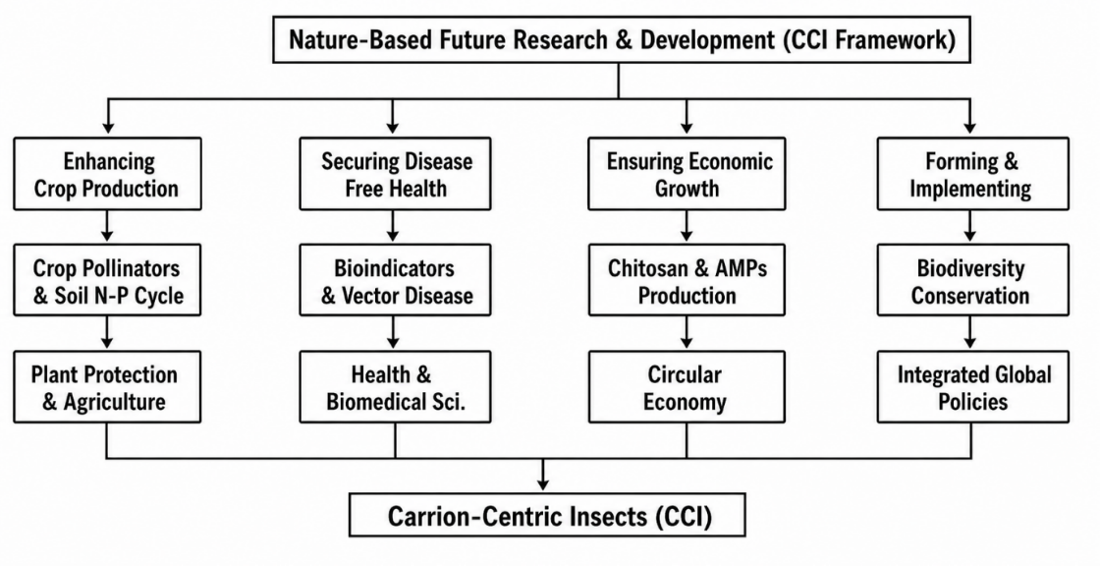
Carrion-centric insects function as vital components in maintaining agroecosystem stability and crop health. This review examines the multifaceted contributions of carrion-centric insects, specifically within the orders Diptera, Coleoptera, and Hymenoptera, as essential drivers of plant protection and soil ecosystem functionality. While these organisms accelerate the decomposition of dead organic mass and facilitate critical nutrient cycling pathways such as nitrogen mineralization and elemental translocation into the rhizosphere, current conservation and agricultural literature remains predominantly vertebrate-centric, leaving a significant gap in the understanding of invertebrate-led crop ecosystem services. This review bridges that gap by establishing an agroecosystem-centered framework that links carrion-centric insect activity directly to soil-rhizosphere health, crop pollination, and sustainable plant protection. The dual functional roles of these insects as non-bee crop pollinators and drivers of specialized soil microbiomes that stimulate systemic acquired resistance against phytopathogens are critically evaluated. Furthermore, the industrial biomanufacturing of insect-derived biopolymers, particularly chitosan and its derivatives, offers a nature-based platform for eco-friendly pest management, seed coatings, and controlled-release biopesticides, replacing traditional synthetic inputs within circular agricultural economies. To ensure biosecure field integration, these agro-ecological services are reconciled with pathogen vector risks through structured spatial management and a One Health biosecurity framework. Aligning insect-centric agroecosystem management with international environmental mandates, such as the Kunming-Montreal Global Biodiversity Framework and UN Sustainable Development Goal 15, is essential for building resilient agricultural landscapes. Ultimately, incorporating carrion-centric insects into modern plant protection strategies provides an indispensable foundation for sustainable crop health, biological pest suppression, and long-term agroecological resilience.
References
Abbas, M. S. T., Saleh, M. M. E., & Akil, A. M. (2001). Laboratory and field evaluation of the pathogenicity of entomopathogenic nematodes to the red palm weevil, Rhynchophorus ferrugineus (Oliv.) (Col.: Curculionidae). Anzeiger Für Schädlingskunde, 74(6), 167–168. https://doi.org/10.1046/j.1439-0280.2001.d01-1.x
Abdel Rahman, R. M., Ghaffar, H. A., Alkhuriji, A. F., Khalil, M. I., Amaly, N., El-Kott, A. F., & Sultan, A. S. (2020). Dipteran carboxymethyl chitosan as an inexhaustible derivative with a potential antiproliferative activity in hepatocellular carcinoma cells. Evidence-Based Complementary and Alternative Medicine, 2020(1). https://doi.org/10.1155/2020/4396305
Abenaim, L., & Conti, B. (2023). Chitosan as a control tool for insect pest management: A review. Insects, 14(12), 949. https://doi.org/10.3390/insects14120949
Ahmad, A., Broce, A., & Zurek, L. (2006). Evaluation of significance of bacteria in larval development of Cochliomyia macellaria (Diptera: Calliphoridae). Journal of Medical Entomology, 43(6), 1129–1133. https://doi.org/10.1093/jmedent/43.6.1129
Aluja, M., & Mangan, R. L. (2008). Fruit fly (Diptera: Tephritidae) host status determination: critical conceptual, methodological, and regulatory considerations. Annual Review of Entomology, 53(1), 473–502. https://doi.org/10.1146/annurev.ento.53.103106.093350
Anderson, D., Sedgley, M., Short, J., & Allwood, A. (1982). Insect pollination of mango in Northern Australia. Australian Journal of Agricultural Research, 33(3), 541–548. https://doi.org/10.1071/AR9820541
Anderson, G. S. (2019). Factors that influence insect succession on carrion. In Forensic Entomology (pp. 103–139). CRC Press, Taylor & Francis.
Antoniazzi, R., García‐Franco, J., Janda, M., Leponce, M., & Dáttilo, W. (2020). Diurnal foraging ant–tree co‐occurrence networks are similar between canopy and understorey in a Neotropical rain forest. Biotropica, 52(4), 717–729. https://doi.org/10.1111/btp.12773
Ascrizzi, R., Flamini, G., Bedini, S., Tani, C., Giannotti, P., Lombardi, T., Conti, B., & Fraternale, D. (2021). Ferulago campestris essential oil as active ingredient in chitosan seed-coating: Chemical analyses, allelopathic effects, and protective activity against the common bean pest Acanthoscelides obtectus. Agronomy, 11(8), 1578. https://doi.org/10.3390/agronomy11081578
Aubrecht, G., Huber, W., & Weissenhofer, A. (2013). Coincidence or benefit? the use of Marasmius (horse-hair fungus) filaments in bird nests. Avian Biology Research, 6(1), 26–30. https://doi.org/10.3184/175815512X13531739538638
Banziger, H. (1996). Pollination of a flowering oddity: Rhizanthes zippelii (Blume) Spach (Rafflesiaceae) (pp. 113–142). Natural History Bulletin of the Siam Society.
Barton, P. S., Cunningham, S. A., Lindenmayer, D. B., & Manning, A. D. (2013). The role of carrion in maintaining biodiversity and ecological processes in terrestrial ecosystems. Oecologia, 171(4), 761–772. https://doi.org/10.1007/s00442-012-2460-3
Barton, P. S., McIntyre, S., Evans, M. J., Bump, J. K., Cunningham, S. A., & Manning, A. D. (2016). Substantial long‐term effects of carcass addition on soil and plants in a grassy eucalypt woodland. Ecosphere, 7(10). https://doi.org/10.1002/ecs2.1537
Baz, A., Cifrian, B., Martín-Vega, D., & Baena, M. (2010). Phytophagous insects captured in carrion-baited traps in central Spain. Bulletin of Insectology, 63(1), 21–30.
Beaman, R. S., Decker, P. J., & Beaman, J. H. (1988). Pollination of Rafflesia (Rafflesiaceae). American Journal of Botany, 75(8), 1148–1162. https://doi.org/10.1002/j.1537-2197.1988.tb08828.x
Benbow, M. E., Barton, P. S., Ulyshen, M. D., Beasley, J. C., DeVault, T. L., Strickland, M. S., Tomberlin, J. K., Jordan, H. R., & Pechal, J. L. (2019). Necrobiome framework for bridging decomposition ecology of autotrophically and heterotrophically derived organic matter. Ecological Monographs, 89(1). https://doi.org/10.1002/ecm.1331
Bocock, K. L. (1963). Soil organisms. In J. Doeksen & J. van der Drif (Eds.), The digestion and assimilation of food by Glomeris (pp. 85–91). North-Holland Publishing Company.
Bolopo, D., Canestrari, D., Marcos, J. M., & Baglione, V. (2015). Nest sanitation in cooperatively breeding carrion crows. The Auk, 132(3), 604–612. https://doi.org/10.1642/AUK-14-233.1
Boumba, V. A., Economou, V., Kourkoumelis, N., Gousia, P., Papadopoulou, C., & Vougiouklakis, T. (2012). Microbial ethanol production: experimental study and multivariate evaluation. Forensic Science International, 215(1–3), 189–198. https://doi.org/10.1016/j.forsciint.2011.03.003
Bump, J. K., Peterson, R. O., & Vucetich, J. A. (2009). Wolves modulate soil nutrient heterogeneity and foliar nitrogen by configuring the distribution of ungulate carcasses. Ecology, 90(11), 3159–3167. https://doi.org/10.1890/09-0292.1
Carter, D. O., Yellowlees, D., & Tibbett, M. (2006). Cadaver decomposition in terrestrial ecosystems. Naturwissenschaften, 94(1), 12–24. https://doi.org/10.1007/s00114-006-0159-1
Cazemier, A. E., Hackstein, J. H. P., Camp, H. J. M. O. den, Rosenberg, J., & Drift, C. van der. (1997). Bacteria in the intestinal tract of different species of arthropods. Microbial Ecology, 33(3), 189–197. https://doi.org/10.1007/s002489900021
Coe, J., & Curran, W. (1980). Definition and time of death. In W. Curran, A. McGarry, & C. Petty (Eds.), Modern Legal Psychiatry and Forensic Science (pp. 141–169). F A Davis Co.
Cortés-Avizanda, A., Selva, N., Carrete, M., & Donázar, J. A. (2009). Effects of carrion resources on herbivore spatial distribution are mediated by facultative scavengers. Basic and Applied Ecology, 10(3), 265–272. https://doi.org/10.1016/j.baae.2008.03.009
Cragg, J. B. (1955). The natural history of sheep blowflies in Britain. Annals of Applied Biology, 42(1), 197–207. https://doi.org/10.1111/j.1744-7348.1955.tb02426.x
Czerwiński, Z., Jakubczyk, H., & Pętal, J. (1971). Influence of ant hills on the meadow soils. Pedobiologia, 11(1), 277–285. https://doi.org/10.1016/S0031-4056(23)00472-9
Dag, A., & Gazit, S. (2000). Mango pollinators in Israel. Journal of Applied Horticulture, 02(01), 39–43. https://doi.org/10.37855/jah.2000.v02i01.12
de Fátima Silva, M., Maciel, V. B. V., Noletto, A. P. R., Venturini, A. C., de Carvalho, R. A., & Yoshida, C. M. P. (2022). Chitosan active coating on paperboard surface forming an anti‐insect grain‐based food packaging. Packaging Technology and Science, 35(4), 361–372. https://doi.org/10.1002/pts.2634
DeAngelis, D. L., Mulholland, P. J., Palumbo, A. V., Steinman, A. D., Huston, M. A., & Elwood, J. W. (1989). Nutrient dynamics and food-web stability. Annual Review of Ecology and Systematics, 20(1), 71–95. https://doi.org/10.1146/annurev.es.20.110189.000443
Dejean, A., Compin, A., Delabie, J. H. C., Azémar, F., Corbara, B., & Leponce, M. (2019). Biotic and abiotic determinants of the formation of ant mosaics in primary Neotropical rainforests. Ecological Entomology, 44(4), 560–570. https://doi.org/10.1111/een.12735
Dembilio, Ó., Llácer, E., Martínez de Altube, M. del M., & Jacas, J. A. (2010). Field efficacy of imidacloprid and Steinernema carpocapsae in a chitosan formulation against the red palm weevil Rhynchophorus ferrugineus (Coleoptera: Curculionidae) in Phoenix canariensis. Pest Management Science, 66(4), 365–370. https://doi.org/10.1002/ps.1882
Dossey, A. T. (2010). Insects and their chemical weaponry: New potential for drug discovery. Natural Product Reports, 27(12), 1737. https://doi.org/10.1039/c005319h
El Hadrami, A., Adam, L. R., El Hadrami, I., & Daayf, F. (2010). Chitosan in plant protection. Marine Drugs, 8(4), 968–987. https://doi.org/10.3390/md8040968
Eubanks, M. D., Lin, C., & Tarone, A. M. (2019). The role of ants in vertebrate carrion decomposition. Food Webs, 18, e00109. https://doi.org/10.1016/j.fooweb.2018.e00109
Evans, L. J., Goodwin, M. R., & Howlett, B. G. (2011). The role of insect pollinators in avocado (Persea americana) pollination in New Zealand and Australia. Proceedings VII World Avocado Congress, 280–286.
Farina, P., Ascrizzi, R., Bedini, S., Castagna, A., Flamini, G., Macaluso, M., Mannucci, A., Pieracci, Y., Ranieri, A., Sciampagna, M. C., Venturi, F., & Conti, B. (2022). Chitosan and essential oils combined for beef meat protection against the oviposition of Calliphora vomitoria, water loss, lipid peroxidation, and colour changes. Foods, 11(24), 3994. https://doi.org/10.3390/foods11243994
Fedorka, K. M., Zuk, M., & Mousseau, T. A. (2004). Immune suppression and the cost of reproduction in the ground cricket, Allonemobius socius. Evolution, 58(11), 2478–2485. https://doi.org/10.1111/j.0014-3820.2004.tb00877.x
Fierer, N., Strickland, M. S., Liptzin, D., Bradford, M. A., & Cleveland, C. C. (2009). Global patterns in belowground communities. Ecology Letters, 12(11), 1238–1249. https://doi.org/10.1111/j.1461-0248.2009.01360.x
Fittkau, E. J., & Klinge, H. (1973). On biomass and trophic structure of the central Amazonian rain forest ecosystem. Biotropica, 5(1), 2. https://doi.org/10.2307/2989676
Fuglei, E., Øritsland, N. A., & Prestrud, P. (2003). Local variation in arctic fox abundance on Svalbard, Norway. Polar Biology, 26(2), 93–98. https://doi.org/10.1007/s00300-002-0458-8
García‐López de Hierro, L., Moleón, M., & Ryan, P. G. (2013). Is carrying feathers a sexually selected trait in house sparrows? Ethology, 119(3), 199–211. https://doi.org/10.1111/eth.12053
Gil-Delgado, J. A., Mira, Ó., Viñals, A., Gómez, J., Banyuls, N., & Vives-Ferrándiz, C. (2010). Diet of the garden dormouse (Eliomys quercinus Linnaeus 1766) in orange groves: Seasonal variation and use of available resources. Mamm, 74(2), 147–151. https://doi.org/10.1515/mamm.2010.027
Gómez-Márquez, J. (2023). A new definition and three categories for classifying ecosystems. Academia Biology, 1(1). https://doi.org/10.20935/AcadBiol6072
Haas, J., Lozano, E. R., Haida, K. S., Mazaro, S. M., de Souza Vismara, E., & Poppy, G. M. (2018). Getting ready for battle: Do cabbage seeds treated with jasmonic acid and chitosan affect chewing and sap‐feeding insects? Entomologia Experimentalis et Applicata, 166(5), 412–419. https://doi.org/10.1111/eea.12678
Hart, A. G., & Ratnieks, F. L. W. (2001). Task partitioning, division of labour and nest compartmentalisation collectively isolate hazardous waste in the leafcutting ant Atta cephalotes. Behavioral Ecology and Sociobiology, 49(5), 387–392. https://doi.org/10.1007/s002650000312
Harvell, C. D., Mitchell, C. E., Ward, J. R., Altizer, S., Dobson, A. P., Ostfeld, R. S., & Samuel, M. D. (2002). Climate warming and disease risks for terrestrial and marine biota. Science, 296(5576), 2158–2162. https://doi.org/10.1126/science.1063699
Hashimoto, Yoshiaki Morimoto, Y., Widodo, E. S., Mohamed, M., & Fellowes, J. R. (2010). Vertical habitat use and foraging activities of arboreal and ground ants (Hymenoptera: Formicidae) in a Bornean tropical rainforest. Sociobiology, 56(2), 435–448.
Hawlena, D., Strickland, M. S., Bradford, M. A., & Schmitz, O. J. (2012). Fear of predation slows plant-litter decomposition. Science, 336(6087), 1434–1438. https://doi.org/10.1126/science.1220097
Himler, A. G., Adachi-Hagimori, T., Bergen, J. E., Kozuch, A., Kelly, S. E., Tabashnik, B. E., Chiel, E., Duckworth, V. E., Dennehy, T. J., Zchori-Fein, E., & Hunter, M. S. (2011). Rapid spread of a bacterial symbiont in an invasive whitefly is driven by fitness benefits and female bias. Science, 332(6026), 254–256. https://doi.org/10.1126/science.1199410
Hoback, W. W., Bishop, A. A., Kroemer, J., Scalzitti, J., & Shaffer, J. J. (2004). Differences among antimicrobial properties of carrion beetle secretions reflect phylogeny and ecology. Journal of Chemical Ecology, 30(4), 719–729. https://doi.org/10.1023/B:JOEC.0000028427.53141.41
Hossain, F., Follett, P., Salmieri, S., Vu, K. D., Harich, M., & Lacroix, M. (2019). Synergistic effects of nanocomposite films containing essential oil nanoemulsions in combination with ionizing radiation for control of rice weevil Sitophilus oryzae in stored grains. Journal of Food Science, 84(6), 1439–1446. https://doi.org/10.1111/1750-3841.14603
Houston, D. C. (1985). Evolutionary ecology of Afrotropical and Neotropical vultures in forests. Ornithological Monographs, 36, 856–864. https://doi.org/10.2307/40168321
Houston, D. C. (1988). Competition for food between neotropical vultures in forest. Ibis, 130(3), 402–417. https://doi.org/10.1111/j.1474-919X.1988.tb08815.x
Howlett, B. G. (2012). Hybrid carrot seed crop pollination by the fly Calliphora vicina (Diptera: Calliphoridae). Journal of Applied Entomology, 136(6), 421–430. https://doi.org/10.1111/j.1439-0418.2011.01665.x
Howlett, B., Read, S., Cutting, B., Pattemore, D., Cross, S., & Goodwin, M. (2017). Optimising pollination of macadamia and avocado in Australia.
Joseph, S. M., Krishnamoorthy, S., Paranthaman, R., Moses, J. A., & Anandharamakrishnan, C. (2021). A review on source-specific chemistry, functionality, and applications of chitin and chitosan. Carbohydrate Polymer Technologies and Applications, 2, 100036. https://doi.org/10.1016/j.carpta.2021.100036
Karban, R., & English-Loeb, G. (1997). Tachinid parasitoids affect host plant choice by caterpillars to increase caterpillar survival. Ecology, 78(2), 603. https://doi.org/10.2307/2266033
Kaya, M., Akyuz, B., Bulut, E., Sargin, I., Eroglu, F., & Tan, G. (2016). Chitosan nanofiber production from Drosophila by electrospinning. International Journal of Biological Macromolecules, 92, 49–55. https://doi.org/10.1016/j.ijbiomac.2016.07.021
Kolpin, D. W., Furlong, E. T., Meyer, M. T., Thurman, E. M., Zaugg, S. D., Barber, L. B., & Buxton, H. T. (2002). Pharmaceuticals, hormones, and other organic wastewater contaminants in U.S. streams, 1999−2000: a national reconnaissance. Environmental Science & Technology, 36(6), 1202–1211. https://doi.org/10.1021/es011055j
Lam, K., Tsang, M., Labrie, A., Gries, R., & Gries, G. (2010). Semiochemical-mediated oviposition avoidance by female house flies, Musca domestica, on animal feces colonized with harmful fungi. Journal of Chemical Ecology, 36(2), 141–147. https://doi.org/10.1007/s10886-010-9741-2
Li, Y., Luo, S., & Zhang, D. (2014). Fly pollination and duodichogamy in Bridelia stipularis and Cleistanthus sumatranus (Phyllanthaceae). Plant Species Biology, 29(3). https://doi.org/10.1111/1442-1984.12035
Li, Y., Qin, Y., Liu, S., Xing, R., Yu, H., Li, K., & Li, P. (2016). Preparation, characterization, and insecticidal activity of avermectin-grafted-carboxymethyl chitosan. BioMed Research International, 2016, 1–8. https://doi.org/10.1155/2016/9805675
Libersat, F., Delago, A., & Gal, R. (2009). Manipulation of host behavior by parasitic insects and insect parasites. Annual Review of Entomology, 54(1), 189–207. https://doi.org/10.1146/annurev.ento.54.110807.090556
Liibert, L., Treu, A., & Meier, P. (2011). A two-step wood protection process using alternative wood protection agents in combination with an oil treatment. Environmental Science, Materials Science, Engineering.
Limon, T., Birke, A., Monribot‐Villanueva, J. L., Guerrero‐Analco, J. A., Altúzar‐Molina, A., Carrión, G., Goycoolea, F. M., Moerschbacher, B. M., & Aluja, M. (2021). Chitosan coatings reduce fruit fly (Anastrepha obliqua) infestation and development of the fungus Colletotrichum gloeosporioides in Manila mangoes. Journal of the Science of Food and Agriculture, 101(7), 2756–2766. https://doi.org/10.1002/jsfa.10903
Linder, J. E., Owers, K. A., & Promislow, D. E. L. (2008). The effects of temperature on host–pathogen interactions in D. melanogaster: Who benefits? Journal of Insect Physiology, 54(1), 297–308. https://doi.org/10.1016/j.jinsphys.2007.10.001
Llácer, E., Martínez de Altube, M. M., & Jacas, J. A. (2009). Evaluation of the efficacy of Steinernema carpocapsae in a chitosan formulation against the red palm weevil, Rhynchophorus ferrugineus, in Phoenix canariensis. BioControl, 54(4), 559–565. https://doi.org/10.1007/s10526-008-9208-3
Lockaby, B. G., & Adams, J. C. (1985). Pedoturbation of a forest soil by fire ants. Soil Science Society of America Journal, 49(1), 220–223. https://doi.org/10.2136/sssaj1985.03615995004900010044x
Macdonald, B. C. T., Farrell, M., Tuomi, S., Barton, P. S., Cunningham, S. A., & Manning, A. D. (2014). Carrion decomposition causes large and lasting effects on soil amino acid and peptide flux. Soil Biology and Biochemistry, 69, 132–140. https://doi.org/10.1016/j.soilbio.2013.10.042
Markandya, A., Taylor, T., Longo, A., Murty, M. N., Murty, S., & Dhavala, K. (2008). Counting the cost of vulture decline-An appraisal of the human health and other benefits of vultures in India. Ecological Economics, 67(2), 194–204. https://doi.org/10.1016/j.ecolecon.2008.04.020
Martinez, J.-J. I. (2015). Monopolization of resources by ground-nesting ants foraging on trees in Mediterranean forests. Acta Oecologica, 65–66, 11–16. https://doi.org/10.1016/j.actao.2015.03.002
Merritt, R. W., & De Jong, G. D. (2015). Arthropod communities in terrestrial environments. In M. E. Benbow, J. K. Tomberlin, & A. M. Tarone (Eds.), Carrion ecology, evolution, and their applications (pp. 65–91). CRC Press.
Moophayak, K., Taeprayoon, P., Pichtel, J., Premmanee, S., Phooseekaew, C., Thinnok, C., Avakul, P., & Meeinkuirt, W. (2024). Necrophagous flies as bioindicators in Cd and Zn co-contaminated areas of Tak Province, Thailand. Ecotoxicology and Environmental Safety, 269, 115800. https://doi.org/10.1016/j.ecoenv.2023.115800
Muryeti, M., Eka Pratiwi, F., Tri Yuniastuti, R., & Budi Mulyani, E. (2020). Termiticidal activity of chitosan on paper. Progress on Chemistry and Application of Chitin and Its Derivatives, XXV, 164–173. https://doi.org/10.15259/PCACD.25.013
Negri, A., Pezzali, G., Pitton, S., Piazzoni, M., Gabrieli, P., Lazzaro, F., Mastrantonio, V., Porretta, D., Lenardi, C., Caccia, S., Bandi, C., & Epis, S. (2023). MosChito rafts as a promising biocontrol tool against larvae of the common house mosquito, Culex pipiens. PLOS ONE, 18(12), e0295665. https://doi.org/10.1371/journal.pone.0295665
Nelson, L. A., Dowton, M., & Wallman, J. F. (2009). Thermal attributes of Chrysomya species. Entomologia Experimentalis et Applicata, 133(3), 260–275. https://doi.org/10.1111/j.1570-7458.2009.00932.x
Newsome, T. M., Barton, B., Buck, J. C., DeBruyn, J., Spencer, E., Ripple, W. J., & Barton, P. S. (2021). Monitoring the dead as an ecosystem indicator. Ecology and Evolution, 11(11), 5844–5856. https://doi.org/10.1002/ece3.7542
Nigam, Y., Bexfield, A., Thomas, S., & Ratcliffe, N. A. (2006). Maggot therapy: The science and implication for CAM part II—maggots combat infection. Evidence-Based Complementary and Alternative Medicine, 3(3), 303–308. https://doi.org/10.1093/ecam/nel022
Odum, H. T. (1970). Summary: An emerging view of the ecological system at El Verde. In H. T. Odum & R. F. Pigeon (Eds.), A tropical rain forest: A study of irradiation and ecology at El Verde, Puerto Rico (pp. I191–I289). U.S. Atomic Energy Commission.
Oliveira-Santos, L. G. R., Antoniazzi, R., Loyola, R., & Vargas, A. B. (2022). Tree density and forest stratification shape ant assemblages in Brazilian Pantanal forest patches. International Journal of Tropical Insect Science, 42(3), 2351–2363. https://doi.org/10.1007/s42690-022-00757-y
Ondrušová, K., & Adamík, P. (2013). Characterizing the mammalian hair present in great tit Parus major) nests. Bird Study, 60(3), 428–431. https://doi.org/10.1080/00063657.2013.818935
Ostfeld, R. S., & Keesing, F. (2000). Pulsed resources and community dynamics of consumers in terrestrial ecosystems. Trends in Ecology & Evolution, 15(6), 232–237. https://doi.org/10.1016/S0169-5347(00)01862-0
Padamini, R., Bhumita, P., Hazarika, S., NM, R., Gowda, G. R. V., Chaturvedi, K., Panigrahi, C. K., & Karanwal, R. (2024). Exploring the role of chitosan: A natural solution for plant disease and insect management. Archives of Current Research International, 24(6), 102–116. https://doi.org/10.9734/acri/2024/v24i6769
Pain, D. J., Cunningham, A. A., Donald, P. F., Duckworth, J. W., Houston, D. C., Katzner, T., Parry‐Jones, J., Poole, C., Prakash, V., Round, P., & Timmins, R. (2003). Causes and effects of temporospatial declines of Gyps vultures in Asia. Conservation Biology, 17(3), 661–671. https://doi.org/10.1046/j.1523-1739.2003.01740.x
Parmenter, R. R., & MacMahon, J. A. (2009). Carrion decomposition and nutrient cycling in a semiarid shrub–steppe ecosystem. Ecological Monographs, 79(4), 637–661. https://doi.org/10.1890/08-0972.1
Pechal, J. L., Crippen, T. L., Tarone, A. M., Lewis, A. J., Tomberlin, J. K., & Benbow, M. E. (2013). Microbial community functional change during vertebrate carrion decomposition. PLoS ONE, 8(11), e79035. https://doi.org/10.1371/journal.pone.0079035
Perez-Balam, J., Quezada-Euan, J. J., Alfaro-Bates, R., Medina, S., McKendrick, L., Soro, A., & Paxton, R. J. (2012). The contribution of honey bees, flies and wasps to avocado (Persea americana) pollination in southern Mexico. Journal of Pollination Ecology, 8, 42–47. https://doi.org/10.26786/1920-7603(2012)6
Pérez-Bañón, C., Juan, A., Petanidou, T., Marcos-García, M. A., & Crespo, M. B. (2003). The reproductive ecology of Medicago citrina (Font Quer) Greuter (Leguminosae): A bee-pollinated plant in Mediterranean islands where bees are absent. Plant Systematics and Evolution, 241(1–2), 29–46. https://doi.org/10.1007/s00606-003-0004-3
Perez, D. M., Gardner, J. L., & Medina, I. (2020). Climate as an evolutionary driver of nest morphology in birds: A review. Frontiers in Ecology and Evolution, 8. https://doi.org/10.3389/fevo.2020.566018
Perwita, M. G. C. S., Wahyuningsih, T. D., Astuti, E., & Pranowo, D. (2020). Synthesis edible film chitosan/polyethylene glycol/ carboxymethylcellulose with lemongrass oils as insect ovipositing repellent. Key Engineering Materials, 840, 142–148. https://doi.org/10.4028/www.scientific.net/KEM.840.142
Philibert, T., Lee, B. H., & Fabien, N. (2017). Current status and new perspectives on chitin and chitosan as functional biopolymers. Applied Biochemistry and Biotechnology, 181(4), 1314–1337. https://doi.org/10.1007/s12010-016-2286-2
Pollock, H. S., MacDonald, S. E., Vizentin‐Bugoni, J., Brawn, J. D., Sutton, Z. S., & Hauber, M. E. (2021). What the pluck? The theft of mammal hair by birds is an overlooked but common behavior with fitness implications. Ecology, 102(12). https://doi.org/10.1002/ecy.3501
Poole, T., & Crippen, T. (2009). Conjugative plasmid transfer between Salmonella enterica Newport and Escherichia coli within the gastrointestinal tract of the lesser mealworm beetle, Alphitobius diaperinus (Coleoptera: Tenebrionidae). Poultry Science, 88(8), 1553–1558. https://doi.org/10.3382/ps.2008-00553
Primack, R. B. (1978). Variability in New Zealand montane and alpine pollinator assemblages. New Zealand Journal of Ecology, 1, 66–73.
Rabea, E. I., Badawy, M. E., Rogge, T. M., Stevens, C. V, Höfte, M., Steurbaut, W., & Smagghe, G. (2005). Insecticidal and fungicidal activity of new synthesized chitosan derivatives. Pest Management Science, 61(10), 951–960. https://doi.org/10.1002/ps.1085
Rader, R., Cunningham, S. A., Howlett, B. G., & Inouye, D. W. (2020). Non-bee insects as visitors and pollinators of crops: Biology, ecology, and management. Annual Review of Entomology, 65(1), 391–407. https://doi.org/10.1146/annurev-ento-011019-025055
Raji, O., Tang, J. D., Telmadarrehei, T., & Jeremic, D. (2018). Termiticidal activity of chitosan against the subterranean termites Reticulitermes flavipes and Reticulitermes virginicus. Pest Management Science, 74(7), 1704–1710. https://doi.org/10.1002/ps.4864
Rajkumar, V., Gunasekaran, C., Paul, C. A., & Dharmaraj, J. (2020). Development of encapsulated peppermint essential oil in chitosan nanoparticles: characterization and biological efficacy against stored-grain pest control. Pesticide Biochemistry and Physiology, 170, 104679. https://doi.org/10.1016/j.pestbp.2020.104679
Raw, F. (1967). Arthropoda (except Acari and Collembola). In N. Burges & F. Raw (Eds.), Soil biology (pp. 323–362). Academic Press.
Richardson, M. L., Reagel, P. F., Mitchell, R. F., & Whitman, D. W. (2012). Opportunistic carnivory by Romalea microptera (Orthoptera: Acrididae). Annals of the Entomological Society of America, 105(1), 28–35. https://doi.org/10.1603/AN11057
Rivers, D. B., & Dahlem, G. A. (2014). The science of forensic entomology. Wiley-Blackwell.
Rolff, J., & Siva-Jothy, M. T. (2002). Copulation corrupts immunity: A mechanism for a cost of mating in insects. Proceedings of the National Academy of Sciences, 99(15), 9916–9918. https://doi.org/10.1073/pnas.152271999
Romero, A., Broce, A., & Zurek, L. (2006). Role of bacteria in the oviposition behaviour and larval development of stable flies. Medical and Veterinary Entomology, 20(1), 115–121. https://doi.org/10.1111/j.1365-2915.2006.00602.x
Roohigohar, S., Prentis, P. J., & Clarke, A. R. (2020). Effect of tomato fruit cultivar and ripening stage on Bactrocera tryoni (Froggatt) egg and larval survival. Journal of Applied Entomology, 144(9), 797–805. https://doi.org/10.1111/jen.12813
Rosengaus, R. B., Lefebvre, M. L., & Traniello, J. F. A. (2000). Inhibition of fungal spore germination by nasutitermes: Evidence for a possible antiseptic role of soldier defensive secretions. Journal of Chemical Ecology, 26(1), 21–39. https://doi.org/10.1023/A:1005481209579
Rozen, D. E., Engelmoer, D. J. P., & Smiseth, P. T. (2008). Antimicrobial strategies in burying beetles breeding on carrion. Proceedings of the National Academy of Sciences, 105(46), 17890–17895. https://doi.org/10.1073/pnas.0805403105
Ruiz-Suárez, N., Boada, L. D., Henríquez-Hernández, L. A., González-Moreo, F., Suárez-Pérez, A., Camacho, M., Zumbado, M., Almeida-González, M., del Mar Travieso-Aja, M., & Luzardo, O. P. (2015). Continued implication of the banned pesticides carbofuran and aldicarb in the poisoning of domestic and wild animals of the Canary Islands (Spain). Science of The Total Environment, 505, 1093–1099. https://doi.org/10.1016/j.scitotenv.2014.10.093
Ruxton, G. D., & Houston, D. C. (2004). Obligate vertebrate scavengers must be large soaring fliers. Journal of Theoretical Biology, 228(3), 431–436. https://doi.org/10.1016/j.jtbi.2004.02.005
Sahab, A., Waly, A., Sabbour, M., & Nawar, L. S. (2015). Synthesis, antifungal and insecticidal potential of chitosan (CS)-g-poly (acrylic acid) (PAA) nanoparticles against some seed borne fungi and insects of soybean. International Journal of ChemTech Research, 8(2), 589–598.
Salvador-Figueroa, M., Hernández-Ortiz, E., Ventura-González, C., Ovando-Medina, I., & Adriano-Anaya, L. (2013). Effect of chitosan coatings on the development of Anastrepha ludens (Loew) in mango fruits (Mangifera indica L.) cv. Ataulfo. Revista Iberoamericana de Tecnología Postcosecha, 14(1), 14–20.
Sharif, R., Mujtaba, M., Ur Rahman, M., Shalmani, A., Ahmad, H., Anwar, T., Tianchan, D., & Wang, X. (2018). The multifunctional role of chitosan in horticultural crops; A review. Molecules, 23(4), 872. https://doi.org/10.3390/molecules23040872
Shcherban, A. B. (2023). Chitosan and its derivatives as promising plant protection tools. Vavilov Journal of Genetics and Breeding, 27(8), 1010–1021. https://doi.org/10.18699/VJGB-23-116
Shirasu-Hiza, M. M., & Schneider, D. S. (2007). Confronting physiology: How do infected flies die? Cellular Microbiology, 9(12), 2775–2783. https://doi.org/10.1111/j.1462-5822.2007.01042.x
Shrivastava, S. K., Allotey, J., Prakash, A., Rao, J., & Suresh Chandra, D. (2017). Entomotherapy: Medicinal insects. AZRA.
Shrivastava, S. K., Prakash, A., & Rao, J. (2023). Dipteran necrophagous insects the efficient pollinators -a review. Journal of Applied Zoological Researches, 34(1), 23–31.
Shrivastava, S. K., Prakash, A., Rao, J., & Bharatha Laxmi, B Prakash, J. (2022). Entomoscavengy: Carrion feeding insects. Applied Zoologists Research Association.
Southwood, T. R. E. (1973). An evolutionary perspective. In H. F. Van Emden (Ed.), Insect/plant relationships (pp. 3–30). Blackwell Scientific Publications.
Stackelberg, P. E., Furlong, E. T., Meyer, M. T., Zaugg, S. D., Henderson, A. K., & Reissman, D. B. (2004). Persistence of pharmaceutical compounds and other organic wastewater contaminants in a conventional drinking-water-treatment plant. Science of The Total Environment, 329(1–3), 99–113. https://doi.org/10.1016/j.scitotenv.2004.03.015
Steglińska, A., Nowak, A., Janas, R., Grzesik, M., Śmigielski, K., Kręgiel, D., & Gutarowska, B. (2024). Chitosan as an antimicrobial, anti-insect, and growth-promoting agent for potato (Solanum tuberosum L.) Plants. Molecules, 29(14), 3313. https://doi.org/10.3390/molecules29143313
Stoffolano, J., Wong, R., Lo, T., Ford, B., & Geden, C. J. (2020). Effect of chitosan on adult longevity when fed, in no‐choice experiments, to Musca domestica L., Tabanus nigrovittatus Macquart, and Phormia regina (Meigen) adults and its consumption in adult Musca domestica L. Pest Management Science, 76(12), 4293–4300. https://doi.org/10.1002/ps.5996
Suzuki, S. (2001). Suppression of fungal development on carcasses by the burying beetle Nicrophorus quadripunctatus (Coleoptera: Silphidae). Entomological Science, 4(4), 403–406.
Swift, M. J., Heal, O. W., & Anderson, J. M. (1979). Decomposition in terrestrial ecosystems.
Telmadarrehei, T., Raji, O., Rezazadeh, A., Jeremic-Nikolic, D., & Tang, J. D. (2018). Effect of chitosan on diversity and number of protists in subterranean termites. Proceedings of the American Wood Protection Association.
Uddin, M. E., Nihad, S. A. I., & Mamun, M. A. Al. (2021). Insecticidal and growth inhibitory potentiality of chitosan, a chitin-derived biopesticide against Spodoptera litura (Fabricius). International Journal of ChemTech Research, 14(1), 177–185.
Vass, A., Bass, W., Wolt, J., Foss, J., & Ammons, J. (1992). Time since death determinations of human cadavers using soil solution. Journal of Forensic Sciences, 37(5), 1236–1253. https://doi.org/10.1520/JFS13311J
Vithanage, H. I. M. V. (1986). Insect pollination of avocado and macadamia. Acta Horticulturae, 175, 97–102. https://doi.org/10.17660/ActaHortic.1986.175.14
Wallman, J. F., Leys, R., & Hogendoorn, K. (2005). Molecular systematics of Australian carrion-breeding blowflies (Diptera : Calliphoridae) based on mitochondrial DNA. Invertebrate Systematics, 19(1), 1–15. https://doi.org/10.1071/IS04023
Wang, G., Li, X., & Wang, Z. (2016). APD3: the antimicrobial peptide database as a tool for research and education. Nucleic Acids Research, 44(D1), D1087–D1093. https://doi.org/10.1093/nar/gkv1278
Wang, J., Wang, M., Li, G.-B., Zhang, B.-H., Lü, H., Luo, L., & Kong, X.-P. (2021). Evaluation of a spinosad controlled-release formulation based on chitosan carrier: Insecticidal activity against Plutella xylostella (L.) larvae and dissipation. ACS Omega, 6(45), 30762–30768. https://doi.org/10.1021/acsomega.1c04853
Wardle, D. A., Bardgett, R. D., Klironomos, J. N., Setälä, H., van der Putten, W. H., & Wall, D. H. (2004). Ecological linkages between aboveground and belowground biota. Science, 304(5677), 1629–1633. https://doi.org/10.1126/science.1094875
Wilson-Rich, N., Spivak, M., Fefferman, N. H., & Starks, P. T. (2009). Genetic, individual, and group facilitation of disease resistance in insect societies. Annual Review of Entomology, 54(1), 405–423. https://doi.org/10.1146/annurev.ento.53.103106.093301
Wilson, E. E., & Wolkovich, E. M. (2011). Scavenging: How carnivores and carrion structure communities. Trends in Ecology & Evolution, 26(3), 129–135. https://doi.org/10.1016/j.tree.2010.12.011
Woelber-Kastner, B. K., Frey, S. D., Howard, D. R., & Hall, C. L. (2021). Insect reproductive behaviors are important mediators of carrion nutrient release into soil. Scientific Reports, 11(1), 3616. https://doi.org/10.1038/s41598-021-82988-6
Ye, Y. H., Chenoweth, S. F., & McGraw, E. A. (2009). Effective but costly, evolved mechanisms of defense against a virulent opportunistic pathogen in Drosophila melanogaster. PLoS Pathogens, 5(4), e1000385. https://doi.org/10.1371/journal.ppat.1000385
Zeng, D., Luo, X., & Tu, R. (2012). Application of bioactive coatings based on chitosan for soybean seed protection. International Journal of Carbohydrate Chemistry, 2012, 1–5. https://doi.org/10.1155/2012/104565
Zhang, M., Tan, T., Yuan, H., & Rui, C. (2003). Insecticidal and fungicidal activities of chitosan and oligo-chitosan. Journal of Bioactive and Compatible Polymers, 18(5), 391–400. https://doi.org/10.1177/0883911503039019
Downloads
Published
Issue
Section
License
Copyright (c) 2026 Surya Kant Shrivastava, Ravindra Chandra Joshi, Anand Prakash

This work is licensed under a Creative Commons Attribution 4.0 International License.