
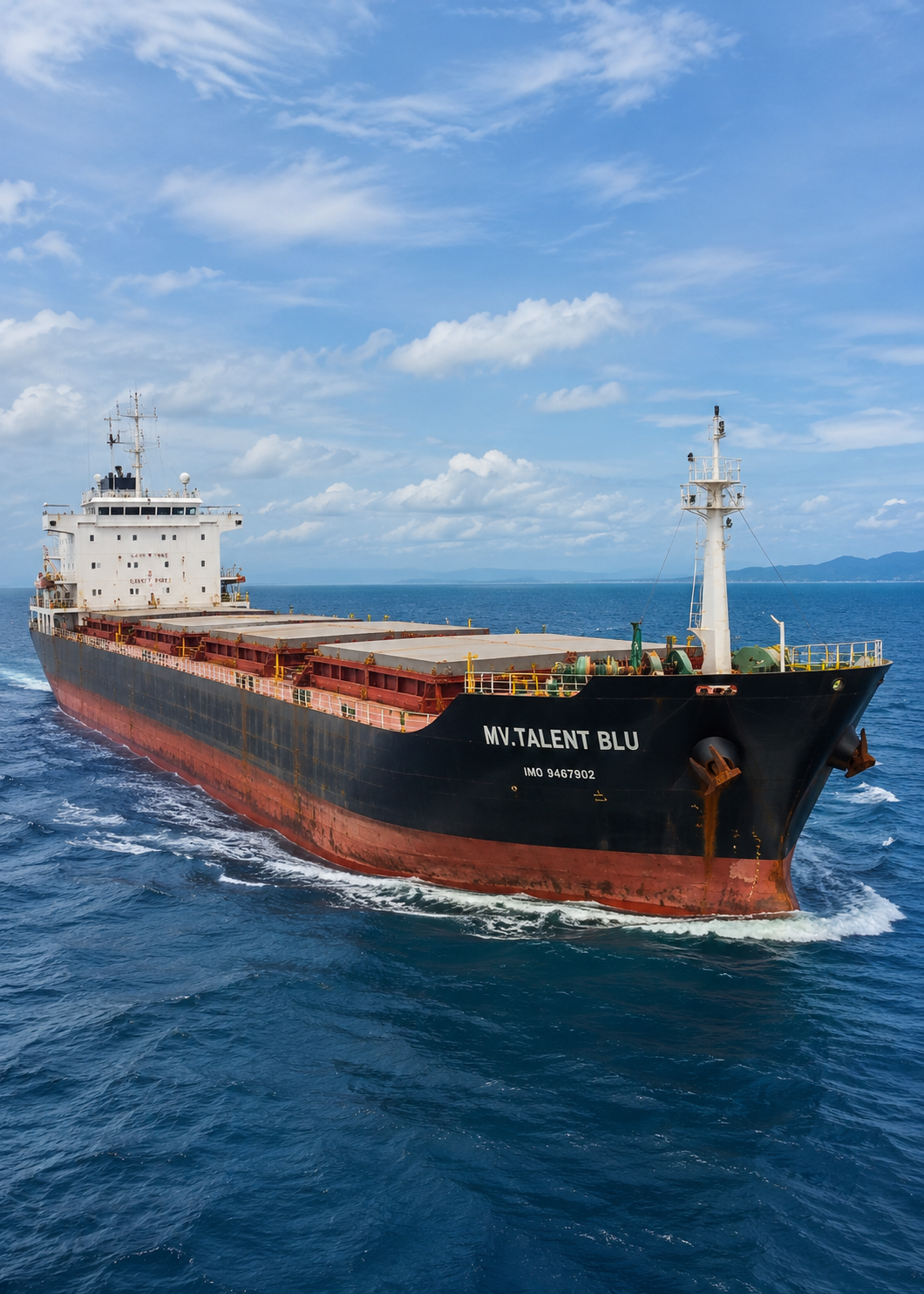
Analysis Of The Cause Of Pressure Drop In The Hydraulic Windlass Pump On MV.Talent Blu
Article Sidebar
Main Article Content
Abstract
The problem explored in this study is the decrease of the hydraulic pressure that occurred in the hydraulic windlass system, so that the operation of the anchor heave-up is not optimal. The windlass must have enough hydraulic pressure to properly hoist anchor chain and anchor. This study examined the reasons for the decrease in hydraulic windlass pump pressure and the corrective actions which were made by the crew to correct the issue. The approach taken in doing the research was descriptive qualitative. The author's sea-practice period was on board MV. Talent Blu was collected by direct observation, interviewing with one Chief Engineer (KKM), and Three Engineers/Masinists, and documentation. The results showed that both contamination and blockage of the hydraulic filter and leakage in the hydraulic hose pipe/piping system were to blame for the loss of hydraulic windlass pressure. The clogged filter reduced hydraulic oil flow and leakage in the oil led to oil loss and lowered hydraulic oil pressure and flow to the hydraulic motor. This caused the lifting speed to reduce and the windlass to give poor performance. The corrective actions were the following: stop operation, depressurize hydraulic system, inspect and clean/change filter, repair/replace leaky hose pipe/piping, check hydraulic oil level, add 25 liters of hydraulic oil, and run system test post repair. The results also provide guidance on enhancements to the Planned Maintenance System (PMS) namely regular checking on filter, hose pipes/piping, hydraulic pressure, hydraulic oil level and condition as well as availability of spare parts to speed up repair when failure occurs.
Article Details
Section

This work is licensed under a Creative Commons Attribution 4.0 International License.
Allow anyone to modify, improve, and make derivative works, even for commercial purposes, as long as they credit to you for the original work.
How to Cite
References
[1] A. Aldo and A. J. Susilo, “Stabilitas Dinding Penahan Tanah Dengan Ground Anchor Dan Metode Pelaksanaannya Pada Kondisi in-Situ Dan Jenuh,” JMTS J. Mitra Tek. Sipil, vol. 2, no. 4, p. 149, 2021, doi: 10.24912/jmts.v2i4.6178.
[2] F. T. Adi, Z. Hilmy, T. Susilo, and M. Shakri, “Penyebab Penurunan Tekanan Hydraulic Anchor Windlass pada Kapal MT Transko Taurus,” Bul. Poltanesa, vol. 23, no. 2, pp. 901–905, 2022, doi: 10.51967/tanesa.v23i2.1989.
[3] S. D. Prastyo, “Analisa Penyebab Turunnya Tekanan Hydraulic Pump Pada Mesin Jangkar Di MV.PERMATA,” 2021.
[4] S. Suyuti, Jamaluddin, Musriady, and Muh Jafar, “Maintenance Of Winchlass Hydraulic Oil Pump In Supporting Mooring Un Mooring In Kl Sultan Hasanuddin 02,” Zo. Laut J. Inov. Sains Dan Teknol. Kelaut., vol. 5, no. 3, pp. 332–337, 2024, doi: 10.62012/zl.v5i3.42258.
[5] R. R. F. Astri Kustina Dewi, Pramudyasari Nur Bintari, “Optimalisasi perawatan mesin jangkar berbasis praktik operasional untuk meningkatkan keandalan proses berlabuh pada Kapal MV. Trifosa,” J. Mar. Insid., vol. 6, no. 1, pp. 4–8, 2025.
[6] Y. Ezhov, I. Zub, N. Pizhurina, and V. Sidorenko, “Methods of studying the characteristics of hydraulic systems of loading machines on a laboratory hydraulic stand,” MATEC Web Conf., vol. 239, 2021, doi: 10.1051/matecconf/201823904006.
[7] M. B. Zaman, A. Santoso, and M. Fahadh, “Design Analysis of the Hydraulic System for Containerized Oil Boom,” Int. J. Mar. Eng. Innov. Res., vol. 5, no. 2, pp. 53–58, 2020, doi: 10.12962/j25481479.v5i2.5466.
[8] H. K. Dovan, “Analisis Kinerja Tekanan Hydraulic Mesin Windlass di MV. Andhika Kanishka,(Doctoral dissertation, POLITEKNIK ILMU PELAYARAN SEMARANG).,” 2023.
[9] M. R. Rifaldi et al., “R Ancang B Angun a Plikasi P Resensi,” vol. 29, no. 1, pp. 144–152, 2024.
[10] G. Rutkowski, “Analysis of Human Errors Related to Many Marine Accidents Occurring While Anchoring and Manoeuvring at an Anchorage,” Sci. J. Gdynia Marit. Univ., vol. 6988, no. 112, pp. 45–59, 2020, doi: 10.26408/112.04.
[11] International Organization for Standardization (ISO), ISO 4413:2010 Hydraulic Fluid Power—General Rules and Safety Requirements for Systems and Their Components, 2010.
[12] Parker Hannifin, The Handbook of Hydraulic Filtration, Hydraulic Filter Division Europe, publication FDHB289UK.
[13] M. Orosnjak, T. Pekovic, M. Jocanovic, et al., “Using Contamination Control in Condition Based Maintenance of a Hydraulic System,” Maintenance Forum, 2017.
[14] J. M. R. Gorle, V. M. Heiskanen, S. Nissi, and M. Majas, “Effect of Temperature, Flow Rate and Contamination on Hydraulic Filtration,” MM Science Journal, October 2018, doi: 10.17973/MMSJ.2018_10_201852.
[15] N. Novak, A. Trajkovski, M. Kalin, and F. Majdič, “Degradation of Hydraulic System due to Wear Particles or Medium Test Dust,” Applied Sciences, vol. 13, no. 13, 7777, 2023, doi: 10.3390/app13137777