Optimizing Nutrient Supply for Dwarf Elephant Grass in Shaded Pine Forest
DOI:
https://doi.org/10.20956/hajas.v8i1.45972Abstract
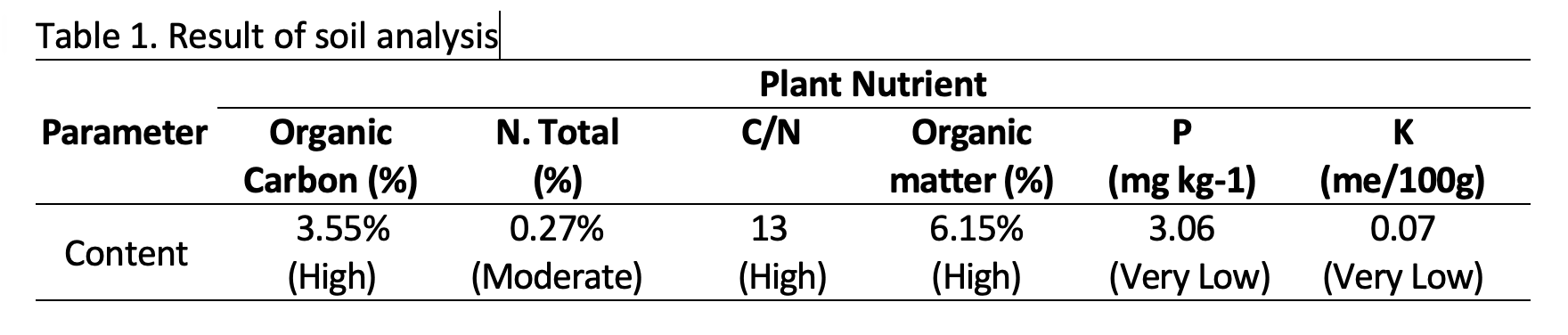
Pine forest undergrowth in tropical regions often remains underutilized despite its potential to alleviate forage deficits for ruminant livestock. This study explored whether moderate NPK fertilization could enhance the growth and quality of dwarf elephant grass (Pennisetum purpureum cv. Mott). A Completely Randomized Design was employed to test four fertilization levels (0 (T0), 3 g (T1), 6 g (T2), and 9 g (T3) of NPK per cutting) in a pine canopy environment, with each treatment replicated three times. Key data included the stem-to-leaf ratio, Neutral Detergent Fiber (NDF), and Acid Detergent Fiber (ADF). Soil nutrient status and microclimate (light intensity, temperature) were also monitored. Statistical analysis utilized ANOVA followed by multiple range tests. The results show that moderate fertilization rates (3 g and 6 g) increased leaf growth, yielding significantly lower stem-to-leaf ratios than the control and the highest fertilizer treatment (9 g). Moreover, NDF and ADF values rose with escalating fertilizer rates; at 9 g, fiber content was notably elevated, suggesting a decline in forage digestibility. Moderate NPK fertilization effectively leverages pine forest undergrowth to produce high-quality forage by enhancing leaf growth without excessively increasing fiber content.
Keywords: dwarf elephant grass, fertilizer, forage quality, pine forest
Downloads
Published
Issue
Section
License
Copyright (c) 2026 A. Irsyammawati, I. Subagiyo, V. Afrilia

This work is licensed under a Creative Commons Attribution-NonCommercial 4.0 International License.