

Current Issue
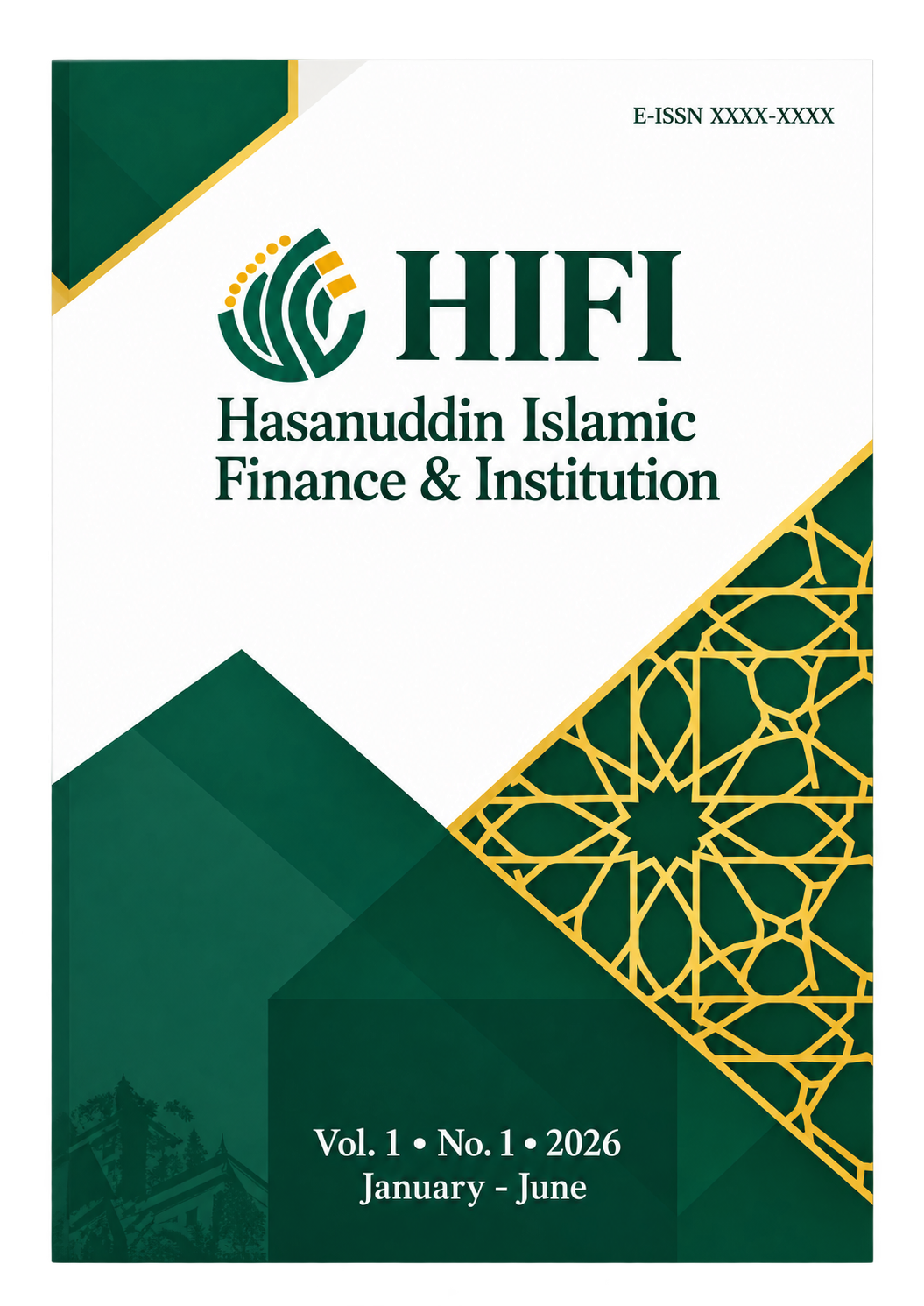
Hasanuddin Islamic Finance and Institutions (HIFI) is an international, double-blind peer-reviewed, open-access journal published by the Faculty of Economics and Business, Hasanuddin University, Indonesia. The journal publishes original, rigorous, and policy-relevant research in Islamic economics, finance, and institutions, with a particular focus on Islamic social finance, socioeconomic development, Sharia policy, institutional accountability, sustainability, and the Sustainable Development Goals (SDGs). HIFI welcomes theoretical, empirical, and interdisciplinary contributions from scholars and practitioners worldwide, particularly those addressing contemporary challenges in Indonesia and other developing economies. The journal aims to advance academic knowledge, strengthen institutional governance, and support inclusive and sustainable socioeconomic development.
This inaugural issue, Volume 1, Number 1, has been available online since June, 2026. The issue comprises 5 research articles authored or co-authored by 10 contributing authors from 5 countries (Malaysia, Indonesia, Egypt, China, and Jordan).
Articles
Welcome to Hasanuddin Islamic Finance & Institution
Hasanuddin Islamic Finance & Institution (HIFI) is an international, open-access, peer-reviewed journal. HIFI provides an international academic platform for research on the Islamic finance–institution nexus, examining how financial arrangements and institutional mechanisms shape capital allocation, risk sharing, accountability, and socioeconomic outcomes.
The journal welcomes theoretically informed, empirical, comparative, interdisciplinary, and policy-oriented research on Islamic financial practices and the institutions through which they operate. It gives particular attention to developing and emerging economies and Muslim-minority settings while welcoming studies from all geographical contexts, including Indonesia and other Muslim-majority countries.
Priority is given to manuscripts that offer a substantive connection between Islamic finance and institutions, demonstrate originality and scholarly rigor, and contribute insights beyond their immediate organisational or geographical setting. Submissions should meet the journal's editorial standards and manuscript preparation guidelines.
Ready to submit?
Start a new submission or continue a submission in progress.