
About the Journal
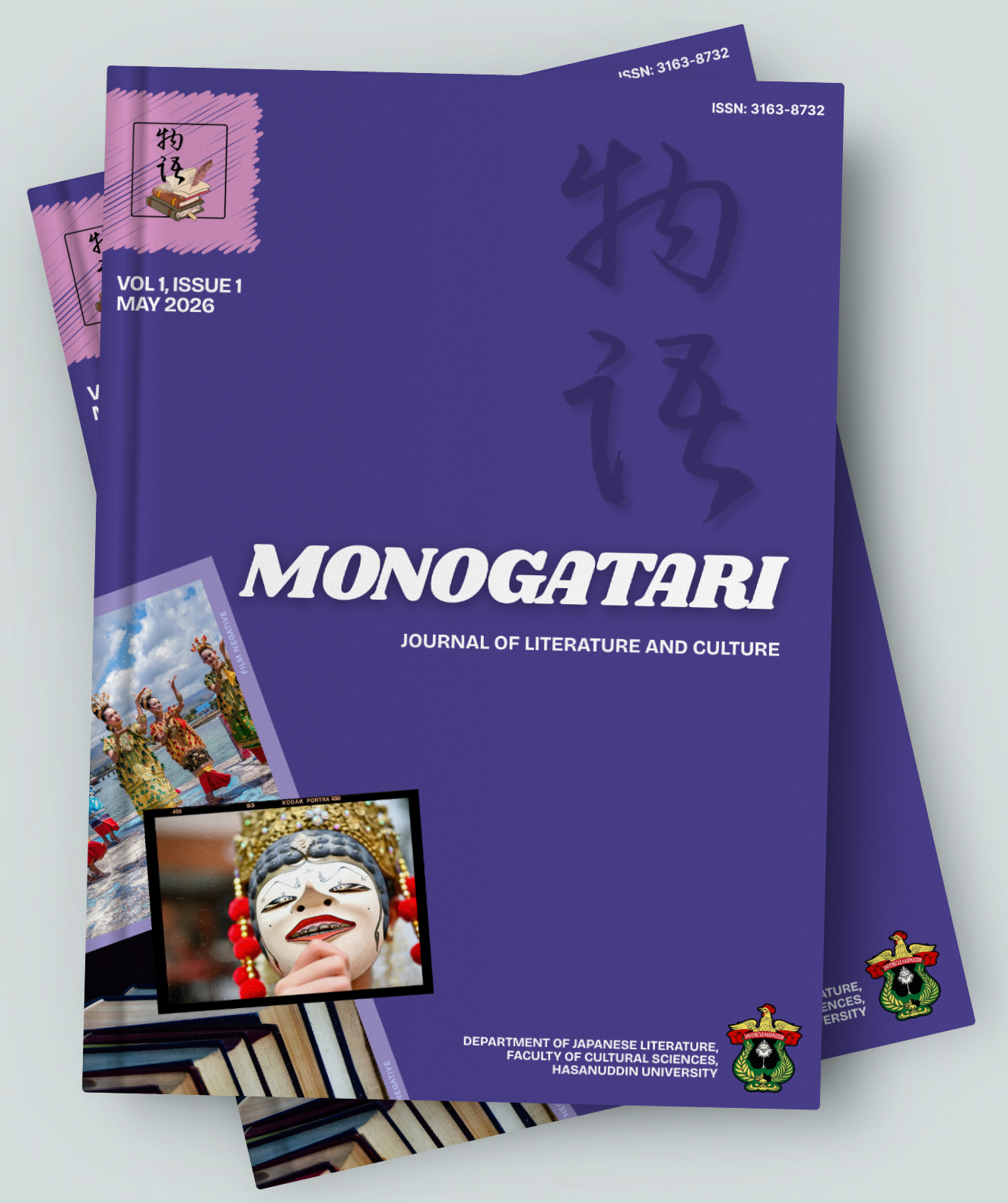
MONOGATARI: Journal of Literature and Culture takes its name from the Japanese term monogatari (物語), which literally means story or narrative. In the Japanese literary tradition, monogatari refers not merely to fictional storytelling, but to a narrative practice that records human experience, cultural values, and collective memory. The term underscores the role of literature as a medium through which textual expression is deeply connected to cultural and historical contexts.
Based on this understanding, Monogatari: Journal of Literature and Culture is a peer-reviewed, open-access journal that focuses primarily on literary studies, with a strong emphasis on literary analysis in relation to culture. The journal provides a scholarly forum for research that approaches literary works as cultural texts, drawing on literary theory, cultural studies, and relevant interdisciplinary perspectives. Through the publication of rigorous and original research articles, Monogatari seeks to contribute to the advancement of literary studies that are critical, contextual, and grounded in cultural dynamics.
Focus and Scope
MONOGATARI: Journal of Literature and Culture is a peer-reviewed, open-access journal that focuses on literary studies and related fields within the humanities. The journal is dedicated to the publication of original research articles and review articles that examine literature as both a textual and cultural practice. While the journal welcomes a wide range of scholarly approaches, it particularly prioritizes studies that explore literary works in relation to cultural contexts, social dynamics, and historical conditions.
The scope of the journal includes, but is not limited to, the following areas:
- Literary criticism and literary theory.
- Studies of prose, poetry, drama, and oral literature.
- Comparative literature and cross-cultural literary studies.
- Literature and culture, including issues of identity, representation, memory, gender, and power.
- Literary studies in relation to film, adaptation, and other visual or narrative media.
- Film studies and narrative analysis with a clear literary or cultural perspective.
- Literature education and pedagogy, particularly studies related to the teaching and learning of literature.
- Interdisciplinary approaches to literature within cultural, historical, and media contexts.
MONOGATARI encourages submissions that offer strong theoretical grounding, methodological clarity, and original contributions to the field of literary and cultural studies. Manuscripts focusing on education or film studies are expected to demonstrate a clear engagement with literary analysis or cultural interpretation.
Peer Review Process
All manuscripts submitted to this journal must follow the focus scope and author guidelines of this journal. The submitted manuscripts must address scientific merit or novelty appropriate to the focus and scope.
The manuscript submitted to the journal must be original, unpublished work and not under consideration for publication elsewhere. Every paper submitted will be scanned for plagiarism before it is sent to the reviewer. Editors use Turnitin software to detect plagiarism in manuscripts in this journal.
Each submission will go through the following process:
- Technical and content screening by the Editorial Board.
- Double-blind review by Reviewer.
- Revision by author/s if required.
- Editorial screening/ decision.





 content on this site is licensed under a