
Protected Areas’ Latent Functions and Social Consequences: A Case from Mount Hamiguitan, Philippines
DOI:
https://doi.org/10.24259/fs.v4i2.10485Keywords:
Forest Management, Biodiversity Conservation, Social ForestryAbstract
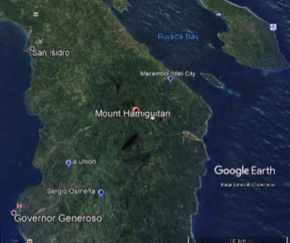
While protected areas (PAs) are established primarily for biological diversity conservation and provision of ecological services, social dimensions comes into play. This paper extends the discourse on PAs’ impact to local communities by focusing on the latent functions and social consequences utilizing Robert Merton’s Functional Analysis. Based on in-depth interviews among community leaders and elders, and forest custodians around Mount Hamiguitan, a UNESCO World Heritage Site, it is revealed that establishment of PAs entails varied consequences beyond what are being intended and manifested. While communities availed of some latent benefits from the declaration of the PA, they also have responses that limit the success of conservation initiatives. Hence, forest protection is a complex social and political process that demands more integrative response on community’s social, cultural, and political structures and dynamics.
References
Abukari, H., & Mwalyosi, R. B. (2020). Local communities’ perceptions about the impact of protected areas on livelihoods and community development. Global Ecology and Conservation, 22, e00909. doi: https://doi.org/10.1016/j.gecco.2020.e00909
Aryal, C., Ghimire, B., & Niraula, N. (2019). Tourism in protected areas and appraisal of ecotourism in Nepalese policies. Journal of Tourism and Hospitality Education, 9, 40-73. doi: https://doi.org/10.3126/jthe.v9i0.23680
Andrade, G. S., & Rhodes, J. R. (2012). Protected areas and local communities: an inevitable partnership toward successful conservation strategies?. Ecology and Society, 17(4). doi: http://dx.doi.org/10.5751/ES-05216-170414
Badola, R., Hussain, S. A., Dobriyal, P., Manral, U., Barthwal, S., Rastogi, A., & Gill, A. K. (2018). Institutional arrangements for managing tourism in the Indian Himalayan protected areas. Tourism Management, 66, 1-12.doi: https://doi.org/10.1016/j.tourman.2017.10.020
Bandura, A. (Ed.). (1995). Self-efficacy in changing societies. Cambridge university press. Retrieved from www.cambridge.org/9780521474672 doi: https://doi.org/10.1017/CBO9780511527692
Bennett, N. J., Roth, R., Klain, S. C., Chan, K., Christie, P., Clark, D. A., Cullman, G., Curran, D., Durbin, T.J., Epstein, G., Greenberg, A., Nelson, M.P., Sandlos, J., Stedman, R., Teel, T.L., Thomas, R., Veríssimo, D., Wyborn, C. (2016). Conservation social science: Understanding and integrating human dimensions to improve conservation. Biological Conservation, 205, 93-108. doi: http://dx.doi.org/10.1016/j.biocon.2016.10.006
Bhattarai, B. R., Wright, W., Poudel, B. S., Aryal, A., Yadav, B. P., & Wagle, R. (2017). Shifting paradigms for Nepal’s protected areas: history, challenges and relationships. Journal of Mountain Science, 14(5), 964-979. doi: https://doi.org/10.1007/s11629-016-3980-9
Bottrill, M., Cheng, S., Garside, R., Wongbusarakum, S., Roe, D., Holland, M. B., ... & Turner, W. R. (2014). What are the impacts of nature conservation interventions on human well-being: a systematic map protocol. Environmental Evidence, 3(1), 1-11. doi: https://doi.org/10.1186/2047-2382-3-16
Brechin, S. R., Wilshusen, P. R., Fortwangler, C. L., & West, P. C. (2002). Beyond the square wheel: toward a more comprehensive understanding of biodiversity conservation as social and political process. Society & Natural Resources, 15(1), 41-64. doi: https://doi.org/10.1080/089419202317174011
Brockington, D., & Wilkie, D. (2015). Protected areas and poverty. Philosophical Transactions of the Royal Society B: Biological Sciences, 370(1681), 20140271. doi: http://dx.doi.org/10.1098/rstb.2014.0271
Brown, M. J. (2006). Building powerful community organizations. Arlington, MA: Long Haul. doi: https://doi.org/10.1080/10705420801978070
Chowdhury, M. S. H., & Koike, M. (2010). An overview on the protected area system for forest conservation in Bangladesh. Journal of Forestry research, 21(1), 111-118. doi: http://dx.doi.org/10.1007/s11676-010-0019-x
Dahal, G. R., & Adhikari, K. P. (2008). Bridging, linking, and bonding social capital in collective action: The case of Kalahan Forest Reserve in the Philippines (No. 577-2016-39220). doi: 10.22004/ag.econ.44352
Dewu, S. (2016). Fringe Community Attitudes and Protected Areas.-Insights from two Protected Areas in Ghana (Master's thesis, NTNU).
García-Frapolli, E., Ramos-Fernández, G., Galicia, E., & Serrano, A. (2009). The complex reality of biodiversity conservation through Natural Protected Area policy: three cases from the Yucatan Peninsula, Mexico. Land Use Policy, 26(3), 715-722. doi: https://doi.org/10.1016/j.landusepol.2008.09.008
Larson, A. M. (2003). Decentralisation and forest management in Latin America: Towards a working model. Public administration and development, 23(3), 211-226. doi: http://dx.doi.org/10.1002/pad.271
Magno, F. (2001). Forest devolution and social capital: State-civil society relations in the Philippines. Environmental History, 264-286. doi: https://doi.org/10.2307/3985087
Mukul, S. A. (2007). Biodiversity conservation strategies in Bangladesh: the state of protected areas. Tigerpaper, 34(3), 28-32.
Naidoo, R., Gerkey, D., Hole, D., Pfaff, A., Ellis, A. M., Golden, C. D., Herrera, D.., Johnson, K., Mulligan, M., Ricketts, T.H., & Fisher, B. (2019). Evaluating the impacts of protected areas on human well-being across the developing world. Science Advances, 5(4), eaav3006. doi: http://dx.doi.org/10.1126/sciadv.aav3006
Nebasifu, Ayonghe Akonwi & Ngoindong Majory Atong (2019). Rethinking Institutional Knowledge for Community Participation in Co-Management Sustainability. 11, 5788; doi:10.3390/su11205788
Nolte, C., Agrawal, A., Silvius, K. M., & Soares-Filho, B. S. (2013). Governance regime and location influence avoided deforestation success of protected areas in the Brazilian Amazon. Proceedings of the National Academy of Sciences, 110(13), 4956-4961.doi: https://doi.org/10.1073/pnas.1214786110
Philippine Health Research Ethics Board (2017). National Ethical Guidelines for Health and Health-Related Research. Department of Science and Technology – Philippine Council for Health Research and Development, Philippines.
Van der Ploeg, J., Van Weerd, M., Masipiqueña, A., & Persoon, G. (2011). Illegal Logging in the Northern Sierra Madre Natural Park, the Philippines. Conservation and Society, 9(3), 202-215. Retrieved November 17, 2020, from http://www.jstor.org/stable/26393043 DOI: 10.4103/0972-4923.86991
Porter-Bolland, L., Ellis, E. A., Guariguata, M. R., Ruiz-Mallén, I., Negrete-Yankelevich, S., & Reyes-García, V. (2012). Community managed forests and forest protected areas: An assessment of their conservation effectiveness across the tropics. Forest ecology and management, 268, 6-17. doi: https://doi.org/10.1016/j.foreco.2011.05.034
Pretty, J., & Smith, D. (2004). Social capital in biodiversity conservation and management. Conservation biology, 18(3), 631-638. doi: http://dx.doi.org/10.1111/j.1523-1739.2004.00126.x
Ritzer, G. (2011). Sociological Theory. 8th ed. USA: The McGraw-Hill Companies, Inc.
Robalino, J., & Villalobos, L. (2015). Protected areas and economic welfare: an impact evaluation of national parks on local workers' wages in Costa Rica. Environment and Development Economics, 20(3), 283-310. doi: http://dx.doi.org/10.1017/S1355770X14000461
Sharrock, W., Hughes, J. A., Martin, P. J., & Pratt, A. (2003). Understanding modern sociology. Sage.
Scherl, L. M., Wild, R., & Wilson, A. (2004). Can protected areas contribute to poverty reduction?: opportunities and limitations. IUCN. Retrieved from: http://lib.riskreductionafrica.org/bitstream/handle/123456789/281/5672%20%20Can%20Protected%20Areas%20Contribute%20to%20Poverty%20Reduction.%20Opportunities%20and%20Limitations.pdf?sequence=1&isAllowed=y
Sodhi, N. S., Lee, T. M., Sekercioglu, C. H., Webb, E. L., Prawiradilaga, D. M., Lohman, D. J., Pierce, N.E., Diesmos, A.C., Rao, M., & Ehrlich, P. R. (2010). Local people value environmental services provided by forested parks. Biodiversity and Conservation, 19(4), 1175-1188. doi: http://dx.doi.org/10.1007/s10531-009-9745-9
Torri, M. C. (2011). Conservation, relocation and the social consequences of conservation policies in protected areas: Case study of the Sariska Tiger Reserve, India. Conservation and Society, 9(1), 54-64. Retrieved November 17, 2020, from http://www.jstor.org/stable/26393125 DOI: 10.4103/0972-4923.79190
The LawPhil Project, (2018). Retreived from https://www.lawphil.net/statutes/repacts/ra2018/ra_11038_2018.html
The LawPhil Project, (2004). Retreived from
https://lawphil.net/statutes/repacts/ra2004/ra_9303_2004.html
The LawPhil Project, (1992). Retreived from https://lawphil.net/statutes/repacts/ra1992/ra_7586_1992.html
West, P., Igoe, J., & Brockington, D. (2006). Parks and peoples: the social impact of protected areas. Annu. Rev. Anthropol., 35, 251-277. doi: http://dx.doi.org/10.1146/annurev.anthro.35.081705.123308
Woodhouse, E., Homewood, K. M., Beauchamp, E., Clements, T., McCabe, J. T., Wilkie, D., & Milner-Gulland, E. J. (2015). Guiding principles for evaluating the impacts of conservation interventions on human well-being. Philosophical Transactions of the Royal Society B: Biological Sciences, 370(1681), 20150103. doi: http://dx.doi.org/10.1098/rstb.2015.0103
World Heritage Centre. Retrieved September 08, 2020, from World Heritage Centre https://whc.unesco.org/en/list/1403/documents/
Additional Files
Published
License
Copyright (c) 2020 Forest and Society

This work is licensed under a Creative Commons Attribution 4.0 International License.
This is an open access journal which means that all contents is freely available without charge to the user or his/her institution. Users are allowed to read, download, copy, distribute, print, search, or link to the full texts of the articles in this journal without asking prior permission from the publisher or the author. This is in accordance with the BOAI definition of open access.
Submission of an article implies that the work described has not been published previously (except in the form of an abstract or as part of a published lecture or academic thesis), that it is not under consideration for publication elsewhere, that its publication is approved by all authors and tacitly or explicitly by the responsible authorities where the work was carried out, and that, if accepted, will not be published elsewhere in the same form, in English or in any other language, without the written consent of the Publisher. An article based on a section from a completed graduate dissertation may be published in Forest and Society, but only if this is allowed by author's(s') university rules. The Editors reserve the right to edit or otherwise alter all contributions, but authors will receive proofs for approval before publication.
Forest and Society operates a CC-BY 4.0 © license for journal papers. Copyright remains with the author, but Forest and Society is licensed to publish the paper, and the author agrees to make the article available with the CC-BY 4.0 license. Reproduction as another journal article in whole or in part would be plagiarism. Forest and Society reserves all rights except those granted in this copyright notice

