
Productivity and Cost Analysis of Forest Harvesting Operation in Matang Mangrove Forest, Perak, Malaysia
DOI:
https://doi.org/10.24259/fs.v1i1.1529Keywords:
Time Study, Productivity, Unit Cost, Cost Analysis, Mangrove, Forest HarvestingAbstract
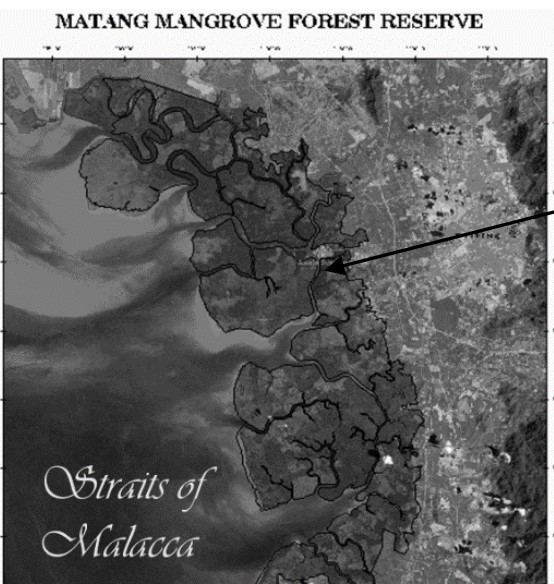
Matang Mangrove Forest is under systematic management since 1902 and still considered as the best managed mangrove forest in the world. This research was conducted to measure the time and productivity of forest harvesting operation and also to analyze the cost and revenue of mangrove forest harvesting operation at Matang mangrove forest. This project had been carried out in cooperation with Seri Sepetang Enterprise, one of the harvesting licenses in Kuala Sepetang, Perak. Data collections were taken in every station starting from standing tree until to the Kiln-Drying jetty. The data then calculated by using the formulas of productivity and cost analysis. As the result, the productivity for felling, bucking and debarking, the manual skidding using wheel-barrow and the water transportation are 1.84 tan/hour, 3.82 tan/hour and 4.64 tan/hour respectively. The cost for each operation of 9 tan log volume for felling, bucking and debarking, the manual skidding using wheel-barrow and the water transportation are RM 56.88, RM 10.80 and RM 36.72 respectively. As the revenue, the company paid RM 260 per 9 tan of log for the in-forest operation (felling, manual skidding and loading to the ship) and pay RM 80 per 9 tan for the water transportation, and they gained the net profit of RM 192.32 and RM 43.28 respectively. The average of forest harvesting operation is twice operation in a day (equal with 2 x 9-ton volume of log production a day), so they will gain a double profit. In conclusion, the forest harvesting operation is sustainably managed for supplying the raw material of charcoal industries in Matang mangrove forest. Since, they work manually and spend much energy in this forest harvesting operation, so for further study it recommends to conduct the ergonomics evaluation during forest harvesting operation at Matang Mangrove Forest.References
Alongi, D. M. (2008). Mangrove forests: resilience, protection from tsunamis, and responses to global climate change. Estuarine, Coastal and Shelf Science, 76(1), 1-13.
Borges, A. V., Djenidi, S., Lacroix, G., Théate, J., Delille, B., & Frankignoulle, M. (2003). Atmospheric CO2 flux from mangrove surrounding waters. Geophysical Research Letters, 30(11).
Currie, R.M. & Faraday, J.E., 1989. Work Study. Pitman Publishing, London, UK, pp. 47-48.
FAO, (1992). Cost Control in Forest Harvesting and Road Construction. ISBN 92-5-103161-4. Publication Division, FAO, Rome, Italy.
Goessens, A., et al., (2014). Is Matang Mangrove Forest Sustainably Rejuvenating after More than a Century of Conservation and Harvesting Management?. Journal of Plos One. http://dx.doi.org/10.1371/journal.pone.0105069.
Kluender, R., Lortz, D., McCoy, W., Stokes, B., & Klepac, J. (1997). Productivity of rubber-tired skidders in southern pine forests. Forest Products Journal, 47(11/12), 53.
Naghdi, R., RAFATNIA, N., Sobhani, H., Jalali, G., & Hosseini, M. (2005). A survey of the efficiency of Timberjack C450 wheeled skidder in Shafaroud forests in Guilan province.
Nurminen, T., Korpunen, H., & Uusitalo, J. (2006). Time consumption analysis of the mechanized cut-to-length harvesting system. Silva Fennica, 40(2), 335.
Norizah, K., Hasmadi, M. I., Kamaruzaman, J. (2012). Operational efficiency of rimbaka timber harvester in hilly tropical forest. Journal of Tropical Forest Science. Vol 24(3), 368-378.
Silversides, C. R., & Sundberg, B. (2013). Operational Efficiency in Forestry: Vol. 2: Practice (Vol. 32). Springer Science & Business Media.
Wang, J., Long, C., & McNeel, J. (2004). Production and cost analysis of a feller-buncher and grapple skidder in central Appalachian hardwood forests. Forest products journal, 54(12), 159.
WWF (World Wide Fund). (2013). Mangrove Forest. Retrieved from http://www.wwf.org.my/. in September 8, 2015.
Additional Files
Published
Versions
- 2017-04-27 (2)
- 2017-04-27 (1)
License
Copyright (c) 2019 Forest and Society

This work is licensed under a Creative Commons Attribution 4.0 International License.
This is an open access journal which means that all contents is freely available without charge to the user or his/her institution. Users are allowed to read, download, copy, distribute, print, search, or link to the full texts of the articles in this journal without asking prior permission from the publisher or the author. This is in accordance with the BOAI definition of open access.
Submission of an article implies that the work described has not been published previously (except in the form of an abstract or as part of a published lecture or academic thesis), that it is not under consideration for publication elsewhere, that its publication is approved by all authors and tacitly or explicitly by the responsible authorities where the work was carried out, and that, if accepted, will not be published elsewhere in the same form, in English or in any other language, without the written consent of the Publisher. An article based on a section from a completed graduate dissertation may be published in Forest and Society, but only if this is allowed by author's(s') university rules. The Editors reserve the right to edit or otherwise alter all contributions, but authors will receive proofs for approval before publication.
Forest and Society operates a CC-BY 4.0 © license for journal papers. Copyright remains with the author, but Forest and Society is licensed to publish the paper, and the author agrees to make the article available with the CC-BY 4.0 license. Reproduction as another journal article in whole or in part would be plagiarism. Forest and Society reserves all rights except those granted in this copyright notice

