
Ostrom’s Design Principles as Steering Principles for Contractual Governance in “Hotbeds”
DOI:
https://doi.org/10.24259/fs.v6i1.17993Keywords:
contractual networks, Ostrom’s design principles, West Papua, Indonesia, governanceAbstract
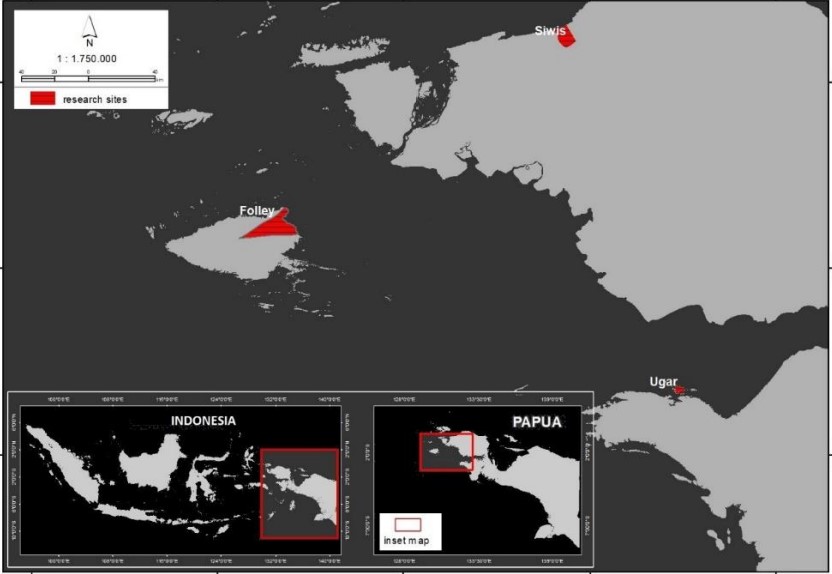
The sustainability of complex contractual governance in “hotbeds” depends on steering principles. Ostrom’s design principles provide an analytical framework for robust institutions that enable collective action and cooperative behaviour. The success of Ostrom’s design principles depends on the capacity of social entities to self-govern. This article explores the potential of Ostrom’s design principles as such steering principles for contractual governance in “hotbeds”. We find that the preconditions for successful contractual networks in “hotbeds” and the empirical situations underlying Ostrom’s design principles are comparable. Building on this comparability, we apply Ostrom’s design principles to contractual networks in “hotbeds” area theoretically, and then go on to demonstrate its applied value to three situations in West Papua, Indonesia.
References
Agostini, V. N., Grantham, H. S., Wilson, J., Mangubhai, S., Rotinsulu, C., Hidayat, N., ... & Possingham, H. P. (2012). Achieving fisheries and conservation objectives within marine protected areas: zoning the Raja Ampat network. The Nature Conservancy, Indonesia Marine Program, Denpasar, Indonesia.
Agrawal, A. (2001a). Common property institutions and sustainable governance of resources. World Development, 29(10), 1649-1672. https://doi.org/10.1016/S0305-750X(01)00063-8
Agrawal, A. (2001b). State formation in community spaces? Decentralization of control over forests in the Kumaon Himalaya, India. The Journal of Asian Studies, 60(1), 9-40. https://doi.org/10.2307/2659503
Al Mamun, A., & Brook, R. K. (2015). Evaluating local rules and practices for avoiding tragedies in small-scale fisheries of oxbow lakes, Southern Bangladesh. International Journal of the Commons, 9(2). 772–807. http://doi.org/10.18352/ijc.564
Anderson, B. (2015). Papua's insecurity: state failure in the Indonesian periphery. Policy Studies Np. 72. East-West Center.
Andersson, K., Benavides, J. P., & León, R. (2014). Institutional diversity and local forest governance. Environmental Science & Policy, 36, 61-72. https://doi.org/10.1016/j.envsci.2013.07.009
Araral, E. (2013). A transaction cost approach to climate adaptation: Insights from Coase, Ostrom and Williamson and evidence from the 400-year old zangjeras. Environmental Science & Policy, 25, 147-156. https://doi.org/10.1016/j.envsci.2012.08.005
Aubriot, O. (2002). Governing Irrigation Systems in Nepal. Institutions, Infrastructure, and Collective Action. Mountain Research and Development, 22(1), 91-93. https://doi.org/10.1659/0276-4741(2002)022[0088:ROWSCR]2.0.CO;2
Babili, I. H., Mtalo, E., Kajembe, G. C., & van der Wal, H. (2015). Institutional change and institutional performance under decentralized forest management in Babati District, Tanzania. Small-scale Forestry, 14(3), 381-400. https://doi.org/10.1007/s11842-015-9294-x
Bardhan, P. (2000). Irrigation and cooperation: An empirical analysis of 48 irrigation communities in South India. Economic Development and Cultural Change, 48(4), 847-865. https://doi.org/10.1086/452480
Barnett, A. J., & Anderies, J. M. (2014). Weak feedbacks, governance mismatches, and the robustness of social-ecological systems: an analysis of the Southwest Nova Scotia lobster fishery with comparison to Maine. Ecology and Society, 19(4), 39. http://dx.doi.org/10.5751/ES-06714-190439
Black, J., & Kingsford Smith, D. (2002). Critical reflections on regulation [Plus a reply by Dimity Kingsford Smith.]. Australasian Journal of Legal Philosophy, 27(2002), 1-46. https://search.informit.org/doi/10.3316/ielapa.200206927
Blomkvist, P., & Larsson, J. (2013). An analytical framework for common-pool resource–large technical system (CPR-LTS) constellations. International Journal of the Commons, 7(1), 113–139. http://doi.org/10.18352/ijc.353.
Bradach, J. L., & Eccles, R. G. (1989). Price, authority, and trust: From ideal types to plural forms. Annual Review of Sociology, 15(1), 97-118. https://doi.org/10.1146/annurev.so.15.080189.000525
Brechin, S. R., Wilshusen, P. R., Fortwangler, C. L., & West, P. C. (2002). Beyond the square wheel: toward a more comprehensive understanding of biodiversity conservation as social and political process. Society & Natural Resources, 15(1), 41-64. https://doi.org/10.1080/089419202317174011
Brondizio, E. S., Ostrom, E., & Young, O. R. (2009). Connectivity and the governance of multilevel social-ecological systems: the role of social capital. Annual Review of Environment and Resources, 34, 253-278. https://doi.org/10.1146/annurev.environ.020708.100707
Cafaggi, F. (2011). Contractual networks, inter-firm cooperation and economic growth, Edward Elgar Publishing.
Carter, D. P., & Weible, C. M. (2014). Assessing rule compliance and robustness in recreational resource management. Journal of Environmental Policy & Planning, 16(1), 117-139. https://doi.org/10.1080/1523908X.2013.821943
Cavalcanti, C., Schläpfer, F., & Schmid, B. (2010). Public participation and willingness to cooperate in common-pool resource management: A field experiment with fishing communities in Brazil. Ecological Economics, 69(3), 613-622. https://doi.org/10.1016/j.ecolecon.2009.09.009
Chaudhary, P., Chhetri, N. B., Dorman, B., Gegg, T., Rana, R. B., Shrestha, M., … Thapa, S. (2015). Turning conflict into collaboration in managing commons: A case of Rupa Lake Watershed, Nepal. International Journal of the Commons, 9(2), 744–771. http://doi.org/10.18352/ijc.561.
Cinti, A., Duberstein, J. N., Torreblanca, E., & Moreno-Báez, M. (2014). Overfishing drivers and opportunities for recovery in small-scale fisheries of the Midriff Islands Region, Gulf of California, Mexico: the roles of land and sea institutions in fisheries sustainability. Ecology and Society, 19(1). http://dx.doi.org/10.5751/ES-05570-190115
Colding, J., & Barthel, S. (2019). Exploring the social-ecological systems discourse 20 years later. Ecology and Society, 24(1). http://dx.doi.org/10.5751/ES-10598-240102
Collen, W., Krause, T., Mundaca, L., & Nicholas, K. A. (2016). Building local institutions for national conservation programs: lessons for developing Reducing Emissions from Deforestation and Forest Degradation (REDD+) programs. Ecology and Society, 21(2). http://dx.doi.org/10.5751/ES-08156-210204
Cook, K. (Ed.). (2001). Trust in Society. Russell Sage Foundation.
Cox, M., Arnold, G., & Tomás, S. V. (2010). A review of design principles for community-based natural resource management. Ecology and Society, 15(4). http://dx.doi.org/10.5751/ES-03704-150438
Deepananda, K. A., Amarasinghe, U. S., & Jayasinghe-Mudalige, U. K. (2016). Neither bust nor boom: Institutional robustness in the beach seine fishery of southern Sri Lanka. Ocean & Coastal Management, 128, 61-73. https://doi.org/10.1016/j.ocecoaman.2016.04.020
Degnet, M. B., van der Werf, E., Ingram, V., & Wesseler, J. H. (2020). Do locals have a say? Community experiences of participation in governing Forest plantations in Tanzania. Forests, 11(7), 782. https://doi.org/10.3390/f11070782
Dolfing, B., & Snellen, W. B. (1999). Sustainability of Dutch water boards: Appropriate design characteristics for self-governing water management organisations. ILRI.
Eshuis, J., & Van Woerkum, C. (2003). Trust and monitoring in governance processes: lessons from landscape management by farmers in a Dutch municipality. Journal of Environmental Policy & Planning, 5(4), 379-396. https://doi.org/10.1080/1523908032000171620
Fatem, S. M. (2019). Connecting social forestry to conservation policies in Tanah Papua. Forest and Society, 3(1), 141-147. https://doi.org/10.24259/fs.v3i1.5865
Fatem, S. M., Awang, S. A., Pudyatmoko, S., Sahide, M. A., Pratama, A. A., & Maryudi, A. (2018). Camouflaging economic development agendas with forest conservation narratives: A strategy of lower governments for gaining authority in the re-centralising Indonesia. Land Use Policy, 78, 699-710. https://doi.org/10.1016/j.landusepol.2018.07.018
Fleischman, F. D., Loken, B., Garcia-Lopez, G. A., & Villamayor-Tomas, S. (2014). Evaluating the utility of common-pool resource theory for understanding forest governance and outcomes in Indonesia between 1965 and 2012. International Journal of the Commons, 8(2), 304–336. http://doi.org/10.18352/ijc.409.
Gautam, A. P., & Shivakoti, G. P. (2005). Conditions for successful local collective action in forestry: some evidence from the hills of Nepal. Society and Natural Resources, 18(2), 153-171. https://doi.org/10.1080/08941920590894534
Gaveau, D. (2018). Drivers of forest loss in Papua and West Papua. CIFOR.
German, L. (2018). Catalyzing self-governance: Addressing multi-faceted collective action dilemmas in densely settled agrarian landscapes. International Journal of the Commons, 12(2), 217–250. http://doi.org/10.18352/ijc.852
Gómez, F. & Cafaggi, F. (2011). Cooperation, long-term relationships and open-endedness in contractual networks. In Cafaggi, F. (Ed.), Contractual Networks, Inter-Firm Cooperation and Economic Growth (21-38). Edward Elgar Publishing. https://doi.org/10.4337/9781849809696.00008
Haapala, J., Rautanen, S.-L., White, P., Keskinen, M., & Varis, O. (2016). Facilitating bricolage through more organic institutional designs? The case of water users’ associations in rural Nepal. International Journal of the Commons, 10(2), 1172–1201. http://doi.org/10.18352/ijc.688.
Hardin, G. (1968). The tragedy of the commons: the population problem has no technical solution; it requires a fundamental extension in morality. Science, 162(3859), 1243-1248. https://doi.org/10.1126/science.162.3859.1243
Haryanto, T., & Purnhagen, K. P. (2019). Governing Nature Conservation in Political Hotbeds: a Contractual Approach. Hastings Environmental Law Journal, 25, 143-160.
Holbrook, J. B. (2013). What is interdisciplinary communication? Reflections on the very idea of disciplinary integration. Synthese, 190(11), 1865-1879. https://doi.org/10.1007/s11229-012-0179-7
Hoole, A. F. (2009). Place-power-prognosis: Community-based conservation, partnerships, and ecotourism enterprises in Namibia. International Journal of the Commons, 4(1), 78–99. http://doi.org/10.18352/ijc.112
Hoshino, E., van Putten, I., Girsang, W., Resosudarmo, B. P., & Yamazaki, S. (2016). A Bayesian belief network model for community-based coastal resource management in the Kei Islands, Indonesia. Ecology and Society, 21(2). http://dx.doi.org/10.5751/ES-08285-210216
Hovik, S., Sandström, C., & Zachrisson, A. (2010). Management of protected areas in Norway and Sweden: challenges in combining central governance and local participation. Journal of Environmental Policy & Planning, 12(2), 159-177. https://doi.org/10.1080/15239081003719219
Jentoft, S. (2017). Small-scale fisheries within maritime spatial planning: knowledge integration and power. Journal of Environmental Policy & Planning, 19(3), 266-278. https://doi.org/10.1080/1523908X.2017.1304210
Koch, S., Faust, H., & Barkmann, J. (2008). Differences in power structures regarding access to natural resources at the village level in Central Sulawesi (Indonesia). ASEAS-Austrian Journal of South-East Asian Studies, 1(2), 59-81. https://nbn-resolving.org/urn:nbn:de:0168-ssoar-362609
Kooiman, J. (2003). Governing as Governance. Sage.
Krott, M., Bader, A., Schusser, C., Devkota, R., Maryudi, A., Giessen, L., & Aurenhammer, H. (2014). Actor-centred power: The driving force in decentralised community based forest governance. Forest Policy and Economics, 49, 34-42. https://doi.org/10.1016/j.forpol.2013.04.012
Krupa, M. B., Chapin III, F. S., & Lovecraft, A. L. (2014). Robustness or resilience? Managing the intersection of ecology and engineering in an urban Alaskan fishery. Ecology and Society, 19(2). http://dx.doi.org/10.5751/ES-06274-190217
Larson, A. M., & Springer, J. (2016). Recognition and Respect for Tenure Rights. International Union for Conservation of Nature and Natural Resources (IUCN).
Larsson, J. (2016). Conflict-resolution mechanisms maintaining an agricultural system. Early modern local courts as an arena for solving collective-action problems within Scandinavian Civil Law. International Journal of the Commons, 10(2), 1100–1118. http://doi.org/10.18352/ijc.666
London, S., Rojas, M. L., Ibáñez Martin, M. M., Scordo, F., Andrea Huamantinco Cisneros, M., Luján Bustos, M., … Cintia Piccolo, M. (2017). Characterization of an artisanal fishery in Argentina using the social-ecological systems framework. International Journal of the Commons, 11(1), 1–69. http://doi.org/10.18352/ijc.534
Lundqvist, L. J. (2001). Games real farmers play: knowledge, memory and the fate of collective action to prevent eutrophication of water catchments. Local Environment, 6(4), 407-419. https://doi.org/10.1080/13549830120091707
Macaulay, S. (1963). Non-contractual relations in business: A preliminary study. American Sociological Review, 28(1), 55-67. https://doi.org/10.2307/2090458
Macneil, I. R. (1973). The many futures of contracts. Southern California Law Review, 47, 691.
Mansoben, J. R. (1994). Sistem Politik Tradisional di Irian Jaya, Indonesia: Studi Perbandingan [Doctoral dissertation]. University of Leiden.
Nobre, D. M., Alarcon, D. T., Cinti, A., & Schiavetti, A. (2017). Governance of the Cassurubá Extractive Reserve, Bahia State, Brazil: An analysis of strengths and weaknesses to inform policy. Marine Policy, 77, 44-55. https://doi.org/10.1016/j.marpol.2016.12.008
Marshall, G. R. (2004). Farmers cooperating in the commons? A study of collective action in salinity management. Ecological Economics, 51(3-4), 271-286. https://doi.org/10.1016/j.ecolecon.2004.06.016
Masolo, C., Vieu, L., Bottazzi, E., Catenacci, C., Ferrario, R., Gangemi, A. & Guarino, N. (2004). Social Roles and their Descriptions. Proceedings of the Ninth International Conference on the Principles of Knowledge Representation and Reasoning (KR2004), 267-277. AAAI Press.
McLeod, E., Szuster, B., & Salm, R. (2009). Sasi and marine conservation in Raja Ampat, Indonesia. Coastal Management, 37(6), 656-676. https://doi.org/10.1080/08920750903244143
Minato, W., Curtis, A., & Allan, C. (2010). Social norms and natural resource management in a changing rural community. Journal of Environmental Policy & Planning, 12(4), 381-403. https://doi.org/10.1080/1523908X.2010.531084
MoEF. (2019). Rekalkulasi Penutupan Lahan Indonesia Tahun 2018. Ministry of Environtment and Forestry.
Morawetz, D. (2017). Land tenure conversion in the Northern District of Papua. NEW Guinea Research Bulletin No. 17. New Guinea Re search Unit.
Mwangi, E., & Wardell, A. (2012). Multi-level governance of forest resources (Editorial to the special feature). International Journal of the Commons, 6(2), 79–103. http://doi.org/10.18352/ijc.374.
Naess, P. (2004). Live and let die: the tragedy of Hardin's social Darwinism. Journal of Environmental Policy & Planning, 6(1), 19-34. https://doi.org/10.1080/1523908042000259668
Naiga, R., Penker, M., & Hogl, K. (2015). Challenging pathways to safe water access in rural Uganda: From supply to demand-driven water governance. International Journal of the Commons, 9(1), 237–260. http://doi.org/10.18352/ijc.480
Oberlack, C., LaHaela Walter, P., Schmerbeck, J., & Tiwari, B. K. (2015). Institutions for sustainable forest governance: Robustness, equity, and cross-level interactions in Mawlyngbna, Meghalaya, India. International Journal of the Commons, 9(2), 670–697. http://doi.org/10.18352/ijc.538.
Obidzinski, K., Andriani, R., Komarudin, H., & Andrianto, A. (2012). Environmental and social impacts of oil palm plantations and their implications for biofuel production in Indonesia. Ecology and Society, 17(1). http://dx.doi.org/10.5751/ES-04775-170125
Ostrom, E. (1990). Governing the commons: The evolution of institutions for collective action. Cambridge University Press.
Ostrom, E. (1999a). Collective Action And The Evolution Of Social Norms. Journal of Economic Perspectives, 14(3), 137-158. https://doi.org/10.1257/jep.14.3.137
Ostrom, E. (1999b). Coping with tragedies of the commons. Annual Review of Political Science, 2(1), 493-535. https://doi.org/10.1146/annurev.polisci.2.1.493
Ostrom, E. (2005a). Self-governance and forest resources. In Shah, P., & Maitra, V. (Eds.), Terracotta reader: a market approach to the environment (pp. 131-154). Academic Foundation.
Ostrom, E. (2005b). Understanding institutional diversity. Princeton University Press.
Ostrom, E. (2008a). Design Principles of Robust Property–Rights Institutions: What Have We Learned. In Cole, D. H., & McGinnis, M. D. (Eds.), Elinor Ostrom and the Bloomington School of Political Economy: Resource Governance (Volume 2) (pp. 215-248). Lexington Books.
Ostrom, E. (2008b). Institutions and the Environment. Economic affairs, 28(3), 24-31. https://doi.org/10.1111/j.1468-0270.2008.00840.x
Ostrom, E. (2009). Understanding institutional diversity. Princeton University Press.
Ostrom, E. (2010). Analyzing collective action. Agricultural Economics, 41, 155-166. https://doi.org/10.1111/j.1574-0862.2010.00497.x
Özerol, G. (2013). Institutions of farmer participation and environmental sustainability: a multi-level analysis from irrigation management in Harran Plain, Turkey. International Journal of the Commons, 7(1), 73–91. http://doi.org/10.18352/ijc.368.
Pomeroy, R. S., & Berkes, F. (1997). Two to tango: the role of government in fisheries co-management. Marine policy, 21(5), 465-480. https://doi.org/10.1016/S0308-597X(97)00017-1
Pretty, J. (2003). Social capital and the collective management of resources. Science, 302(5652), 1912-1914. https://doi.org/10.1126/science.1090847
Purnhagen, K. (2015). Mapping private regulation–classification, market access and market closure policy and law’s response. Journal of World Trade, 49(2), 309-323.
Ratner, B. D., Meinzen-Dick, R., May, C., & Haglund, E. (2013). Resource conflict, collective action, and resilience: an analytical framework. International Journal of the Commons, 7(1), 183–208. http://doi.org/10.18352/ijc.276
Reumi, F. (2018). Local Leadership Legal Of Etnography In Traditional Area In Papua (Legal Anthropology Perspective). Papua Law Journal, 2(2), 137-155.
Ribot, J. C., & Peluso, N. L. (2003). A theory of access. Rural Sociology, 68(2), 153-181. https://doi.org/10.1111/j.1549-0831.2003.tb00133.x
Riggs, R. A., Sayer, J., Margules, C., Boedhihartono, A. K., Langston, J. D., & Sutanto, H. (2016). Forest tenure and conflict in Indonesia: Contested rights in Rempek Village, Lombok. Land use Policy, 57, 241-249. https://doi.org/10.1016/j.landusepol.2016.06.002
Sandler, T. (2015). Collective action: fifty years later. Public Choice, 164(3), 195-216. https://doi.org/10.1007/s11127-015-0252-0
Sari, M. K. Book Review. Finding a New Prism of Understanding the “Papua Conflict” Through Papua’s Insecurity: State Failure in the Indonesian Periphery. Humaniora, 29(1), 122-124. https://doi.org/10.22146/jh.22574
Sarker, A. (2005). Land improvement districts as irrigation common-pool resources in Japan. Case Study submitted for the joint study Rural Common Property in a Perspective of Development and Modernization. University of Queensland.
Sarker, A., Ikeda, T., Abe, T., & Inoue, K. (2015). Design principles for managing coastal fisheries commons in present-day Japan. Ecological Economics, 117, 32-38. https://doi.org/10.1016/j.ecolecon.2015.06.019
Sarker, A., & Itoh, T. (2001). Design principles in long-enduring institutions of Japanese irrigation common-pool resources. Agricultural Water Management, 48(2), 89-102. https://doi.org/10.1016/S0378-3774(00)00125-6
Satria, A., Matsuda, Y., & Sano, M. (2006). Contractual solution to the tragedy of property right in coastal fisheries. Marine Policy, 30(3), 226-236. https://doi.org/10.1016/j.marpol.2005.01.003
Saunders, F. P. (2014). The promise of common pool resource theory and the reality of commons projects. International Journal of the Commons, 8(2), 636–656. http://doi.org/10.18352/ijc.477
Scholtens, J. (2016). The elusive quest for access and collective action: North Sri Lankan fishers’ thwarted struggles against a foreign trawler fleet. International Journal of the Commons, 10(2), 929–952. http://doi.org/10.18352/ijc.627
Schutz, A. B. (2010). Grassland governance and common-interest communities. Sustainability, 2(7), 2320-2348. https://doi.org/10.3390/su2072320
Shepherd, D. A., & Suddaby, R. (2017). Theory building: A review and integration. Journal of Management, 43(1), 59-86. https://doi.org/10.1177%2F0149 206316647102
Shimada, D. (2014). External impacts on traditional commons and present-day changes: a case study of iriai forests in Yamaguni district, Kyoto, Japan. International Journal of the Commons, 8(1), 207–235. http://doi.org/10.18352/ijc.348
Sikor, T., & Lund, C. (2009). Access and property: a question of power and authority. Development and Change, 40(1), 1-22. https://doi.org/10.1111/j.1467-7660.2009.01503.x
Sterling, E. J., Betley, E., Sigouin, A., Gomez, A., Toomey, A., Cullman, G., ... & Porzecanski, A. L. (2017). Assessing the evidence for stakeholder engagement in biodiversity conservation. Biological Conservation, 209, 159-171. https://doi.org/10.1016/j.biocon.2017.02.008
Sunderlin, W. D., Larson, A. M., Duchelle, A. E., Resosudarmo, I. A. P., Huynh, T. B., Awono, A., & Dokken, T. (2014). How are REDD+ proponents addressing tenure problems? Evidence from Brazil, Cameroon, Tanzania, Indonesia, and Vietnam. World Development, 55, 37-52. https://doi.org/10.1016/j.worlddev. 2013.01.013
Syartinilia, S., Wahyuni, S., Siahainenia, A. J., & Santoso, I. (2019). Environmentally sensitive area models for supporting West Papua conservation province. Sixth International Symposium on LAPAN-IPB Satellite, 11372, 113721D. International Society for Optics and Photonics. https://doi.org/10.1117/12.2542766
Termeer, C. J., Stuiver, M., Gerritsen, A., & Huntjens, P. (2013). Integrating self-governance in heavily regulated policy fields: insights from a Dutch Farmers' Cooperative. Journal of Environmental Policy & Planning, 15(2), 285-302. https://doi.org/10.1080/1523908X.2013.778670
Teubner, G. & Collins, H. (2011). Networks As Connected Contracts : Edited with an Introduction by Hugh Collins. Hart Publishing.
The Samdhana Institute. (2017). Creating conservation development codes under clear tenure rights in Papua, cases from Tambrauw. The Samdhana Institute. Retrieved from https://www.samdhana.org/stories/creating-conservation-development-codes-under-clear-tenure-rights-papua-cases-tambrauw
Trawick, P. B. (2001). Successfully governing the commons: Principles of social organization in an Andean irrigation system. Human Ecology, 29(1), 1-25. https://doi.org/10.1023/A:1007199304395
Vollan, B., Prediger, S., & Frölich, M. (2013). Co-managing common-pool resources: Do formal rules have to be adapted to traditional ecological norms?. Ecological Economics, 95, 51-62. https://doi.org/10.1016/j.ecolecon.2013.08.010
Werthmann, C., Weingart, A., & Kirk, M. (2010). Common pool resources-a challenge for local governance, experimental research in Eight Villages in the Mekong Delta of Cambodia and Vietnam. CAPRi Working Paper No. 98. International Food Policy Research Institute (IFPRI).
Additional Files
Published
Issue
Section
Categories
License
Copyright (c) 2022 Forest and Society

This work is licensed under a Creative Commons Attribution 4.0 International License.
This is an open access journal which means that all contents is freely available without charge to the user or his/her institution. Users are allowed to read, download, copy, distribute, print, search, or link to the full texts of the articles in this journal without asking prior permission from the publisher or the author. This is in accordance with the BOAI definition of open access.
Submission of an article implies that the work described has not been published previously (except in the form of an abstract or as part of a published lecture or academic thesis), that it is not under consideration for publication elsewhere, that its publication is approved by all authors and tacitly or explicitly by the responsible authorities where the work was carried out, and that, if accepted, will not be published elsewhere in the same form, in English or in any other language, without the written consent of the Publisher. An article based on a section from a completed graduate dissertation may be published in Forest and Society, but only if this is allowed by author's(s') university rules. The Editors reserve the right to edit or otherwise alter all contributions, but authors will receive proofs for approval before publication.
Forest and Society operates a CC-BY 4.0 © license for journal papers. Copyright remains with the author, but Forest and Society is licensed to publish the paper, and the author agrees to make the article available with the CC-BY 4.0 license. Reproduction as another journal article in whole or in part would be plagiarism. Forest and Society reserves all rights except those granted in this copyright notice

