
The Production of Safety School Space from Climate Disasters in Doi Mae Salong Forest, Upland Northern Thailand
DOI:
https://doi.org/10.24259/fs.v6i2.20739Keywords:
School Safety, Spatial Triad Framework, Forest, Climate Disasters, Northern ThailandAbstract
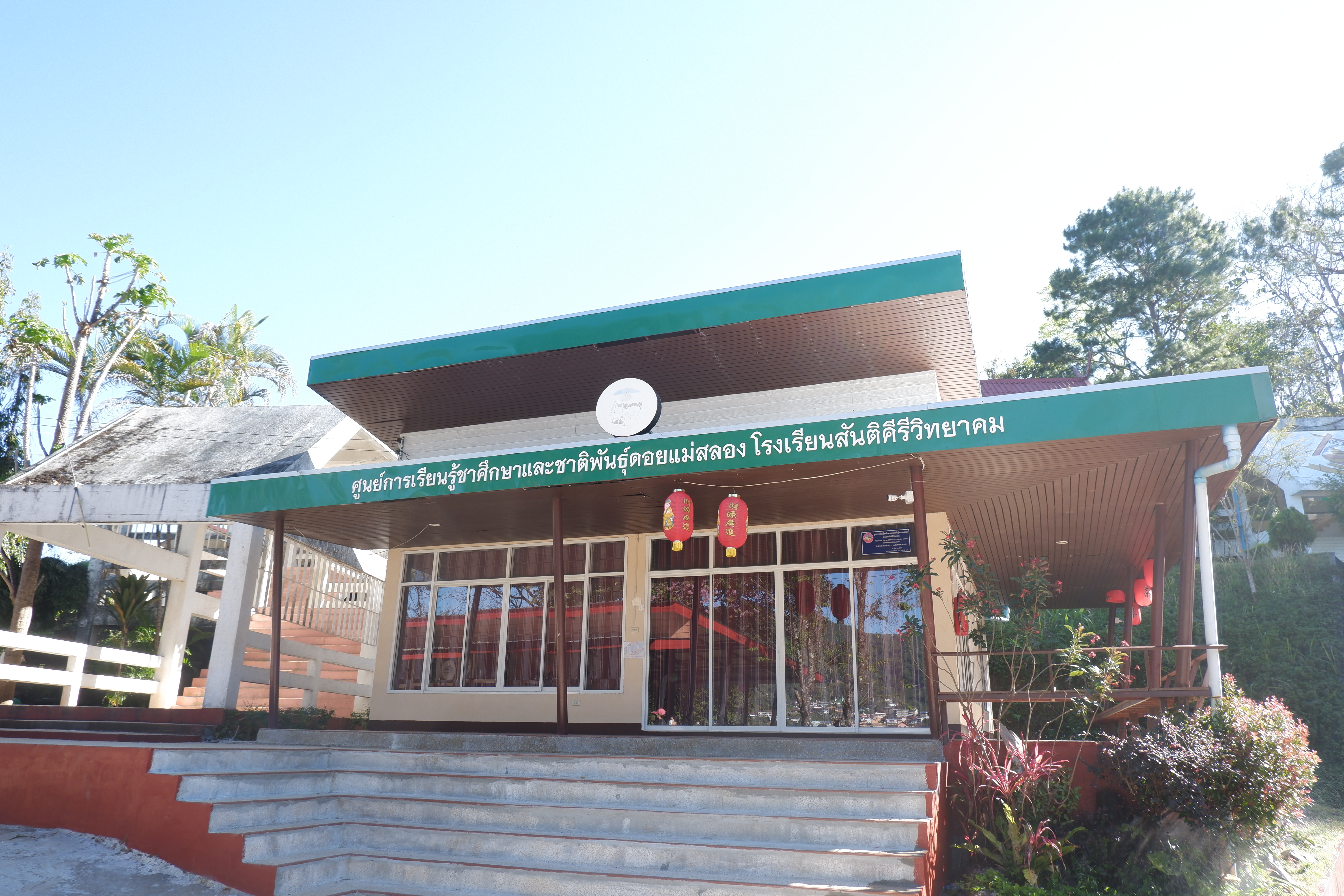
This research is conducted in Santikhiri, a hilltop village on the highest peak in the Doi Mae Salong forest, where climate change increases the intensity and frequency of natural disasters that immensely affect the local children in the mountainous area in Chiang Rai province, northern Thailand. There is only one secondary-level school in this forest landscape educating around 900 schoolchildren from various minority hill-tribe ethnic groups. This paper examines everyday life experiences recentering the village school's role as the producer of safe space for the forest children from climate disasters. School safety is a global framework for recognizing the importance of child-centered efforts in building disaster resilience for the education sector. Parameters and variables used to measure the disaster resilience of schools are adapted from the Climate Resilience Model and School Safety Model by Tong et al. (2012), covering three dimensions: 1) institutional issues, 2) physical conditions, and 3) external relationships. Lefebvre's Spatial Triad Framework is applied to dialectically interconnect dimensions to produce a safe space at the village school to protect the students from climate disaster threats. A mix-method method is applied with several techniques to collect data, including participant observation, semi-structured interviews, and content analysis. Furthermore, a scale Likert survey examined statements on school safety from educational practitioners in the rural forest area. The research argues that the production of safe space at the school is intertwined with budget allocation for disaster preparedness and response (institutional issue as l'espace concu), environmental protection campaign to create a hygienic school environment (physical conditions as l'espace percu), and support from the local community (external relations as l'espace vecu). However, the school is also two contradicting spaces of conceived and lived. Through the critical examination of the production of safe space, the school is a planned space of hierarchical power relations in institutional issues focusing on impacts from rapid-onset disasters. Concurrently, the forest children are still marginalized from external relationships and natural conditions' slow-onset climate change impacts.
References
Abdulharis, R., Handayani, A. P., Isouchi, C., & Meilano, I. (2022). Developing Community Disaster Resilience in the Lembang Fault Area, Indonesia: Lessons Learned from Japanese Experience. Applied Sciences, 12(3), 1271. https://doi.org/10.3390/app12031271
ADPC. (2010). Culture of Safety in Schools: Mandatory or Choice. Bangkok: ADPC. Retrieved from https://reliefweb.int/sites/reliefweb.int/files/resources/82EC90 AE0597034E8525780E0063615DFull_Report.pdf
Asian Disaster Reduction Center(ADRC). (2009). Thailand DRR Policy Peer Review Report 2009. Bangkok: Department of Disaster Prevention and Mitigation (DDPM), Ministry of Interior.
Altieri, M. (2004). The Ecological Role of Biodiversity in Agriculture. Routledge
Baker, S. M. (2009). Vulnerability and resilience in natural disasters: a marketing and public policy perspective. Journal of Public Policy & Marketing, 28(1), 114-123. https://doi.org/10.1509/jppm.28.1.114
Berkes, F., Colding, J., & Folke, C. (2000). Rediscovery of traditional ecological knowledge as adaptive management. Ecological applications, 10(5), 1251-1262. https://doi.org/10.2307/2641280
Cadena, A. J., Pond, D., & Rattanasorn, T. (2015). Integrated livelihoods and landscape approach for smallholders in Northern Thailand. Future of Food: Journal on Food, Agriculture and Society, 2(2), 22-29.
Cervone, J. A. (2017). The reproduction of rural spaces through education: Abstraction of the rural and the creation of new differential spaces. Policy Futures in Education, 15(4), 427-440. https://doi.org/10.1177/1478210316688356
Chatterjee, R., Shiwaku, K., Das Gupta, R., Nakano, G., & Shaw, R. (2015). Bangkok to Sendai and beyond: Implications for disaster risk reduction in Asia. International Journal of Disaster Risk Science, 6(2), 177-188. https://doi.org/10.1007/ s13753-015-0055-4
Christie, P. (2013). Space, place, and social justice: Developing a rhythmanalysis of education in South Africa. Qualitative Inquiry, 19(10), 775-785. https://doi.org/10.1177/1077800413503796
Cutler, D. M., & Lleras-Muney, A. (2010). Understanding differences in health behaviors by education. Journal of health economics, 29(1), 1-28. https://doi.org/10.1016/ j.jhealeco.2009.10.003
Cvetković, V., Roder, G., Öcal, A., Filipović, M., Janković, B., & Noji, E. (2018). Knowledge of children and youth about forest fires: Discrepancies between basic perception and reality. Vojno delo, 70(1), 171-185. http://dx.doi.org/10.5937/vojdelo 1801171C
Dale, V. H., Joyce, L. A., McNulty, S., Neilson, R. P., Ayres, M. P., Flannigan, M. D., ... & Wotton, B. M. (2001). Climate change and forest disturbances: climate change can affect forests by altering the frequency, intensity, duration, and timing of fire, drought, introduced species, insect and pathogen outbreaks, hurricanes, windstorms, ice storms, or landslides. BioScience, 51(9), 723-734. https://doi.org/10.1641/0006-3568(2001)051[0723:CCAFD]2.0.CO;2
Dechkamfoo, C., Sitthikankun, S., Kridakorn Na Ayutthaya, T., Manokeaw, S., Timprae, W., Tepweerakun, S., ... & Rinchumphu, D. (2022). Impact of rainfall-induced landslide susceptibility risk on mountain roadside in northern Thailand. Infrastructures, 7(2), 17. https://doi.org/10.3390/infrastructures7020017
Delang, C. O. (2004). Social and economic adaptations to a changing landscape: realities, opportunities and constraints. In Delang, C.O. (Ed.), Living at the Edge of Thai Society: The Karen in the Highlands of Northern Thailand (pp. 173-200). Routledge.
Devine, J., & Cohen, J. (2007). Making your school safe: Strategies to protect children and promote learning. Columbia: Teachers College Press.
Ding, Y., Hayes, M. J., & Widhalm, M. (2011). Measuring economic impacts of drought: a review and discussion. Disaster Prevention and Management, 20(4), 434-446. https://doi.org/10.1108/09653561111161752
Djalante, R., & Lassa, S. (2019). Governing complexities and its implication on the Sendai Framework for Disaster Risk Reduction priority 2 on governance. Progress in Disaster Science, 2, 100010. https://doi.org/10.1016/j.pdisas.2019.100010
Duangjai, W., Schmidt-Vogt, D., & Shrestha, R. P. (2015). Farmers’ land use decision-making in the context of changing land and conservation policies: A case study of Doi Mae Salong in Chiang Rai Province, Northern Thailand. Land Use Policy, 48, 179-189. https://doi.org/10.1016/j.landusepol.2015.06.002
Elden, S. (2004). Understanding Henri Lefebvre: theory and the possible. New York: Continuum.
EMDAT-CRED. (2020). 2020 The Non-COVID Year in Disasters. Retrieved from https://www.undrr.org/publication/2020-non-covid-year-disasters
Ford, D. (2017). Education and the Production of Space: Political Pedagogy, Geography, and Urban Revolution. Routledge. https://doi.org/10.4324/9781315389127
Ganjanapan, A. (1998). The Politics of Conservation and the Complexity of Local Control of Forests in the Northern Thai Highlands. Mountain Research and Development, 18(1), 71-82. https://doi.org/10.2307/3673869
Geist, H. J., & Lambin, E. F. (2001). What drives tropical deforestation. LUCC Report series, 4, 116.
Goonewardena, K. et al. (2008). Space, Difference, Everyday Life: Reading Henri Lefebvre. Routledge: United States.
Gottdiener, M. (1993). A Marx for our time: Henri Lefebvre and the production of space. Sociological Theory, 11(1), 129-134. https://doi.org/10.2307/201984
ICEM-International Centre for Environmental Management. (2003). Thailand National Report on Protected Areas and Development. International Centre for Environmental Management.
Jintaprasat, R. (2016). Soil amplification assessment of earthquake ground motionusing geophysical and geotechnical data in Amphoe Muang, Changwat Chiang Rai (Doctoral dissertation, Bangkok: Chulalongkorn University).
Joshi, A., Kale, S., Chandel, S., & Pal, D. K. (2015). Likert scale: Explored and explained. British journal of applied science & technology, 7(4), 396.
Kar, N., Mohapatra, P. K., Nayak, K. C., Pattanaik, P., Swain, S. P., & Kar, H. C. (2007). Post-traumatic stress disorder in children and adolescents one year after a super-cyclone in Orissa, India: exploring cross-cultural validity and vulnerability factors. BMC psychiatry, 7(1), 1-9. https://doi.org/10.1186/1471-244X-7-8
Kartez, J. D., & Lindell, M. K. (1987). Planning for uncertainty: The case of local disaster planning. Journal of the American Planning Association, 53(4), 487-498. https://doi.org/10.1080/01944368708977138
Khan, A. A., Rana, I. A., & Najam, F. A. (2020). Assessing school safety against natural and human-made hazards: A case study of Gilgit city, Pakistan. Journal of Geography and Social Sciences, 2(2), 133-147.
Kim, J. J. (2004). Ambient air pollution: health hazards to children. Pediatrics, 114(6), 1699-1707. https://doi.org/10.1542/peds.2004-2166
Kitagawa, K. (2020). Development of disaster risk reduction policy in Thailand. Disaster Prevention and Management, (ahead-of-print). https://doi.org/10.1108/DPM-08-2019-0244
Leake, H. (2007). International Negotiations on Forest. Biodiversity, 8(4), 44-48. https://doi.org/10.1080/14888386.2007.9712836
Lefebvre, H. (1991). The Production of Space (1974, 1st edn). Translated from the French by D. Nicholson-Smith. Wiley-Blackwell.
Lefebvre, H. (2003). The Urban Revolution. University of Minnesota Press
Lefebvre, H. (2004). Rhythmanalysis: Space, Time and Everyday Life. Continuum.
Lefebvre, H. (2014). Dissolving city, planetary metamorphosis. Environment and Planning D: Society and Space, 32(2), 203-205. https://doi.org/10.1068/ d3202tra
Lefebvre, H. (2022). On the Rural: Economy, Sociology, Geography. Minnesota: University of Minnesota Press.
Merrifield, A. (2006). Henri Lefebvre: a critical introduction. Routledge.
Middleton, S. (2014). Henri Lefebvre and Education: Space, History, Theory. Routledge.
Ministry of Natural Resources and Environment. (2015). Climate Change Master Plan 2015 - 2050. Retrieved from https://climate.onep.go.th/wp-content/uploads/ 2019/07/CCMP_english.pdf
MoE. (2008). The Basic Education Core Curriculum B.E. 2551. Retrieved from http://www.act.ac.th/document/1741.pdf
NDPMC. (2015). National Disaster Risk Management Plan. Retrieved from https://www.disaster.go.th/upload/download/file_attach/584115d64fcee.pdf
Ocal, A. & Topkaya, Y. (2011). Earthquake preparedness in schools in seismic hazard regions in the South-East of Turkey. Disaster Prevention and Management, 20(3), 334-348. DOI 10.1108/09653561111141754.
Oreopoulos, P. & Salvanes, K. G. (2011). Priceless: The Nonpecuniary Benefits of Schooling. Journal of Economic Perspectives, 25(1), 159-184. https://doi.org/ 10.1257/jep.25.1.159
Peek, L., Abramson, D. M., Cox, R. S., Fothergill, A., & Tobin, J. (2018). Children and disasters. In Rodríguez, H., Donner, W., Trainor, J. (Eds.), Handbook of disaster research (pp. 243-262). Springer. https://doi.org/10.1007/978-3-319-63254-4_13
Pfefferbaum, B., Jacobs, A. K., Jones, R. T., Reyes, G., & Wyche, K. F. (2017). A skill set for supporting displaced children in psychological recovery after disasters. Current Psychiatry Reports, 19(9), 1-8. https://doi.org/10.1007/s11920-017-0814-6
Pinthong, J. (1992). Evaluation of Forest Occupancy for Framing. Institution of Local Community Development.
Piyasil, V., Ketuman, P., Plubrukarn, R., Jotipanut, V., Tanprasert, S., Aowjinda, S., & Thaeeromanophap, S. (2007). Post traumatic stress disorder in children after tsunami disaster in Thailand: 2 years follow-up. Medical journal of the Medical Association of Thailand, 90(11), 2370-6.
Pollock, W., & Wartman, J. (2020). Human vulnerability to landslides. GeoHealth, 4(10), e2020GH000287. https://doi.org/10.1029/2020GH000287
Saadati, S., Soltani, S. A. E. I. D., & Eslamian, S. S. (2009). Statistical analysis of return period of drought conditions in Isfahan province using the Standardized Precipitation Index. Journal of Range and Watershed Management, 62(2), 257-269.
Sakboon, M. (2013). Controlling Bad Drugs, Creating Good Citizens: Citizenship and Social Immobility for Thailand's Hill Ethnic Minorities. In Barry, C. (Ed.), Rights to Culture: Heritage, Language and Community in Thailand. Silkworm Books.
Sakurai, A., Bisri, M. B. F., Oda, T., Oktari, R. S., & Murayama, Y. (2017, February). Assessing school disaster preparedness by applying a comprehensive school safety framework: A case of elementary schools in Banda Aceh City. IOP Conference Series: Earth and Environmental Science 56(1), 012021. https://doi.org/10.1088/1755-1315/56/1/012021
Save the Children. (2006). Save the Children Annual Report 2006. Connecticut: Save the Children Federation Inc.
Schmid, C. (2008). Henri Lefebvre’s theory of the production of space: Towards a three-dimensional dialectic. In Goonewardena, K., Kipfer, S., Milgrom, R., & Schmid, C. (Eds.), Space, Difference, Everyday Life: Reading Henri Lefebvre (pp. 41-59). Routledge.
Seeboonruang, U. (2016). Impact assessment of climate change on groundwater and vulnerability to drought of areas in Eastern Thailand. Environmental Earth Sciences, 75(1), 1-13. https://doi.org/10.1007/s12665-015-4896-3
Shrestha, R. P., Chaweewan, N., & Arunyawat, S. (2017). Adaptation to climate change by rural ethnic communities of Northern Thailand. Climate, 5(3), 57. https://doi.org/10.3390/cli5030057
Siripong, A. (2010). Education for disaster risk reduction in Thailand. Journal of Earthquake and Tsunami, 4(02), 61-72.
Tanchaisawat, T., & Hirano, N. (2018). Appropriate attenuation model for Chiang Mai, Thailand from field measurement to model equation. GEOMATE Journal, 15(47), 48-52.
Thompson, D. W., & Solomon, S. (2009). Understanding recent stratospheric climate change. Journal of Climate, 22(8), 1934-1943. https://doi.org/10.1175/ 2008JCLI2482.1
Till, J. (2009). Architecture Depends. MIT Press.
Tong, T. M. T., Shaw, R., & Takeuchi, Y. (2012). Climate disaster resilience of the education sector in Thua Thien Hue Province, Central Vietnam. Natural hazards, 63(2), 685-709. https://doi.org/10.1007/s11069-012-0178-5
Triastari, I. (2021). Developing Disaster Mitigation Education with Local Wisdom: Exemplified in Indonesia Schools. IOP Conf. Series: Earth and Environmental Science, 884. DOI:10.1088/1755-1315/884/1/012004
Turner, B. L., Kasperson, R. E., Matson, P. A., McCarthy, J. J., Corell, R. W., Christensen, L., ... & Schiller, A. (2003). A framework for vulnerability analysis in sustainability science. Proceedings of the national academy of sciences, 100(14), 8074-8079.UNESCO. (2013). Towards a Learning Culture of Safety and Resilience: Technical Guidance for Integrating Disaster Risk Reduction in the School Curriculum (Pilot Version). Geneva/Paris: UNESCO.
UNICEF. (2011). Children and Disasters: Building Resilience Through Education. Retrieved from https://www.unisdr.org/files/24583_childrenanddisastersbuild ingresilie.pdf
UNICEF. (2016). Basic Education Sector SNAPSHOT for Comprehensive School Safety and Education in Emergencies in Thailand. Retrieved from https://www.preventionweb.net/files/67965_6796509esscsseiereportthaeng2016.pdf.
United Nations. (2014). The Millennium Development Goals Report 2014. United Nations.
Van der Meer, A., & Van Winden, W. (2003). E-governance in cities: A comparison of urban information and communication technology policies. Regional Studies, 37(4), 407-419.
Vandermeer, J. & Perfecto, I. (2008). Biodiversity Conservation in Tropical Agroecosystems. Annals of the New York Academy of Sciences, 1134(1): 173-200. DOI:10.1196/annals.1439.011
Virapongse, A. (2017). Smallholders and forest landscape restoration in upland northern Thailand. International Forestry Review, 19(4), 102-119.
Wahlström, M. (2015). The critical role of trees and forests in disaster risk reduction. Unasylva, 66(243/244), 3-5.
Wongphyat, W., & Tanaka, M. (2020). A Prospect of Disaster Education and Community Development in Thailand: Learning from Japan. Nakhara: Journal of Environmental Design and Planning, 19, 1-24. https://doi.org/10.54028/NJ202 019124
Yamane, T. (1967). Statistics: An Introductory Analysis (2nd Edition). Harper and Row.
Zarafshani, K., Gorgievski, M. J., & Zamani, G. H. (2007). Dealing with drought: A comparison of perceptions and coping strategies of Iranian farmers from regions with different drought intensities. Journal of agricultural education and extension, 13(1), 69-80. https://doi.org/10.1080/13892240601162130
Additional Files
Published
License
Copyright (c) 2022 Forest and Society

This work is licensed under a Creative Commons Attribution 4.0 International License.
This is an open access journal which means that all contents is freely available without charge to the user or his/her institution. Users are allowed to read, download, copy, distribute, print, search, or link to the full texts of the articles in this journal without asking prior permission from the publisher or the author. This is in accordance with the BOAI definition of open access.
Submission of an article implies that the work described has not been published previously (except in the form of an abstract or as part of a published lecture or academic thesis), that it is not under consideration for publication elsewhere, that its publication is approved by all authors and tacitly or explicitly by the responsible authorities where the work was carried out, and that, if accepted, will not be published elsewhere in the same form, in English or in any other language, without the written consent of the Publisher. An article based on a section from a completed graduate dissertation may be published in Forest and Society, but only if this is allowed by author's(s') university rules. The Editors reserve the right to edit or otherwise alter all contributions, but authors will receive proofs for approval before publication.
Forest and Society operates a CC-BY 4.0 © license for journal papers. Copyright remains with the author, but Forest and Society is licensed to publish the paper, and the author agrees to make the article available with the CC-BY 4.0 license. Reproduction as another journal article in whole or in part would be plagiarism. Forest and Society reserves all rights except those granted in this copyright notice

