
The Pagoda of the Gods: A case for Indigenous Karen sacred sites as Special Cultural Zones along Thailand’s borders
DOI:
https://doi.org/10.24259/fs.v6i2.20962Keywords:
Biocultural conservation, biocultural diversity, Indigenous knowledge, Indigenous rights, Special Economic Zones, exclusionary forest policy, fortress protection, spiritual ontology, sacred groveAbstract
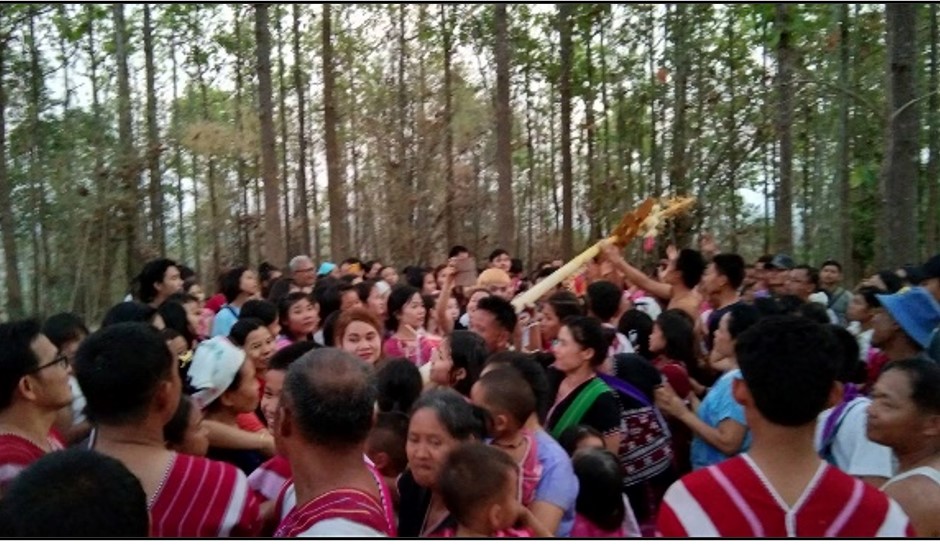
Burgeoning recognition of Indigenous traditional ecological knowledge and livelihood practices have led to ‘Special Cultural Zone’ designations for some traditionally Indigenous lands in Thailand. Simultaneously, the Thai government has designated 10 Special Economic Zones (SEZs) to bolster trade and investments along its borders without acknowledging the pre-existence of Indigenous peoples. SEZs intersect with sites of notable cultural significance, such as Kho Pho Lu (Pagoda of the Gods), a sacred site for Indigenous Karen near Mae Sot in Tak province. Detailed ethnographic and interview findings show the resilience of these sacred sites and embedded ritualistic place-making practices that persist despite a legacy of Indigenous displacement. Ethnobotanical findings of 39 sampled taxa in the sacred forest of Kho Pho Lu indicate that cultural and spiritual practices support local biodiversity conservation. Potential biocultural conservation approaches include the adoption of ‘Special Cultural Zones’ to promote Indigenous well-being and the preservation of biocultural diversity in Thailand.
References
Armitage, D., Berkes, F., Dale, A., Kocho-Schellenberg, E., & Patton, E. (2011). Co-management and the co-production of knowledge: Learning to adapt in Canada’s Arctic. Global Environmental Change, 21(3), 995–1004. https://doi.org/10.1016/j.gloenvcha.2011.04.006
Baird, I. G., Leepreecha, P., & Yangcheepsutjarit, U. (2017). Who should be considered ‘Indigenous’? A survey of ethnic groups in northern Thailand. Asian Ethnicity. https://doi.org/10.1080/14631369.2016.1268044
Barclay, S. H., & Steele, M. (2021). Rethinking protections for indigenous sacred sites. Harvard Law Review.
Berkes, F. (1999). Sacred Ecology. Traditional Ecological Knowledge and Resource Management. Philadelphia and London: Taylor & Francis. https://doi.org/10.4324/9780203928950
Berkes, F. (2009a). Community conserved areas: policy issues in historic and contemporary context. Conservation Letters, 2(1), 20–25. https://doi.org/10.1111/j.1755-263x.2008.00040.x
Berkes, F. (2009b). Evolution of co-management: Role of knowledge generation, bridging organizations and social learning. Journal of Environmental Management, 90(5), 1692–1702. https://doi.org/10.1016/j.jenvman.2008.12.001
Berkes, F., Colding, J., & Folke, C. (2000). Rediscovery of Traditional Ecological Knowledge as Adaptive Management. Ecological Applications. https://doi.org/10.1890/1051-0761(2000)010[1251:ROTEKA]2.0.CO;2
Berkes, F., & Folke, C. (1994). Investing in cultural capital for sustainable use of natural capital. In Investing in natural capital the ecological economics approach to sustainability.
Berkes, F., & Folke, C. (1998). Linking social and ecological systems: management practices and social mechanisms for building resilience. Cambridge University Press.
Bhagwat, S. A., Kushalappa, C. G., Williams, P. H., & Brown, N. D. (2005). The role of informal protected areas in maintaining biodiversity in the Western Ghats of India. Ecology and Society. https://doi.org/10.5751/ES-01285-100108
Bhagwat, S. A., & Rutte, C. (2006). Sacred groves: Potential for biodiversity management. Frontiers in Ecology and the Environment, 4(10), 519–524. https://doi.org/10.1890/1540-9295(2006)4[519:SGPFBM]2.0.CO;2
Buergin, R. (2003). Trapped in environmental discourses and politics of exclusion: Karen in the Thung Yai Naresuan Wildlife Sanctuary in the context of forest and hill tribe policies in Thailand. In Living at the Edge of Thai Society: The Karen in the Highlands of Northern Thailand. Routledge. https://doi.org/10.4324/9780203356456
Buergin, R. (2015). Contested Rights of Local Communities and Indigenous Peoples in Conflicts over Biocultural Diversity: The case of Karen communities in Thung Yai, a World Heritage Site in Thailand. Modern Asian Studies, 49(6), 2022–2062. https://doi.org/10.1017/S0026749X14000390
Carmichael, D. L., Hubert, J., Reeves, B., & Schanche, A. (Eds.). (1994). Sacred Sites, Sacred Places. https://doi.org/10.4324/9780203714041
Chandran, M. D. S., Gadgil, M., & Hughes, J. D. (1998). Sacred groves of the Western Ghats. In Conserving the sacred for biodiversity management (pp. 211–232). New Delhi: Oxford and IBH.
Chandran, R. (2020a). “The sea is all we know”: Thai villagers fight industrial zone. Retrieved February 9, 2022, from https://news.trust.org/item/20201229100016-2a6fb
Chandran, R. (2020b). With social media and academics, Thai villagers save ancestral forest. Retrieved February 9, 2022, from https://news.trust.org/item/20200928230812-vlgun
Colding, J., & Folke, C. (2001). Social Taboos: “Invisible” Systems of Local Resource Management and Biological Conservation. Ecological Applications, 11(2), 584–600. Retrieved from url: http://www.jstor.org/stable/3060911
Cultural Survival & Network of Indigenous Peoples in Thailand & the Asia Indigenous Peoples Pact. (2016). The Rights of Indigenous Peoples in Thailand. In 2nd CYCLE UNIVERSAL PERIODIC REVIEW Thailand UPR 2016 - ADVOCACY FACTSHEET. Retrieved from https://tbinternet.ohchr.org/Treaties/CCPR/Shared Documents/THA/INT_CCPR_ICO_THA_23570_E.pdf
Delang, C. O. (2005). The political ecology of deforestation in Thailand. Geography. https://doi.org/10.1080/00167487.2005.12094135
Dudgeon, R. C., & Berkes, F. (2003). Local Understandings of the Land: Traditional Ecological Knowledge and Indigenous Knowledge. In H. Selin (Ed.), Nature Across Cultures: Views of Nature and the Environment in Non-Western Cultures (pp. 75–96). Kluwer Academic Publishers. https://doi.org/10.1007/978-94-017-0149-5_4
FAO. (2019). The State of the World’s Biodiversity for Food and Agriculture. Rome. Retrieved from http://www.fao.org/3/CA3129EN/CA3129EN.pdf
Garnett, S. T., Burgess, N. D., Fa, J. E., Fernández-Llamazares, Á., Molnár, Z., Robinson, C. J., … Leiper, I. (2018). A spatial overview of the global importance of Indigenous lands for conservation. Nature Sustainability, 1(7), 369–374. https://doi.org/10.1038/s41893-018-0100-6
Gavin, M. C., McCarter, J., Mead, A., Berkes, F., Stepp, J. R., Peterson, D., & Tang, R. (2015). Defining biocultural approaches to conservation. Trends in Ecology and Evolution, 30(3), 140–145. https://doi.org/10.1016/j.tree.2014.12.005
Grazia Borrini-Feyerabend, M. P., Farvar, M. T., Renard, A. K., & Renard, Y. (2005). Sharing Power: Learning-by-doing in Co-management of Natural Resources throughout the World. Electronic Green Journal. https://doi.org/10.5070/g312210632
Hayami, Y. (1996). Karen tradition according to Christ or Buddha: The implications of multiple reinterpretations for a minority ethnic group in Thailand. Journal of Southeast Asian Studies. https://doi.org/10.1017/S0022463400021093
Hayami, Y. (1997). Internal and external discourse of communality, tradition and environment: Minority claims on forest in the northern hills of Thailand. Southeast Asian Studies. https://doi.org/10.20495/tak.35.3_558
Hayami, Y. (2011). Pagodas and prophets: Contesting sacred space and power among buddhist karen in karen state. Journal of Asian Studies. https://doi.org/10.1017/S0021911811001574
Hubert, J. (1994). Introduction. In D. L. Carmichael, J. Hubert, B. Reeves, & A. Schanche (Eds.), Sacred Sites, Sacred Places. Routledge.
IPBES. (2018). Science and Policy for People and Nature. Retrieved March 19, 2018, from https://www.ipbes.net
IUCN. (2009). Indigenous and Community Conserved Areas.
Kailash, S. M., & Yogesh, G. (2001). Cultural and Ecological Dimensions of Sacred Groves in India.
Khan, M. L., Khumbongmayum, A. D., & Tripathi, R. S. (2008). The sacred groves and their significance in conserving biodiversity an overview. International Journal of Ecology and Environmental Sciences.
Kothari, A. (2006). Community conserved areas: Towards ecological and livelihood security. Parks, 16(1), 3–13.
Kuhnlein, H. V. (1996). Dietary Change and Traditional Food Systems of Indigenous Peoples. Annual Review of Nutrition. https://doi.org/10.1146/annurev.nutr.16.1.417
Kunstadter, P. (1983). Karen Agro-Forestry: Processes, Functions, and Implications for Socio-Economic, Demographic, and Environmental Change in Northern Thailand. Mountain Research and Development. https://doi.org/10.2307/3673036
Lohmann, L. (1999). Forest Cleansing: Racial Oppression in Scientific Nature Conservation. Corner House Briefing 13.
Maybury-Lewis, D. (1997). Indigenous peoples, ethnic groups, and the state. The Cultural Survival Studies in Ethnicity and Change.
Mgumia, F. H., & Oba, G. (2003). Potential role of sacred groves in biodiversity conservation in Tanzania. Environmental Conservation. https://doi.org/10.1017/S0376892903000250
Mulder, M. B., & Coppolillo, P. (2005). The Evolution of Policy. In Conservation: Linking Ecology, Economics, and Culture (pp. 27–52).
Murray Li, T. (2010). Indigeneity, Capitalism, and the Management of Dispossession. Current Anthropology. https://doi.org/10.1086/651942
Nair, N. C. (1981). On the rediscovery of four threatened species from sacred groves of Kerala. Journal of Economic Taxonomy and Botany, 2, 233–234.
Ntiamoa-Baidu, Y. (2008). Indigenous Beliefs and Biodiversity Conservation: The Effectiveness of Sacred Groves, Taboos and Totems in Ghana for Habitat and Species Conservation. Journal for the Study of Religion, Nature and Culture. https://doi.org/10.1558/jsrnc.v2i3.309
Ostrom, E. (2015). Governing the commons: The evolution of institutions for collective action. Governing the Commons: The Evolution of Institutions for Collective Action. https://doi.org/10.1017/CBO9781316423936
Oviedo, G., Jeanrenaud, S., & Otegui, M. (2005). Protecting Sacred Natural Sites of Indigenous and Traditional Peoples: an IUCN Perspective.
Phongchiewboon, A., Farrelly, T., Hytten, K., & Holland, J. (2020). Political ecology, privation and sustainable livelihoods in northern Thailand’s national parks. Journal of Political Ecology, 27(1), 360–377. https://doi.org/10.2458/V27I1.23753
Post, S. C. M. (2021). Thai farmers fear loss of land to industrial zone linked to China’s belt and road. Retrieved February 21, 2022, from https://www.scmp.com/news/asia/southeast-asia/article/3161702/thai-farmers-fear-loss-land-industrial-zone-linked-chinas
Povinelli, E. A. (2002). The Cunning of Recognition. The Cunning of Recognition. https://doi.org/10.1215/9780822383673
Pretty, J. N., Adams, B., Berkes, F., Athayde, S. F. de, Dudley, N., Hunn, E., … Pilgrim, S. (2009). The Intersections of Biological Diversity and Cultural Diversity: Towards Integration. Conservation & Society, 7(2), 100–112.
Rastogi, V. (2018). Thailand’s Special Economic Zones – Opportunities for Investment. Retrieved February 9, 2022, from https://www.aseanbriefing.com/news/thailands-special-economic-zones-opportunities-investment/
Robson, J. P., & Berkes, F. (2010). Sacred nature and community conserved areas. In Nature and Culture: Rebuilding Lost Connections (pp. 197–216). https://doi.org/10.4324/9781849776455
Salick, J., Amend, A., Anderson, D., Hoffmeister, K., Gunn, B., & Zhendong, F. (2007). Tibetan sacred sites conserve old growth trees and cover in the eastern Himalayas. Biodiversity and Conservation, 16(3), 693–706. https://doi.org/10.1007/s10531-005-4381-5
Schmidt-Vogt, D. (1998). Defining degradation: the impacts of swidden on forests in northern Thailand. Mountain Research and Development. https://doi.org/10.2307/3673969
Smyth, D. (2015). Indigenous protected areas and ICCAs: Commonalities, contrasts and confusions. Parks. https://doi.org/10.2305/IUCN.CH.2014.PARKS-21-2DS.en
Sobrevila, C. (2008). The Role of Indigenous Peoples in Biodiversity Conservation: The Natural but often forgotten partners. The World Bank.
Sukumaran, S., & Raj, A. D. S. (2007). Rare, endemic, threatened (RET) trees and lianas in the sacred groves of Kanyakimiari District. Indian Forester.
Tapp, N. (1989). The impact of missionary christianity upon marginalized ethnic minorities: The case of the hmong. Journal of Southeast Asian Studies. https://doi.org/10.1017/S0022463400019858
Tauli-Corpuz, V., Alcorn, J., Molnar, A., Healy, C., & Barrow, E. (2020). Cornered by PAs: Adopting rights-based approaches to enable cost-effective conservation and climate action. World Development. https://doi.org/10.1016/j.worlddev.2020.104923
Uquillas, J. E., & Nieuwkoop, M. Van. (2006). Social Capital and Indigenous Peoples Development Programs in Ecuador. In The Search for Empowerment: Social Capital as Idea and Practice at the World Bank (pp. 145–176). Kumarian Press.
Vipat, A., & Bharucha, E. (2014). Sacred Groves: The Consequence of Traditional Management. Journal of Anthropology. https://doi.org/10.1155/2014/595314
Walker, A. (2001). The “Karen Consensus”, Ethnic Politics and Resource-Use Legitimacy in Northern Thailand. Asian Ethnicity. https://doi.org/10.1080/14631360124782
West, P., Igoe, J., & Brockington, D. (2006). Parks and Peoples: The Social Impact of Protected Areas. Annual Review of Anthropology. https://doi.org/10.1146/annurev.anthro.35.081705.123308
Young, O. R., King, L. A., & Schroeder, H. (2010). Institutions and Environmental Change: Principal Findings, Applications, and Research Frontiers. International Environmental Agreements: Politics, Law and Economics.
Additional Files
Published
Issue
Section
Categories
License
Copyright (c) 2022 Forest and Society

This work is licensed under a Creative Commons Attribution 4.0 International License.
This is an open access journal which means that all contents is freely available without charge to the user or his/her institution. Users are allowed to read, download, copy, distribute, print, search, or link to the full texts of the articles in this journal without asking prior permission from the publisher or the author. This is in accordance with the BOAI definition of open access.
Submission of an article implies that the work described has not been published previously (except in the form of an abstract or as part of a published lecture or academic thesis), that it is not under consideration for publication elsewhere, that its publication is approved by all authors and tacitly or explicitly by the responsible authorities where the work was carried out, and that, if accepted, will not be published elsewhere in the same form, in English or in any other language, without the written consent of the Publisher. An article based on a section from a completed graduate dissertation may be published in Forest and Society, but only if this is allowed by author's(s') university rules. The Editors reserve the right to edit or otherwise alter all contributions, but authors will receive proofs for approval before publication.
Forest and Society operates a CC-BY 4.0 © license for journal papers. Copyright remains with the author, but Forest and Society is licensed to publish the paper, and the author agrees to make the article available with the CC-BY 4.0 license. Reproduction as another journal article in whole or in part would be plagiarism. Forest and Society reserves all rights except those granted in this copyright notice