
Determinants of the decision to adopt climate change adaptation strategies among smallholder upland farmers in Southeast Asia
DOI:
https://doi.org/10.24259/fs.v7i2.22641Keywords:
Community assets, Determinants, Innovation, Knowledge, Institutions, ImpactsAbstract
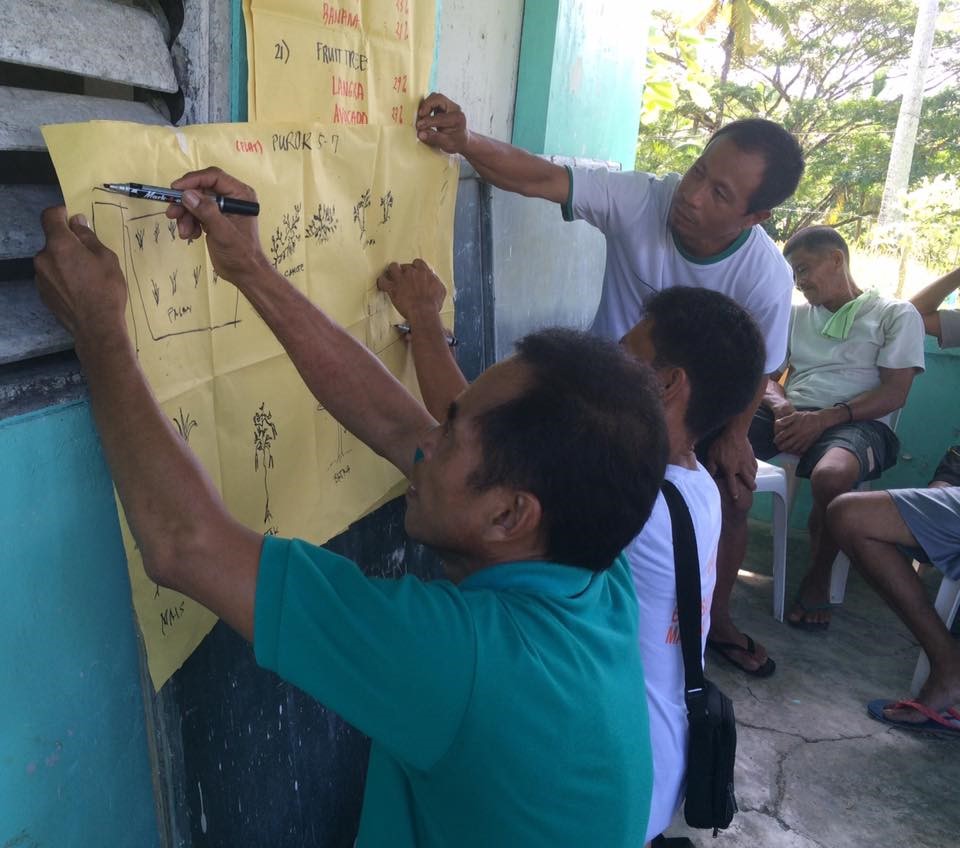
This article argues that local adaptive capacity of the smallholder farmers determines their decision to adopt climate change adaptation strategies in the upland farming communities in the Philippines. This argument is based on the research conducted in the selected upland farming communities in the Philippines, Vietnam and Timor-Leste in 2017-2018 using the Local Adaptive Capacity (LAC) framework as the theoretical foundation. The study involved a survey of 637 upland farmers who were selected using simple random sampling; focus group discussion; key informant interviews; and, farm visits. Results revealed that the smallholder farmers across the three countries had low level of adaptive capacity. Binary logistics regression also indicates that leadership (p=.078) and innovations (p=.000) are the factors that influence farmers to adopt climate change adaptation strategies in the Philippines, while knowledge (p=0.000) and community assets (p=0.000) as the determinants among the smallholder farmers in Vietnam. In Timor-Leste, the decision to adopt climate change adaptation strategies are community assets (p=0.001), knowledge (p=0.000), and innovations (p=0.007). These results suggest an urgent need of enhancing the local adaptive capacity of smallholder farmers to be able to adapt to the impacts of climate change.
References
Abdul-Razak, M., & Kruse, S. (2017). The adaptive capacity of smallholder farmers to climate change in the Northern Region of Ghana. Climate Risk Management, 17, 104-122. https://doi.org/10.1016/j.crm.2017.06.001
Akinnagbe, O. M., & Irohibe, I. J. (2014). Agricultural adaptation strategies to climate change impacts in Africa: A review. Bangladesh Journal of Agricultural Research, 39(3), 407-418. https://doi.org/10.3329/bjar.v39i3.21984
Akinyi, D. P., Karanja Ng’ang’a, S., & Girvetz, E. H. (2021). Trade-offs and synergies of climate change adaptation strategies among smallholder farmers in sub-Saharan Africa: A systematic review. Regional Sustainability, 2(2), 130-143. https://doi.org/10.1016/j.regsus.2021.05.002
Antwi-Agyei, P., Wiafe, E. A., Amanor, K., Baffour-Ata, F., & Codjoe, S. N. A. (2021). Determinants of choice of climate change adaptation practices by smallholder pineapple farmers in the semi-deciduous forest zone of Ghana. Environmental and Sustainability indicators, 12, 100140. https://doi.org/10.1016/j.indic.2021. 100140
Atube, F., Malinga, G. M., Nyeko, M., Okello, D. M., Alarakol, S. P., & Okello-Uma, I. (2021). Determinants of smallholder farmers’ adaptation strategies to the effects of climate change: Evidence from northern Uganda. Agriculture & Food Security, 10(1), 1-14. https://doi.org/10.1186/s40066-020-00279-1
Brown, I. (2018). Assessing climate change risks to the natural environment to facilitate cross-sectoral adaptation policy. Philosophical Transactions of the Royal Society A: Mathematical, Physical and Engineering Sciences, 376(2121), 20170297. https://doi.org/10.1098/rsta.2017.0297
Centino, Z. M. H., & Vista, A. B. (2018). Determinants of corn farmers to adapt to climate change impacts in Sagbayan, Bohol, Philippines. Annals of Tropical Research, 40(2), 77-89. https://doi.org/10.32945/atr4027.2018
Chalchisa, S. S. T. (2016). Farmers’ perception, impact and adaptation strategies to climate change among smallholder farmers in sub-Saharan Africa: A systematic review. Journal of Resources Development and Management, 26, 1-8.
Coff, R. W. (2002). Human capital, shared expertise, and the likelihood of impasse in corporate acquisitions. Journal of Management, 28(1), 107–128. https://doi.org/ 10.1177/014920630202800107
Colting-Pulumbarit, C., Lasco, R., Rebancos, C., & Coladilla, J. (2018). Sustainable livelihoods-based assessment of adaptive capacity to climate change: The case of organic and conventional vegetable farmers in La Trinidad, Benguet, Philippines. Journal of Environmental Science and Management, 21(2), 57-69. https:// doi.org/10.47125/jesam/2018_2/08
Crook, T. R., Todd, S. Y., Combs, J. G., Woehr, D. J., & Ketchen Jr, D. J. (2011). Does human capital matter? A meta-analysis of the relationship between human capital and firm performance. Journal of Applied Psychology, 96(3), 443-456. https:// psycnet.apa.org/doi/10.1037/a0022147
Debertin, D. L., & Goetz, S. J. (2013). Social capital formation in rural, urban and suburban communities. Working or Discussion Paper No. 474. University of Kentucky. http://dx.doi.org/10.22004/ag.econ.159102
Defiesta, G., & Rapera, C. (2014). Measuring adaptive capacity of farmers to climate change and variability: Application of a composite index to an agricultural community in the Philippines. Journal of Environmental Science and Management, 17(2), 48-62. http://dx.doi.org/10.47125/jesam/2014_2/05
Department for International Development (DFID). (2000). DFID Guidance Sheets. Retrieved from http://www.efls.ca/webresources/DFID_Sustainable_livelihoods _guidance_sheet.pdf
Elia, E. (2017). Farmers’ awareness and understanding of climate change and variability in Central semi-arid Tanzania. University of Dar es Salaam Library Journal, 12(2), 124-138.
Evangelista, R. J., Evangelista, K. P., Ureta, J., & Lasco, R. (2015). Vulnerability of smallholder farmers in Lantapan, Bukidnon. ICRAF Working Paper. ICRAF & CIFOR. http://dx.doi.org/10.5716/ WP15727.PDF
Food and Agriculture Organization (FAO). (2020). Supporting climate change adaptation in smallholder agriculture: Summary of lessons learnt. FAO. Retrieved from https://www.fao.org/3/cb1768en/CB1768EN.pdf
Harvey, C. A., Saborio-Rodríguez, M., Martinez-Rodríguez, M. R., Viguera, B., Chain-Guadarrama, A., Vignola, R., & Alpizar, F. (2018). Climate change impacts and adaptation among smallholder farmers in Central America. Agriculture & Food Security, 7(1), 1-20. https://doi.org/10.1186/s40066-018-0209
Intergovernmental Panel for Climate Change (IPCC). (2014). Fifth Assessment Report. Retrieved from http://www.ipcc.ch/report/ar5/syr/
IPCC. (2007). Climate Change 2007: The Physical Science Basis: Contribution of Working Group I to the Fourth Assessment Report of the Intergovernmental Panel on Climate Change. Cambridge University Press.
Jones, L., Ludi, E., & Levine, S. (2010). Towards a characterisation of adaptive capacity: a framework for analysing adaptive capacity at the local level. Overseas Development Institute.
Kabir, A., Amin, M. N., Roy, K., & Hossain, M. S. (2021). Determinants of climate change adaptation strategies in the coastal zone of Bangladesh: implications for adaptation to climate change in developing countries. Mitigation and Adaptation Strategies for Global Change, 26(7), 30. https://doi.org/10.1007/s11027-021-09968-z
Kasperczyk N. and K. Knickel. (2006). The Analytic Hierarchy Process (AHP). Retrieved from http://www.ivm.vu.nl/en/Images/MCA3_tcm234-161529.pdf
Keil, A., Zeller, M., Wida, A., Sanim, B., & Birner, R. (2008). What determines farmers’ resilience towards ENSO-related drought? An empirical assessment in Central Sulawesi, Indonesia. Climatic Change, 86, 291-307. https://doi.org/10.1007/ s10584-007-9326-4
Kiumbuku, S., Baaru, M., & Mutindia, J. (2020). Gender Analysis of Smallholder Farmers’ Adaptive Capacity to Drought in Semi-arid Kenya. Gender and Women Studies, 3(1), 1-19. https://doi.org/10.31532/GendWomensStud.3.1.005
Komba, C., & Muchapondwa, E. (2012). Adaptation to climate change by smallholder farmers in Tanzania. Working Waper, No. 299. Economic Research Southern Africa (ERSA).
Landicho, L. D., Visco, R. G., Paelmo, R. F., Cabahug, R. D., Baliton, R. S., Espaldon, M. L. O., & Lasco, R. D. (2015). Field-level evidences of climate change and coping strategies of smallholder farmers in Molawin-Dampalit sub-watershed, Makiling forest reserve, Philippines. Asian Journal of Agriculture and Development, 12(1362-2016-107736), 81-94. http://dx.doi.org/10.22004/ag.econ.243241
Landicho, L. D., Wulandari, C., Visco, R. A., & Huy, B. (2019). Enhancing Local Adaptive Capacities of Selected Upland Farming Communities in Southeast Asia: Lessons and Experiences. The Asian Journal of Agriculture and Development (AJAD), 16(1), 59-73.
Landicho, L., Paelmo, R., Cabahug, R., de Luna, C., Visco, R., & Tolentino, L. (2016). Climate change adaptation strategies of smallholder agroforestry farmers in the Philippines. Journal of Environmental Science and Management, 19(1), 37-45. https://doi.org/10.47125/jesam/2016_1/05
Lasco, R. D., Delfino, R. J., Pulhin, F. B., & Rangasa, M. (2008). The role of local government units in mainstreaming climate change adaptation in the Philippines. AdaptNet Policy Forum 08-09-P-Ad.
Lasco, R. D., Habito, C. M. D., Delfino, R. J. P., Pulhin, F. B., & Concepcion, R. N. (2011). Climate change adaptation for smallholder farmers in Southeast Asia. World Agroforestry Centre
Lasco, R. D., Pulhin, F. B., Roshetko, J. M., & Banaticla, M. R. (2004). LULUCF Climate Change Mitigation Project in the Philippines: A Primer. World Agroforestry Centre.
Maldonado, J. H., & del Pilar Moreno-Sánchez, R. (2014). Estimating the adaptive capacity of local communities at marine protected areas in Latin America: a practical approach. Ecology and Society, 19(1), 16. http://dx.doi.org/10.5751/ES-05962-190116
Ministry of Agriculture and Rural Development (MARD) 2014. Cultivation Data. Accessed from http://fsiu.mard.gov.vn/data /trongtrot.htm
Morton, J. F. (2007). The impact of climate change on smallholder and subsistence agriculture. Proceedings of the national academy of sciences, 104(50), 19680-19685. https://doi.org/10.1073/pnas.0701855104
Mulia R., Dam, V. B., & Catacutan. D. (2015). Vulnerability and adaptive capacity of smallholders in Ho Ho subwatershed, north-central Viet Nam. Working Paper 217. World Agroforestry Centre. http://dx.doi.org/10.5716/WP15728.PDF
Müller, A. (2009). Benefits of organic agriculture as a climate change adaptation and mitigation strategy in developing countries. IOP Conference Series: Earth and Environmental Science, 6, 372032. https://doi.org/10.1088/1755-1307/6/37/ 372032
Ngilangil, L. E., Olivar, S. O., & Ballesil, L. A. (2013). Farmers’ awareness and knowledge on climate change adaptation strategies in Northern Luzon, Philippines. E–International Scientific Research Journal, 5(3), 2094-1749.
Nor Diana, M. I., Zulkepli, N. A., Siwar, C., & Zainol, M. R. (2022). Farmers’ adaptation strategies to climate change in Southeast Asia: a systematic literature review. Sustainability, 14(6), 3639. https://doi.org/10.3390/su14063639
Odoemenem, I. U., Ezihe, J. A. C., & Akerele, S. O. (2013). Saving and investment pattern of small-scale farmers of Benue State, Nigeria. Global Journal of Human Social Science Sociology and Culture, 13(1), 7-12.
Saaty, T. L. (1990). How to make a decision: the analytic hierarchy process. European Journal of Operational Research, 48(1), 9-26. http://dx.doi.org/10.1016/0377-2217(90)90057-I
Shahid, Z., & Piracha, A. (2016). Awareness of climate change impacts and adaptation at local level in Punjab, Pakistan. In B. Maheshwari, V. P. Singh, & B. N. I. E. Thoradeniya (Eds.), Balanced Urban Development: Options and Strategies for Liveable Cities (pp. 409-428). https://doi.org/10.1007/978-3-319-28112-4_25
Shrestha, R. P., Raut, N., Swe, L. M. M., & Tieng, T. (2018). Climate change adaptation strategies in agriculture: Cases from southeast Asia. Sustainable Agriculture Research, 7(3), 39-51. https://doi.org/10.5539/sar.v7n3p39
Silici, L., Rowe, A., Suppiramaniam, N., & Knox, J. W. (2021). Building adaptive capacity of smallholder agriculture to climate change: evidence synthesis on learning outcomes. Environmental Research Communications, 3(12), 122001. https://doi.org/10.1088/2515-7620/ac44df
Snidvongs, A., Choowaew, S., & Chinvanno, S. (2003). Impact of climate change on water and wetland resources in Mekong river basin: Directions for preparedness and action. Southeast Asia START Regional Center Report Number 12. IUCN.
Solomon, E., & Edet, O. G. (2018). Determinants of climate change adaptation strategies among farm households in Delta State, Nigeria. Current Investigations of Agriculture and Current Research, 5(3), 663-668. http://dx.doi.org/10.32474/ CIACR.2018.05.000213
Staudinger, M. D., Grimm, N. B., Staudt, A., Carter, S. L., & Chapin, F. S. (2012). Impacts of climate change on biodiversity, ecosystems, and ecosystem services. Cooperative Report to the 2013 National Climate Assessment. United States Global Change Research Program.
Tolentino, L. L., & Landicho, L. D. (2013). Climate change adaptation strategies of selected smallholder upland farmers in southeast Asia: Philippines and Indonesia. APN Science Bulletin, 3(1), 61–64. https://doi.org/10.30852/sb.2013.61
Uy, N., Takeuchi, Y., & Shaw, R. (2011). Local adaptation for livelihood resilience in Albay, Philippines. Environmental Hazards, 10(2), 139-153. https://doi.org/ 10.1080/17477891.2011.579338
Wang, J., Chen, K. Z., Das Gupta, S., & Huang, Z. (2015). Is small still beautiful? A comparative study of rice farm size and productivity in China and India. China Agricultural Economic Review, 7(3), 484-509. http://dx.doi.org/10.1108/CAER-01-2015-0005
Yamane, Taro. (1967). Statistics: An Introductory Analysis (2nd Ed.). Harper and Row.
Additional Files
Published
Issue
Section
Categories
License
Copyright (c) 2023 Forest and Society

This work is licensed under a Creative Commons Attribution 4.0 International License.
This is an open access journal which means that all contents is freely available without charge to the user or his/her institution. Users are allowed to read, download, copy, distribute, print, search, or link to the full texts of the articles in this journal without asking prior permission from the publisher or the author. This is in accordance with the BOAI definition of open access.
Submission of an article implies that the work described has not been published previously (except in the form of an abstract or as part of a published lecture or academic thesis), that it is not under consideration for publication elsewhere, that its publication is approved by all authors and tacitly or explicitly by the responsible authorities where the work was carried out, and that, if accepted, will not be published elsewhere in the same form, in English or in any other language, without the written consent of the Publisher. An article based on a section from a completed graduate dissertation may be published in Forest and Society, but only if this is allowed by author's(s') university rules. The Editors reserve the right to edit or otherwise alter all contributions, but authors will receive proofs for approval before publication.
Forest and Society operates a CC-BY 4.0 © license for journal papers. Copyright remains with the author, but Forest and Society is licensed to publish the paper, and the author agrees to make the article available with the CC-BY 4.0 license. Reproduction as another journal article in whole or in part would be plagiarism. Forest and Society reserves all rights except those granted in this copyright notice