
Livelihood Diversity of Rural Communities Without Legal Access to Forest Resources: The Case of Kerinci Seblat National Park in Bengkulu Province
DOI:
https://doi.org/10.24259/fs.v8i1.30947Keywords:
Livelihood diversity, Access, Exclusion, Structuration theory, Sustainability, Indigenous peopleAbstract
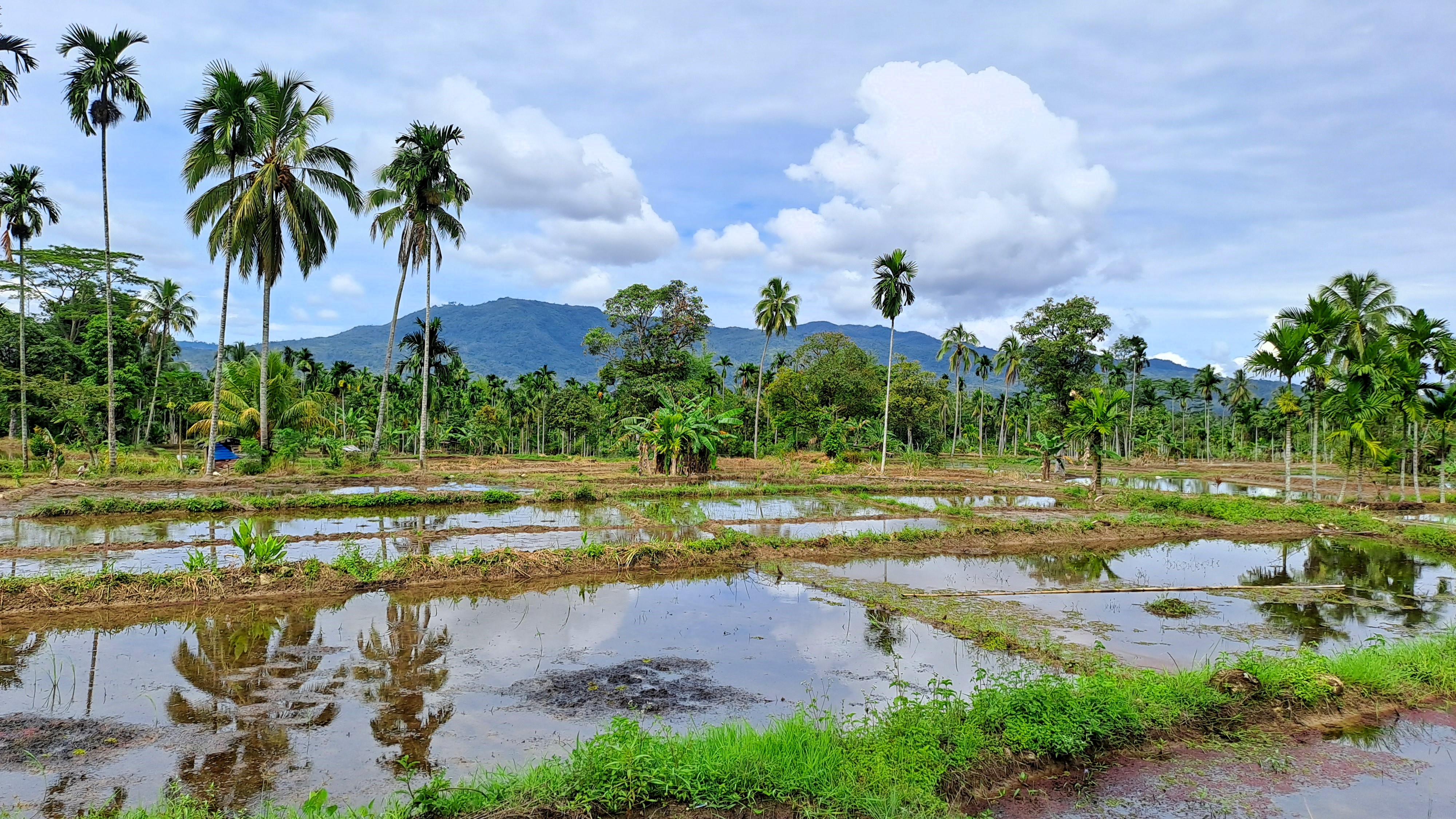
Kerinci Seblat National Park in Bengkulu, Indonesia, was gazetted by the Indonesian government, and its overlaps with forests occupied by most indigenous communities made their farming activities in the area illegal. People were prohibited from accessing and expanding their farming areas in the national park, threatening their livelihoods. The livelihood diversity index (LDI) and livelihood asset index (LAI) were used to explore the livelihood systems of these communities. This study also examines the effect of livelihood assets on livelihood diversity and analyzes livelihood strategy choices using Giddens’ structuration theory. A quantitative survey combined with in-depth interviews was conducted in two villages with different land types: wetlands (rice fields) and drylands (farmlands). This study found that the communities diversified their livelihoods into eight types of livelihood strategies. Almost all livelihood indicators were different, and the differences in livelihood asset indicators affected the LDI. As a process of structuration, communities have diversified their livelihoods into farm (e.g., annual and perennial crops), off-farm (e.g., farm wages), and non-farm (e.g., services and government transfer) activities. Rural households have modified their social and physical structures to secure their livelihoods by optimizing agricultural intensification technologies or by seeking non-agricultural income. Households decide whether to specialize or diversify their livelihoods based on factors such as the area of cultivated land, number of crops cultivated, distance of the farming location from the house, total household income, non-farm income, and reciprocal relationships.
References
Abdulkadir-sunito, M., Adiwibowo, S., Soetarto, E., Kinseng, R. A., & Foley, S. (2017). Batas Politik Etnisitas? Migrasi dan Transformasi Dataran Tinggi di Sulawesi Tengah. Sodality, 5(3), 226–233. https://doi.org/10.22500/sodality.v5i3.19396
Ali, A. (2023). Linking forest ecosystem processes, functions and services under integrative social–ecological research agenda: current knowledge and perspectives. Science of The Total Environment, 892, 164768. https://doi.org/10. 1016/J.SCITOTENV.2023.164768
Anggreani, F., Susatya, A., & Tiaif, S. (2018). Tingkat Kerentanan terhadap Perubahan Iklim pada Desa-Desa Sekitar Taman Nasional Kerinci Seblat (TNKS) di Kecamatan Pinang Belapis Kabupaten Lebong Provinsi Bengkulu. Naturalis, 7(1), 109–119. https://doi.org/10.31186/naturalis.7.1.9271
Anwar, G., Ardha, T., Susatya, A., Saprinurdin, S., & Senoaji, G. (2023). Diversity of spice plants in the MADAPI Forest, Kerinci Seblat National Park, Rejang Lebong Bengkulu. E3S Web of Conferences, 373, 05006. https://doi.org/10.1051/e3s conf/202337305006
Baird, T. D., & Gray, C. L. (2014). Livelihood diversification and shifting social networks of exchange: A social network transition? World Development, 60, 14–30. https://doi.org/10.1016/j.worlddev.2014.02.002
Bebbington, A. J., & Batterbury, S. P. (2001). Transnational livelihoods and landscapes: Political ecologies of globalization. Ecumene, 8(4), 369-380. https://doi.org/ 10.1177/096746080100800401
Bettinger, K. A. (2015a). Political Contestation, Resource Control and Conservation in an Era of Decentralisation at Indonesia’s Kerinci Seblat National Park. Asia Pacific Viewpoint, 56(2), 252–266. https://doi.org/10.1111/apv.12069
Bettinger, K. A. (2015b). The Fight over the Forest: The State, Rural Communities, and Customary Law in Indonesia. Worldviews, 19(2), 123–143. https://doi.org/10. 1163/15685357-01902004
BPS-Lebong Statistic. (2023). Kabupaten Lebong Dalam Angka 2023. BPS Kabupaten Lebong.
Chambers, R., & Conway, G. R. (1991). Sustainable rural livelihoods: practical concepts for the 21st century. IDS Discussion Paper 296. Institute of Development Studies.
Cramb, R. A., Colfer, C. J. P., Dressler, W., Laungaramsri, P., Le, Q. T., Mulyoutami, E., ... & Wadley, R. L. (2009). Swidden transformations and rural livelihoods in Southeast Asia. Human Ecology, 37, 323-346. https://doi.org/10.1007/s10745-009-9241-6
Deng, Q., Li, E., & Zhang, P. (2020). Livelihood sustainability and dynamic mechanisms of rural households out of poverty: An empirical analysis of Hua County, Henan Province, China. Habitat International, 99, 102160. https://doi.org/10.1016/ j.habitatint.2020.102160
Dharmawan, A. H. (2001). Farm household livelihood strategies and socio-economic changes in rural Indonesia [Doctoral Dissertation]. University of George August.
Ellis, F. (1993). Peasant economics: Farm households and agrarian development (2nd Edition). Cambridge University Press.
Ellis, F. (1998). Household strategies and rural livelihood diversification. Journal of Development Studies, 35(1), 1–38. https://doi.org/10.1080/0022038980842 2553
Ellis, F. (2000). Rural Livelihood and Diversity in Developing Countries. Oxford University Press.
Giddens, A. (1984). Constitution of the Society: Outline of the Theory of Structuration. Polity Press and Blackwell.
Hall, D., Hirsch, P., & Li, T. M. (2011). Powers of Exclusion: Land Dilemmas in Southeast Asia. National University of Singapore Press.
Harbi, J., Erbaugh, J. T., Sidiq, M., Haasler, B., & Nurrochmat, D. R. (2018). Making a bridge between livelihoods and forest conservation: Lessons from non-timber forest products’ utilization in South Sumatera, Indonesia. Forest Policy and Economics, 94, 1–10. https://doi.org/10.1016/j.forpol.2018.05.011
Jaetuloh, A., Dinar, P. A. K., & Budiandrian, B. (2019). Demong Samin: Menuju Kepastian Hak Tata Kelola Hutan Adat Rejang (Studi Kasus di Desa Kota Baru, Embong 1, dan Embong Uram, Kabupaten Lebong). Akar Foundation.
Jalal, M. J. E., Khan, M. A., Hossain, M. E., Yedla, S., & Alam, G. M. M. (2021). Does climate change stimulate household vulnerability and income diversity? Evidence from southern coastal region of Bangladesh. Heliyon, 7(9), e07990. https://doi.org/10.1016/j.heliyon.2021.e07990
Jones, M. R., & Karsten, H. (2008). Giddens's structuration theory and information systems research. MIS Quarterly: Management Information Systems, 32(1), 127-157. https://doi.org/10.2307/25148831
Karyadi, H., Pratiwi, D. I., Danis, E. H., Suyanto, D. P., & Hendrayadi. (2018). Taman Nasional Kerinci Seblat Warisan Dunia di Tanah Sumatera. Balai Besar Taman Nasional Kerinci Seblat.
Kinseng, R. A. (2017). Strukturgensi: Sebuah teori tindakan. Sodality, 5(2), 127–137.
Klasen, S., Priebe, J., & Rudolf, R. (2013). Cash crop choice and income dynamics in rural areas: Evidence for post-crisis Indonesia. Agricultural Economics, 44(3), 349–364. https://doi.org/10.1111/agec.12015
Li, J., Zhang, Z., Jin, X., Chen, J., Zhang, S., He, Z., ... & Xiao, H. (2018). Exploring the socioeconomic and ecological consequences of cash crop cultivation for policy implications. Land Use Policy, 76, 46-57. https://doi.org/10.1016/j.landusepol. 2018.04.009
Linkie, M., Chapron, G., Martyr, D. J., Holden, J., & Leader-Williams, N. (2006). Assessing the viability of tiger subpopulations in a fragmented landscape. Journal of Applied Ecology, 43(3), 576–586. https://doi.org/10.1111/j.1365-2664.2006.01153.x
Linkie, M., Martyr, D. J., Harihar, A., Risdianto, D., Nugraha, R. T., Maryati, ... & Wong, W. M. (2015). Safeguarding Sumatran tigers: evaluating effectiveness of law enforcement patrols and local informant networks. Journal of Applied Ecology, 52(4), 851-860. https://doi.org/10.1111/1365-2664.12461
Liu, H., Hao, H., Hu, X., Du, L., Zhang, Z., & Li, Y. (2020). Livelihood Diversification of Farm Households and Its Impact on Cultivated Land Utilization in Agro-pastoral Ecologically-vulnerable Areas in the Northern China. Chinese Geographical Science, 30(2), 279–293. https://doi.org/10.1007/s11769-020-1111-6
Mao, S., Qiu, S., Li, T., & Tang, M. (2020). Rural households’ livelihood strategy choice and livelihood diversity of main ethnic minorities in chongqing, China. Sustainability (Switzerland), 12(8166). https://doi.org/10.3390/su12198166
Maru, H., Haileslassie, A., Zeleke, T., & Esayas, B. (2021). Analysis of smallholders’ livelihood vulnerability to drought across agroecology and farm typology in the upper awash sub-basin, Ethiopia. Sustainability, 13(17), 9764. https://doi.org/ 10.3390/su13179764
Marwoto, Kartodihardjo, H., Darusman, D., & Adiwibowo, S. (2017). Co-evolution of Forestry Policy Development and System-Social Community. Environment and Ecology Research, 5(7), 528–536. https://doi.org/10.13189/eer.2017.050710
Meert, H., Van Huylenbroeck, G., Vernimmen, T., Bourgeois, M., & van Hecke, E. (2005). Farm household survival strategies and diversification on marginal farms. Journal of Rural Studies, 21(1), 81–97. https://doi.org/10.1016/j.jrurstud.2004.08.007
Meng, L. I., Christopher, G. A. N., Wanglin, M. A., & Jiang, W. (2020). Impact of cash crop cultivation on household income and migration decisions: Evidence from low-income regions in China. Journal of Integrative Agriculture, 19(10), 2571-2581. https://doi.org/10.1016/S2095-3119(20)63161-6
Minot, N., Epprecht, M., Anh, T. T. T., & Trung, L. Q. (2006). Income diversification and poverty in the Northern Uplands of Vietnam. Research Report of the International Food Policy Research Institute, 145, 1–137. https://doi.org/10.2499/08962 91480
Moreda, T. (2023). The social dynamics of access to land, livelihoods and the rural youth in an era of rapid rural change: Evidence from Ethiopia. Land Use Policy, 128. https://doi.org/10.1016/j.landusepol.2023.106616
Mouzelis, N. P. (2008). Modern and Postmodern Social Theorizing: Bridging the Divide. Cambridge University Press.
Peng, W., Robinson, B. E., Zheng, H., Li, C., Wang, F., & Li, R. (2022). The limits of livelihood diversification and sustainable household well-being, evidence from China. Environmental Development, 43, 100736. https://doi.org/10.1016/j. envdev.2022.100736
Rasmus, S., Wallen, H., Turunen, M., Landauer, M., Tahkola, J., Jokinen, M., & Laaksonen, S. (2021). Land-use and climate related drivers of change in the reindeer management system in Finland: Geography of perceptions. Applied Geography, 134. https://doi.org/10.1016/j.apgeog.2021.102501
Ribot, J. C. (2017). Turning Senegal’s Forestry Policy Around (From Exclusion to Participation?). In Cline-Cole, R., & Madge, C. (Eds.), Contesting Forestry in West Africa (pp. 213-235). Routledge.
Ribot, J., & Peluso, N. (2003). A Theory of Access. Rural Sociology, 68(2), 153–181. https://doi.org/10.1111/j.1549-0831.2003.tb00133.x
Ruangsarakul, R., Chamruspanth, V., & Jutaviriya, K. (2019). Structuration theory and social capital: A qualitative case study of organic producer groups in southern Thailand. International Journal of Interdisciplinary Social and Community Studies, 14(2). https://doi.org/10.18848/2324-7576/CGP/V14I02/13-26
Ryan, S. J., Palace, M. W., Hartter, J., Diem, J. E., Chapman, C. A., & Southworth, J. (2017). Population pressure and global markets drive a decade of forest cover change in Africa’s Albertine Rift. Applied Geography, 81, 52–59. https://doi.org/10.1016/j.apgeog.2017.02.009
Ryan, T. P. (2013). Sample size determination and power. John Wiley & Sons.
Sadeghi, A., Zhunusova, E., Günter, S., & Dieter, M. (2023). Households’ livelihood in restricted forest landscapes: What is the impact of contextual factors? Forest Policy and Economics, 154, 103008. https://doi.org/10.1016/j.forpol.2023. 103008
Sahide, M. A. K., Fisher, M. R., Erbaugh, J. T., Intarini, D., Dharmiasih, W., Makmur, M., ... & Maryudi, A. (2020). The boom of social forestry policy and the bust of social forests in Indonesia: Developing and applying an access-exclusion framework to assess policy outcomes. Forest Policy and Economics, 120, 102290. https://doi.org/10.1016/j.forpol.2020.102290
Sardjo, S., Dharmawan, A. H., Darusman, D., & Wahyuni, E. S. (2022). The Agricultural Expansion in Conservation Areas: The Case of Gunung Halimun Salak National Park, West Java. Forest and Society, 6(2), 742–762. https://doi.org/10.24259/ fs.v6i2.18380
Scoones, I. (1998). Sustainable rural livelihoods: a framework for analysis. IDS Working Paper 72. Institute of Development Studies.
Scoones, I. (2009). Livelihoods perspectives and rural development. Journal of Peasant Studies, 36(1), 171–196. https://doi.org/10.1080/03066150902820503
Scoones, I. (2015). Sustainable Livelihood and Rural Development. Fernwood Publishing and Practical Action Publishing.
Sewell, W. H. Jr. (1992). A Theory of Structure: Duality, Agency, and Transformation. The American Journal of Sociology, 98(1), 1–29. https://doi.org/10.1086/229967
Sibeon, R. (2004). Rethinking Social Theory. SAGE Publication.
Solesbury, W. (2003). Sustainable livelihoods: A case study of the evolution of DFID policy. Working Paper 217. Overseas Development Institute. https://doi.org/ 10.3362/9781780444598.006
Sukiyono, K., Widiono, S., & Apriyanto, E. (2013). Diversifikasi Ekonomi Rumah Tangga pada Desa-Desa sekitar Taman Nasional Kerinci Seblat di Kabupaten Lebong Provinsi Bengkulu. Agrisep, 12(1), 31–40. https://doi.org/10.31186/jagrisep. 12.1.31-40
Sulistiyowati, E., Setiadi, S., & Haryono, E. (2023). The Dynamics of Sustainable Livelihoods and Agroforestry in Gunungkidul Karst Area, Yogyakarta, Indonesia. Forest and Society, 7(2), 222–246. https://doi.org/10.24259/fs.v7i2.21886
Supriatna, J. (2014). Berwisata Alam di Taman Nasional (1st Edition). Yayasan Pustaka Obor Indonesia.
Thu, P. M., Barreto, J., Erskine, W., Williams, R., Soares, A., Ximenes, V., Ximenes, A., Fernandes, M., Agostinho, O. P., & Page, T. (2023). Towards a diversified agricultural forest-based economy: Community views of planting sandalwood in Timor-Leste. Forest and Society, 7(2), 311–343. https://doi.org/10.24259/fs.v7i2. 23548
UNDP. (2007). Human Development Report 2007/2008. Palgrave Macmillan.
UNESCO. (2023). Tropical Rainforest Heritage of Sumatra - UNESCO World Heritage Centre. UNESCO. Retrieved from https://whc.unesco.org/en/list/1167/
van Vliet, N., Reenberg, A., & Rasmussen, L. V. (2013). Scientific documentation of crop land changes in the Sahel: A half empty box of knowledge to support policy? Journal of Arid Environments, 95, 1-13. https://doi.org/10.1016/j.jaridenv.2013. 03.010
Widiono, S., Sukiyono, K., & Apriyanto, E. (2013). Population Pressure on The Villages Around Kerinci Sebelat National Park (TNKS) of Lebong District, Province of Bengkulu, Indonesia. The 3rd International Symposium for Sustainable Humanosphere (ISSH) Proceeding, 163–169.
Additional Files
Published
Issue
Section
Categories
License
Copyright (c) 2024 Forest and Society

This work is licensed under a Creative Commons Attribution 4.0 International License.
This is an open access journal which means that all contents is freely available without charge to the user or his/her institution. Users are allowed to read, download, copy, distribute, print, search, or link to the full texts of the articles in this journal without asking prior permission from the publisher or the author. This is in accordance with the BOAI definition of open access.
Submission of an article implies that the work described has not been published previously (except in the form of an abstract or as part of a published lecture or academic thesis), that it is not under consideration for publication elsewhere, that its publication is approved by all authors and tacitly or explicitly by the responsible authorities where the work was carried out, and that, if accepted, will not be published elsewhere in the same form, in English or in any other language, without the written consent of the Publisher. An article based on a section from a completed graduate dissertation may be published in Forest and Society, but only if this is allowed by author's(s') university rules. The Editors reserve the right to edit or otherwise alter all contributions, but authors will receive proofs for approval before publication.
Forest and Society operates a CC-BY 4.0 © license for journal papers. Copyright remains with the author, but Forest and Society is licensed to publish the paper, and the author agrees to make the article available with the CC-BY 4.0 license. Reproduction as another journal article in whole or in part would be plagiarism. Forest and Society reserves all rights except those granted in this copyright notice