
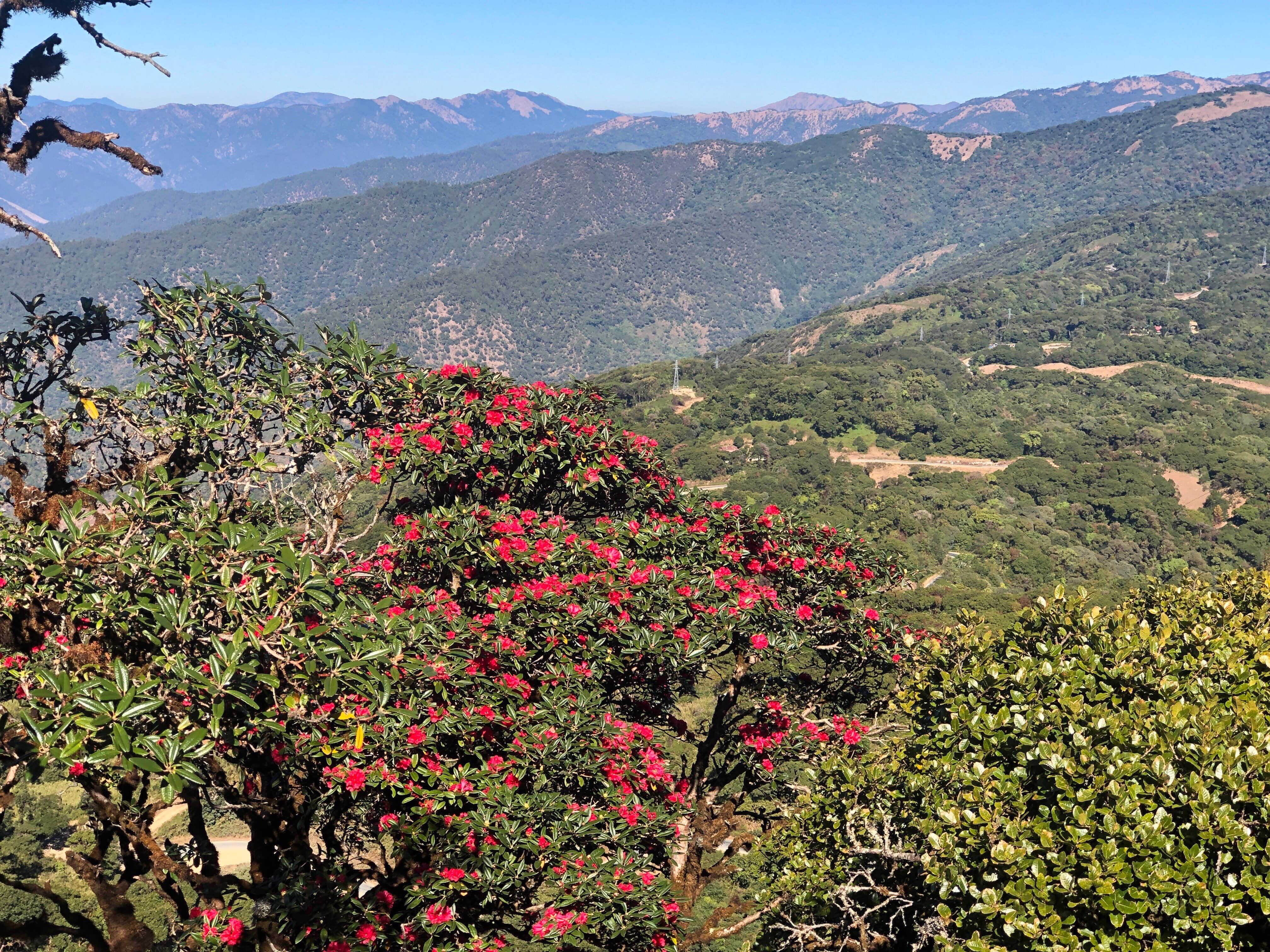
Revitalizing Ritual Performances for Environmental Conservation and Climate Change Adaptation: A Case Study of Ecotourism in Khaw Nu M’cung National Park, Myanmar
DOI:
https://doi.org/10.24259/fs.v9i1.33163Keywords:
Indigenous Knowledge, Ecotourism, Khaw Nu M’cung, Chin State, MyanmarAbstract
Environmental conservation is vital for sustaining biodiversity, ensuring ecosystem services, and mitigating climate change. Despite its importance, a theoretical gap exists in integrating indigenous knowledge with contemporary conservation strategies. Indigenous knowledge, which deeply coexisted with cultural practices, has been marginalized due to colonial histories and religious development. This marginalization neglects valuable ecological insights embedded in traditional rituals and practices. However, ecotourism presents a promising avenue for bridging this gap by leveraging the symbiotic relationship between indigenous communities and their natural environment. The ecotourism centered on indigenous practices fosters environmental stewardship and empowers local communities economically and culturally. Ecotourism can enhance conservation efforts while promoting sustainable tourism activities that highlight traditional ecological knowledge while preserving cultural heritage. In the context of Khaw Nu M’cung National Park in Myanmar, incorporating Chin indigenous rituals and traditional activities into ecotourism initiatives offers a holistic approach to environmental conservation. The touristic performance can guide sustainable resource management and biodiversity preservation. This study proposes a new dynamic of ecological conservation, emphasizing the revival and integration of indigenous rituals and traditional knowledge. Doing so aims to create a sustainable model that respects cultural heritage while addressing contemporary conservation challenges, ensuring the harmonious coexistence of nature and indigenous communities.
References
Akhmar, A. M., Rahman, F., Supratman, S., Hasyim, H., & Nawir, M. (2022). Poured from the sky: The story of traditional ecological knowledge in Cérékang Forest conservation. Forest and Society, 6(2), 527-546. https://doi.org/10.24259/fs. v6i2.15176
Asriyani, H., & Verheijen, B. (2020). Protecting the Mbau Komodo in Riung, Flores: Local adat, national conservation and ecotourism developments. Forest and Society, 4(1), 20-34. https://doi.org/10.24259/fs.v4i1.7465
Berkes, F. (1999). Sacred Ecology: Traditional Ecological Knowledge and Resource Management. Taylor & Francis.
Boonratana, R. (2010). Community-based tourism in Thailand: The need and justification for an operational definition. Kasetsart Journal: Social Sciences, 31(2), 280-289.
Brosius, J. P., Tsing, A. L., & Zerner, C. (2005). Communities and Conservation: Histories and Politics of Community-Based Natural Resource Management. AltaMira Press.
Butcher, J. (2007). Ecotourism, NGOs and Development: A Critical Analysis. Routledge.
Cater, E. (2002). Ecotourism: Impacts, potentials, and possibilities? Routledge.
Cater, E. (2007). Ecotourism as a Western construct. In Higham J. (Ed.), Critical issues in ecotourism (pp. 46-69). Routledge.
Charmaz, K. (2006). Constructing grounded theory. Sage Publications.
Choi, H. C., & Sirakaya, E. (2006). Sustainability indicators for managing community tourism. Tourism Management, 27(6), 1274-1289. https://doi.org/10.1016/j. tourman.2005.05.018
Coria, J., & Calfucura, E. (2012). Ecotourism and the development of Indigenous communities: The good, the bad, and the ugly. Ecological Economics, 73, 47-55. https://doi.org/10.1016/j.ecolecon.2011.10.024
De Azeredo Grünewald, R. (2012). Staged indigeneity: Notes on the performance of ethnicity in Northeast Brazil. Journal of Tourism and Cultural Change, 10(4), 265-280.
Depari, C. (2023). Assessing Indigenous Forest Management in Mount Merapi National Park Based on Ostrom’s Design Principles. Forest and Society, 7(2), 380-411. https://doi.org/10.24259/fs.v7i2.25039
Fennell, D. A. (2001). A content analysis of ecotourism definitions. Current Issues in Tourism, 4(5), 403-421. https://doi.org/10.1080/13683500108667896
Fisher, M. R., Verheijen, B., & Sahide, M. A. K. (2020). Community and conservation in Wallacea: Making the case for the region, a methodological framework, and research trends. Forest and Society, 4(1), 1-19. https://doi.org/10.24259/fs. v4i1.9569
Giampiccoli, A., & Saayman, M. (2016). Community-based tourism: From a local to a global push. Acta Commercii, 16(1), 1-10. https://hdl.handle.net/10520/EJC1 91610
Gilbert, J. (2006). Indigenous Peoples’ Land Rights under International Law: From Victims to Actors. Transnational Publishers.
Glaser, B. G., & Strauss, A. L. (1967). The discovery of grounded theory: Strategies for qualitative research. Aldine Publishing.
Graham, L. R., & Penny, H. G. (Eds.). (2014). Performing indigeneity: Global histories and contemporary experiences. University of Nebraska Press.
Gupta, A. K. (2011). Protecting traditional knowledge: The role of the international patent system. WIPO Magazine.
Honey, M. (2008). Ecotourism and Sustainable Development: Who Owns Paradise? Island Press.
Johnston, A. (2000). Indigenous peoples and ecotourism: Bringing Indigenous knowledge and rights into the sustainability equation. Tourism Recreation Research, 25(2), 89-96. https://doi.org/10.1080/02508281.2000.11014914
Khanal, B. R., & Babar, J. T. (2007). Community-based ecotourism for sustainable tourism development in the Mekong region. Policy Brief, 1, 2007. Hanoi Research Center.
Kiper, T. (2013). Role of ecotourism in sustainable development. InTech. http://dx.doi.org/10.5772/55749
Krüger, O. (2005). The role of ecotourism in conservation: Panacea or Pandora’s box? Biodiversity and Conservation, 14(3), 579-600. https://doi.org/10.1007/ s10531-004-3917-4
Leepreecha, P. (2005). The politics of ethnic tourism in northern Thailand. In workshop on Mekong Tourism: Learning Across Borders (Vol. 25).
Lian, S. H. (2021). Christianity and the state of religious freedom in Burma/Myanmar’s Chin State. International Journal for Religious Freedom, 14(1/2), 105-121. https://hdl.handle.net/10520/ejc-ijrf_v14_n1_2_a12
Logan, W. S. (2009). Indigenous knowledge and cultural heritage in tourism. Cambridge University Press.
McCarter, J., & Gavin, M. C. (2011). Perceptions of the value of traditional ecological knowledge to formal school curricula: opportunities and challenges from Malekula Island, Vanuatu. Journal of ethnobiology and ethnomedicine, 7, 1-14. https://doi.org/10.1186/1746-4269-7-38
Meletis, Z. A., & Campbell, L. M. (2007). Call it consumption! Re‐conceptualizing ecotourism as consumption and consumptive. Geography Compass, 1(4), 850-870. https://doi.org/10.1111/j.1749-8198.2007.00048.x
Nurse, K. (2006). Culture is the fourth pillar of sustainable development. Small States: Economic Review and Basic Statistics, 11, 28-40.
Nyong, A., Adesina, F., & Osman Elasha, B. (2007). The value of indigenous knowledge in climate change mitigation and adaptation strategies in the African Sahel. Mitigation and Adaptation Strategies for Global Change, 12(5), 787-797. https://doi.org/10.1007/s11027-007-9099-0
Office Report. (2018). The quarterly report on the conservation of Khaw Nu M’cung National Park.
Phillips, D. (2021). Staging Indigeneity: Salvage tourism and the performance of Native American history. University of Washington Press.
Picard, D., Pocock, C., & Trigger, D. (2014). Tourism as theatre: performing and consuming indigeneity in an Australian wildlife sanctuary. Journal of Tourism and Cultural Change, 12(3), 206-223. https://doi.org/10.1080/14766825.2014.93 3967
Posey, D. A., & Dutfield, G. (1996). Beyond intellectual property: Toward traditional resource rights for indigenous peoples and local communities. International Development Research Centre.
Prosser, G. (2001). Regional tourism. In N. Douglas, N. Douglas, & R. Derrett (Eds.), Special interest tourism (pp. 86–112). Wiley
Quesenberry, L. (2000). Ecotourism: An introduction. Springer.
Ruhanen, L. (2008). Progressing the sustainability debate: A knowledge management approach to sustainable tourism planning. Current Issues in Tourism, 11(5), 429-455. https://doi.org/10.1080/13683500802316030
Ryan, C., & Aicken, M. (Eds.). (2005). Indigenous tourism: The commodification and management of culture. Elsevier.
Sakhong, L. H. (2003). In search of Chin identity: A study in religion, politics and ethnic identity in Burma. Nias Press.
Scarangella, L. (2010). Indigeneity in tourism: Transnational spaces, pan-Indian identity, and cosmopolitanism. In Forte, M. C. (Ed.), Indigenous cosmopolitans: Transnational and transcultural indigeneity in the twenty-first century (pp. 163-188). Peter Lang.
Semali, L. M., & Kincheloe, J. L. (1999). What is indigenous knowledge? Voices from the academy. Falmer Press.
Stronza, A. (2007). The economic promise of ecotourism for conservation. Journal of Ecotourism, 6(3), 210-230. https://doi.org/10.2167/joe177.0
Stronza, A., & Gordillo, J. (2008). Community views of ecotourism. Annals of Tourism Research, 35(2), 448-468. https://doi.org/10.1016/j.annals.2008.01.002
Weaver, D. B. (2001). The encyclopedia of ecotourism. CABI Publishing.
Weaver, D. B., & Lawton, L. J. (2007). Twenty years on: The state of contemporary ecotourism research. Tourism Management, 28(5), 1168-1179. https://doi.org/ 10.1016/j.tourman.2007.03.004
Additional Files
Published
Issue
Section
Categories
License
Copyright (c) 2025 Forest and Society

This work is licensed under a Creative Commons Attribution 4.0 International License.
This is an open access journal which means that all contents is freely available without charge to the user or his/her institution. Users are allowed to read, download, copy, distribute, print, search, or link to the full texts of the articles in this journal without asking prior permission from the publisher or the author. This is in accordance with the BOAI definition of open access.
Submission of an article implies that the work described has not been published previously (except in the form of an abstract or as part of a published lecture or academic thesis), that it is not under consideration for publication elsewhere, that its publication is approved by all authors and tacitly or explicitly by the responsible authorities where the work was carried out, and that, if accepted, will not be published elsewhere in the same form, in English or in any other language, without the written consent of the Publisher. An article based on a section from a completed graduate dissertation may be published in Forest and Society, but only if this is allowed by author's(s') university rules. The Editors reserve the right to edit or otherwise alter all contributions, but authors will receive proofs for approval before publication.
Forest and Society operates a CC-BY 4.0 © license for journal papers. Copyright remains with the author, but Forest and Society is licensed to publish the paper, and the author agrees to make the article available with the CC-BY 4.0 license. Reproduction as another journal article in whole or in part would be plagiarism. Forest and Society reserves all rights except those granted in this copyright notice

