
Pantun as a Medium for Environmental Education and Ecological-Political Activism by Customary Institutions in Haruku Island
DOI:
https://doi.org/10.24259/fs.v9i2.35750Keywords:
Pantun, Environmental Education, Natural Preservation, Kewang, HarukuAbstract
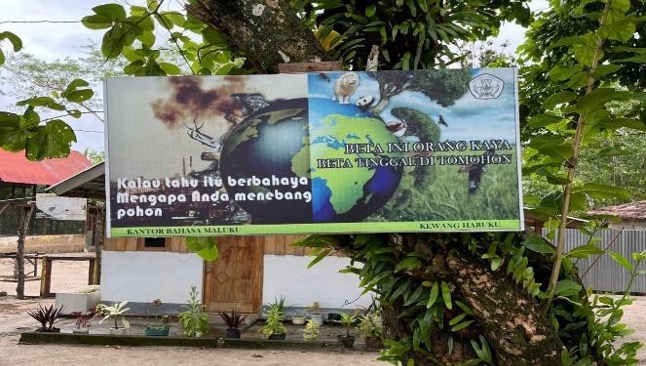
This research aims to examine the ecological values and political practice contained in pantun, particularly that used by the kewang, a customary or adat institution in Haruku Village, Central Maluku. In Haruku, pantun is used as a medium of enviromental education and ecological activism for the community, specifically the young generation. This study is expected to contribute to the reconstruction of a more eco-friendly civilization of the Archipelago by streamlining the potential of local traditions in promoting sustainability andconservation Haruku Village, in this study, becomes a role model and best practice of utilizing kewang as a customary institution, with the head of kewang as the central figure, in building ecological awareness and cultural-political strategy based on oral tradition and literature. By using the case study method and thematic analysis, this research discovered that the role of pantun in environmental activism carried out by kewang as a customary institution is very significant in the efforts of environmental conservation in Haruku. Eliza Marthen Kissya, as the head of kewang, made a strategy by producing pantun, which was then used as a medium for environmental education and cultural-political agenda to protect Haluku’s environment from external threat, as well as a medium for inheriting the ecological harmony, sustainability, and cultural resilience to the young generation of Haruku, especially the young generation who are prepared to become kewang in the future (kewang muda). The usage of pantun shows that traditional orality can be effectively utilized to support not only ecological harmony, but also cultivate an ideological, political, and cultural strategy. Therefore, local culture and natural conservation can be synergized in order to develop ecological awareness in the community as well as maintain the eco-political activism inherited in local culture and practices.References
Alfian, A. (2023). Eco-Relational Citizenship: Perspectives from Bara and Cindakko Indigenous Communities of Sulawesi, Indonesia. Universitas Gadjah Mada.
Alfian, A. (2023). Reinterpreting Mantras as Religious Healing in Indigenous Peoples in Indonesia: The Indigenous Religion Paradigm as an Alternative to “World Religions.” Studies in Interreligious Dialogue, 33(1), 15–34.
Alpi, K. M., & Evans, J. J. (2019). Distinguishing case study as a research method from case reports as a publication type. Journal of the Medical Library Association, 107(1), 1–5. https://doi.org/10.5195/jmla.2019.615
Anwar, K. (2020). Ecological wisdom of oral tradition: Surface and deep structure tension in preserving the lake environment. IOP Conference Series: Earth and Environmental Science, 469, 012021. https://doi.org/10.1088/1755-1315/469/ 1/012021
Azuz, F., & Mony, F. (2018). Habitus Disposition within Culture of Land and Marine Sasi in Moluccas. IOP Conference Series: Earth and Environmental Science, 156(1), 0–6. https://doi.org/10.1088/1755-1315/156/1/012021
Bagir, Z. A. (2015). The Importance of Religion and Ecology in Indonesia. Worldviews: Global Religions, Culture, and Ecology 19(2), 99–102. https://doi.org/10.1163/ 15685357-01902002
Barus, R. N. (2021). Adat ecology: The practice of sasi on Haruku Island, Maluku, Indonesia. In Bagir, Z. A., Northcott, M. S., & Wijsen, F. (Eds.), Varieties of Religion and Ecology: Dispatches from Indonesia (pp. 99-118). LIT.
Batiran, K., & Salim, I. (2020). A Tale of Two Kewangs: A comparative study of traditional institutions and their effect on conservation in Maluku. Forest and Society, 4(1), 81-97. https://doi.org/10.24259/fs.v4i1.8186
Bauman, W., Bohannon, R., & O’Brien, K. J. (2017). Ecology: What is it, who gets to decide, and why does it matter? In Bauman, W. A., Bohannon, R., & O’Brien, K. J. (Eds.), Grounding Religion: A Field Guide to the Study of Religion and Ecology (pp. 32–48). Routledge.
Baxter, P., & Jack, S. (2008). Qualitative case study methodology: Study design and implementation for novice researchers. The Qualitative Report, 13(4), 544–559. https://doi.org/10.46743/2160-3715/2008.1573
Berkes, F. (2012). Sacred Ecology: Traditional Ecological Knowledge and Resource Management. Routledge. https://doi.org/10.4324/9780203123843
Bryman, Al. (2016). Social Research Methodology. Oxford University Press.
Collins, J. T. (2021). “Culture is a shadow”, language as a shade Fragments of a dead language, Naka’ela. Wacana, 22(1), 152–181. https://doi.org/10.17510/wacana. v22i1.1036
Coombs, H. (2022). Case study research Defined (White Paper). Southern Utah University. https://doi.org/10.5281/zenodo.7604301
Creswell, J. W. (2013). Qualitative Inquiry and Research Design: Choosing Among Five Approaches (3rd Edition). SAGE Publications, Inc.
Darman, F. (2017). Realitas Sejarah dalam Sastra Lisan Kapata Perang Kapahaha Desa Morella, Pulau Ambon. Kapata Arkeologi, 13(2), 131-140. https://doi.org/10.24 832/kapata.v13i2.390
Diana, E. (2023). Eksplorasi Nilai-Nilai Luhur dalam Tradisi Lisan “Berasan” Adat Perkawinan Kota Bengkulu. Diglosia: Jurnal Kajian Bahasa, Sastra, dan Pengajarannya, 6(1), 205-222. https://doi.org/10.30872/diglosia.v6i1.550
Effendy, C. (2006). Sastra sebagai wadah integrasi budaya. STAIN Pontianak Press.
Fatem, S. M., Runtuboi, Y. Y., Fisher, M. R., Sufi, Y., Maryudi, A., & Sirimorok, N. (2023). Conservation Policy, Indigeneity, and Changing Traditional Hunting Practices in West Papua. Forest and Society, 7(2), 359–379. https://doi.org/10.24259/fs.v7i 2.27420
Gaspersz, E. J., & Saiya, H. G. (2019). Pemetaan kearifan lokal budaya sasi di negeri Haruku dan negeri Kailolo, pulau Haruku, Kabupaten Maluku Tengah. Seminar Nasional Geomatika, 3(107), 2018-3. https://doi.org/10.24895/sng.2018.3-0.933
Hallatu, T. G., Palittin, I. D., & Umanailo, M. C. B. (2019, November). Culture and religion in sasi tradition. In Proceedings of the International Conference on Industrial Engineering and Operations Management (pp. 984-90).
Keliat, D. P., Amirudin, A., & Luqman, Y. (2021). Chances and Challenges of Local Wisdom as a Management Model Toward Sustainable Fisheries. E3S Web of Conferences, 317(32), 1–12. https://doi.org/10.1051/e3sconf/202131701055
Kissya, E. (2021). Kapata Sasi Kewang Aman Haruku Ukui. INSISTPress.
Kosatica, M. (2024). Semiotic landscape in a green capital: The political economy of sustainability and environment. Linguistic Landscape, 10(2), 136-165. https://doi.org/10.1075/ll.23016.kos
Latour, B. (2007). To Modernize or to Ecologise? That is the Question. In K. Asdal, B. Brenna, & I. Moser (Eds.), Technoscience: The Politics of Interventions (pp. 249–272). Oslo Academic Press-Unipub.
Latupeirissa, N. A. (2022). Transmisi Musik Kapata Pelantikan Raja Allang. PROMUSIKA, 10(1), 24-32. https://doi.org/10.24821/promusika.v10i1. 6831
Leger, M. T., & Martin, S. (2020). A collective case study into the use of social media as a tool for developing sustainable living habits in urban families. Canadian Journal of Environmental Education, 23(3), 132–149
Leimena, H. E. P., Sjarmidi, A., & Syamsudin, T. S. (2023). Traditional egg-harvesting policies for the endemic Moluccan Scrubfowl Eulipoa wallacei on Haruku Island, Indonesia, and its conservation implications. Bird Conservation International, 33, e64. https://doi.org/doi:10.1017/S0959270923000163
Lubis, T., & Abus, A. F. (2020). Revitalisasi Tradisi Lisan Melayu dalam Mempertahankan Eksistensi Kebahasaan: Pendekatan Antropolinguistik. Seminar Nasional Bahasa Dan Sepeda Bangsa.
Merchant, C. (1980). The death of nature: women and ecology in the scientific revolution. In Merchant, C. (Ed.), Earthcare: Women and the Environment (pp. 75-90). Routledge.
Morton, T. (2021). All Art is Ecological. Penguin.
Nesi, A., Rahardi, R. K., & Pranowo, P. (2019). Nilai-nilai kearifan lokal dalam tradisi lisan takanab: Kajian ekolinguistik. Jurnal Pendidikan Dan Kebudayaan Missio, 11(1), 71-90. https://doi.org/10.36928/jpkm.v11i1.138
Northcott, M. S. (2015). Place, Ecology and The Sacred: The Moral Geography of Sustainable Communities. Bloomsbury Academic.
Novaczek, I., & Palyama, R. (1999). Dig it up and ship it out? Resistance to mining in the Lease Islands. Cakalele, 10.
Ong, W. J. (1982). Orality and literacy: The technologizing of the word. Methuen
Owen, J. R., & Kemp, D. (2014). Mining-induced displacement and resettlement: A critical appraisal. Journal of Cleaner Production, 87, 478–488. https://doi.org/10. 1016/j.jclepro.2014.09.087
Persada, N. P. R., Mangunjaya, F. M., & Tobing, I. S. (2018). Sasi sebagai budaya konservasi sumber daya alam di Kepulauan Maluku. Ilmu Dan Budaya, 41(59). https://doi.org/10.47313/jib.v41i59.453
Plumwood, V. (2005). Environmental Culture: The Ecological Crisis of Reason. Routledge. https://doi.org/10.4324/9780203996430
Ruhulessin, H. (2017). Peranan Korps Kewang Dalam Melestarikan Lingkungan Di Kepulauan Lease. Jurnal Hukum & Pembangunan, 15(4). https://doi.org/10.2114 3/jhp.vol15.no4.1128
Sahureka, M., & Sahupala, A. (2023). Penguatan Lembaga Adat “Kewang” Dalam Konservasi Sumber Daya Alam di Desa Haruku. MAANU: Jurnal Pengabdian Kepada Masyarakat, 1(1), 33-39. https://doi.org/10.30598/maanuv1i1p33-39
Sahusilawane, M. M., Sunardi, & Iskandar, J. (2024). Implementation of Sasi which impact on the sustainability of ecosystem services in Maluku. E3S Web of Conferences, 495. https://doi.org/10.1051/e3sconf/202449501005
Salampessy, M. L., Nugroho, B., Kartodiharjo, H., & Kusmana, C. (2024). Local Institutions Performance in Mangrove Forest Management on Small Islands: Case Study in Buano Island, Maluku Province, Indonesia. Jurnal Sylva Lestari, 12(2), 296–323. https://doi.org/10.23960/jsl.v12i2.840
Saptenno, M. J., & Timisela, N. R. (2024). Assessing the role of local sasi practices in environmental conservation and community economic empowerment in Maluku, Indonesia. International Journal of Sustainable Development and Planning, 19(4), 1029–1039. https://doi.org/10.18280/ijsdp.190418
Scott, J. C. (1985) Weapons of the Weak: Everyday Forms of Peasant Resistance. Yale University Press.
Sibarani, R. (2015). Pendekatan antropolinguistik terhadap kajian tradisi lisan. RETORIKA: Jurnal Ilmu Bahasa, 1(1), 1-17. https://doi.org/10.22225/jr.v 1i1.9
Simanjuntak, R., Yusniar, M., Samalukang, Y. M., Boleu, F. I., Mardiastuti, A., Widyasari, V., & Udin, J. S. (2020). Short communication: Egg harvesting and local conservation of moluccan scrubfowl (eulipoa wallacei) in the Maluku Islands, Indonesia. Biodiversitas, 21(7), 3018–3024. https://doi.org/10.13057/biodiv/d21 0719
Sisinaru, S. Y., Hattu, V. V., & Saptenno, M. J. (2020). The Local Law Instrument Based On Local Wisdom in Maluku,“Sasi Lompa”: Laws and Economic Improvement. JournalNX, 6(06), 331-341.
Soehardi, S. (2002). Nilai-nilai tradisi lisan dalam budaya Jawa. Humaniora, 14(3), 11972. https://doi.org/10.22146/jh.v14i3.763
Soselisa, H. L. (2019). Sasi Lompa: A critical review of the contribution of local practices to sustainable marine resource management in Central Maluku, Indonesia. IOP Conference Series: Earth and Environmental Science, 339(1). https://doi.org/10. 1088/1755-1315/339/1/012013
Stankevičienė, J., Levickaitė, R., Braškutė, M., & Noreikaitė, E. (2011). Creative Ecologies: Developing and Managing New Concepts of Creative Economy. Business, Management and Education, 9(2), 277–294. https://doi.org/10.3846/ bme.2011.19
Stibbe, A. (2021). Ecolinguistics: Language, ecology and the stories we live by. Routledge. https://doi.org/10.17456/simple-177
Surakhman, M. A. (2021). Tradisi lisan dan jejak masa pra sejarah dalam ritual Asyeik di Kerinci. Siddhayatra: Jurnal Arkeologi, 25(2), 163-178. https://doi.org/10.248 32/siddhayatra.v25i2.179
Suryani, I., Rahariyoso, D., & Maulana, R. Y. (2019). Nilai-Nilai Yang Terkandung Dalam Tradisi Lisan Biduk Sayak Masyarakat Desa Jernih. Titian: Jurnal Ilmu Humaniora, 3(1), 73-92. https://doi.org/10.22437/titian.v3i1.7028
Tetelepta, J. M. S., Natan, Y., Pattikawa, J. A., & Bernardus, A. S. (2022). Population parameters and sustainable status of lompa fish Thryssa baelama (Forsskal, 1775) manage through sasi approach at Haruku Village. Fisheries and Aquatic Sciences, 25(2), 101–116. https://doi.org/10.47853/FAS.2022.e10
Tjoa, M., Sahureka, M., & Renyaan, A. (2021). The Role Of Customary Institutions In Natural Resource Management In Kailolo, Haruku Island. Tropical Small Island Agriculture Management, 1(1), 19-27. https://doi.org/10.30598/tsiam.2021. 1.1.19
Topatimasang, R. (2016). Orang-orang kalah: Kisah penyingkiran masyarakat adat Kepulauan Maluku. INSISTPress.
Warami, H. (2020). Pantun Kelautan Dalam Bahasa Melayu Ambon: Kajian Ekolinguistik. Journal of Social Sciences and Humanities, 17.
Wati, E. A. (2023). Tradisi lisan sebagai sumber sejarah. Krinok: Jurnal Pendidikan Sejarah Dan Sejarah, 2(1), 52-59. https://doi.org/10.22437/krinok.v2i1.24049
Wibowo, B. A. (2022). Eksistensi Tradisi Lisan sebagai Sumber Sejarah Lokal. Estoria: Journal of Social Science and Humanities, 3(1), 383-397. https://doi.org/10. 30998/je.v3i1.1178
Widayati, D., Lubis, R., Harahap, N., & Maha, R. F. (2024). Ecosophy in Pakpak Dairi community folklore. Research Journal in Advanced Humanities, 5(1), 20–130. https://doi.org/10.58256/ds5b0e15
Yasir, Y., Firdaus, M., & Awza, R. (2023). Environmental communication patterns based on local wisdom in management of Lubuk Larangan in Subayang River. Sosiohumaniora, 25(1), 60–70. https://doi.org/10.24198/sosiohumaniora.v25i1.41044
Yulianto, D. (2021). Nilai Pendidikan Karakter dalam Tradisi Lisan Pondok Pesantren Darunnajah Kelutan. Magistra Andalusia: Jurnal Ilmu Sastra, 3(2). https://doi.org/10.25077/majis.3.2.62.2021
Yusari, N. I. (2021). Eksistensi Pantun Sebagai Dampak Ekologis Dan Bentuk Tradisi Ekspresif Masyarakat Melayu: Tinjauan Antropolinguistik. Jurnal Sasindo UNPAM, 9(2), 17-34. https://doi.org/10.32493/SASINDO.V9I2
Additional Files
Published
Issue
Section
Categories
License
Copyright (c) 2025 Forest and Society

This work is licensed under a Creative Commons Attribution 4.0 International License.
This is an open access journal which means that all contents is freely available without charge to the user or his/her institution. Users are allowed to read, download, copy, distribute, print, search, or link to the full texts of the articles in this journal without asking prior permission from the publisher or the author. This is in accordance with the BOAI definition of open access.
Submission of an article implies that the work described has not been published previously (except in the form of an abstract or as part of a published lecture or academic thesis), that it is not under consideration for publication elsewhere, that its publication is approved by all authors and tacitly or explicitly by the responsible authorities where the work was carried out, and that, if accepted, will not be published elsewhere in the same form, in English or in any other language, without the written consent of the Publisher. An article based on a section from a completed graduate dissertation may be published in Forest and Society, but only if this is allowed by author's(s') university rules. The Editors reserve the right to edit or otherwise alter all contributions, but authors will receive proofs for approval before publication.
Forest and Society operates a CC-BY 4.0 © license for journal papers. Copyright remains with the author, but Forest and Society is licensed to publish the paper, and the author agrees to make the article available with the CC-BY 4.0 license. Reproduction as another journal article in whole or in part would be plagiarism. Forest and Society reserves all rights except those granted in this copyright notice

