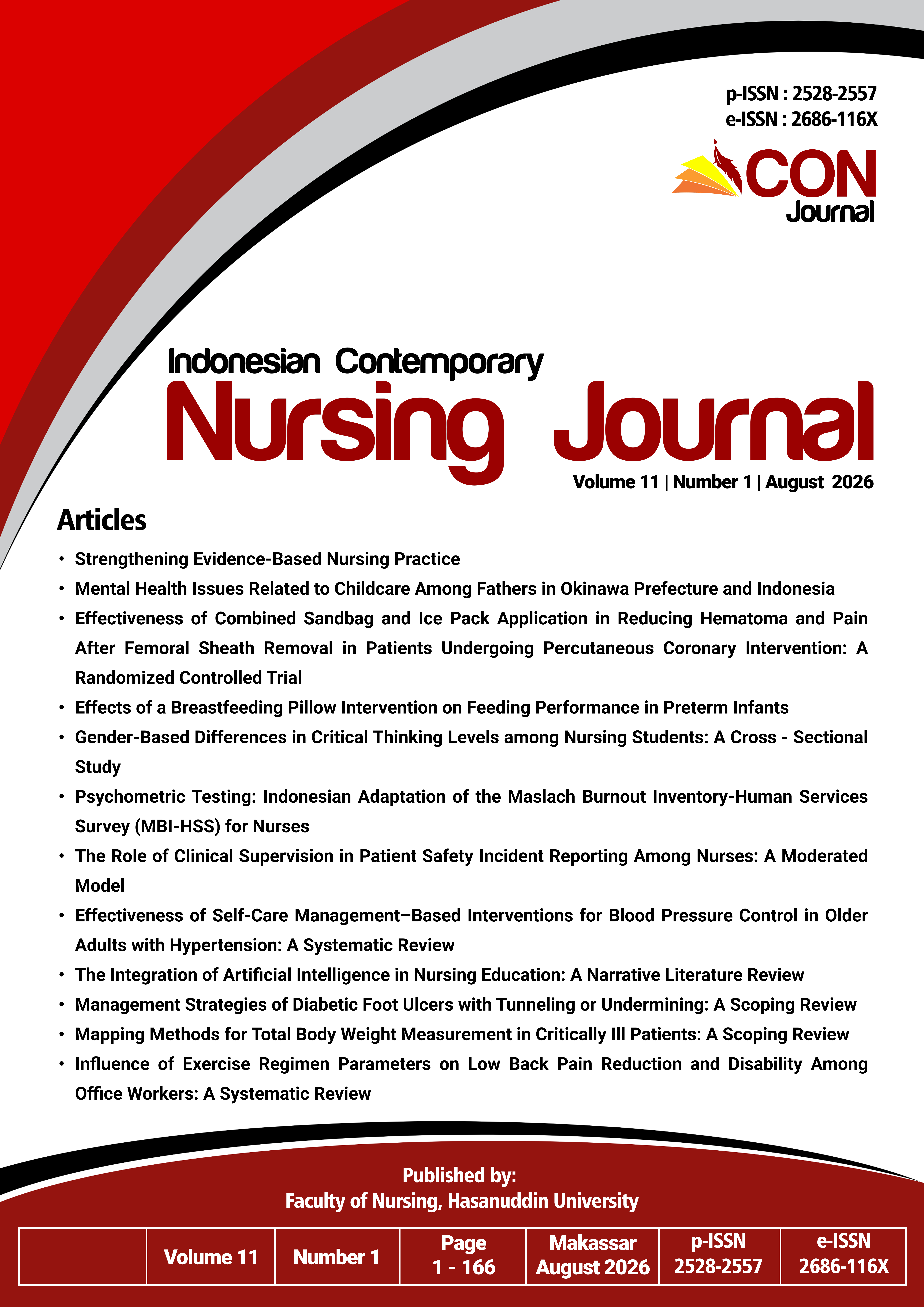
Influence of Exercise Regimen Parameters on Low Back Pain Reduction and Disability Among Office Workers: A Systematic Review
DOI:
https://doi.org/10.20956/415y1k17Keywords:
disability, exercise, low back pain, office workersAbstract
Aims: This study aimed to evaluate the parameters of low back exercise intervention on pain and disability in office workers with low back pain (LBP) and explore its potential application in clinical practice.
Methods: A systematic review was conducted by systematically searching three databases: EMBASE, OVID Medline, and Web of Science. Following the PRISMA guidelines, the included reviews exploring low back pain and disability among office workers and detailed exercise programs were described. Reviewers were recruited to independently appraise and synthesize all eligible studies using the Joanna Briggs Institute critical appraisal tool.
Results: Of the 169 articles initially identified, 13 articles were included in the review, with an average article quality indicating minimal bias and trustworthy evidence. Thirteen structured and progressive exercise programs significantly influenced LBP reduction, alleviation, and disability management (p<0.05 to p<0.001). The effective programs were most commonly implemented twice weekly for five to ten weeks longer with 20- 60 minutes duration sessions of light to moderate intensity, and weekly progress with regular activities maintenance. The most commonly reported studies for pain level are the visual analog scale or numerical rating scale and disability outcome with the Oswestry Disability Index and Rolland Morris Disability Questionnaire.
Conclusion: The exercise program followed a structured parameter of frequency, intensity, time, type, volume, and progression of exercise intervention to improve LBP and disability. These findings provide a baseline integration strategy that is practical and evidence-based for managing LBP and disability in the workplace.
References
Almhdawi, K. A., Obeidat, D. S., Kanaan, S. F., Oteir, A. O., Mansour, Z. M., & Alrabbaei, H. (2020). Efficacy of an innovative smartphone application for office workers with chronic non-specific low back pain: A pilot randomized controlled trial. Clinical Rehabilitation, 34(10), 1282-1291. https://doi.org/10.1177/0269215520937757
Barker, T. H., Habibi, N., Aromataris, E., Stone, J. C., Leonardi-Bee, J., Sears, K., ... & Munn, Z. (2024). The revised JBI critical appraisal tool for the assessment of risk of bias for quasi-experimental studies. JBI Evidence Synthesis, 22(3), 378-388. https://doi.org/10.11124/JBIES-23-00268
Basakci Calik, B., Yagci, N., Oztop, M., & Caglar, D. (2022). Effects of risk factors related to computer use on musculoskeletal pain in office workers. International journal of occupational safety and ergonomics: JOSE, 28(1), 269–274. https://doi.org/10.1080/10803548.2020.1765112
Cieza, A., Causey, K., Kamenov, K., Hanson, S. W., Chatterji, S., & Vos, T. (2021). Global estimates of the need for rehabilitation based on the Global Burden of Disease study 2019: A systematic analysis for the Global Burden of Disease Study 2019. Lancet (London, England), 396(10267), 2006–2017. https://doi.org/10.1016/S0140-6736(20)32340-0
Damba, D., & Pilusa, S. I. (2025). Lower back pain prevalence and experiences in civil service workers, Botswana. African Journal of Primary Health Care & Family Medicine, 17(1), 1-6.https://doi.org/10.4102/phcfm.v17i1.4629
del Pozo-Cruz, B., Parraca, J. A., del Pozo-Cruz, J., Adsuar, J. C., Hill, J., & Gusi, N. (2012). An occupational, internet-based intervention to prevent chronicity in subacute lower back pain: A randomised controlled trial. Journal of rehabilitation medicine, 44(7), 581-587. https://doi.org/10.1177/0269215512444632
Fanta, M., Alagaw, A., Kejela, G., & Tunje, A. (2020). Low back pain and associated factors among civil service sectors office workers in Southern Ethiopia. International Journal of Occupational Safety and Health, 10(1), 53-63. https://doi.org/10.3126/ijosh.v10i1.29883
GBD 2021 Low Back Pain Collaborators. (2023). Global, regional, and national burden of low back pain, 1990-2020, its attributable risk factors, and projections to 2050: A systematic analysis of the global burden of disease study 2021. Lancet Rheumatol. 5, e316–e329. https://doi.org/10.1016/S2665-9913(23)00098-X
Gobbo, S., Bullo, V., Bergamo, M., Duregon, F., Vendramin, B., Battista, F., Roma, E., Bocalini, D. S., Rica, R. L., Alberton, C. L., Cruz-Diaz, D., Priolo, G., Pancheri, V., Maso, S., Neunhaeuserer, D., Ermolao, A., & Bergamin, M. (2019). Physical Exercise is confirmed to reduce low back pain symptoms in office workers: A Systematic Review of the Evidence to Improve Best Practices in the Workplace. Journal of functional morphology and kinesiology, 4(3), 43. https://doi.org/10.3390/jfmk4030043
Hartvigsen, J., Hancock, M. J., Kongsted, A., Louw, Q., Ferreira, M. L., Genevay, S., Hoy, D., Karppinen, J., Pransky, G., Sieper, J., Smeets, R. J., Underwood, M., & Lancet Low Back Pain Series Working Group. (2018). What low back pain is and why we need to pay attention. The Lancet, 391(10137), 2356-2367. https://doi.org/10.1016/S0140-6736(18)30480-X
Hortobagyi, T., Vetrovsky, T., Brach, J. S., van Haren, M., Volesky, K., Radaelli, R., Lopez, P., & Granacher, U. (2023). Effects of Exercise Training on Muscle Quality in Older Individuals: A Systematic Scoping Review with Meta-Analyses. Sports Med Open, 9(1), 41. https://doi.org/10.1186/s40798-023-00585-5
Indrayani, N. L. D., Kao, C. Y., Suyasa, I. G. P. D., Padmalatha, K. M. S., Chang, J. H., & Wang, C. J. (2024). Effectiveness of exercise programs to reduce low back pain among nurses and nursing assistants: A systematic review and meta-analysis. Journal of safety research, 89, 312-321. https://doi.org/10.1016/j.jsr.2024.01.001
Johnston, V., Gane, E. M., Brown, W., Vicenzino, B., Healy, G. N., Gilson, N., & Smith, M. D. (2019). Feasibility and impact of sit-stand workstations with and without exercise in office workers at risk of low back pain: A pilot comparative effectiveness trial. Applied Ergonomics, 76, 82-89. https://doi.org/10.1016/j.apergo.2018.12.006
Liu, H.-C., Cheng, Y., & Ho, J.-J. (2020). Associations of ergonomic and psychosocial work hazards with musculoskeletal disorders of specific body parts: A study of general employees in Taiwan. International Journal of Industrial Ergonomics, 76, 102935. https://doi.org/10.1016/j.ergon.2020.102935
Masroor, S., Tanwar, T., Aldabbas, M., Iram, I., & Veqar, Z. (2023). Effect of Adding Diaphragmatic Breathing Exercises to Core Stabilization Exercises on Pain, Muscle Activity, Disability, and Sleep Quality in Patients With Chronic Low Back Pain: A Randomized Control Trial. J Chiropr Med, 22(4), 275-283. https://doi.org/10.1016/j.jcm.2023.07.001
Marins, E. F., Caputo, E. L., Kruger, V. L., Junior, D. M., Scaglioni, F. G., Del Vecchio, F. B., Primo, T. T., & Alberton, C. L. (2023). Effectiveness of m-health-based core strengthening exercise and health education for public safety workers with chronic non-specific low back pain: study protocol for a superiority randomized controlled trial (SAFEBACK). Trials, 24(1), 780. https://doi.org/10.1186/s13063-023-07833-9
National Health Insurance Administration, Ministry of Health and Welfare. (2026). Important statistical data. Retrieved January 29, 2026, from https://www.nhi.gov.tw/ch/cp-6015-0907b-3023-1.html
Navas-Otero, A., Calvache-Mateo, A., Martin-Nunez, J., Valenza-Pena, G., Hernandez-Hernandez, S., Ortiz-Rubio, A., & Valenza, M. C. (2024). The Effectiveness of Combined Exercise and Self-Determination Theory Programmes on Chronic Low Back Pain: A Systematic Review and Metanalysis. Healthcare (Basel), 12(3). 382 https://doi.org/10.3390/healthcare12030382
Page, M. J., McKenzie, J. E., Bossuyt, P. M., Boutron, I., Hoffmann, T. C., Mulrow, C. D., Shamseer, L., Tetzlaff, J. M., Akl, E. A., Brennan, S. E., Chou, R., Glanville, J., Grimshaw, J. M., Hrobjartsson, A., Lalu, M. M., Li, T., Loder, E. W., Mayo-Wilson, E., McDonald, S., . . . Moher, D. (2021). The PRISMA 2020 statement: an updated guideline for reporting systematic reviews. BMJ, 372, n71. https://doi.org/10.1136/bmj.n71
Passos, M., Picon, S. P. B., Batista, G. A., Nascimento, V. Y. S., Oliveira, F., Locks, F., Pitangui, A. C. R., & de Araujo, R. C. (2024). Effects of an eight-week physical exercise program on low back pain and function in fruit workers: A randomized controlled trial. Journal of Back and Musculoskeletal Rehabilitation, 37(3), 733-742. https://doi.org/10.3233/BMR-230201
Pedersen, M. T., Andersen, L. L., Jørgensen, M. B., Søgaard, K., & Sjøgaard, G. (2013). Effect of specific resistance training on musculoskeletal pain symptoms: dose-response relationship. The Journal of Strength & Conditioning Research, 27(1), 229-235. https://doi.org/10.1519/JSC.0b013e3182541ceb
Phattharasupharerk, S., Purepong, N., Eksakulkla, S., & Siriphorn, A. (2019). Effects of Qigong practice in office workers with chronic non-specific low back pain: A randomized control trial. Journal of bodywork and movement therapies, 23(2), 375-381. https://doi.org/10.1016/j.jbmt.2018.02.004
Shariat, A., Alizadeh, R., Moradi, V., Afsharnia, E., Hakakzadeh, A., Ansari, N. N., ... & Shaw, I. (2019). The impact of modified exercise and relaxation therapy on chronic lower back pain in office workers: a randomized clinical trial. Journal of exercise rehabilitation, 15(5), 703. https://doi.org/10.12965/jer.1938490.245
Suni, J. H., Rinne, M., Tokola, K., Mänttäri, A., & Vasankari, T. (2017). Effectiveness of a standardised exercise programme for recurrent neck and low back pain: A multicentre, randomised, two-arm, parallel group trial across 34 fitness clubs in Finland. BMJ Open Sport & Exercise Medicine, 3(1), e000233. https://doi.org/10.1136/bmjsem-2017-000233
Shariat, A., Lam, E. T., Kargarfard, M., Tamrin, S. B., & Danaee, M. (2017). The application of a feasible exercise training program in the office setting. Work (Reading, Mass.), 56(3), 421-428. https://doi.org/10.3233/WOR-172508
Sjögren, T., Nissinen, K. J., Järvenpää, S. K., Ojanen, M. T., Vanharanta, H., & Mälkiä, E. A. (2006). Effects of a workplace physical exercise intervention on the intensity of low back symptoms in office workers: a cluster randomized controlled cross-over design. Journal of Back and Musculoskeletal Rehabilitation, 19(1), 13-24. https://doi.org/10.3233/BMR-2006-19103
Sihawong, R., Janwantanakul, P., & Jiamjarasrangsi, W. (2014). A prospective, cluster-randomized controlled trial of exercise program to prevent low back pain in office workers. European Spine Journal, 23, 786-793. https://doi.org/10.1007/s00586-014-3212-3
Shariat, A., Cleland, J. A., Danaee, M., Kargarfard, M., Sangelaji, B., & Tamrin, S. B. M. (2018). Effects of stretching exercise training and ergonomic modifications on musculoskeletal discomforts of office workers: a randomized controlled trial. Brazilian journal of physical therapy, 22(2), 144-153. https://doi.org/10.1016/j.bjpt.2017.09.003
Thompson, W. R. (2017). Worldwide survey of fitness trends for 2017. ACSM's Health & Fitness Journal, 21(6), 10-19. https://doi.org/10.1249/FIT.0000000000000313
Wang, L., Ye, H., Li, Z., Lu, C., Ye, J., Liao, M., & Chen, X. (2022). Epidemiological trends of low back pain at the global, regional, and national levels. European Spine Journal, 31(4), 953-962. https://doi.org/10.1007/s00586-022-07133-x
Downloads
Published
Issue
Section
License
Authors who publish with this journal agree to the following terms:Authors retain copyright and grant the journal right of first publication with the work simultaneously licensed under a Creative Commons Attribution License that allows others to share the work with an acknowledgement of the work's authorship and initial publication in this journal.
Authors are able to enter into separate, additional contractual arrangements for the non-exclusive distribution of the journal's published version of the work (e.g., post it to an institutional repository or publish it in a book), with an acknowledgement of its initial publication in this journal.
Authors are permitted and encouraged to post their work online (e.g., in institutional repositories or on their website) prior to and during the submission process, as it can lead to productive exchanges, as well as earlier and greater citation of published work (See The Effect of Open Access).