
Oil Palm Plantations, Forest Conservation and Indigenous Peoples in West Papua Province: What Lies Ahead?
DOI:
https://doi.org/10.24259/fs.v5i1.11343Keywords:
Oil Palm Plantation, Special Autonomy Law, Sustainable development policy, West Papua, Indigenous People, Poverty alleviation, Conservation, Biodiversity lossAbstract
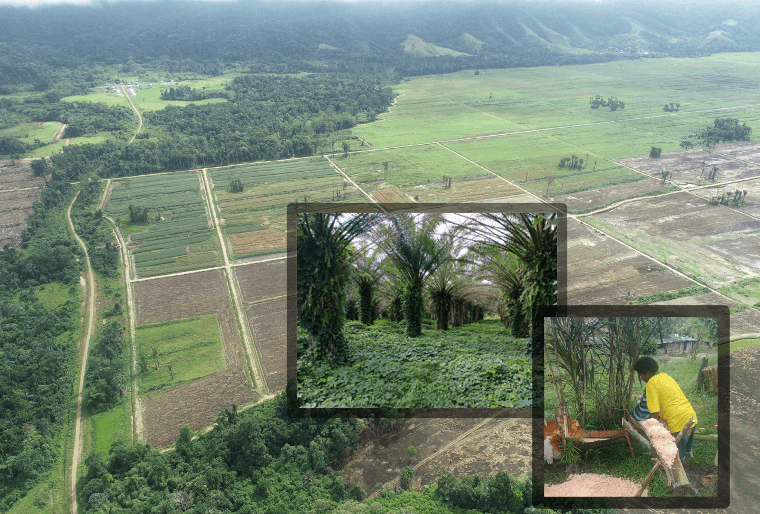
Oil palm plantations are currently expanding to the eastern part of Indonesia, especially in West Papua province. Many oil palm permits issued in West Papua occupy intact biodiversity-rich forest areas which have essential value for indigenous Papuans' socio-cultural life. This article discusses expansion of oil palm plantations in West Papua province, and its impacts on forests and indigenous people. It also assesses whether the plantations fit the Special Autonomy Law and Sustainable Development Regulation goals of the province. In general, plantations are being established in forest areas, and further planned expansion threatens intact and biodiversity-rich forests. In addition, plantation development rarely considers the socio-cultural issues of indigenous Papuans. As a result, customary rights and institutions are commonly overlooked, undermined, or violated. Oil palm plantations are not necessarily compatible with sustainable development regulation goals, and need to reconcile its overall economic and conservation agenda.
References
Acosta, P., & Curt, M. D. (2019). Understanding the expansion of oil palm cultivation: A case-study in Papua. Journal of Cleaner Production, 219, 199–216. https://doi.org/10.1016/J.JCLEPRO.2019.02.029
Afriyanti, D., Kroeze, C., & Saad, A. (2016). Indonesia palm oil production without deforestation and peat conversion by 2050. Science of The Total Environment, 557–558, 562–570. https://doi.org/10.1016/J.SCITOTENV.2016.03.032
Albert. (2019). Dishut Papua Barat Buka Kedok Status PT. BAPP di Lembah Kebar Tambrauw | Mobile Wartaplus.com. Retrieved August 14, 2020, from https://www.m.wartaplus.com/read/6321/Dishut-Papua-Barat-Buka-Kedok-Status-PT-BAPP-di-Lembah-Kebar-Tambrauw
Andrianto, A., Komarudin, H., & Pacheco, P. (2019). Expansion of Oil Palm Plantations in Indonesia’s Frontier: Problems of Externalities and the Future of Local and Indigenous Communities. Land, 8(4), 56. https://doi.org/10.3390/land8040056
Baransano, M. A., Putri, E. I. K., Achsani, N. A., & Kolopaking, L. (2016). Peranan Sektor Unggulan sebagai Salah Satu Faktor dalam Mengurangi Ketimpangan Pembangunan Wilayah di Provinsi Papua Barat. Jurnal Perencanaan Wilayah Dan Kota, 27(2), 119. https://doi.org/10.5614/jrcp.2016.27.2.4
Cámara-Leret, R., David G. Frodin, D. ., Adema, F., Anderson, C., Appelhans, M. S., Guerrero, S. ., … Welzen2, P. C. van. (2020). New Guinea has the world’ s richest island. Nature 2020, (October 2019), 1–5. https://doi.org/10.1038/s41586-020-2549-5
Cámara-Leret, R., Schuiteman, A., Utteridge, T., Bramley, G., Deverell, R., Fisher, L. A., … Heatubun, C. (2019). The Manokwari declaration: Challenges ahead in conserving 70% of Tanah Papua’s forests. Forest and Society, 3(1), 148–151. https://doi.org/10.24259/fs.v3i1.6067
Chao, S. (2019). The Plastic Cassowary: Problematic ‘Pets’ in West Papua. Ethnos, 84(5), 828–848. https://doi.org/10.1080/00141844.2018.1502798
Dinas Kehutanan Provinsi Papua Barat. (2020). Pengelolaan Hutan Provinsi Papua Barat.
Elizabeth, A. (2020). Evaluasi Izin Kebun Sawit di Papua Barat, Bagaimana Perkembangannya? Retrieved October 31, 2020, from https://www.mongabay.co.id/2020/09/07/evaluasi-izin-kebun-sawit-di-papua-barat-bagaimana-perkembangannya/
Fatem, S. M, Syufi, Y., Baru, J., Marwa, J., Runtuboi, Y. Y., Tawer, V., … Runtuboi, F. R. (2020a). The sausapor declaration: Challenges in promoting good governance to protect customary communities and natural resources in Tambrauw District, West Papua. Forest and Society, 4(2), 330–337. https://doi.org/10.24259/fs.v4i2.9346
Fatem, S. M., Awang, S. A., Maryudi, A., Pudyatmoko, S., & Marwa, J. (2020b). Model Kelembagaan Lokal Kabupaten Konservasi Tambrauw di Papua Barat. Jurnal Ilmu Kehutanan, 14(2), 167–184. https://doi.org/10.22146/JIK.61401
Fatem, S. M. (2019). Connecting social forestry to conservation policies in Tanah Papua. Forest and Society, 3(1), 141–147. https://doi.org/10.24259/fs.v3i1.5865
Fatem, S. M., Awang, S. A., Pudyatmoko, S., Sahide, M. A. K., Pratama, A. A., & Maryudi, A. (2018). Camouflaging economic development agendas with forest conservation narratives: A strategy of lower governments for gaining authority in the re-centralising Indonesia. Land Use Policy, 78, 699–710. https://doi.org/10.1016/J.LANDUSEPOL.2018.07.018
Forest Watch Indonesia. (2019). BioRegion Papua: Hutan dan Manusianya. “Hasil studi Baseline mengenai Hutan dan Manusia di Bioregion Papua.” In M. F. Barri & E. Cahyono (Eds.) (p. 250). Forest Watch Indonesia (FWI).
Gaveau, D. (2019). Drivers of forest loss in Papua and West Papua. Cifor.Org. Retrieved from https://www.cifor.org/publications/pdf_files/factsheet/7444-factsheet.pdf
Hadiprayitno, I. I. (2015). Behind Transformation: The Right to Food, Agricultural Modernisation and Indigenous Peoples in Papua, Indonesia. Human Rights Review, 16(2), 123–141. https://doi.org/10.1007/s12142-015-0353-7
Indrawan, M., Sumule, A., Wijaya, A., Kapisa, N., Wanggai, F., Ahmad, M., … Heatubun, C. D. (2019). A time for locally driven development in Papua and West Papua. Development in Practice, 29(6), 817–823. https://doi.org/10.1080/09614524.2019.1609907
Ito, T., Rachman, N. F., & Savitri, L. A. (2014). Power to make land dispossession acceptable: a policy discourse analysis of the Merauke Integrated Food and Energy Estate (MIFEE), Papua, Indonesia. The Journal of Peasant Studies, 41(1), 29–50. https://doi.org/10.1080/03066150.2013.873029
Jubi. (2019). Bagaimana Boven Digoel Menjadi Sasaran Perkebunan Sawit Terluas Di Dunia. Jubi. Retrieved from https://jubi.co.id/bagaimana-boven-digoel-menjadi-sasaran-perkebunan-sawit-terluas-di-dunia/
KPK. (2020). Pencegahan Korupsi Sektor Komoditas Kelapa Sawit. Indonesia: Greenpeace Indonesia. Retrieved from https://www.youtube.com/results?search_query=modus+tipu-tipu+perusahaan+sawit
Lambin, E. F., & Meyfroidt, P. (2011). Global land use change, economic globalization, and the looming land scarcity. In Proceedings of the National Academy of Sciences of the United States of America (Vol. 108, pp. 3465–3472). National Academy of Sciences. https://doi.org/10.1073/pnas.1100480108
Matualage, A., Hariadi, S. S., & Wiryono, P. (2019). Pengelolaan Kebun Kelapa Sawit dalam Pola Kemitraan Inti Plasma PTPN II Prafi dengan Petani Suku Arfak Di Manokwari, Papua Barat. JSEP (Journal of Social and Agricultural Economics), 12(1), 19. https://doi.org/10.19184/jsep.v12i1.6897
Myers, R., Intarini, D., Thomas, M., & Maryudi, A. (2017). Land Use Policy Claiming the forest : Inclusions and exclusions under Indonesia’s‘ new forest policies on customary forests. Land Use Policy, 66(May), 205–213. https://doi.org/10.1016/j.landusepol.2017.04.039
Namkhan, M., Gale, G. A., Savini, T., & Tantipisanuh, N. (2020). Loss and vulnerability of lowland forests in mainland Southeast Asia. Conservation Biology, cobi.13538. https://doi.org/10.1111/cobi.13538
Pakasi, U. (2012). Local Community Empowerment in the Special Autonomy Law in Papua Province. Journal of Government and Politics, 3(2), 335--350. https://doi.org/10.18196/jgp.2012.0019
PASPI. (2018). Sawit dan Kebijakan Industrialisasi Sawit Menuju 2050 | Gabungan Pengusaha Kelapa Sawit Indonesia (GAPKI). Retrieved August 19, 2020, from https://gapki.id/news/3209/sawit-dan-kebijakan-industrialisasi-sawit-menuju-2050
Purba, J., & Sipayung, T. (2018). Perkebunan kelapa sawit indonesia dalam perspektif pembangunan berkelanjutan. Jmi.Ipsk.Lipi.Go.Id, 43(1). Retrieved from http://jmi.ipsk.lipi.go.id/index.php/jmiipsk/article/view/717
Purnomo, H., Okarda, B., Dermawan, A., Ilham, Q. P., Pacheco, P., Nurfatriani, F., & Suhendang, E. (2020). Reconciling oil palm economic development and environmental conservation in Indonesia: A value chain dynamic approach. Forest Policy and Economics, 111. https://doi.org/10.1016/j.forpol.2020.102089
Ramdani, R., & Lounela, A. K. (2020). Palm oil expansion in tropical peatland: Distrust between advocacy and service environmental NGOs. Forest Policy and Economics, 118. https://doi.org/10.1016/j.forpol.2020.102242
Samperante, F. (2018). Dari hutanlah kami hidup, bukan dari kelapa sawit | Drupal. Retrieved August 14, 2020, from https://www.forestpeoples.org/id/node/50232
Santika, T., Wilson, K. A., Budiharta, S., Law, E. A., Poh, T. M., Ancrenaz, M., … Meijaard, E. (2019). Does oil palm agriculture help alleviate poverty? A multidimensional counterfactual assessment of oil palm development in Indonesia. World Development, 120, 105–117. https://doi.org/10.1016/j.worlddev.2019.04.012
Savitri, L. A., & Price, S. (2016). Beyond special autonomy and customary land rights recognition: examining land negotiations and the production of vulnerabilities in Papua. In J. F. McCarthy & K. Robinson (Eds.), Land and Development in Indonesia:Searching for the People’s Sovereignty. ISEAS–Yusof Ishak Institute Singapore. Retrieved from https://books.google.co.id/books?hl=id&lr=&id=e1B3DAAAQBAJ&oi=fnd&pg=PA1&dq
Setiawan, E. N., Maryudi, A., Purwanto, R. H., & Lele, G. (2016). Opposing interests in the legalization of non-procedural forest conversion to oil palm in Central Kalimantan, Indonesia. Land Use Policy, 58, 472–481. https://doi.org/10.1016/j.landusepol.2016.08.003
Susanti, A., & Maryudi, A. (2016). Development narratives, notions of forest crisis, and boom of oil palm plantations in Indonesia. Forest Policy and Economics, 73, 130–139. https://doi.org/10.1016/J.FORPOL.2016.09.009
Tabura Pos. (2019). KSP Mahkota Permata Papua Masuk Dalam Pembahasan Revisi RTRW Papua Barat – Tabura Pos. Retrieved August 18, 2020, from https://taburapos.com/2019/09/26/ksp-mahkota-permata-papua-masuk-dalam-pembahasan-revisi-rtrw-papua-barat/
Ungirwalu, A., Awang, S. A., Suryanto, P., & Maryudi, A. (2017). The ethno-techno-conservation approach in the utilization of Black Fruit (Haplolobus sp.) by the Wandamen ethnic of Papua, Indonesia. Biodiversitas, Journal of Biological Diversity, 18(4), 1336–1343. Retrieved from https://smujo.id/biodiv/article/view/2063
Ungirwalu, A., Awang, S., Maryudi, A., & Priyono, S. (2019). Small Scale Ecology and society: Forest-Culture of Papua Nutmeg (Myristica argantea Warb.). Retrieved from http://repository.unipa.ac.id:8080/xmlui/handle/123456789/375
Additional Files
Published
Issue
Section
Categories
License
Copyright (c) 2020 Forest and Society

This work is licensed under a Creative Commons Attribution 4.0 International License.
This is an open access journal which means that all contents is freely available without charge to the user or his/her institution. Users are allowed to read, download, copy, distribute, print, search, or link to the full texts of the articles in this journal without asking prior permission from the publisher or the author. This is in accordance with the BOAI definition of open access.
Submission of an article implies that the work described has not been published previously (except in the form of an abstract or as part of a published lecture or academic thesis), that it is not under consideration for publication elsewhere, that its publication is approved by all authors and tacitly or explicitly by the responsible authorities where the work was carried out, and that, if accepted, will not be published elsewhere in the same form, in English or in any other language, without the written consent of the Publisher. An article based on a section from a completed graduate dissertation may be published in Forest and Society, but only if this is allowed by author's(s') university rules. The Editors reserve the right to edit or otherwise alter all contributions, but authors will receive proofs for approval before publication.
Forest and Society operates a CC-BY 4.0 © license for journal papers. Copyright remains with the author, but Forest and Society is licensed to publish the paper, and the author agrees to make the article available with the CC-BY 4.0 license. Reproduction as another journal article in whole or in part would be plagiarism. Forest and Society reserves all rights except those granted in this copyright notice

