
Poured from the Sky: The Story of Traditional Ecological Knowledge in Cérékang Forest Conservation
DOI:
https://doi.org/10.24259/fs.v6i2.15176Keywords:
Forest conservation, traditional ecological knowledge (TEK), sacred ecology, adaptation strategy, indigenous communityAbstract
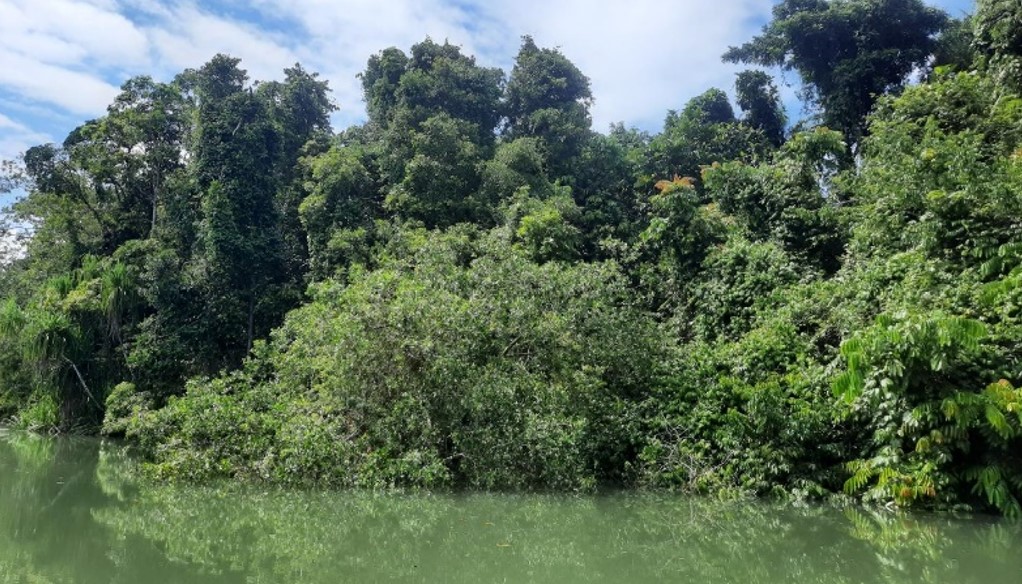
The Cérékang people are often used as an example of how Indigenous Peoples successfully carry out traditional conservation of customary forests. This article aims to investigate the conditions that sustain the forest conservation in Cérékang by using Berkes’s (2008) concept of traditional ecological knowledge (TEK) and Houde’s (2007) six dimensions of TEK as the framework. Data collections were obtained through literature review, direct observation, in-depth interviews, and focus group discussions with key informants. The results of the study are as follows: First, the mythical construction around the area of forest is connected to their cosmology and stories of origin associated with the La Galigo epic, and the Cérékang people have developed protective attitudes towards forests consistent with the term “sacred ecology”. Second, such an attitude is endured by the ethics that respect the intimate relationship between humans, nature, and spiritual realms, which is subsequently manifested through prohibitions to enter the sacred forest except for ritual. This implies that the Cérékang people rely on symbolic knowledge, not technical knowledge, to protect the forest. The protected forest does not only provide cultural ecosystem services but also regulates services that indirectly benefit the Cerekang People such as flood prevention. Yet, the uncertain legal status of the sacred forest and the activities of a mining company around the area pose threats for continued conservation efforts. Consequently, to exercise direct control over the sacred forest area, new community organizations are integrated with customary institutions formed with support from NGOs, local government, and universities. This can be seen as their adaptation strategy to survive and conserve the forest amid ongoing challenges.
References
Akhmar, A. M., Rahman, F., Supratman, H. H., & Nawir, M. (2020). Traditional Ecology Knowledge of To-Cerekang Community and Their Ability to Adapt Changes. BASA 2020: Proceedings of the 4th BASA: International Seminar on Recent Language, Literature and Local Culture Studies, 188-195. European Alliance for Innovation.
Aliansi Masyarakat Adat Nusantara. (2013). Data Kasus Perampasan Wilayah Masyarakat Adat Anggota Komunitas AMAN. Avaliable at http://www.mongabay.co.id/wp-content/uploads/2014/01/Data-konflik-Masyarakat-Adat-2013..xls
Berkes, F., (1993). Traditional ecological knowledge in perspective. In J. T. Inglis (Ed.), Traditional Ecological Knowledge: Concepts and Cases (pp. 1-10). International Program on Traditional Ecological Knowledge & International Development Research Centre.
Berkes, F. (2004). Rethinking community-based conservation. Conservation Biology, 18(3), 621-630. doi: https://doi.org/10.1111/j.1523-1739.2004.00077.x
Berkes, F. (2008). Sacred Ecology (2nd Edition). Routledge.
Bulbeck, D. (2013). Sacred places in Ussu and Cerekang, South Sulawesi, Indonesia: Their history, ecology and pre-Islamic relation with the Bugis kingdom of Luwuq. In Brockwell, S., OʹConnor, S., & Byrne, D. (Eds.), Transcending the Culture-Nature Divide in Cultural Heritage: Views from the Asia-Pacific Region (pp. 171-190). ANU ePress. http://dx.doi.org/10.22459/TA36.12.2013.12
Callaway, D. G. (2004). Landscapes of tradition, landscapes of resistance. In Krupnik, I., Mason, R., & Horton, T. W. (Eds.), Northern ethnographic landscapes: perspectives from circumpolar nations (pp. 177-201). Smithsonian Institution (Arctic Studies Center) & National Parks Service.
Davis, W. (2019). Keynote Speech: The Ethnosphere and The Academy. Retrieved from https://www.wheretherebedragons.com/wp-content/uploads/2014/09/Davis EthnosphereAcademy.pdf
Enre, F. A. (1999). Ritumpanna Welenrenge: Sebuah Episoda Sastra Bugis Klasik. Yayasan Obor Indonesia.
Gómez-Baggethun, E., & Reyes-García, V. (2013). Reinterpreting change in traditional ecological knowledge. Human Ecology, 41(4), 643-647. https://doi.org/10.1007/s10745-013-9577-9
Gunawan, H. (2005). Desentralisasi: Ancaman dan harapan bagi masyarakat adat-studi kasus masyarakat adat Cérékang di Kabupaten Luwu Timur, Propinsi Sulawesi Selatan. CIFOR.
Gusliana, H. B., & Hanifah, M. (2016). Pola Perlindungan Hutan Adat Terhadap Masyarakat Adat Di Provinsi Riau Pasca Putusan Mahkamah Konstitusi Nomor 35/PUU-X/2012. Jurnal Hukum Respublica, 16(1), 183-200. https://doi.org/10.31849/respublica.v16i1.1435
Hakim, B., & Mahmud, M. I. (2006). Investigasi Arkeologi Atas Legenda Luwu di Pesisir Timur Teluk Bone. In Sumantri, I. (Ed.), Kedatuan Luwu Perspektif Arkeologi, Sejarah, dan Antropologi (Second Edition) (pp. 60-76). Jendela Dunia.
Hardesty, D. L. (1986). Rethinking cultural adaptation. The Professional Geographer, 38(1), 11-18. https://doi.org/10.1111/j.0033-0124.1986.00011.x
Herrawan, H., Sirimorok, N., Nursaputra, M., Mas' ud, E. I., Faturachmat, F., Sadapotto, A., ... & Sahide, M. A. K. (2022). Commoning the State Forest: Crafting Commons through an Indonesian Social Forestry Program. Forest and Society, 6(1), 20-39. https://doi.org/10.24259/fs.v6i1.10680
Hijjang, P., & Gising, B. (2007). Pasang ri Kajang Kearifan Lokal dalam Pengelolaan Hutan Kawasan Adat Ammatoa di Kabupaten Bulukumba. In Ahkmar, A. M., & Syarifuddin, S. (Eds.), Mengungkap Kearifan Lingkungan Sulawesi Selatan. Pusat Pengelolaan Lingkungan Hidup Regional Sumapapua & Masagena Press.
Houde, N. (2007). The Six Faces of Traditional Ecological Knowledge: Challenges and Opportunities for Canadian Co-Management Arrangements. Ecology and Society, 12(2), 34. https://doi.org/10.5751/ES-02270-120234
Iriani, S. (2019). Sistem Kepemimpinan Pua pada Masyarakat Adat Cerekang. Pangadereng: Jurnal Hasil Penelitian Ilmu Sosial dan Humaniora, 5(2), 225-238. https://doi.org/10.36869/pjhpish.v5i2.29
Jamil, H. (2014). Mengembalikan Hak Konservasi Hutan Adat Cérékang: Refleksi Pemekaran Kabupaten Luwu Timur. Brawijaya University.
Kareiva, P., Tallis, H., Ricketts, T. H., Daily, G. C., & Polasky, S. (2011). Natural capital: theory and practice of mapping ecosystem services. Oxford University Press.
Maria, M., Taskur, T., & azis Karim, H. (2020). Kearifan Lokal Masyarakat Adat Cerekang dalam Menjaga dan Melestarikan Hutan Adat di Desa Manurung. Jurnal Penelitian Kehutanan BONITA, 2(2), 43-50. http://dx.doi.org/10.55285/bonita.v2i2.498
Massa, Y. N., Fadillah, R., Adila, L., Iman A. N. (2017). Final Report, Scoping Study Fisheries, Mangroves & Health in North and East Luwu South Sulawesi. Blue Forest.
Mattulada, M. (1985). La Toa; Suatu Lukisan Analitis Terhadap Antropologi Politik Orang Bugis. Gadjah Mada University Press.
Mesoudi, A., & Whiten, A. (2008). The multiple roles of cultural transmission experiments in understanding human cultural evolution. Philosophical Transactions of the Royal Society B: Biological Sciences, 363(1509), 3489-3501. https://doi.org/10.1098/rstb.2008.0129
Pemerintah Desa Manurung (2019). Data Kependudukan Desa Manurung, Kecamatan Malili, Kabupaten Luwu Timur.
Pemerintah Kabupaten Luwu Timur (2019). Keputusan Bupati Luwu Timur Nomor 286/X/Tahun 2019 tentang Pengakuan dan perlindungan Kearifan Lokal Masyarakat Hukum Adat To-Cérékang.
Perkumpulan Wallacea. (2018). Profil Identifikasi Masyarakat Hukum Adat, Hutan Adat dan Kearifan Lokal Masyarakat Adat To Cérékang Kecamatan Malili Kabupaten Luwu Timur Provinsi Selawesi Selatan. Perkumpulan Wallacea
Peters, E. J. (2003). Views of traditional ecological knowledge in co-management bodies in Nunavik, Quebec. Polar Record, 39(1), 49-60. https://doi.org/10.1017/S0032247402002759
Robinson, K. (2005). Tradisi Membangun Rumah di Sulawesi Selatan. In Kathryn, R., & Paeni, M. (Eds.), Tapak-Tapak Waktu Kebudayaan, Sejarah, dan Kehidupan Sosial di Sulawesi Selatan. Penerbit Ininnawa.
Rusdianto, E. (2014). Menjaga Hutan di Bukit Pensimoni. Avaliable at https://www.mongabay.co.id/2014/09/08/menjaga-hutan-di-bukit-pensimoni/
Siahaya, M. E., Hutauruk, T. R., Aponno, H. S., Hatulesila, J. W., & Mardhanie, A. B. (2016). Traditional ecological knowledge on shifting cultivation and forest management in East Borneo, Indonesia. International Journal of Biodiversity Science, Ecosystem Services & Management, 12(1-2), 14-23. https://doi.org/10.1080/21513732.2016.1169559
Sirimorok, N., & Rusdianto, E. (2020). Conditions for success in a community-based conservation initiative: an analysis of triggering moments and catalytic elements in nuha. Forest and Society, 4(1), 127–141. https://doi.org/10.24259/fs.v4i1.8184
Sumanto, S. E., & Takandjandji, M. (2014). Identifikasi pemanfaatan hasil hutan oleh masyarakat: Upaya konservasi sumber daya genetik dan sosial budaya. Buletin Plasma Nutfah, 20(1), 27-40. http://dx.doi.org/10.21082/blpn.v20n1.2014.p27-40
Tribun Timur. (2019). 18 Desa di Luwu Timur Dilanda Banjir, Husler Perintahkan Buat Posko Kesehatan. Avaliable at https://makassar.tribunnews.com/2019/05/01/ 18-desa-di-luwu-timur-dilanda-banjir-husler-perintahkan-buat-posko-kesehatan
Additional Files
Published
Issue
Section
Categories
License
Copyright (c) 2022 Forest and Society

This work is licensed under a Creative Commons Attribution 4.0 International License.
This is an open access journal which means that all contents is freely available without charge to the user or his/her institution. Users are allowed to read, download, copy, distribute, print, search, or link to the full texts of the articles in this journal without asking prior permission from the publisher or the author. This is in accordance with the BOAI definition of open access.
Submission of an article implies that the work described has not been published previously (except in the form of an abstract or as part of a published lecture or academic thesis), that it is not under consideration for publication elsewhere, that its publication is approved by all authors and tacitly or explicitly by the responsible authorities where the work was carried out, and that, if accepted, will not be published elsewhere in the same form, in English or in any other language, without the written consent of the Publisher. An article based on a section from a completed graduate dissertation may be published in Forest and Society, but only if this is allowed by author's(s') university rules. The Editors reserve the right to edit or otherwise alter all contributions, but authors will receive proofs for approval before publication.
Forest and Society operates a CC-BY 4.0 © license for journal papers. Copyright remains with the author, but Forest and Society is licensed to publish the paper, and the author agrees to make the article available with the CC-BY 4.0 license. Reproduction as another journal article in whole or in part would be plagiarism. Forest and Society reserves all rights except those granted in this copyright notice

