
Impacts of Payment for Forest Ecosystem Services on Local livelihoods in A Luoi District, Thua Thien Hue Province, Viet Nam
DOI:
https://doi.org/10.24259/fs.v6i2.18808Keywords:
Payment for Forest Ecosystem Services, Vietnam, livelihoods, additionality, poverty reduction, sustainable forest managementAbstract
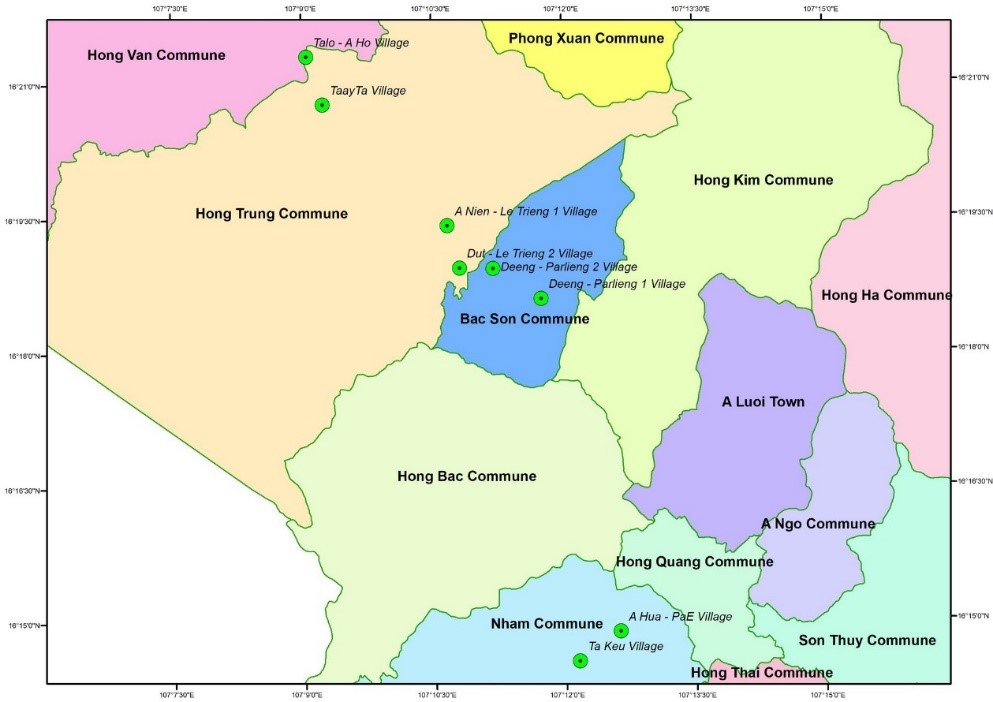
This paper analyses the impacts of the national Payment for Forest Environmental Services (PFES) policy in A Luoi district, Thua Thien Hue province, Viet Nam. There are mixed impacts of PFES in A Luoi district. While some surveyed households have experienced increases in income since PFES, for many other incomes have fallen. Our findings show PFES impacts on local communities and individuals are limited because most forest areas are managed by state agencies, leaving only 17.9% of PFES payments being channeled to these groups, while the rest goes to state government agencies and commune people’s committees. This disparity in PFES payments has further widened the income gap between state agencies and local households. PFES payments currently contribute little to household incomes, averaging only 2.64% of total earnings. PFES has little impact and additionality in advancing land tenure security and reducing natural forest product exploitation for generating income as impacts are similar to those found in non-PFES villages. PFES poverty reduction impacts vary from village to village, but in general, percentages of poor households receiving PFES payments range from 1% to 59%.
References
Alarcon, G. G., Fantini, A. C., Salvador, C. H., & Farley, J. (2017). Additionality is in detail: Farmers' choices regarding payment for ecosystem services programs in the Atlantic forest, Brazil. Journal of Rural Studies, 54, 177-186. https://doi.org/10.1016/j.jrurstud.2017.06.008
Anh, T. N., Kim, D. C., & Ubukata, F. (2016). Negotiating the State-making in Vietnam borderland–Case study of an ethnic minority group in Central Vietnam. Belgeo. Revue belge de géographie, (4). https://doi.org/10.4000/belgeo.19409
Artati, Y. (2011). Water-induced displacement in Thua Thien Hue province: the impacts of hydropower dams on livelihood of forest dependent people. Utrecht University Repository.
Beckman, M. (2011). Converging and conflicting interests in adaptation to environmental change in central Vietnam. Climate and Development, 3(1), 32-41. https://doi.org/10.3763/cdev.2010.0065
Bennett, K. (2010). Additionality: the next step for ecosystem service markets. The Duke Environmental Law & Policy Forum, 20(2), 417-438. Retrieved from https://scholarship.law.duke.edu/cgi/viewcontent.cgi?article=1047&context=delpf
Blundo-Canto, G., Bax, V., Quintero, M., Cruz-Garcia, G. S., Groeneveld, R. A., & Perez-Marulanda, L. (2018). The different dimensions of livelihood impacts of payments for environmental services (PES) schemes: A systematic review. Ecological Economics, 149, 160-183. https://doi.org/10.1016/j.ecolecon.2018.03.011
Börner, J., Wunder, S., Reimer, F., Bakkegaard, R. K., Viana, V., Tezza, J., ... & Marostica, S. (2013). Promoting forest stewardship in the Bolsa Floresta Programme: local livelihood strategies and preliminary impacts. Center for International Forestry Research (CIFOR).
Clements, T., & Milner‐Gulland, E. J. (2015). Impact of payments for environmental services and protected areas on local livelihoods and forest conservation in northern Cambodia. Conservation Biology, 29(1), 78-87. https://doi.org/10.1111/ cobi.12423
Dang, D. T., and NaRanong, A. (2019). Livelihood and Environmental Impacts of Payments for Forest Environmental Services: A Case Study in Vietnam. Sustainability, 11(15), 4165. https://doi.org/10.3390/su11154165
DT. (2019, 12 6). Social - Economic Report. Retrieved from A Luoi District Portal: https://aluoi.thuathienhue.gov.vn/?gd=21andcn=254andtc=16341
Duchelle, A. E., de Sassi, C., Jagger, P., Cromberg, M., Larson, A. M., Sunderlin, W. D., ... & Pratama, C. D. (2017). Balancing carrots and sticks in REDD+ implications for social safeguards. Ecology and Society, 22(3), 1-13. https://doi.org/10.5751/ES-09334-220302
Ezzine-de-Blas, D., Wunder, S., Ruiz-Pérez, M., & Moreno-Sanchez, R. D. P. (2016). Global patterns in the implementation of payments for environmental services. PloS one, 11(3), e0149847. https://doi.org/10.1371/journal.pone.0149847
Fischer, A. P., & Charnley, S. (2010). Social and Cultural Influences on Management for Carbon Sequestration on US Family Forestlands: A Literature Synthesis. International Journal of Forestry Research. https://doi.org/10.1155/2010/ 960912
Haas, J. C., Loft, L., & Pham, T. T. (2019). How fair can incentive-based conservation get? The interdependence of distributional and contextual equity in Vietnam's payments for Forest Environmental Services Program. Ecological Economics, 160, 205-214. https://doi.org/10.1016/j.ecolecon.2019.02.021
Hegde, R., & Bull, G. Q. (2011). Performance of an agro-forestry based Payments-for-Environmental-Services project in Mozambique: A household level analysis. Ecological Economics, 71, 122-130. https://doi.org/10.1016/j.ecolecon.2011. 08.014
Hoang, H. T., Tran, T. T., and Le, Q. V. (2017). Performance of rights over natural forest and its impact on local people livelihood in Vietnam's upland: A case study in Huong Lam Commune, A Luoi District, Thua Thien Hue Province. Hue University Journal of Science: Agriculture and Rural Development, 126(3E), 75–88. https://doi.org/10.26459/hueuni-jard.v126i3E.4242
Jagger, P., Sills, E. O., Lawlor, K., and Sunderlin, W. D. (2010). A guide to learning about livelihood impacts of REDD+ projects. CIFOR.
Kwayu, E., Paavola, J., and Sallu, S. (2017). The livelihood impacts of the Equitable Payments for Watershed Services (EPWS) Program in Morogoro, Tanzania. Environment and Development Economics, 22(3), 328-349. https://doi.org/ 10.1017/S1355770X17000067
Linh, N., and Dinh, V. C. (2015, November 13). Environment. Retrieved from A Luoi District Portal: https://aluoi.thuathienhue.gov.vn/?gd=21andcn=112andtc=2990
Lichtenberg, E. (2018). Additionality in Payment for Ecosystem Services Programs: Agricultural Conservation Subsidies in Maryland. SSRN. http://dx.doi.org/10.2139/ssrn.3290775
Mai, T. K. (2020). Payments for Forest Environmental Services in Vietnam with The Different Mechanisms. 12th NEU-KKU International Conference on Social - Economic and Environmental Issues in Development. National Economics University.
Ngo, D. T., Sakai, T., Moriya, K., & Mizuno, K. (2012). Participation in and Benefits of Community Forest Management: Learning from Cases in Thua Thien Hue Province, Vietnam. Geographical review of Japan series B, 85(1), 39-55. https://doi.org/10.4157/geogrevjapanb.85.39
Nguyen, Q. K., Janekarnkij, P., and Vijitsrikamol, K. (2018). Household Conservation Efforts and Perception towards Payment for Forest Environmental Services: Thua Thien Hue Province, Vietnam. Proceedings of 56th Kasetsart University Conference: Education, Economics and Business Administration, Humanities and Social Sciences. Kasetsart University.
Pagiola, S., Arcenas, A., & Platais, G. (2005). Can Payments for Environmental Services Help Reduce Poverty? An Exploration of the Issues and the Evidence to Date from Latin America. World Development, 33(2), 237-253. https://doi.org/ 10.1016/j.worlddev.2004.07.011
Pham, T. T., Dao, T. L., Nguyen, D. T., Haas, J. C., and Hoang, T. L. (2018). Local perspectives on drivers of deforestation and degradation and effectiveness of financial incentive mechanisms in Bach Ma National Park. CIFOR.
Pham, T. T., Ngo, H. C., Dao, T. L., Hoang, T. L., & Fisher, M. R. (2020). The politics of numbers and additionality governing the national Payment for Forest Environmental Services scheme in Vietnam: A case study from Son La province. Forest and Society, 4(2), 379-404. https://doi.org/10.24259/fs.v4i2.10891
Pham, T., Moeliono, M., Brockhaus, M., Le, D., Wong, G., & Le, T. (2014). Local preferences and strategies for effective, efficient, and equitable distribution of PES revenues in Vietnam: Lessons for REDD+. Human Ecology, 42(6), 885-899. https://doi.org/10.1007/s10745-014-9703-3
Phan, T. H. D., Brouwer, R., Hoang, L. P., & Davidson, M. D. (2018). Do payments for forest ecosystem services generate double dividends? An integrated impact assessment of Vietnam’s PES program. PloS one, 13(8), e0200881. https://doi.org/10.1371/journal.pone.0200881
Pietrzak, R. (2010). Forestry-Based Livelihoods in Central Vietnam: An Examination of the Acacia Commodity Chain: A Case from Thua Thien Hue Province, Vietnam. Retrieved from Wilfrid Laurier University: https://scholars.wlu.ca/etd/963/
PPC, T. T. (2019, December 6). Report No. 330/BC-UBND. Retrieved from Thua Thien Hue Portal: https://thuathienhue.gov.vn/vi-vn/Thong-tin-kinh-te-xa-hoi/cid/ 2051D38F-87F0-4D2A-B1DB-A9AE008FA85F
Schelhas, J. (2002). Race, Ethnicity, and Natural Resources in the United States. A Natural Resources Journal, 42(4), 723-763. https://www.jstor.org/stable/ 24888656
Sunderlin, W. D., de Sassi, C., Sills, E. O., Duchelle, A. E., Larson, A. M., Resosudarmo, I. A. P., ... & Huynh, T. B. (2018). Creating an appropriate tenure foundation for REDD+: The record to date and prospects for the future. World Development, 106, 376-392. https://doi.org/10.1016/j.worlddev.2018.01.010
Roe, D., Booker, F., Wilson-Holt, O., & Cooney, R. (2020). Diversifying local livelihoods while sustaining wildlife: Exploring incentives for community-based conservation. Luc Hoffmann Institute.
Tacconi, L., Mahanty, S., & Suich, H. (2013). The Livelihood Impacts of Payments for Environmental Services and Implications for REDD+. Society and Natural Resources, 26(6), 733-744. https://doi.org/10.1080/08941920.2012.724151
Tallis, H., Kareiva, P., Marvier, M., & Chang, A. (2008). An Ecosystem Services Framework to Support Both Practical Conservation and Economic Development. Proceedings of the National Academy of Sciences of the United States of America, 105, 9457-64. https://doi.org/10.1073/pnas.0705797105
Thang, T. N., Shivakoti, G. P., & Inoue, M. (2010). Changes in Property Rights, Forest Use and Forest Dependency of Katu Communities in Nam Dong District, Thua Thien Hue Province, Vietnam. International Forestry Review, 12(4), 307-319. https://doi.org/10.1505/ifor.12.4.307
Vien, T., & Thanh, M. (2017). Decentralization in Forest Management in Vietnam’s Uplands: Case Studies of the Kho Mu and Thai Ethnic Community. In M. V. Thanh, T. D. Vien, S. J. Leisz, & G. P. Shivakoti (Eds.), Redefining Diversity & Dynamics of Natural Resources Management in Asia (Vol. 2, pp. 195-206). Elsevier. https://doi.org/10.1016/B978-0-12-805453-6.00012-7
Völker, M., & Waibel, H. (2010). Do rural households extract more forest products in times of crisis? Evidence from the mountainous uplands of Vietnam. Forest Policy and Economics, 12(6), 407-414. https://doi.org/10.1016/j.forpol.2010.03.001
Weber, R., Faust, H., Schippers, B., Mamar, S., & Kreisel, E. S. (2007). Migration and ethnicity as cultural impact factors on land use change in the rainforest margins of Central Sulawesi, Indonesia. In T. Tscharntke, C. Leuschner, M. Zeller, E. Guhardja, & A. Bidin (Eds.), Stability of Tropical Rainforest Margins Linking Ecological, Economic and Social Constraints of Land Use and Conservation (pp. 415–434). Springer. https://doi.org/10.1007/978-3-540-30290-2_20
Wong, G. Y., Luttrell, C., Loft, L., Yang, A., Pham, T. T., Naito, D., . . . Brockhaus, M. (2019). Narratives in REDD+ benefit sharing: Examining evidence within and beyond the forest sector. Climate Policy, 19(8), 1038-1051. https://doi.org/10.1080/ 14693062.2019.1618786
World Bank. (2019). GDP per capita (current US$) - Vietnam. Retrieved from World Bank Group IBRD-IDA: https://data.worldbank.org/indicator/NY.GDP.PCAP.CD? locations=VN
Wunder, S., Börner, J., Ezzine-de-Blas, D., Feder, S., & Pagiola, S. (2020). Payments for Environmental Services: Past Performance and Pending Potentials. Annual Review of Resource Economics, 12, 209-234. https://doi.org/10.1146/annurev-resource-100518-094206
Wunder, S., Dung, B. T., & Ibarra, E. (2005). Payment is good, control is better: Why payment for forest ecosystem services remained incipient. CIFOR.
Wunder, S., Engel, S., and Pagiola, S. (2008). Taking Stock: A Comparative Analysis of Payments for Environmental Services Programs in Developed and Developing Countries. Ecological Economics, 65(4), 834–52. https://doi.org/10.1016/ j.ecolecon.2008.03.010
Additional Files
Published
Issue
Section
Categories
License
Copyright (c) 2022 Forest and Society

This work is licensed under a Creative Commons Attribution 4.0 International License.
This is an open access journal which means that all contents is freely available without charge to the user or his/her institution. Users are allowed to read, download, copy, distribute, print, search, or link to the full texts of the articles in this journal without asking prior permission from the publisher or the author. This is in accordance with the BOAI definition of open access.
Submission of an article implies that the work described has not been published previously (except in the form of an abstract or as part of a published lecture or academic thesis), that it is not under consideration for publication elsewhere, that its publication is approved by all authors and tacitly or explicitly by the responsible authorities where the work was carried out, and that, if accepted, will not be published elsewhere in the same form, in English or in any other language, without the written consent of the Publisher. An article based on a section from a completed graduate dissertation may be published in Forest and Society, but only if this is allowed by author's(s') university rules. The Editors reserve the right to edit or otherwise alter all contributions, but authors will receive proofs for approval before publication.
Forest and Society operates a CC-BY 4.0 © license for journal papers. Copyright remains with the author, but Forest and Society is licensed to publish the paper, and the author agrees to make the article available with the CC-BY 4.0 license. Reproduction as another journal article in whole or in part would be plagiarism. Forest and Society reserves all rights except those granted in this copyright notice

