
Examining forest economies: A case study of silk value chain analysis in Wajo District
DOI:
https://doi.org/10.24259/fs.v3i1.4912Keywords:
silk, value chain, marketing margin, profit margin, Sulawesi, Indonesia, Social Forestry, livelihoodsAbstract
Value chain analysis is a strategic analytical tool for understanding activities that represent the value of a product (or service), meanwhile providing opportunities for identifying competitive advantage. In this value chain analysis, the research aims to 1) map the actors of silk commodity business ventures, 2) determine the activities of these business actors, and 3) calculate and analyze financial ratios. This study was conducted in the Wajo District as a site historically well known for silk production, and which is undergoing efforts at revival. The method used in this study is observation, interview, and modeling. Data analysis was conducted as a classical value chain analysis, emphasizing the calculations of financial ratios. The results show that the main actors and activities in commodities trading are farmers, local traders, weavers, and silk clothing stores. The largest marketing margin is approximately IDR. 300,000, which is found in silk clothing stores. On the other hand, the smallest marketing margins amounted to about IDR. 100,000, which were identified among local traders. Finally, the largest profit margins were identified among farmers valued at IDR. 196,000, while the smallest profit margins were among local traders amounting to IDR. 68,000. Overall, this case study highlights that forest enterprises, in this case of the silk industry in Wajo, can improve household incomes for forest farmers, while maintaining their overall bargaining position against the market.
References
ACIAR. (2012). Membuat Rantai Nilai Lebih Berpihak Pada Kaum Miskin. Australian Centre for International Agricultural Research (hal. 100). Australian: Australian Goverment.
Hafid, I. (2016). The Effect of Margin Profit and Total Assets Towards Sustainable Growth Rate of the Distributor and trade Company. International Journal of Business Management 10 (4): 423-428.
Harbi, J., Nurrochmat, D. R., & Kusharto, C. M. (2015). Analisis Kelayakan Usaha Persuteraan Alam, Diversifikasi dan Inovasi Produk di Kabupaten Wajo, Sulawesi Selatan. Bogor: Institut Pertanian Bogor.
Hakim I., Setiasih, I., Murniatih, Asmanah W., Rachman E., dan Sri R. (2010). Social Forestry. Menuju Restorai Pembangunan Kehutanan Berkelanjutan. Pusat Penelitian dan Pengembangan Perubahan Iklim dan Kebijakan.
Nuraeni, S. (2017). Gaps in the thread: Disease, production, and opportunity in the failing silk industry of South Sulawesi. Forest and Society, 1(2), 110-120. doi:http://dx.doi.org/10.24259/fs.v1i2.1861
Popoko, S. (2013). Pengaruh Biaya Pemasaran Terhadap Tingkat Pendapatan Petani Kopra di Kecamatan Tobelo Selatan Kabupaten Halmahera Utara. Jurnal UNIERA, 2.
Porter, M. E. (1983). Competitive Advantage. New York: Free Press
SIFSIA. (2011). Price and Market-Structure Analysis for Some Agricultural Commodities: Marketing Costs and Margins. Agricultural Economics Directorate of the Ministry of Agriculture, Sudan. http://www.fao.org/fileadmin/user_upload/sifsia/docs/Marketing%20Cost%20Margin%20Final%20May%202011%20(2).pdf
Sihar, N. F. (2008). Kriya Tekstil Tenunan Sutera Tradisional Gedongan Sulawesi Selatan, Studi Kasus: Kabupaten Wajo, Sulawesi Selatan. Bandung: Institut Teknologi Bandung.
Widarsono, A. (2005). Analisis Stratejik Rantai Nilai: Suatu Pendekatan Manajemen Biaya. Bandung: BHMN
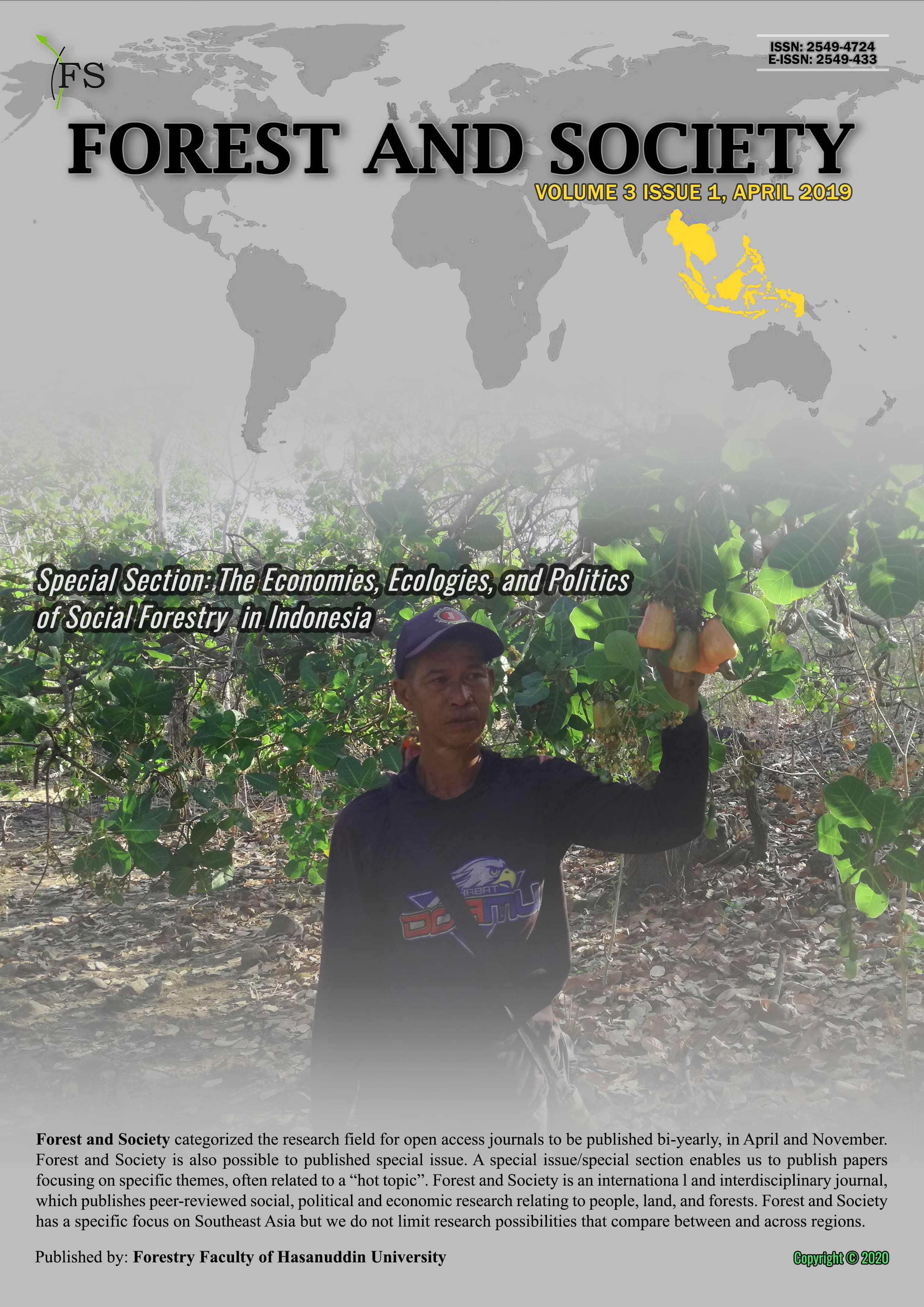
Published
Versions
- 2019-04-25 (2)
- 2019-04-25 (1)
Issue
Section
License
This is an open access journal which means that all contents is freely available without charge to the user or his/her institution. Users are allowed to read, download, copy, distribute, print, search, or link to the full texts of the articles in this journal without asking prior permission from the publisher or the author. This is in accordance with the BOAI definition of open access.
Submission of an article implies that the work described has not been published previously (except in the form of an abstract or as part of a published lecture or academic thesis), that it is not under consideration for publication elsewhere, that its publication is approved by all authors and tacitly or explicitly by the responsible authorities where the work was carried out, and that, if accepted, will not be published elsewhere in the same form, in English or in any other language, without the written consent of the Publisher. An article based on a section from a completed graduate dissertation may be published in Forest and Society, but only if this is allowed by author's(s') university rules. The Editors reserve the right to edit or otherwise alter all contributions, but authors will receive proofs for approval before publication.
Forest and Society operates a CC-BY 4.0 © license for journal papers. Copyright remains with the author, but Forest and Society is licensed to publish the paper, and the author agrees to make the article available with the CC-BY 4.0 license. Reproduction as another journal article in whole or in part would be plagiarism. Forest and Society reserves all rights except those granted in this copyright notice