
Optimalisasi Abandon The Ship Drill di atas Km.Bintan Utama Dalam Upaya Peningkatan Keselamatan Pelayaran
Article Sidebar
Main Article Content
Abstract
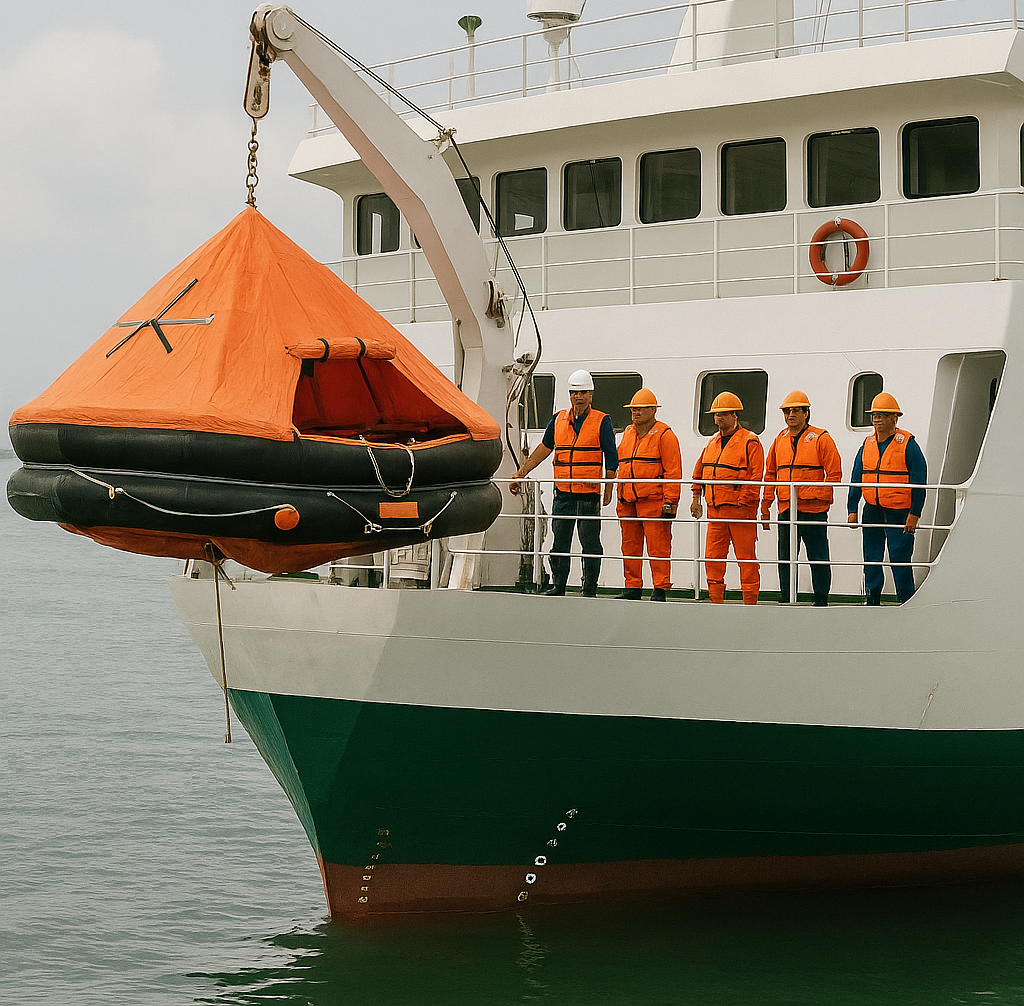
This study analyzes the implementation and optimization of the “Abandon the Ship Drill” aboard KM. Bintan Utama to enhance maritime safety. The research examines the effectiveness of the drill, crew readiness, procedural compliance, communication, and encountered obstacles. The study employed observation, interviews, and documentation methods. The results indicate a good level of compliance with standard operating procedures (85%) and full utilization of lifeboats (100%). However, communication barriers (30%) and inconsistencies in the use of life jackets (90%) were identified. Mental preparedness of the crew and the frequency of drills require improvement. Recommendations include enhanced training programs, improved communication exercises, and continuous evaluation to optimize maritime safety.
Downloads
Article Details

This work is licensed under a Creative Commons Attribution 4.0 International License.
Allow anyone to modify, improve, and make derivative works, even for commercial purposes, as long as they credit to you for the original work.
Accepted 2025-11-12
Published 2025-11-18
References
[1] A. Rahman, “Upaya Peningkatan Keselamatan Pelayaran dari Aspek Peralatan dan Manajemen Keselamatan Kapal,” ILTEK: Jurnal Teknologi, vol. 19, no. 1, pp. 28–33, 2024, doi: 10.47398/iltek.v19i01.153.
[2] Y. Denys, “УДК 004.622 YATSYNA Denys,” no. 4, pp. 165–169, 2023.
[3] A. Hendrawan, “Analisa Indikator Keselamatan Pelayaran pada Kapal Niaga,” Saintara: Jurnal Ilmiah Ilmu-Ilmu Maritim, vol. 3, no. 2, pp. 53–59, 1970, doi: 10.52475/saintara.v3i2.11.
[4] Ilmu Kapal dan Logistik, Macam-Macam Safety Drill ABK di Atas Kapal. Ilmu Kapal dan Logistik, 2022.
[5] F. Malahati, et al., “Analisis Penerapan Sistem Manajemen Keamanan Informasi pada Website Official STT NF dengan SNI ISO/IEC 27001:2022,” Jurnal Pendidikan Dasar, vol. 11, no. 2, pp. 341–348, 2023. [Online]. Available: https://jurnalstkipmelawi.ac.id/index.php/JPD/article/view/902
[6] A. M. Maluku, “Penerapan Prosedur Penyelamatan Diri di Kapal pada KM. Sabuk Nusantara,” Akademi Maritim Maluku Journal, vol. 17, pp. 140–154, 2023.
[7] R. Alfaridzi, Abandon Ship: Pengertian dan Tata Cara Safety Drills. PT. SHA SOLO, 2024. [Online]. Available: https://shasolo.com/abandon-ship-pengertian-tata-cara-safety-drills/. Accessed: Jul. 19, 2025.
[8] P. Sigit, “Pengelolaan Kecelakaan pada Kapal,” Majalah Ilmiah Bahari Jogja, vol. 16, no. 1, pp. 54–64, 2018. [Online]. Available: http://jurnal.amy.ac.id/index.php/MIBJ/.
[9] I. Weda, “Analisis Faktor yang Mempengaruhi Keselamatan Pelayaran (Studi pada KSOP Tanjung Wangi),” Jurnal Maritim Indonesia, vol. 1, no. 1, pp. 92–107, 2022.
[10] A. Widodo, et al., “Analisis Kesiapsiagaan dan Pelatihan Keselamatan Awak Kapal,” Journal Marine Inside, vol. 5, Dec. 2023.
[11] M. R. R. Ismail, “Evaluasi Efektivitas Safety Drill dalam Meningkatkan Kesiapsiagaan ABK,” Jurnal Transportasi Laut, vol. 7, no. 2, pp. 45–58, 2021.
[12] IMO (International Maritime Organization), International Convention for the Safety of Life at Sea (SOLAS), London: IMO Publishing, 2020.
[13] IMO, Standards of Training, Certification and Watchkeeping for Seafarers (STCW) Code, London: IMO Publishing, 2021.
[14] D. Setiawan and M. Hartono, “Human Error dan Faktor Psikologis dalam Kecelakaan Maritim,” Jurnal Keselamatan Transportasi Laut, vol. 8, no. 1, pp. 77–85, 2020.
[15] T. Nurhadi, “Evaluasi Program Latihan Keselamatan Kapal: Studi Kasus di Pelabuhan Tanjung Priok,” Jurnal Ilmu Pelayaran Indonesia, vol. 12, no. 3, pp. 211–220, 2022.
[16] S. H. Lestari, “Penerapan Safety Management System (SMS) di Kapal Niaga Indonesia,” Jurnal Keselamatan dan Kesehatan Kerja Laut, vol. 9, no. 2, pp. 134–145, 2023.
[17] R. Rachmawati, “Analisis Pengaruh Safety Culture terhadap Kedisiplinan Awak Kapal,” Marine Science and Safety Review, vol. 6, no. 1, pp. 15–23, 2023.
[18] A. Yulianto and F. D. Prabowo, “Peranan Komunikasi dalam Pelaksanaan Latihan Darurat di Kapal,” Jurnal Ilmu Komunikasi Maritim, vol. 4, no. 2, pp. 98–106, 2022.
[19] D. H. Saputra, “Analisis Keterlibatan Manajemen dalam Peningkatan Keselamatan Kapal,” Jurnal Teknologi dan Manajemen Transportasi Laut, vol. 3, no. 1, pp. 50–61, 2024.
[20] R. Wibisono, “Kesiapan Mental dan Psikologi Awak Kapal dalam Kondisi Darurat,” Jurnal Psikologi Maritim, vol. 5, no. 2, pp. 120–128, 2023.
[21] B. N. Sutanto, “Pengaruh Pelatihan Abandon Ship Drill terhadap Kompetensi Awak Kapal,” Jurnal Pendidikan dan Pelatihan Maritim, vol. 8, no. 2, pp. 80–89, 2024.
[22] S. S. Prasetyo, “Manajemen Risiko Operasional di Atas Kapal Niaga,” Jurnal Inovasi dan Keselamatan Maritim, vol. 11, no. 1, pp. 25–33, 2023.
[23] Kementerian Perhubungan Republik Indonesia, Peraturan Menteri Perhubungan No. PM 84 Tahun 2013 tentang Keselamatan Pelayaran. Jakarta: Kemenhub, 2013.
[24] B. I. Hamzah, “Evaluasi Penggunaan Alat Keselamatan Kapal dalam Simulasi Abandon Ship,” Jurnal Teknik Transportasi Laut, vol. 10, no. 1, pp. 72–80, 2024.
[25] J. F. Creswell, Research Design: Qualitative, Quantitative, and Mixed Methods Approaches, 5th ed. Thousand Oaks, CA: SAGE Publications, 2018.