
Use of Organic Materials to Maintain Soil Quality by Thai-Lao Rice Farmers in Northeast Thailand
DOI:
https://doi.org/10.24259/fs.v5i2.14044Keywords:
Ethnopedology, Agricultural sustainability, Farmer soil management, Manure, Green manure, Organic soil amendments, Soil quality indicatorsAbstract
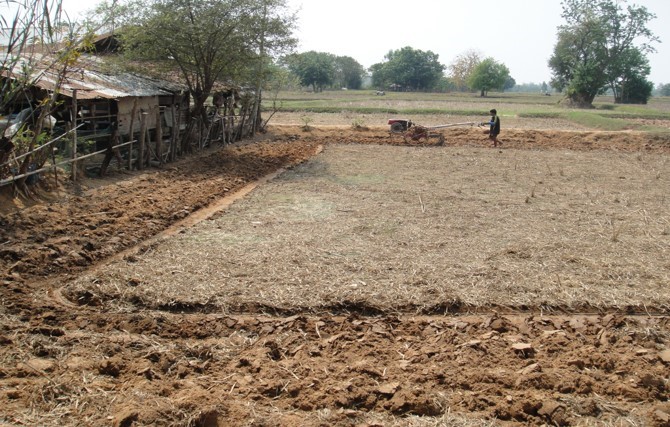
Maintaining soil quality is a major problem for traditional farmers in the tropics. Many rely on organic amendments to enhance the productivity of their fields. However, indigenous knowledge about soil organic matter (SOM) and its management has received relatively little attention from researchers. This paper describes the use of organic materials to maintain soil quality by Thai-Lao farmers in a rice-growing village in Northeast Thailand. In-depth semi-structured interviews were conducted with twelve farmers to: 1) identify the indicators of soil fertility they employed; 2) inventory the organic materials they used; 3) determine changes in the use of amendments over time; and 4) understand their concept of SOM. They used many physical and biological indicators of soil quality. They used nine different organic materials: rice straw and stubble, cattle, buffalo and pig manure, rice husks, sunn hemp plants as green manure, charcoal, commercial compost, homemade compost, and tree leaf litter. Recently, use of livestock manure, rice husks, charcoal, and leaf litter has declined because of supply shortages. They do not appear to have a general concept of organic matter nor is there a commonly used word for “organic” in their language. Most of the farmers would use larger quantities of organic amendments but are constrained by their scarcity and high cost. Ways to increase local supplies of organic materials must be found if the government’s efforts to encourage the adoption of organic agriculture are to be successful.
References
Barrera-Bassols, N., & Zinck, J. A. (2003). Ethnopedology: a worldwide view on the soil knowledge of local people. Geoderma, 111(3-4), 171-195. https://doi.org/10.1016/S0016-7061(02)00263-X
Barrios, E. (2007). Soil biota, ecosystem services and land productivity. Ecological economics, 64(2), 269-285. https://doi.org/10.1016/j.ecolecon.2007.03.004
Cofie, O. O., Kranjac-Berisavljevic, G., & Drechsel, P. (2005). The use of human waste for peri-urban agriculture in Northern Ghana. Renewable Agriculture and Food Systems, 20(2), 73-80. https://doi.org/10.1079/RAF200491
Ellis, E. C., & Wang, S. M. (1997). Sustainable traditional agriculture in the Tai Lake Region of China. Agriculture, Ecosystems & Environment, 61(2-3), 177-193. https://doi.org/10.1016/S0167-8809(96)01099-7
Grossman, J. M. (2003). Exploring farmer knowledge of soil processes in organic coffee systems of Chiapas, Mexico. Geoderma, 111(3-4), 267-287. https://doi.org/10.1016/S0016-7061(02)00268-9
Hijbeek, R., Pronk, A. A., Van Ittersum, M. K., ten Berge, H. F. M., Bijttebier, J., & Verhagen, A. (2018). What drives farmers to increase soil organic matter? Insights from the Netherlands. Soil Use and Management, 34(1), 85-100. https://doi.org/10.1111/sum.12401
Homma, K., Mochizuki, A., Horie, T., Shiraiwa, T., & Supapoj, N. (2009). Nutrient deficiency in the rice-stylo (Stylosanthes guianensis) relay-intercropping system in rainfed lowland rice ecosystem in Northeast Thailand. Plant Production Science, 12(3), 390-393. https://doi.org/10.1626/pps.12.390
Hossain, M. Z. (2001). Farmer's view on soil organic matter depletion and its management in Bangladesh. Nutrient cycling in Agroecosystems, 61(1), 197-204. https://doi.org/10.1023/A:1013376922354
Kawa, N. C., Ding, Y., Kingsbury, J., Goldberg, K., Lipschitz, F., Scherer, M., & Bonkiye, F. (2019). Night Soil. Ethnobiology Letters, 10(1), 40-49. https://doi.org/10.14237/ebl.10.1.2019.1351
Khon Kaen Provincial Statistical Office. 2017. Khon Kaen Provincial Statistical Report. 2017. Retrieved from https://issuu.com/khonkaen.nso.go.th/docs/1aa3e08374d6ee
Kuria, A. W., Barrios, E., Pagella, T., Muthuri, C. W., Mukuralinda, A., & Sinclair, F. L. (2019). Farmers' knowledge of soil quality indicators along a land degradation gradient in Rwanda. Geoderma regional, 16, e00199. https://doi.org/10.1016/j.geodrs.2018.e00199
Lima, A. C. R., Hoogmoed, W. B., Brussaard, L., & Dos Anjos, F. S. (2011). Farmers’ assessment of soil quality in rice production systems. NJAS-Wageningen Journal of Life Sciences, 58(1-2), 31-38. https://doi.org/10.1016/j.njas.2010.08.002
Marten, G.G., and P. Vityakon . 1986. Soil Management in Traditional Agriculture. In Marten, G.G. (Ed.), Traditional Agriculture in Southeast Asia: A Human Ecology Perspective (pp. 199-225). Westview Press.
McNeill, J. R., & Winiwarter, V. (2004). Breaking the sod: Humankind, history, and soil. Science, 304(5677), 1627-1629. https://doi.org/10.1126/science.1099893
Miyagawa, S., Koyama, Y., Kokubo, M., Matsushita, Y., Adachi, Y., Sivilay, S., ... & Oba, S. (2011). Indigenous utilization of termite mounds and their sustainability in a rice growing village of the central plain of Laos. Journal of Ethnobiology and Ethnomedicine, 7(1), 1-6. https://doi.org/10.1186/1746-4269-7-24
Nael, M., Khademi, H., & Hajabbasi, M. A. (2004). Response of soil quality indicators and their spatial variability to land degradation in central Iran. Applied Soil Ecology, 27(3), 221-232. https://doi.org/10.1016/j.apsoil.2004.05.005
Quansah, C., Drechsel, P., Yirenkyi, B. B., & Asante-Mensah, S. (2001). Farmers' perceptions and management of soil organic matter–a case study from West Africa. Nutrient Cycling in Agroecosystems, 61(1), 205-213. https://doi.org/10.1023/A:1013337421594
Pendleton, R. L. (1943). Land use in northeastern Thailand. Geographical review, 33(1), 15-41. https://doi.org/10.2307/210616
Pilbeam, C. J., Mathema, S. B., Gregory, P. J., & Shakya, P. B. (2005). Soil fertility management in the mid-hills of Nepal: Practices and perceptions. Agriculture and Human Values, 22(2), 243-258. https://doi.org/10.1007/s10460-004-8284-y
Rigg, J. D. (1985). The role of the environment in limiting the adoption of new rice technology in Northeastern Thailand. Transactions of the institute of British Geographers, 10(4), 481-494. https://doi.org/10.2307/621893
Ryder, R. (2003). Local soil knowledge and site suitability evaluation in the Dominican Republic. Geoderma, 111(3-4), 289-305. https://doi.org/10.1016/S0016-7061(02)00269-0
Schloter, M., Dilly, O., & Munch, J. C. (2003). Indicators for evaluating soil quality. Agriculture, Ecosystems & Environment, 98(1-3), 255-262. https://doi.org/10.1016/S0167-8809(03)00085-9
Sohi, S. P., Krull, E., Lopez-Capel, E., & Bol, R. (2010). A review of biochar and its use and function in soil. Advances in agronomy, 105, 47-82. https://doi.org/10.1016/S0065-2113(10)05002-9
Subhadira, S., Simaraks, S., Samart, M., and V. Limpinuntana. (1988). Changes in systems properties of Ban Hin Lad, a village agroecosystem in Northeast Thailand. In, K. Rerkasem and A. T. Rambo (Eds.), Agroecosystem Research for Rural Development (pp. 79-102). Chiang Mai (Thailand): Multiple Cropping Center, Chiang Mai University, and the Southeast Asian Universities Agroecosystem Network (SUAN).
Tegene, B. (1998). Indigenous soil knowledge and fertility management practices of the South Wällo Highlands. Journal of Ethiopian Studies, 31(1), 123-158. https://www.jstor.org/stable/41966079
Vaiglova, P., Bogaard, A., Collins, M., Cavanagh, W., Mee, C., Renard, J., ... & Fraser, R. (2014). An integrated stable isotope study of plants and animals from Kouphovouno, southern Greece: a new look at Neolithic farming. Journal of Archaeological Science, 42, 201-215. https://doi.org/10.1016/j.jas.2013.10.023
Vityakon, P. (1993). The traditional trees-in-paddy-fields agroecosystem of Northeast Thailand: Its potential for agroforestry development. Regional Development Dialogue, 14(1), 125-148.
Vityakon, P. (2011). Soil organic matter and soil quality in Northeast Thailand. Department of Plant of Agriculture, Khon Kaen University, Khon Kaen, Thailand.
Watanabe, K. (2017). Improvement in rainfed rice production during an era of rapid national economic growth: a case study of a village in Northeast Thailand. Southeast Asian Studies, 6(2), 293-306. https://doi.org/10.20495/seas.6.2_293
Watanabe, M., Vityakon, P., & Rambo, A. T. (2017). Factors Influencing Variations in the Density, Extent of Canopy Cover, and Origin of Trees in Paddy Fields in a Rainfed Rice-Farming Village in Northeast Thailand. Southeast Asian Studies, 6(2), 307-324. https://doi.org/10.20495/seas.6.2_307
Watanabe, M., Vityakon, P., & Rambo, A. T. (2014). Can’t see the forest for the rice: Factors influencing spatial variations in the density of trees in paddy fields in northeast Thailand. Environmental management, 53(2), 343-356. https://doi.org/10.1007/s00267-013-0206-6
Yodda, S., & Rambo, A. T. (2018). Lack of consensus about indigenous soil knowledge among wet rice farmers in a Thai‐Lao village in N ortheast T hailand. Land Degradation & Development, 29(11), 4121-4128. https://doi.org/10.1002/ldr.3166
Yodda, S. 2019. Indigenous soil knowledge of Thai-Lao farmers in Northeast Thailand (Doctoral dissertation). Khon Kaen University, Thailand.
Yodda, S., Laohasiriwong, S., & Rambo, A. T. (2020). Naming, Classification, and management of paddy soils by Thai-Lao rice farmers in a village in Northeast Thailand. Geoderma, 369, 114332. https://doi.org/10.1016/j.geoderma.2020.114332
Zimmerman, C. C. 1941. Siam Rural Economic Survey, 1930-31. Bangkok Times Press.
Additional Files
Published
Issue
Section
Categories
License
Copyright (c) 2021 Forest and Society

This work is licensed under a Creative Commons Attribution 4.0 International License.
This is an open access journal which means that all contents is freely available without charge to the user or his/her institution. Users are allowed to read, download, copy, distribute, print, search, or link to the full texts of the articles in this journal without asking prior permission from the publisher or the author. This is in accordance with the BOAI definition of open access.
Submission of an article implies that the work described has not been published previously (except in the form of an abstract or as part of a published lecture or academic thesis), that it is not under consideration for publication elsewhere, that its publication is approved by all authors and tacitly or explicitly by the responsible authorities where the work was carried out, and that, if accepted, will not be published elsewhere in the same form, in English or in any other language, without the written consent of the Publisher. An article based on a section from a completed graduate dissertation may be published in Forest and Society, but only if this is allowed by author's(s') university rules. The Editors reserve the right to edit or otherwise alter all contributions, but authors will receive proofs for approval before publication.
Forest and Society operates a CC-BY 4.0 © license for journal papers. Copyright remains with the author, but Forest and Society is licensed to publish the paper, and the author agrees to make the article available with the CC-BY 4.0 license. Reproduction as another journal article in whole or in part would be plagiarism. Forest and Society reserves all rights except those granted in this copyright notice