
Signifying the End of Swidden? An Analysis of Vocabulary of the Fallow Stage Among a Kalimantan Indigenous Group, Indonesia
Additional Files
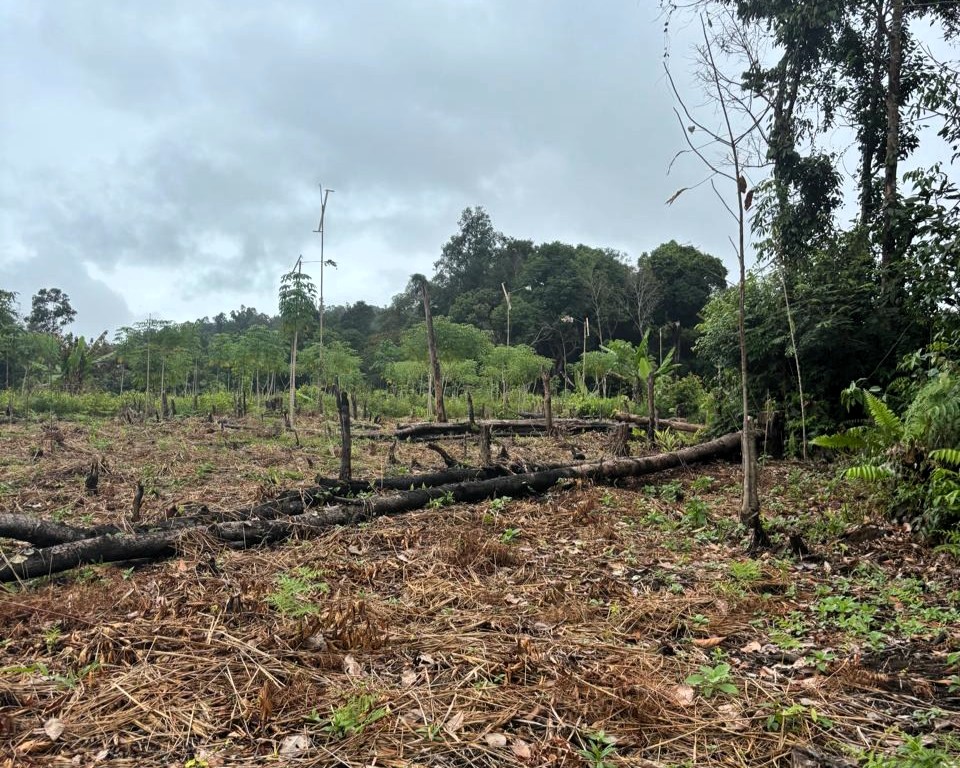
This study examines how the Dayak Tunjung community in East Kalimantan, Indonesia, employs linguistic classifications to structure and transmit ecological knowledge within a traditional swidden agricultural system. It focuses on the vocabulary used to denote fallow stages and analyzes how generational shifts in language use reflect broader socio-ecological transformations. Data were collected through 16 semi-structured interviews and participant observation in Linggang Melapeh Village, stratified by age and occupation to capture intergenerational dynamics. The findings reveal that older generations retain a detailed lexicon tied to ecological succession and customary land practices, while younger members increasingly adopt shortened fallow cycles and show a declining familiarity with traditional terms. These patterns indicate a process of biocultural erosion, wherein linguistic attrition parallels the restructuring of ecological relationships under the pressures of land commodification and shifting livelihood strategies. The study highlights the need to revitalize Indigenous ecological narratives and safeguard linguistic diversity as critical components of cultural and environmental sustainability. Furthermore, it calls for decolonizing conservation frameworks to recognize and empower Indigenous governance systems. Integrative efforts involving education, participatory mapping, and culturally grounded policy interventions are recommended to sustain the ecological and linguistic heritage of the Dayak Tunjung community.
Akhmar, A. M., Rahman, F., Supratman, S., Hasyim, H., & Nawir, M. (2022). Poured from the sky: The story of traditional ecological knowledge in Cérékang Forest conservation. Forest and Society, 6(2), 527-546. https://doi.org/10.24259/fs.v 6i2.15176
Barri, M. F., Setiawan, A. A., Oktaviani, A. R., Prayoga, A. P., & Ichsan, A. C. (2018). Deforestasi tanpa henti: potret deforestasi di Sumatera Utara, Kalimantan Timur, dan Maluku Utara. Forest Watch Indonesia.
Berkes, F. (2008). Sacred ecology (2nd Edition). Routledge.
Cairns, M. (2015). Shifting Cultivation and Environmental Change: Indigenous People, Agriculture and Forest Conservation. Routledge.
Correa, D. S. & Owens, W. R. (2010). The Handbook to Literary Research (2nd Edition). Routledge.
Cramb, R. A., Colfer, C. J. P., Dressler, W., Laungaramsri, P., Le, Q. T., Mulyoutami, E., ... & Wadley, R. L. (2009). Swidden transformations and rural livelihoods in Southeast Asia. Human Ecology, 37(3), 323-346. https://doi.org/10.1007/s107 45-009-9241-6
Dinas Perkebunan Provinsi Kalimantan Timur. (2018). Luas Perkebunan Sawit Kaltim 1,2 Juta Hektar. Accessed from https://disbun.kaltimprov.go.id/artikel/luas-perkebunan-sawit-kaltim-12-juta-hektar
Domínguez, L., & Luoma, C. (2020). Decolonising Conservation Policy: How Colonial Land and Conservation Ideologies Persist and Perpetuate Indigenous Injustices at the Expense of the Environment. Land, 9(3), 65. https://doi.org/10.3390/lan d9030065
Dove, M. R. (2015). The view of swidden agriculture: By the early naturalists Linnaeus and Wallace. In Cairns, M. F. (Ed.), Shifting Cultivation and Environmental Change (pp. 3-24). Routledge.
Dove, M. R. (1983). Theories of swidden agriculture, and the political economy of ignorance. Agroforestry systems, 1(2), 85-99. https://doi.org/10.1007/BF005 96351
Duranti, A. (1997). Linguistics Anthroplogy. Cambridge University Press.
Eriyanto, E. (2011). Analisis Wacana: Pengantar Analisis Teks Media. LKIS.
Foley, W. A. (1997). Anthropological Linguistics: An Introduction. Blackwell Publisher.
Fowler, R. (1991). Language in the News: Discourse and Ideology in the Press. Routledge.
Fowler, R., Hodge, B., Kress, G., & Trew, T. (Eds.). (1979). Language and control. Routledge.
Fox, J., Fujita, Y., Ngidang, D., Peluso, N., Potter, L., Sakuntaladewi, N., ... & Thomas, D. (2009). Policies, political-economy, and swidden in Southeast Asia. Human Ecology, 37(3), 305-322. https://doi.org/10.1007/s10745-009-9240-7
Fox, J. (2000). How blaming'slash and burn'farmers is deforesting mainland Southeast Asia. East-West Center.
Ghafur, H. S. (2021). Tourism Policy and Desacralization of Religious Traditions: A Case Study of the Hudoq Ceremony Tradition and the Farming System of the Dayak Bahau Tribe in Tourism Development, East Kalimantan, Indonesia. East Kalimantan, Indonesia. Heliyon. https://dx.doi.org/10.2139/ssrn.3984077
Gunawan, R., Thamrin, J., & Suhendar, E. (1998). Industrialisasi Kehutanan dan Dampaknya Terhadap Masyarakat Adat: Kasus Kalimantan Timur. Akatiga.
Imang, E. (2020). Short Communication: Adoption level of indigenous communities on agricultural technology in East Kalimantan, Indonesia: Problem and adaptive solutions. Biodiversitas, 21(3), 1160-1164. https://doi.org/10.13057/biodiv/d 210341
Iskandar, J., & Ginanjar, A. (2002). Perubahan pengelolaan hutan oleh masyarakat Dayak akibat kegiatan HPH/HPHH di Kutai Barat Kalimantan Timur. Sosiohumaniora, 4(3), 209-223. https://doi.org/10.24198/sosiohuman iora.v4i3.5268
Kramsch, C. (2000). Language and Culture. Oxford University Press.
Krekel, C., & Prati, A. (2021). Linking subjective wellbeing and pro-environmental behaviour: A multidimensional approach. In Cloutie, S., El-Sayed, S., Ross, A., & Weaver, M. (Eds.), Linking Sustainability and Happiness: Theoretical and Applied Perspective (pp. 175-201). Springer Nature. https://doi.org/10.1007/ 978-3-030-89559-4_11
Lahajir. (2001). Etnoekologi Perladangan Orang Dayak Tunjung Linggang. Galang Press.
Lei, L. (2022). Exploring ecological identity from the perspective of systemic functional linguistics. Journal of World Languages, 7(3), 487-514. https://doi.org/10.151 5/jwl-2021-0013
Mardawani, M. (2020). Praktis Penelitian Kualitatif: Teori Dasar dan Analisis Data dalam Perspektif Kualitatif. Deepublish.
Mears, C. L. (2012). In-depth interviews. In Coe, R., Waring, M., Hedges, L. V., & Ashley, L. D. (Eds.), Research methods and methodologies in education, (pp. 170-176). Sage Publication Inc.
Mulyani, S. (2022). Petkuq Mehuey: Kearifan Lokal dengan Kesetaraan Gender dalam Menjaga Hutan Adat Suku Dayak Wehea-Kutai Timur, Kalimantan Timur. Jurnal Sosial-Politika, 3(2), 82-90. https://doi.org/10.54144/jsp.v3i2.52
Dang, H. N., & Trung, D. N. (2022). Evaluation of land cover changes and secondary ecological succession of typical agroforestry landscapes in Phu Yen Province. Forest and Society, 6(1), 1-19. https://doi.org/10.24259/fs.v6i1.1 7889
Nurrohman, R. (2024). Deforestasi dan Konservasi Hutan di Kalimantan Timur. Kumparan.com. Accessed from https://kumparan.com/rosyid-nurrohman/defo restasi-dan-konservasi-hutan-di-kalimantan-timur
Pérez, I. C. (2015). Indigenous Languages, Identity a nd Legal Framework in Latin America: An Ecolinguistic Approach. Procedia-Social and Behavioral Sciences, 212, 111-116. https://doi.org/10.1016/j.sbspro.2015.11.307
Putri, N. Q. H., Andayani, A., & Wardani, N. E. (2023). Representation of cultural values in Tempuutn Senarikng of Dayak Benuaq and Tunjung tribes. HTS Teologiese Studies/Theological Studies, 79(1), a8091. https://doi.org/10.4102/hts.v79i1. 8091
Rahmawati, H. (2015). Kearifan lokal masyarakat dayak benuaq dalam pemanfaatan lahan dan pemeliharaan lingkungan. Jurnal Penelitian Humaniora, 20(2), 106-113.
Ramadhany, N. (2023). Laju Deforestasi Hutan Akibat Aktivitas Pertambangan di Provinsi Kalimantan Timur. Rekayasa Hijau: Jurnal Teknologi Ramah Lingkungan, 7(1), 10-19. https://doi.org/10.26760/jrh.V7i1.10-19
Rijal, S. (2020). Hopes and Ideals in the Self Name Dayak Kenyah Community. In 2nd Educational Sciences International Conference (ESIC 2019) (pp. 100-103). Atlantis Press. https://doi.org/10.2991/assehr.k.200417.021
Rijal, S. (2016). Hubungan Bahasa Dayak Kenyah dan Bahasa Dayak Punan: Analisis Ekolinguistik Dialektikal. In Prosiding Seminar Nasional Bahasa Ibu IX. Denpasar (pp. 26-27).
Setiawan, Y., Rahayu, D., Rahman, E. (2023). Analisis Penggunaan Lahan Pertambangan Batu Bara dengan Pendekatan Driving, Pressure, State, Impact, Response (DPSIR) di Kecamatan Damai Kabupaten Kutai Barat. Jurnal Infrastruktur, 9(1), 25-32.
Setyawan, A. D. (2010). Biodiversity conservation strategy in a native perspective; case study of shifting cultivation at the Dayaks of Kalimantan. Nusantara Bioscience, 2(2), 97-108. https://doi.org/10.13057/nusbiosci/n020208
Samsoedin, I., Wijaya, A., & Sukiman, H. (2010). Konsep tata ruang dan pengelolaan lahan pada masyarakat Dayak Kenyah di Kalimantan Timur. Jurnal analisis kebijakan kehutanan, 7(2), 145-168. https://doi.org/10.20886/jakk.2010.7.2.1 45-168
Siahaya, M. E., Hutauruk, T. R., Aponno, H. S., Hatulesila, J. W., & Mardhanie, A. B. (2016). Traditional ecological knowledge on shifting cultivation and forest management in East Borneo, Indonesia. International Journal of Biodiversity Science, Ecosystem Services & Management, 12(1-2), 14-23. https://doi.org/ 10.1080/21513732.2016.1169559
Smith, A. D., & Rama, T. (2022). Environmental factors affect the evolution of linguistic subgroups in Borneo. Diachronica, 39(2), 193-225. https://doi.org/10.1075/di a.20024.smi
Steffensen, S. V., & Fill, A. (2014). Ecolinguistics: the state of the art and future horizons. Language sciences, 41, 6-25. https://doi.org/10.1016/j.langsci.201 3.08.003
Steffensen, S. V. (2007). Language, ecology and society: An introduction to dialectical linguistics. In Steffensen, S. V. & Nash, J. (Eds.), Language, ecology and society: A dialectical approach (pp. 3-31). Bloomsbury Academic.
Stibbe, A. (2021). Ecolinguistics: Language, ecology and the stories we live by. Routledge.
Stibbe, A. (2014). An ecolinguistic approach to critical discourse studies. Critical discourse studies, 11(1), 117-128. https://doi.org/10.1080/17405904.2013.84 5789
Tian, H., Liu, W., & Yang D. (2022). Pro-environmental behavior research: Theoretical progress and future directions. Frontiers in Phsychology, 13, 955120. https://doi.org/10.3389/fpsyg.2022.995120
Tisen, O. (2004). Conservation and tourism: A case study of longhouse communities in and adjacent to Batang Ai National Park, Sarawak, Malaysia [Master thesis]. Lincoln University.
Uluk, A., Sudana, M., & Wollenberg, E. (2001). Ketergantungan Masyarakat Dayak Terhadap Hutan. CIFOR.
Wardani, L. K., Sitinjak, R. H. I., Nilasari, P. F., & Widjayadi, D. F. (2018). Form and Meaning of Dayak Traditional House in East Kalimantan, Indonesia (Case Study: Lou Pepas Eheng Dayak Benuaqs House). In 3rd International Conference on Creative Media, Design and Technology (REKA 2018). Atlantis Press. https://doi.org/10.2991/reka-18.2018.59
Widowati, F. M., & Wulandari, M. P. (2022). Combination of Pragmatic and Constitutive Environmental Communication of Dayak Wehea Tribe in Nature Conservation Efforts. J-PAL, 13(2), 47-57. https://doi.org/10.21776/ub.jpal.2022.013.02.01
Yulianingrum, A. V., Nurfadillah, M., Riziq, S. M., & Novitadiningrum, A. (2023). Implikasi Kebijakan Pengelolaan Pertambangan Batubara Terhadap Eksistensi Masyarakat Hukum Adat Di Samarinda. AL-MANHAJ: Jurnal Hukum dan Pranata Sosial Islam, 5(1), 915-924. https://doi.org/10.37680/almanhaj.v5i1. 2826
Zhou, W. (2022). Ecolinguistics: A half-century overview. Journal of World Languages, 7(3), 461-486. https://doi.org/10.1515/jwl-2021-0022
Copyright (c) 2025 Forest and Society

This work is licensed under a Creative Commons Attribution 4.0 International License.
This is an open access journal which means that all contents is freely available without charge to the user or his/her institution. Users are allowed to read, download, copy, distribute, print, search, or link to the full texts of the articles in this journal without asking prior permission from the publisher or the author. This is in accordance with the BOAI definition of open access.
Submission of an article implies that the work described has not been published previously (except in the form of an abstract or as part of a published lecture or academic thesis), that it is not under consideration for publication elsewhere, that its publication is approved by all authors and tacitly or explicitly by the responsible authorities where the work was carried out, and that, if accepted, will not be published elsewhere in the same form, in English or in any other language, without the written consent of the Publisher. An article based on a section from a completed graduate dissertation may be published in Forest and Society, but only if this is allowed by author's(s') university rules. The Editors reserve the right to edit or otherwise alter all contributions, but authors will receive proofs for approval before publication.
Forest and Society operates a CC-BY 4.0 © license for journal papers. Copyright remains with the author, but Forest and Society is licensed to publish the paper, and the author agrees to make the article available with the CC-BY 4.0 license. Reproduction as another journal article in whole or in part would be plagiarism. Forest and Society reserves all rights except those granted in this copyright notice
