INTERNATIONAL INDEXING


Publishing Schedule
Media Kesehatan Masyarakat Indonesia publishes four issues in a year March, June, September, and December.
Advertising Policy
Advertising Complaints Policy
Please send any complaints about advertising to: journal.mkmi@unhas.ac.id or jurnal.mkmi@gmail.com.
Open Access Policy
Media Kesehatan Masyarakat Indonesia provides immediate open access to its content on the principle that making research freely available to the public and supports a greater global exchange of knowledge. All articles published in Media Kesehatan Masyarakat Indonesia are fully open access: immediately freely available to read, download and share. Articles are published under the terms of a CC BY-NC-SA license which permits use, distribution, and reproduction in any medium, provided the original work is properly cited.
Archive Policy
This journal is included in the Public Knowledge Project Private Network (PKP PN), distributed archiving system that creates permanent archives of the journal for purposes of preservation and restoration. Media Kesehatan Masyarakat Indonesia also support self-archiving. Media Kesehatan Masyarakat Indonesia journal permit and encourages authors to make their research visible and accessible to the peers by uploading the final published version of their articles in personal or institutional repositories immediately after publication, while providing bibliographic details that credit, if applicable, its publication in the journal for purposes of preservation and restoration.
Revenue
Media Kesehatan Masyarakat Indonesia uses a Gold open-access business model. It should be noted that publishing fees or waiver status does not influence editorial decision-making. If the research involves confidential data and business/marketing practices, authors should clearly justify this matter whether the data or information will be hidden securely or not.
Media Kesehatan Masyarakat Indonesia is fully sponsored and funded by Hasanuddin University.
AI Ethics Policy
Authors’ Use of AI in Manuscript Preparation
Authors who incorporate AI and AI-assisted tools into their writing process should do so primarily to improve language, clarity, and readability. These tools should not replace core scholarly tasks, such as generating original scientific insights, analyzing data, or forming conclusions. All use of AI must be under the author’s oversight and subject to thorough review and editing by humans. Since AI tools can produce content that appears authoritative but may be incomplete, biased, or incorrect, authors must take full responsibility for the accuracy and originality of their work.
Authors are required to disclose the use of AI and AI-assisted technologies in their manuscripts, with a statement indicating the extent and purpose of such use. This transparency supports trust among readers, reviewers, and editors, and ensures compliance with the terms of use for the tools employed.
Originality and Plagiarism
Authors are fully responsible for the accuracy, originality, and ethical integrity of any content generated or modified with the assistance of GenAI. Any form of AI-assisted plagiarism will be treated as academic misconduct.
Use of AI in Peer Review
Editors and reviewers may also use AI tools in a limited and transparent way (e.g., to check language or identify research gaps), but editorial decisions remain solely based on human judgment and ethical guidelines.
Peer review remains an intellectual task that requires human judgment and critical thinking, and the use of AI for evaluating scientific validity or originality is outside the scope of responsible peer review practices.
Ongoing Policy Development
The journal remains committed to monitoring developments in AI technology and will adapt this policy as necessary to uphold standards of scientific rigor, confidentiality, and ethics.
INTERNATIONAL INDEXING
Cordia Ming Yeuk Chu, (SCOPUS ID : 56435044600) Centre for Environment and Population Health, Griffith University, Australia
Mahdi Hasan Suhail, (SCOPUS ID : 55399070800) Department of Physics, University of Baghdad, Iraq
Isam Mohammed Ibrahim, (SCOPUS ID : 56200248100) Department of Physics, University of Baghdad, Iraq
Kristen Marie Hurley, (SCOPUS ID : 8502630200) Center for Human Nutrition, International Health, The Johns Hopkins Bloomberg School of Public Health, Baltimore, Maryland, USA
Peter Davey, (SCOPUS ID : 57192956383) School of Environment and Science, Griffith University, Australia
Wesam Al Madhoun, (SCOPUS ID : 26430526800) Global Ambassadors of Sustainability, Engineering, Gaza University, Palestine
Aini Ahmad, (SCOPUS ID : 57203645325) School of Nursing, KPJ Healthcare University College, Malaysia
Veni Hadju, (SCOPUS ID : 8684558700), Department of Nutrition, Faculty of Public Health, Universitas Hasanuddin, Indonesia
Oktia Woro Kasmini Handayani, (SCOPUS ID : 57196057104), Nutrition, Department of Public Health, Faculty of Sport Science, Universitas Negeri Semarang, Indonesia
Ede Surya Darmawan, (SCOPUS ID : 57215313462), Department of Health Policy and Administration, Faculty of Public Health, Universitas Indonesia, Indonesia
JOURNAL ISSUE
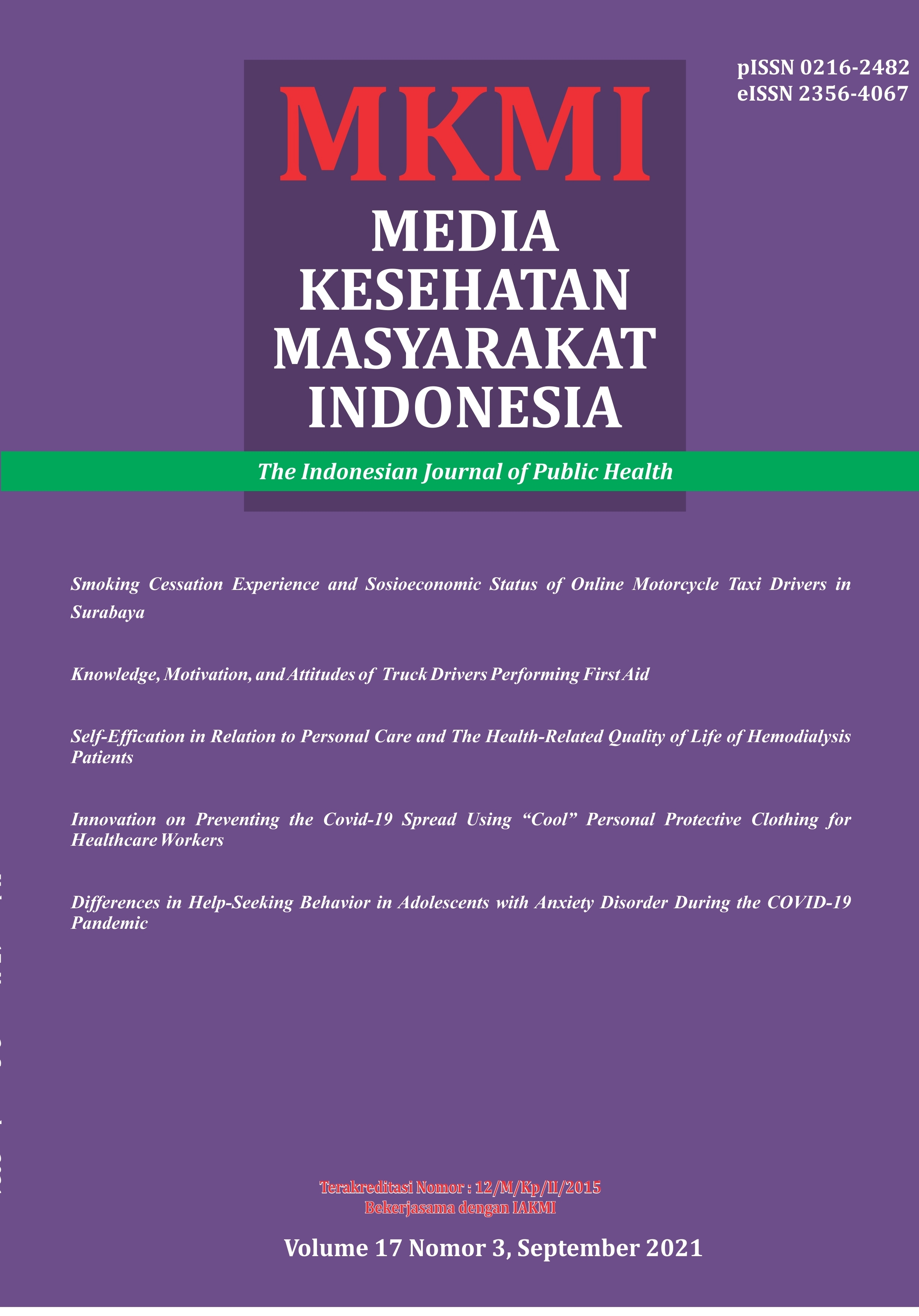
Published by Public Health Faculty, Hasanuddin University
Quarterly Publication
View Current Issue
SOCIAL SHARE


CITATION
STAT COUNTER
TOOLS