
Keywords
Tongkonan symbolism
ethical cosmopolitanism
microcosm
How to Cite
Abstract
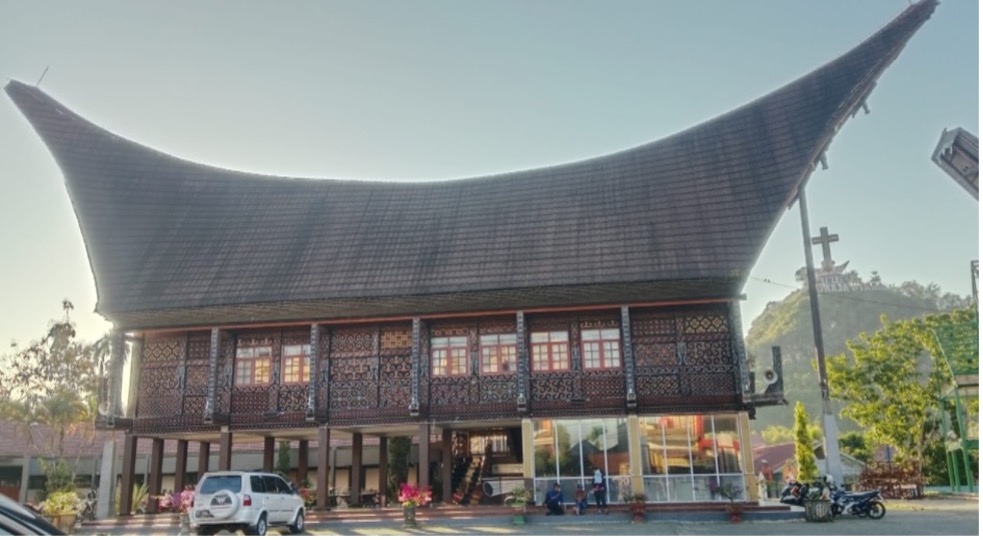
Previous studies have often regarded the tongkonan solely as a traditional, primordial symbol tied exclusively to Toraja culture. This article challenges that view by exploring the broader, transnational ethical dimensions of the tongkonan symbolism, which have not been fully addressed in existing literature. This research aims to empirically examine the relationship between individual subjects, the Toraja community, and other global communities, integrating these findings into a holistic, cosmopolitan perspective.
Adopting a qualitative approach with a hermeneutic framework, this study analyzes the tongkonan as a cultural text through the lenses of symbol theory and ethical cosmopolitanism. Six informants participated in the study, consisting of two customary leaders, a church official, a religious leader, an educational practitioner, and a tongkonan carver. Data were collected through unstructured interview and observation.
The research findings demonstrate that the symbolism of the tongkonan, understood as a representation of the microcosm, aligns with the principles of ethical cosmopolitanism, particularly in terms of cosmic brotherhood or fraternity. The Toraja people, through their symbolic use of the tongkonan, have historically positioned themselves as cosmopolitans or world citizens. The tongkonan embodies an ideal type of human being—one who is guided by solidarity and a sense of responsibility towards the liyan (fellow beings), thus reflecting a cosmopolitan personality. These results confirm the congruence between the symbolic meaning of the tongkonan and the tenets of ethical cosmopolitanism, indicating that the Torajan people have embraced their identity as global citizens, ethically connected across transnational scales.
References
Abu Hamid, D. (2003). Siri’ & Pesse’: Harga Diri Manusia Bugis, Makassar, Mandar, dan Toraja. Makassar: Refleksi.
Ada’, J. L. (2010). Menggali dan Melestarikan Nilai-Nilai Religio-Kultural Tallu Lembangna Dalam Konteks Pancasila. In B. Tallulembang & M. Andin (eds.), Sejarah Leluhur, Aluk, Adat, dan Budaya Toraja di Tallu Lembangna. Yogyakarta: Penerbit Gunung Sopai, 158-194.
Ada’, J. L. (2014). Aluk To Dolo Menantikan Kristus: Ia Datang Agar Manusia Mempunyai Hidup Dalam Segala Kelimpahan. Yogyakarta: Penerbit Gunung Sopai.
Adams, K. M. (1997). Ethnic Tourism and The Renegotiation Of Tradition In Tana Toraja (Sulawesi, Indonesia). Ethnology, 36(4):309–320. https://doi.org/10.2307/3774040, accessed on November 24, 2025.
Adams, K. M. (2006). Art As Politics: Re-Crafting Identities, Tourism, and Power in Tana Toraja, Indonesia. Honolulu: University of Hawai‘i Press.
Appiah, K. A. (2006). Cosmopolitanism: Ethics in A World of Strangers. W.W. New York: Norton & Company.
Basir, S., & Prajawati, M. I. (2021). Moral Responsibility and Wholeheartedness: A Source of Cohesion in Javanese Society. Cosmopolitan Civil Societies, 13(1):15–27. https://doi.org/10.5130/ccs.v13.i1.7617, accessed on November 24, 2025.
Bennington, G. (1997). Politics and Friendship: A Discussion With Jacques Derrida. Centre for Modern French Thought, University of Sussex. http://www.livingphilosophy.org/Derrida-politics-friendship.htm, accessed on October 20, 2023.
Dase, Admadi Balloara. Hegemoni Wacana Tongkonan di Toraja. (2020). Retorik: Jurnal Ilmiah Humaniora, 8(1):24–50. https://doi.org/10.24071/ret.v8i1.4677, accessed on November 24, 2025.
Dewi, N. K. A. (2003). Wantah Geometri, Simetri, dan Religiusitas Pada Rumah Tinggal Tradisional di Indonesia. Jurnal Permukiman "Natah", 1(1):29–43. https://www.researchgate.net/publication/242418848_Wantah_Geometri_Simetri_dan_Religiusitas_pada_Rumah_Tinggal_Tradisional_di_Indonesia, accessed on October 20, 2023.
Dillistone, F. W. (2022). The Power of Symbols. Yogyakarta: Kanisius.
Djufri, D. (2025). Fractured Identity in Multicultural Spaces: A Study of Contemporary Cultural Tensions. The International Journal of Social Sciences and Humanities Invention, 12(4):8562–8568. https://doi.org/10.18535/ijsshi/v12i04.07, accessed on November 24, 2025.
Douglas, M. (1970). Natural Symbols: Explorations in Cosmology. London & New York: Barrie & Rockliff. https://api.pageplace.de/preview/DT0400.9781134379514_A24415889/preview-9781134379514_A24415889.pdf, accessed on November 24, 2025.
Etinson, A. (2017). Cosmopolitanism: Cultural, Moral, and Political. Sovereign Justice. 25-45. https://doi.org/10.1515/9783110245745.1.25, accessed on October 20, 2023.
Hakpantria, H., & Shilfani, L. T. (2021). Pendidikan Karakter Berbasis Nilai Filosofi Tongkonan Pada Era New Normal di SD Kristen Makale 1. Didaktis: Jurnal Pendidikan dan Ilmu Pengetahuan, 21(3), 278–291. https://doi.org/10.30651/didaktis.v21i3.9830, accessed on October 22, 2023.
Hanh, T. N. (2017). The Insight of Interbeing. Awakin.org. https://www.awakin.org/v2/read/view.php?tid=2619, accessed on October 20, 2023.
Hansen, D. T. (2010). Chasing Butterflies Without a Net: Interpreting Cosmopolitanism. Studies in Philosophy and Education, 29(2):151–166. https://doi.org/10.1007/s11217-009-9166-y, accessed on November 24, 2025.
Hardiman, F. B. (2015). Seni Memahami: Hermeneutik Dari Schleiermacher Sampai Derrida. Yogjakarta: Kanisius.
Hill, L., & Blazejak, E. (2021). Stoic Cosmopolitanism and Enlightenment Internationalism. In Stoic Cosmopolitanism and Enlightenment Internationalism (pp. 69–111). Singapore: Palgrave Macmillan. https://doi.org/10.1007/978-981-16-2742-2_3, accessed on November 24, 2025.
Idrus, N. I. (2017). Mana’ dan Éanan: Tongkonan, Harta Tongkonan, Harta Warisan, dan Kontribusi Ritual di Masyarakat Toraja. ETNOSIA : Jurnal Etnografi Indonesia, 1(2): 12. https://doi.org/10.31947/etnosia.v1i2.1612, accessed on October 23, 2023.
International Law Making. (2006). Dekiarasi Universal Hak-Hak Asasi Manusia. Indonesian Journal of International Law, https://www.ohchr.org/en/human- rights/universal-declaration/translations/indonesian, accessed on October 22, 2023.
Jordaan, Eduard. (2009). Cosmopolitanism, Freedom and Indifference: A Levinasian View. Alternatif: Global, Local, Politic. 34 (1) https://journals.sagepub.com/doi/10.1177/030437540903400105, accessed on October 23, 2023.
Kasomo, D. (2012). An Assessment of Ethnic Conflict and Its Challenges Today. African Journal of Political Science and International Relations, 6(1):1–7. https://doi.org/10.5897/AJPSIRX11.001, accessed on November 24, 2025.
Lebang, Y. A. P. (2017). Analisis Semiotika Simbol Kekuasaan Pada Rumah Adat Toraja (Tongkonan Layuk). In Proceedings of Temu Ilmiah Ikatan Peneliti Lingkungan Binaan Indonesia (IPLBI), 6, I055–I062. https://doi.org/10.32315/ti.6.i055, accessed on November 24, 2025.
Maragh-Bass, A. C. (2022). Modernisasi Stratifikasi dan Budaya Sosial Masyarakat Toraja di Era Modern. https://doi.org/10.31219/osf.io/546rp, accessed on November 24, 2025.
Morris-O’Connor, D. A. (2024). The Role of Cultural Heritage in Shaping Modern Identity: A Comparative Study of Eastern and Western Perspectives. 1(1):37–45. https://doi.org/10.70088/rda9re42, accessed on November 24, 2025.
Murray, Don C. (2025). A Theoretical Framework for Conceptualizing Cosmopolitanism: Respect, Responsibility, and Rootedness. Global Philosophy 35 (1):1-25. https://doi.org/10.1007/s10516-025-09741-w, accessed on November 24, 2025.
Pemda Kabupaten Tana Toraja. (2013). Sumbangan Pemikiran Toraya Ma’kombongan: Sangtiangkaran Umpakalebu’ Pa’inaan Umbangun Sangtorayan Lan Lili’na Indonesia. In B. Tallulembang (Ed.), Yogyakarta: Penerbit Gunung Sopai.
Prasetyono, E. (2022). Menggagas Fusi Horison Dalam Hermeneutika Hans Georg Gadamer Sebagai Model Saling Memahami Bagi Dialog Antarbudaya Dengan Relevansi Pada Pancasila Sebagai Landasan Dialogis Filosofis. Studia Philosophica et Theologica, 22(1), 63–95. http://repo.driyarkara.ac.id/718/, accessed on November 24, 2025.
Rita, F. (2005). Konteks Paralelisme Semantis Dalam Budaya dan Bahasa Toraja Ma’retteng: Suatu Kajian Linguistik Antropologi (Disertasi doktor, Universitas Hasanuddin Makassar).
Said, A. A. (2004). Simbolisme Unsur Visual Rumah Tradisional Toraja dan Perubahan Aplikasinya Pada Desain Modern. Yogyakarta: Ombak.
Sandarupa, S. (2014). Kebudayaan Toraja Modal Bangsa, Milik Dunia. Sosiohumaniora, 16(1), https://jurnal.unpad.ac.id/sosiohumaniora/article/viewFile/5678/3009, accessed on October 23, 2023.
Senoaji, Z. H., Setiyawan, A., & Sari, S. D. (2021). Protection of Indigenous Peoples in The Perspective of Human Rights in Indonesia: Realities, Problems and Solutions. Activa Yuris: Jurnal Hukum, 1(1). https://doi.org/10.25273/ay.v1i1.10248, accessed on October 23, 2023.
Soutphommasane, T. (2006). The Ethics of Identity. Thesis Eleven, 85(1). https://doi.org/10.1177/0725513606062956, accessed on October 23, 2023.
Tallulembang, Bert. (2012). Reinterpretasi dan Reaktualisasi Budaya Toraja. Yogyakarta: Penerbit Gunung Sopai.
Tandira’pak, D. (2022). Implementasi Pendidikan Multikultural Melalui Tongkonan Simbol Pemersatu Masyarakat Toraja. Jurnal Pendidikan dan Pengajaran, 1(1): 60–68. https://doi.org/10.58540/pijar.v1i1.105, accessed on November 24, 2025.
Tangdilintin, L. T. (1978). Tongkonan (Rumah adat Toraja) Dengan Struktur, Seni dan Konstruksinya. Tana Toraja: Lepongan Bulan.
Tangdilintin, L. T. (1980). Toraja dan Kebudayaannya. Tana Toraja: Yayasan Lepongan Bulan.
Tribunnews. (2023, 21 Maret). Pesona dan Keunikan Masjid Ridha Allah: Bukti Kerukunan Umat Beragama di Toraja [Gambar]. https://toraja.tribunnews.com/2023/03/21/pesona-dan-keunikan-masjid-ridha-allah-bukti-kerukunan-umat-beragama-di-toraja, accessed on October 23, 2023.
Wattimena, R. A. A. (2017). Under The Same Sun: The Roots of Cosmopolitanism in Stoic Worldview. Journal of International Relations, 1(2). https://doi.org/10.33021/AEGIS.V1I2.240, accessed on November 24, 2025.
Wattimena, R. A. A. (2018). Kosmopolitanisme Sebagai Jalan Keluar Atas Tegangan Abadi Antara Neokolonialisme, Radikalisme Agama, dan Multikulturalisme. Jurnal Ledalero, 17(1), 119–132. 10.31385/jl.v17i1.59.119-132 , accessed on October 23, 2023.

This work is licensed under a Creative Commons Attribution-NonCommercial-ShareAlike 4.0 International License.
Copyright (c) 2025 ETNOSIA : Jurnal Etnografi Indonesia