
Village Fund for Peatlands Restoration: Study of Community’s Perceived Challenges and Opportunities in Muaro Jambi District
DOI:
https://doi.org/10.24259/fs.v5i2.14187Keywords:
Peatland, Restoration, Village, Village fund, Community engagementAbstract
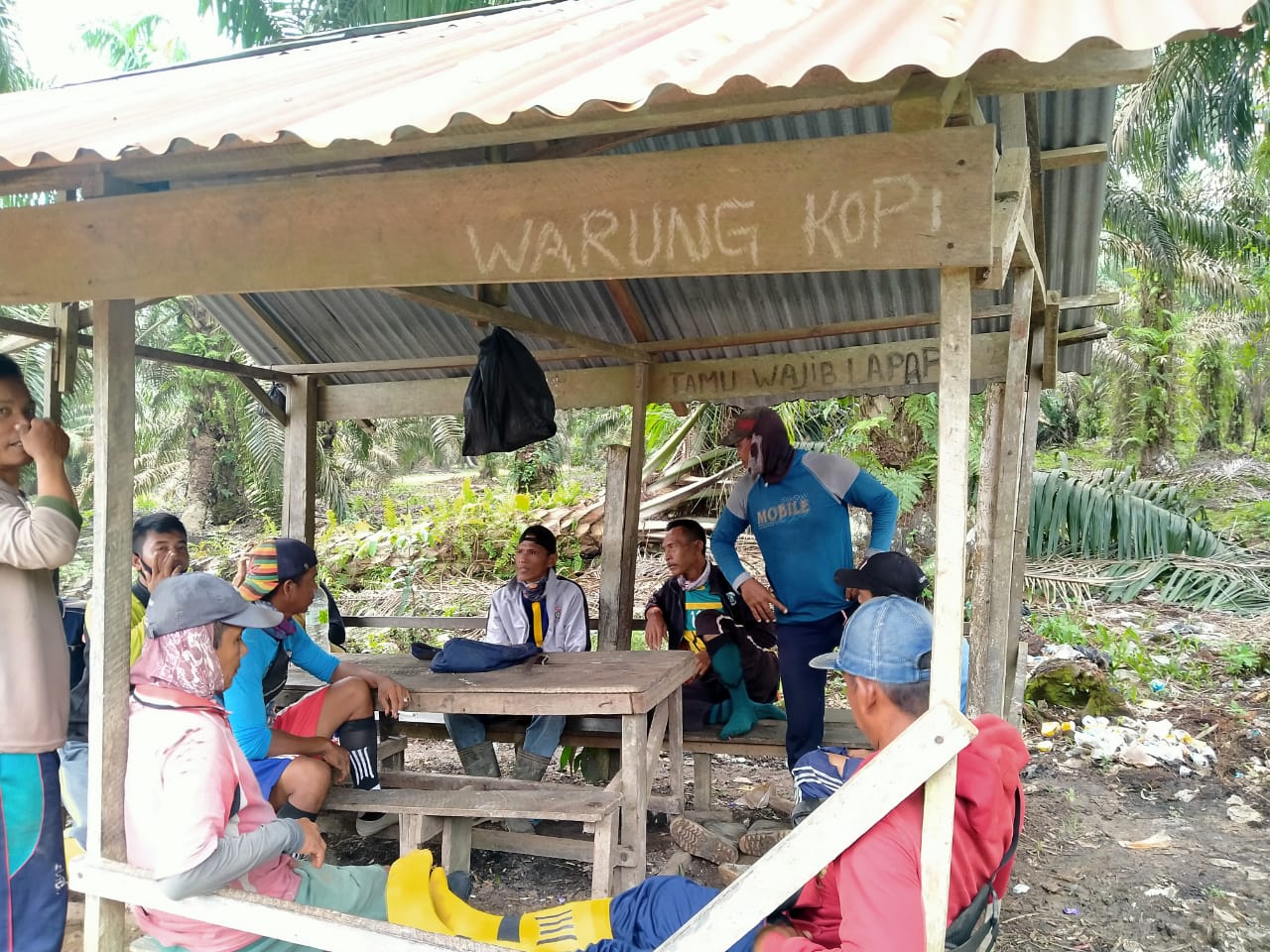
Peatlands conversion to dryland for plantation has caused environmental havoc and is more prone to natural disasters in Indonesia. Community engagements under village administration should be the main strategy for supporting peatlands restoration. Since the new law on villages was enacted in 2014, the village has gained authority and delegated responsibilities from the upper-level government to make rural development decisions in various sectors, including those connected to environmental management, such as peatland restoration. The recognition of authority is followed by the transfer of significant funds, called village funds, from the central government as a form of commitment to undertake the village law. Currently, applied regulations allow community engagement to utilize the village fund for supporting peatland restoration. This study investigated the community's perceptions of village fund utilization for peatland restoration through in-depth interviews and questionnaires with site-level stakeholders that influence village budget allocation-related policies. The investigated aspects included village budgeting and development planning mechanism, the capacity of the community, and rules of district government in supervising the villages. Based on our findings, the identified challenges include the absence of environmental aspects as a part of village development pillars for developing village planning and budgeting, lack of community's environmental-economical nexus knowledge, and lack of district government in supervising village fund utilization and management at the site-level. However, the opportunities to direct the village fund utilization for peatlands restoration are widely open by strengthening the roles of district government to improve village fund governance at the site level.
References
Agus, F., Subiksa, I.G.M., and Wahyunto. (2012). Pengelolaan Lahan Gambut. In Janudianto (ed), Membangun Kembali Aceh: Belajar dari Hasil Penelitian dan Program Rehabilitasi Aceh Pasca Tsunami (pp. 37-58). World Agroforestry Center.
Antlöv, H., Wetterberg, A., & Dharmawan, L. (2016). Village governance, community life, and the 2014 village law in Indonesia. Bulletin of Indonesian Economic Studies, 52(2), 161-183. https://doi.org/10.1080/00074918.2015.1129047
Astiani, D., Burhanuddin, B., Curran, L. M., Mujiman, M., & Salim, R. (2017). Effects of drainage ditches on water table level, soil conditions and tree growth of degraded peatland forests in West Kalimantan. Indonesian Journal of Forestry Research, 4(1), 15-25. https://doi.org/10.20886/ijfr.2017.4.1.15-25
Badan Pusat Statistik [Central Bureau of Statistics]. (2019). Peta Desa di Indonesia. Badan Pusat Statistik (BPS).
Badan Restorasi Gambut [Peat Restoration Agency]. (2016). Rencana Strategis Restorasi Gambut 2016-2020. Badan Restorasi Gambut (BRGM).
Chopra, K., Kadekodi, G.K., Murty, M.N. (1990). Participatory Development: People and Common Property Resources. SAGE Publications.
Cronkleton, P., Bray, D. B., & Medina, G. (2011). Community forest management and the emergence of multi-scale governance institutions: Lessons for REDD+ development from Mexico, Brazil and Bolivia. Forests, 2(2), 451-473. https://doi.org/10.3390/f2020451
Danielsen, F., Skutsch, M., Burgess, N. D., Jensen, P. M., Andrianandrasana, H., Karky, B., ... & Zahabu, E. (2011). At the heart of REDD+: a role for local people in monitoring forests?. Conservation Letters, 4(2), 158-167. https://doi.org/10.1111/j.1755-263X.2010.00159.x
Dinas Kehutanan Provinsi Jambi [Jambi Province Forestry Office]. (2020). Peta Kesatuan Pengelolaan Hutan (KPH) dan Gambut di Provinsi Jambi. Dinas Kehutanan Provinsi Jambi.
Gunawan H., Kobayashi S., Mizuno K., Kono Y., Kozan O. (2016) Sustainable Management Model for Peatland Ecosystems in the Riau, Sumatra. In Osaki M., Tsuji N. (eds.), Tropical Peatland Ecosystems (pp. 113-123). Springer. https://doi.org/10.1007/978-4-431-55681-7_7
Gunawan, H., Kobayashi, S., Mizuno, K., & Kono, Y. (2012). Peat swamp forest types and their regeneration in Giam Siak Kecil-Bukit Batu Biosphere Reserve, Riau, East Sumatra, Indonesia. Mires and Peat, 10(5), 1-17.
Irawan, S., & Tacconi, L. (2016). Intergovernmental Fiscal Transfers, Forest Conservation and Climate Change. Edward Elgar Publishing.
Jaenicke, J., Rieley, J. O., Mott, C., Kimman, P., & Siegert, F. (2008). Determination of the amount of carbon stored in Indonesian peatlands. Geoderma, 147(3-4), 151-158. https://doi.org/10.1016/j.geoderma.2008.08.008
Kementerian Keuangan Republik Indonesia [Ministry of Finance, Republic of Indonesia]. (2019). Laporan Realisasi Anggaran Dana Desa di Indonesia. Ministry of Finance.
Kementerian Keuangan Republik Indonesia [Ministry of Finance, Republic of Indonesia]. (2020). Perkiraan Anggaran Dana Desa di Indonesia 2020. Ministry of Finance.
Kobayashi, S. (2016). Peatland and Peatland Forest in Brunei Darussalam. In Osaki M., Tsuji N. (eds.), Tropical Peatland Ecosystems (pp. 75-89). Springer. https://doi.org/10.1007/978-4-431-55681-7_5
Köllner, T., Schelske, O., & Seidl, I. (2002). Integrating biodiversity into intergovernmental fiscal transfers based on cantonal benchmarking: a Swiss case study. Basic and Applied Ecology, 3(4), 381-391. https://doi.org/10.1078/1439-1791-00104
Kumar, S., & Managi, S. (2009). Compensation for environmental services and intergovernmental fiscal transfers: the case of India. Ecological Economics, 68(12), 3052-3059. https://doi.org/10.1016/j.ecolecon.2009.07.009
Liu, J., Mooney, H., Hull, V., Davis, S. J., Gaskell, J., Hertel, T., ... & Li, S. (2015). Systems integration for global sustainability. Science, 347(6225). https://doi.org/10.1126/science.1258832
Loft, L., Gebara, M.F., and Wong, G.Y. (2016). The experience of ecological fiscal transfers. Occasional Paper 154. CIFOR.
Maguire, R. (2014). Public Finance for REDD+ in Kenya. Research Report. Queensland University of Technology.
Maturana, J. 2005. Biaya dan manfaat ekonomi dari pengalokasian lahan hutan untuk pengembangan hutan tanaman industri di Indonesia. Working Paper No. 30(i). CIFOR.
Mizuno, K., Fujita, M., Kawai, S. (2016). Catastrophe and Regeneration in Indonesia's Peatlands: Ecology, Economy, and Society. National University of Singapore Press.
Mubekti, M. (2011). Studi Pewilayahan Dalam Rangka Pengelolaan Lahan Gambut Berkelanjutan Di Provinsi Riau. Jurnal Sains dan Teknologi Indonesia, 13(2), 88-94. https://doi.org/10.29122/jsti.v13i2.883
Nakhooda, S., Caravani, A., Wenzel, A., and Schalatek, L. (2011). The evolving global climate finance architecture. Brief 2 Overseas Development Institute and Heinrich Böll Stiftung North America.
Pouliot, M., Treue, T., Obiri, B. D., & Ouedraogo, B. (2012). Deforestation and the limited contribution of forests to rural livelihoods in West Africa: evidence from Burkina Faso and Ghana. Ambio, 41(7), 738-750. https://doi.org/10.1007/s13280-012-0292-3
Ring, I. (2008). Integrating local ecological services into intergovernmental fiscal transfers: the case of the ecological ICMS in Brazil. Land Use Policy, 25(4), 485-497. https://doi.org/10.1016/j.landusepol.2007.11.001
Rosyani and Hariyadi, B. (2019). Partisipasi masyarakat dalam pencegahan dan pengendalian kebakaran lahan gambut di Hutan Lindung Gambut Londerang Provinsi Jambi. Jurnal Pembangunan Berkelanjutan, 2(1), 16-39. https://doi.org/10.22437/jpb.v2i1.6435
Rudiana and Afifah, D. (2019). Uniformity of development patterns as a portrait of autonomy of village government in managing village funds. Jurnal Ilmu Pemerintahan Widya Praja, 45(1), 85-98. https://doi.org/10.33701/jipwp.v45i1.340
Santos, R., Ring, I., Antunes, P., & Clemente, P. (2012). Fiscal transfers for biodiversity conservation: the Portuguese Local Finances Law. Land Use Policy, 29(2), 261-273. https://doi.org/10.1016/j.landusepol.2011.06.001
Streck, C. (2012). Financing REDD+: matching needs and ends. Current Opinion in Environmental Sustainability, 4(6), 628-637. https://doi.org/10.1016/j.cosust.2012.10.001
Suhendri, S., & Purnomo, E. P. (2017). Penguatan Kelembagaan Dalam Pencegahan dan Pengendalian Kebakaran Hutan dan Lahan di Kabupaten Muaro Jambi Provinsi Jambi. Journal of Governance and Public Policy, 4(1), 174-204. https://doi.org/10.18196/jgpp.v4i1.2645
Wahyudi, R. (2017). An assessment of village funds: Creating fiscal incentive mechanism in Aceh Province. Research Report. Deutsche Gesellschaft für Internationale Zusammenarbeit (GIZ)- SICCR TAC.
Wahyudi, R., & Wicaksono, R. L. (2020). Policy forum: Village fund for REDD+ in Indonesia: Lessons learned from policy making process at subnational level. Forest Policy and Economics, 119, 102274. https://doi.org/10.1016/j.forpol.2020.102274
Wahyunto, S., Ritung, S., and Subagjo, H. (2003). Sebaran Gambut dan Kandungan Karbon di Sumatera dan Kalimantan. Wetlands International-Indonesia Programme & Wildlife Habitat.
Additional Files
Published
Issue
Section
Categories
License
Copyright (c) 2021 Forest and Society

This work is licensed under a Creative Commons Attribution 4.0 International License.
This is an open access journal which means that all contents is freely available without charge to the user or his/her institution. Users are allowed to read, download, copy, distribute, print, search, or link to the full texts of the articles in this journal without asking prior permission from the publisher or the author. This is in accordance with the BOAI definition of open access.
Submission of an article implies that the work described has not been published previously (except in the form of an abstract or as part of a published lecture or academic thesis), that it is not under consideration for publication elsewhere, that its publication is approved by all authors and tacitly or explicitly by the responsible authorities where the work was carried out, and that, if accepted, will not be published elsewhere in the same form, in English or in any other language, without the written consent of the Publisher. An article based on a section from a completed graduate dissertation may be published in Forest and Society, but only if this is allowed by author's(s') university rules. The Editors reserve the right to edit or otherwise alter all contributions, but authors will receive proofs for approval before publication.
Forest and Society operates a CC-BY 4.0 © license for journal papers. Copyright remains with the author, but Forest and Society is licensed to publish the paper, and the author agrees to make the article available with the CC-BY 4.0 license. Reproduction as another journal article in whole or in part would be plagiarism. Forest and Society reserves all rights except those granted in this copyright notice