
Assessing the sustainability of traditional agroforestry practices: a case of Mamar agroforestry in Kupang-Indonesia
DOI:
https://doi.org/10.24259/fs.v5i2.14380Keywords:
Sustainability, traditional agroforestry, ecosystem services, socio-ecological, trade-off, arid regionAbstract
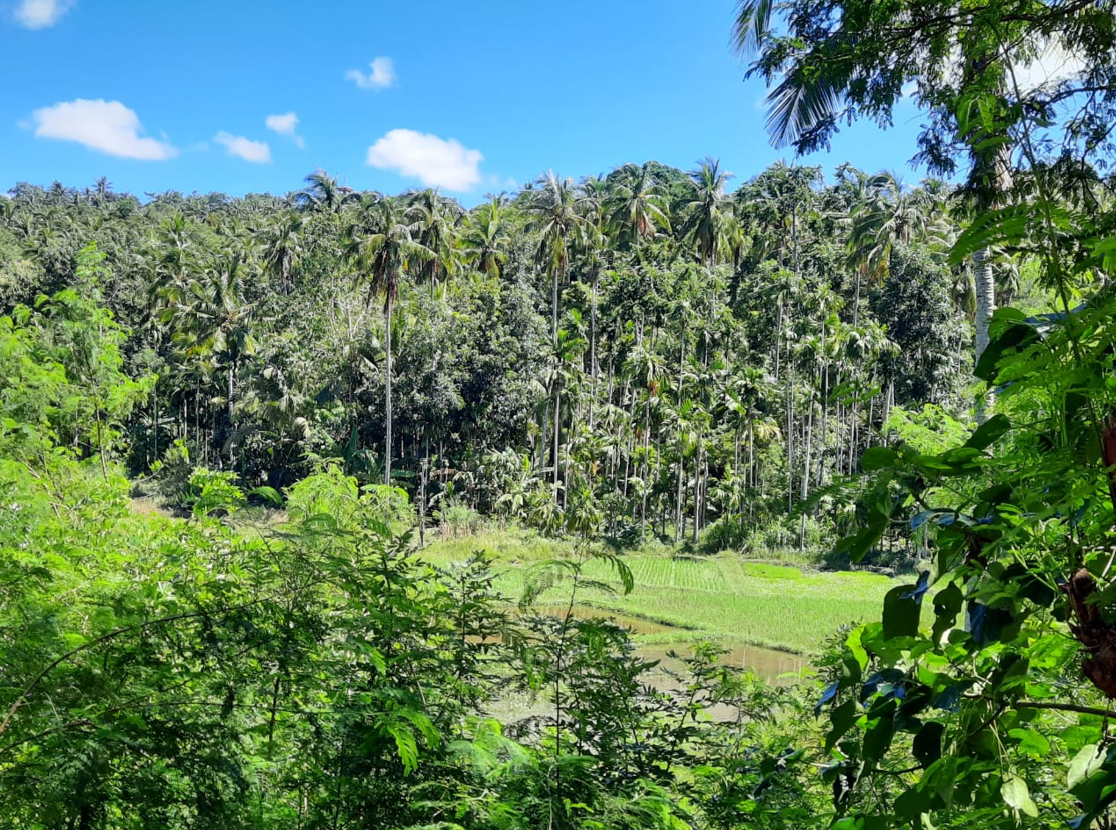
A traditional agroforestry of West Timor, namely Mamar, produces important ecosystem services to the people of this arid region, however, its management tends to change, thereby disrupting its sustainability. This study aims to assess the sustainability of Mamar agroforestry by analyzing the livelihood assests of the community, the biophysical land performance of the soil, and the value of ecosystem services. Furthermore, data, on perception and livelihood assets; the level of soil damage, the importance value index, and diversity index, the value of ecosystem services based on the opinion of experts and community leaders, as well as change in land use were collected in five villages in Kupang district using surveys with a qualitative and quantitative approach. The results showed a change of perspective in Mamar's management; the decrease in the important value index of cultural crops, the diversity index is classified as declining, there is soil damage in several parameters, and the value of ecosystem services does not focus on cultural services. Considering this result, there is a socio-ecological trade-off that reduces support for the sustainability of Mamar as traditional agroforestry that emphasizes socio-cultural functions.
References
Abdulkarim, M. N., Sariffuddin, & Ardiansyah, S. Y. (2015). Penilaian dan Pemetaan Kerusakan Lahan untuk Produksi Biomassa di Kecamatan Mijen, Kota Semarang. Conference on Urban Studies and Development, 15–29. http://proceeding.cousd.org
Berkes, F., Colding, J., & Folke, C. (2000). Rediscovery of Traditional Ecological Knowledge as Adaptive Management. Ecological Applications. https://doi.org/10.2307/2641280
Castro, M. (2016). Management of agroforestry systems : ecological, social and economic approaches Esther Fernández-Núñez Marina Castro Editors (Issue December).
Fraser, E. D. G., Dougill, A. J., Hubacek, K., Quinn, C. H., Sendzimir, J., & Termansen, M. (2011). Assessing vulnerability to climate change in dryland livelihood systems: Conceptual challenges and interdisciplinary solutions. Ecology and Society, 16(3), 01. https://doi.org/10.5751/ES-03402-160303
Graves, A. R., Burgess, P. J., Palma, J. H. N., Herzog, F., Moreno, G., Bertomeu, M., Dupraz, C., Liagre, F., Keesman, K., van der Werf, W., de Nooy, A. K., & van den Briel, J. P. (2007). Development and application of bio-economic modelling to compare silvoarable, arable, and forestry systems in three European countries. Ecological Engineering, 29(4), 434–449. https://doi.org/10.1016/j.ecoleng.2006.09.018
Intergovernmental Panel on Climate Change. (2013). Climate Change 2013: The Physical Science Basis. Contribution of Working Group I to the Fifth Assessment Report. In Climate Change 2013: The Physical Science Basis. Contribution of Working Group I to the Fifth Assessment Report.
Lu, Y., Wang, R., Zhang, Y., Su, H., Wang, P., Jenkins, A., Ferrier, R. C., Bailey, M., & Squire, G. (2015). Ecosystem health towards sustainability. Ecosystem Health and Sustainability. https://doi.org/10.1890/EHS14-0013.1
MA, M. A. (2005). Ecosystem and Human Well-being. In W. V. Reid (Ed.), WHO (Vol. 256, Issue 6). https://doi.org/10.1152/ajpcell.1989.256.6.c1120
Mayrowani, H., & Ashari, N. (2016). Pengembangan Agroforestry untuk Mendukung Ketahanan Pangan dan Pemberdayaan Petani Sekitar Hutan. Forum Penelitian Agro Ekonomi. https://doi.org/10.21082/fae.v29n2.2011.83-98
Moss, R. H., Edmonds, J. A., Hibbard, K. A., Manning, M. R., Rose, S. K., Van Vuuren, D. P., ... & Wilbanks, T. J. (2010). The next generation of scenarios for climate change research and assessment. Nature, 463(7282), 747-756. https://doi.org/10.1038/nature08823
Muta’ali, L. (2019). Daya Dukung dan Daya Tampung Lingkungan Hidup Berbasis Jasa Ekosistem untuk Perencanaan Lingkungan Hidup (V. Eris (ed.); 1st ed.). Badan Penerbit Fakultas Geografi UGM. www.geo.ugm.ac.id
Natonis, M. (2008). Ekosistem Mamar. Accessed from http://marthen-natonis.blogspot.com/2008/10/ekosistem-mamar.html
Ngaji, A. U. K., Baiquni, M., Suryatmojo, H., & Haryono, E. (2020). Sustaining subsistence culture in Mamar agroforestry management in West Timor, is it possible? E3S Web of Conferences. https://doi.org/10.1051/e3sconf/202020002023
Njurumana, G. N., Victorino, B. A., & Pratiwi, P. (2008). Potensi Pengembangan Mamar sebagai Model Hutan Rakyat dalam Rehabilitasi Lahan Kritis di Timor Barat. Jurnal Penelitian Hutan dan Konservasi Alam, 5(5), 473-484. https://doi.org/10.20886/jphka.2008.5.5.473-484
Njurumana, G. N. (2008). Kajian Degradasi Lahan Pada Daerah Aliran Sungai Kambaniru, Kabupaten Sumba Timur. Balai Penelitian Kehutanan Kupang, 241–254. Retrieved from http://www.forda-mof.org/files/5_Gerson_klm.pdf
Njurumana, G. N. (2009). Pola Pengelompokan Komunitas Mamar di Timor. Fakultas Pertanian UGM.
Njurumana, G. N. (2012). Agroforest Mamar dan Konservasi Keragaman Hayati Tumbuhan di Nusa Tenggara Timur. In Widiyatno, E. Prasetyo, T. S. Widiyaningsih, & D. P. Kuswantoro (Eds.), Prosiding Seminar Nasional Agroforestry III (pp. 36–40).
Nolan, K. ., & Callan, J. . (2006). Beachcomber Biology : The Shannon-Weiner Species Diversity Index. ABLE 2005 Proceedings, 27, 334–338.
Petheram, L., Zander, K. K., Campbell, B. M., High, C., & Stacey, N. (2010). “Strange changes”: Indigenous perspectives of climate change and adaptation in NE Arnhem Land (Australia). Global Environmental Change. https://doi.org/10.1016/j.gloenvcha.2010.05.002
Pujiono, E., Raharjo, S. A. S., Njurumana, G., Dwi, B., & Rianawati, H. (2013). Kajian Aspek Ekologi, Ekonomi Dan Sosial Model-Model Agroforestri Di Nusa Tenggara Timur. In In: Prosiding Seminar Nasional Agroforestri (pp. 456-461).
Rachdian, A., Prasetyo, L. B., & Rushayati, S. B. (2016). Identifikasi Perubahan Jasa Lingkungan dengan Menggunakan Penginderaan Jauh dan Sistem Informasi Geografis di Bogor. Media Konservasi, 21(1), 48-57. https://doi.org/10.29244/medkon.21.1.48-57
Rigueiro-Rodríguez, A., Mosquera-Losada, M. R., & Fernández-nuñez, E. (2012). Afforestation of agricultural land with pinus radiata d. Don and betula alba l. In nw spain: Effects on soil ph, understorey Production and floristic diversity eleven years after establishment. Land Degradation and Development, 23(3), 227–241. https://doi.org/10.1002/ldr.1072
Roshetko, J., Mulawarman, S. W., & Oka, I. N. (2002). Wanatani di Nusa Tenggara: Prosiding Loka Karya Wanatani Se-Nusa Tenggara 11-14 November 2001, Denpasar, Bali. Bogor: International Centre for Research in Agroforestry dan Winrock International. p, 164.
Ruhimat, I. S. (2015). Status Keberlanjutan Usahatani Agroforestry Pada Lahan Masyarakat: Studi Kasus Di Kecamatan Rancah , Kabupaten Ciamis , Provinsi Jawa Barat (Sustainability Status of Agroforestry in Private Lands : A Case Study in Rancah , Ciamis Regency , West Java). Penelitian Sosial Ekonomi Kehutanan, 12(2013), 99–110. https://doi.org/10.20886/jpsek.2015.12.2.99-110
Suek, J. (2018). Resiko, Inefisiensi dan Keberlanjutan Sistem Wanatani di Wilayah Timor Barat. Universitas Gadjah Mada.
Sumu, Y. (2011). Mamar “Sistem Wanatani Asli Pulau Timor.”
Tjoe, Y. (2016). Sustaining Livelihoods : An Analysis of Dryland Communities in West Timor , Indonesia Submitted in fulfilment of the requirements of the degree of (Issue March).
Wang, L., Zheng, H., Wen, Z., Liu, L., Robinson, B. E., Li, R., Li, C., & Kong, L. (2019). Ecosystem service synergies/trade-offs informing the supply-demand match of ecosystem services: Framework and application. Ecosystem Services, 37(September 2018), 100939. https://doi.org/10.1016/j.ecoser.2019.100939
Wolf, J., Allice, I., & Bell, T. (2013). Values, climate change, and implications for adaptation: Evidence from two communities in Labrador, Canada. Global Environmental Change. https://doi.org/10.1016/j.gloenvcha.2012.11.007
Zomer, R. J., Neufeldt, H., Xu, J., Ahrends, A., Bossio, D., Trabucco, A., Van Noordwijk, M., & Wang, M. (2016). Global Tree Cover and Biomass Carbon on Agricultural Land: The contribution of agroforestry to global and national carbon budgets. Scientific Reports, 6. https://doi.org/10.1038/srep29987
Additional Files
Published
Issue
Section
Categories
License
Copyright (c) 2021 Forest and Society

This work is licensed under a Creative Commons Attribution 4.0 International License.
This is an open access journal which means that all contents is freely available without charge to the user or his/her institution. Users are allowed to read, download, copy, distribute, print, search, or link to the full texts of the articles in this journal without asking prior permission from the publisher or the author. This is in accordance with the BOAI definition of open access.
Submission of an article implies that the work described has not been published previously (except in the form of an abstract or as part of a published lecture or academic thesis), that it is not under consideration for publication elsewhere, that its publication is approved by all authors and tacitly or explicitly by the responsible authorities where the work was carried out, and that, if accepted, will not be published elsewhere in the same form, in English or in any other language, without the written consent of the Publisher. An article based on a section from a completed graduate dissertation may be published in Forest and Society, but only if this is allowed by author's(s') university rules. The Editors reserve the right to edit or otherwise alter all contributions, but authors will receive proofs for approval before publication.
Forest and Society operates a CC-BY 4.0 © license for journal papers. Copyright remains with the author, but Forest and Society is licensed to publish the paper, and the author agrees to make the article available with the CC-BY 4.0 license. Reproduction as another journal article in whole or in part would be plagiarism. Forest and Society reserves all rights except those granted in this copyright notice