
Protecting Forested Areas in Non-Forest Zone through The Ecological Fiscal Transfer Scheme in Indonesia: A case study from Kutai Timur district
DOI:
https://doi.org/10.24259/fs.v6i1.19193Keywords:
Forested areas, Non-forest zone, Ecological fiscal transfer, Village funds allocation, Kutai TimurAbstract
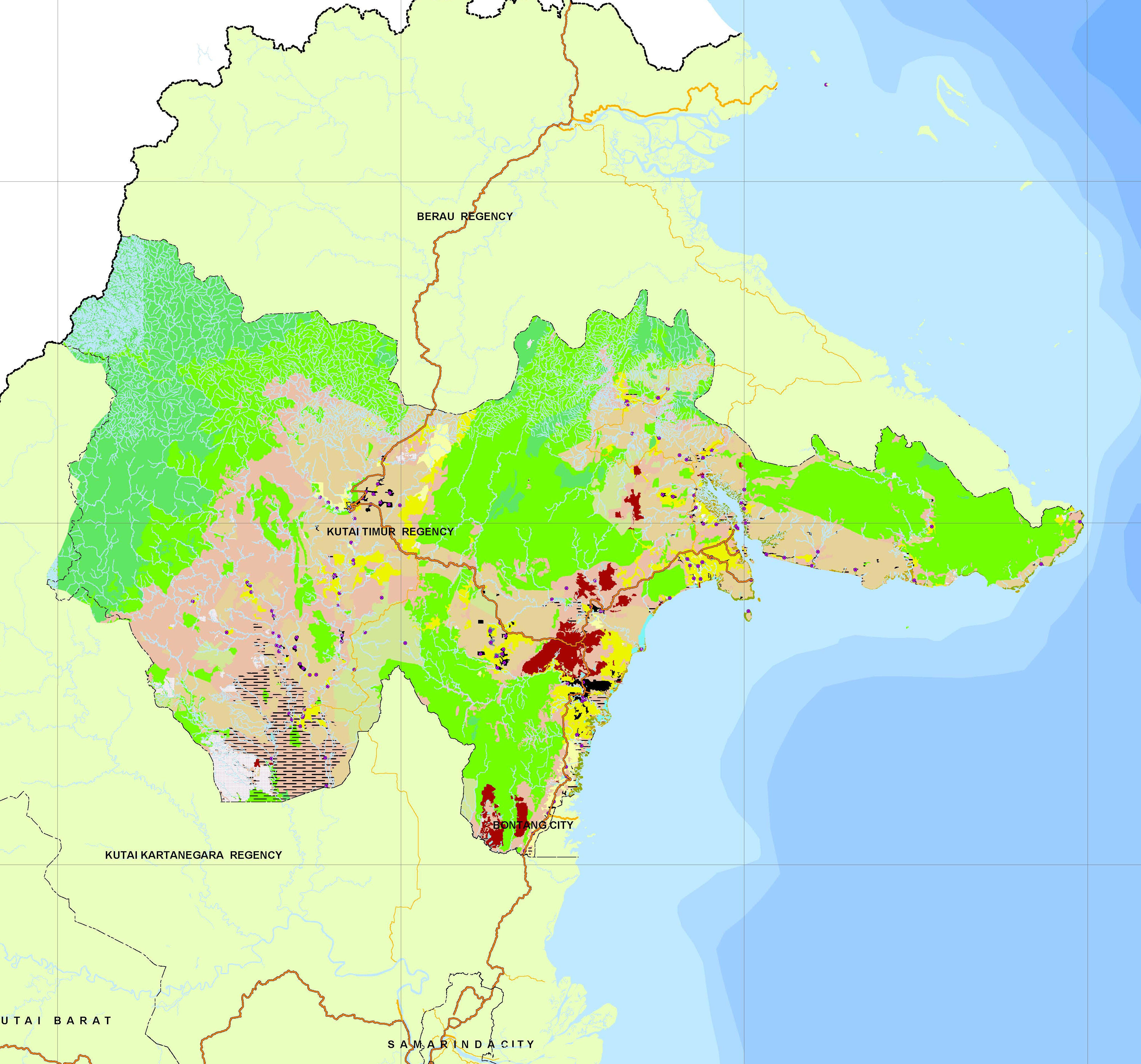
Ecological fiscal transfer (EFT) is an incentive scheme of budgetary transfers from different levels of a government (central and regional) to reward performances in environmental management. In Indonesia, EFT is mainly intended to protect forest zones or protected areas but does not include forested areas in the non-forest zone. This article investigates the opportunities and challenges of adopting the EFT scheme as a policy instrument to maintain the forested areas in Kutai Timur, a district in East Kalimantan province with the largest forested areas in its non-forest zone. This study applies a socio-legal approach along with a regulatory simplification instrument to examine the laws and regulations surrounding the adoption of an EFT scheme in Kutai Timur district. It demonstrates that the Kutai Timur district government can adopt the EFT scheme, given that they have the authority to manage the APL and village funds allocation. The scheme has no specific requirements or standards, identifying priority issues in the environmental sector. To adopt the scheme, the district government should develop criteria and indicators by considering the goals and priorities of district development, the data availability, and the opportunity for every village to implement it. The preparation of these criteria and indicators must be carried out in a participatory and accountable process to be well accepted by the stakeholders. Further, the district government requires integrating the EFT scheme in district policies on village funds allocation. By implementing the EFT scheme, the district government can encourage village governments and villagers to protect and manage forested areas in their village.
References
Alisjahbana, A. S., & Busch, J. M. (2017). Forestry, Forest Fires, and Climate Change in Indonesia. Bulletin of Indonesian Economic Studies, 53(2), 111–136. https://doi.org/10.1080/00074918.2017.1365404
Amirta, R., Sulistioadi, Y. B., Suba, R. B., Setiawati, Huesin, N., Syoim, M., & Kiswanto. (2019a). Gambaran Umum Wilayah Studi dan Rincian Rencana Kerja di Kabupaten Kutai Timur Provinsi Kalimantan Timur. Fakultas Kehutanan Universitas Mulawarman
Amirta, R., Sulistioadi, Y. B., Suba, R. B., Setiawati, Husien, N., Kiswanto, & Syoim, M. (2019b). Pemetaan Baseline Areal Bernilai Konservasi Tinggi di Kabupaten Kutai Timur Provinsi Kalimantan Timur. Fakultas Kehutanan Universitas Mulawarman
Anau, N., Hakim, A., Lekson, A. S., & Setyowati, E. (2019). Local Wisdom Practices of Dayak Indigenous People in the Management of Tana' Ulen in the Kayan Mentarang National Park of Malinau Regency, North Kalimantan Province, Indonesia. Russian Journal of Agricultural and Socio-Economic Sciences, 91(7), 156–167. https://doi.org/10.18551/rjoas.2019-07.16
Austin, K. G., Schwantes, A., Gu, Y., & Kasibhatla, P. S. (2019). What causes deforestation in Indonesia? Environmental Research Letters, 14(2), 024007. https://doi.org/10.1088/1748-9326/aaf6db
Badan Kebijakan Fiskal. (2019). Pendanaan Publik Untuk Pengendalian Perubahan Iklim Indonesia Tahun 2016 - 2018. Badan Kebijakan Fiskal (BKF) Kementerian Keuangan
Bakker, L. (2005). Resource claims between tradition and modernity: Masyarakat Adat strategies in Mului (Kalimantan Timur). Borneo Research Bulletin, 36, 29–50. https://repository.ubn.ru.nl/bitstream/handle/2066/36892/36892.pdf
Bakker, L. (2009). Who owns the Land? Looking for Law and Power in East Kalimantan. Radboud University
Banakar, R. (2019). On Socio-Legal Design. Lund University.
Barthel, M., Jennings, S., Schreiber, W., Sheane, R., Royston, S., Llp, K., Fry, J., Leng Khor, Y., & McGill, J. (2018). Study on the environmental impact of palm oil consumption and on existing sustainability standards. Retrieved from http://ec.europa.eu/environment/forests/pdf/palm_oil_study_kh0218208enn_new.pdf
BIOFIN. (2018). Innovative Financing for Diversity Through Ecological Transfer (EFT). Retrieved from http://www.biodiversityfinance.org/sites/default/files/content/ knowledge_products/EFT Infographic_0.pdf
BIOFIN. (2021). Ecological fiscal transfers : a win-win solution for people & planet. Retrieved from https://www.biofin.org/news-and-media/ecological-fiscal-transfers
Boadway, R., & Shah, A. (2009). Fiscal Federalisme: principles and practices in multiorder governance. Cambridge University Press.
BPS Kalimantan Timur. (2021). Provinsi Kalimantan Timur Dalam Angka 2021. Badan Pusat Statistik (BPS) Provinsi Kalimantan Timur
BPS Kutai Timur. (2021). Kabupaten Kutai Timur Dalam Angka 2021. Badan Pusat Statistik (BPS) Kabupaten Kutai Timur
Brack, D. (2019). Forests and Climate Change. Retrieved from https://www.un.org/esa/forests/wp-content/uploads/2019/03/UNFF14-BkgdStudy-SDG13-March2019.pdf
Busch, J., Ring, I., Akullo, M., Amarjargal, O., Borie, M., Cassola, R. S., ... & Zhou, K. (2021). A global review of ecological fiscal transfers. Nature Sustainability, 4(9), 756-765. https://doi.org/10.1038/s41893-021-00728-0
Christmas, S. K., Hardiyanti, M., & Prawira, S. A. (2021). Role in the Forest Village Community-Based Forest Management Sustainable Development. Journal of Judicial Review, 23(1), 115. https://doi.org/10.37253/jjr.v23i1.4387
de Paulo, F. L. L., & Camões, P. J. S. (2019). Ecological Fiscal Transfers for Biodiversity Conservation Policy: A Transaction Costs Analysis of Minas Gerais, Brazil. Ecological Economics, 166, 106425. https://doi.org/10.1016/j.ecolecon.2019.106425
de Paulo, F. L. L., & Camões, P. J. S. (2021). An analysis of delay in implementing ecological fiscal transfers in Brazil. Environmental Development, 37, 100550. https://doi.org/10.1016/j.envdev.2020.100550
Di Gregorio, M., Nurrochmat, D. R., Paavola, J., Sari, I. M., Fatorelli, L., Pramova, E., ... & Kusumadewi, S. D. (2017). Climate policy integration in the land use sector: Mitigation, adaptation and sustainable development linkages. Environmental Science & Policy, 67, 35-43. https://doi.org/10.1016/j.envsci.2016.11.004
Diskominfo Perstik Kutim. (2021). Kutai Timur Menjadi yang Terbesar di Kaltim, Industri Hilir Kelapa Sawit Akan di Canangkan. Retrieved from https://www.kutaitimurkab.go.id/page/articles/321
Ditjen PKTL. (2019). Rekalkulasi Penutupan Lahan Indonesia Tahun 2018. Direktorat Inventarisasi dan Pemantauan Sumber Daya Hutan.
Droste, N. (2017). Incentive Effects in Ecological Fiscal Transfers Evidence based foundations for policy advice [Doctoral dissertation]. Martin-Luther Universität Halle-Wittenberg. http://dx.doi.org/10.25673/6655
Eckstein, D., Künzel, V., Schäfer, L., & Winges, M. (2019). Global Climate Risk Index 2020. Retrieved from https://www.germanwatch.org/sites/germanwatch.org/ files/20-2-01eGlobal Climate Risk Index 2020_14.pdf
Edwards, D. P., Fisher, B., & Wilcove, D. S. (2012). High Conservation Value or high confusion value? Sustainable agriculture and biodiversity conservation in the tropics. Conservation Letters, 5(1), 20–27. https://doi.org/10.1111/j.1755-263X.2011.00209.x
Edwin, M., Sulistyorini, I. S., & Allo, J. K. (2017). Assessment of Natural Resources and Local Community Participationin Nature-Based Tourism of Wehea Forest, East Kalimantan. Jurnal Manajemen Hutan Tropika (Journal of Tropical Forest Management), 23(3), 128–139. https://doi.org/10.7226/jtfm.23.3.128
Erbaugh, J. T., & Nurrochmat, D. R. (2019). Paradigm shift and business as usual through policy layering: Forest-related policy change in Indonesia (1999-2016). Land Use Policy, 86, 136–146. https://doi.org/10.1016/j.landusepol.2019.04.021
Fisher, M. R., Dhiaulhaq, A., & Sahide, M. A. K. (2019). The politics, economies, and ecologies of Indonesia's third generation of social forestry: An introduction to the special section. Forest and Society, 3(1), 152. https://doi.org/10.24259/fs.v3i1.6348
GGGI. (2016). Mainstreaming Green Growth In Investment Planning: A Handbook to Use extended Cost Benefit Analysis. The Global Green Growth Institute.
Gusti, M. N. (2019). Kaltara Satu-satunya yang Terapkan Sistem Anggaran Berbasis Ekologi. Accessed from https://kaltara.antaranews.com/berita/456928/kaltara-satu-satunya-yang-terapkan-sistem-anggaran-berbasis-ekologi
Halimatussadiah, A., Saputra, W., Haryanto, J. T. (2021). Meningkatkan Kualitas Lingkungan Hidup dengan Transfer Fiskal Berbasis Ekologi di Indonesia. Retrieved from https://pdf.usaid.gov/pdf_docs/PA00XFQG.pdf
Haryanto, T. J. (2016). Ecological Fiscal Transfer dan Kebakaran Hutan. Retrieved from https://www.kemenkeu.go.id/media/4378/ecological-fiscal-transfer-dan-kebakaran-hutan.pdf
Hecht, J. E. (2016). Indonesia: Costs of climate change in 2050. Retrieved from https://www.climatelinks.org/sites/default/files/asset/document/Indonesia Costs of CC 2050 Policy Brief.pdf
Herlambang, H., Suhardiman, A., Syafrudin, M., & Fahmi, A. N. (2020). Kajian Kebijakan Pengelolaan Areal Berhutan di Luar Kawasan Hutan, di Kabupaten Kutai Timur, Provinsi Kalimantan Timur. Fakultas Kehutanan Universitas Mulawarman
Herman, A. Y., Febriyanti, A. S., Sugandi, E., Endrawati, Adhki, I. I., ..., & Parisy, Y. (2019). Kondisi Tutupan Hutan di Luar Kawasan Hutan Kalimantan Tahun 2018. Direktorat Jenderal Planologi Kehutanan Dan Tata Lingkungan Kementerian Lingkungan Hidup Dan Kehutanan.
Hoesein, Z. A. (2012). Pembentukan Hukum dalam Perspektif Pembaruan Hukum. Jurnal Rechts Vinding: Media Pembinaan Hukum Nasional, 1(3), 307-327. http://dx.doi.org/10.33331/rechtsvinding.v1i3.87
Hutchinson, T. (2016). The Doctrinal Method: Incorporating Interdisciplinary Methods in Reforming the Law. Erasmus Law Review, 38(3), 130–138. https://doi.org/10.5553/elr.000055
Ifrani, Abby, Barkatullah, Nurhayati, & Said. (2019). Forest Management Based on Local Culture of Dayak Kotabaru in the Perspective of Customary Law for a Sustainable Future and Prosperity of the Local Community. Resources, 8(2), 78. https://doi.org/10.3390/resources8020078
IUCN. (2021). Forests and Climate Change Issues Brief. Retrieved from https://www.iucn.org/resources/issues-briefs/marine-plastics
Jennings, S., Nussbaum, R., Evans, T., ProForest, & Forestry, W. W. F. and I. C. on F. P. A. partnership to promote responsible. (2003). The High Conservation Value Forest Toolkit (1st ed.). ProForest.
KalFor. (2018). Kebijakan Insentif yang Inovatif dalam Penyelamatan Hutan di APL (Nr. 3; Penyelamatan Hutan Tersisa Di APL Untuk Kemakmuran Bersama). Accessed from https://kalimantanforest.org/media/2019/05/Policy-Brief-Seri-3_Kebijakan-Insentif-dalam-penyelamatan-hutan-di-APL-compressed.pdf
Karki, S. (2002). Community involvement in and management of forest fires in South East Asia. Project FireFight South East Asia.
Kettunen, M., Illes, A., Tucker, G., Baldock, D., Rayment, M., Ebrahim, N., ... & Santos, R. (2017). Integration approach to financing of biodiversity: evaluation of results and analysis of options for the future. Institute for European Policy (IEEP). Retrieved from https://op.europa.eu/en/publication-detail/-/publication/bfc0e7f6-0a19-11e7-8a35-01aa75ed71a1
Kharel, A. (2018). Doctrinal Legal Research. SSRN Electronic Journal. https://doi.org/10.2139/ssrn.3130525
Loft, L., Gebara, M. F., & Wong, G. Y. (2016). The experience of ecological fiscal transfers: Lessons for REDD+ benefit sharing. Occasional Paper 154. CIFOR. https://doi.org/10.17528/cifor/006168
Leo, S., Supriatna, J., Mizuno, K., & Margules, C. (2022). Indigenous Dayak Iban customary perspective on sustainable forest management, West Kalimantan, Indonesia. Biodiversitas, 23(1), 424–435. https://doi.org/10.13057/biodiv/d230144
Lintas Papua. (2019). Kabupaten Jayapura Pertama di Papua Terapkan Transfer Keuangan Berbasis Lingkungan EFT. Accessed from http://lintaspapua.com/2019/11/24/di-papua-baru-kabupaten-jayapura-menerapkan-skema-transfer-keuangan-berbasis-eft/
Maggio, G. F. (1996). Inter/intra-generational Equity: Current Applications under International Law for Promoting the Sustainable Development of Natural Resources. Buffalo Environmental Law Journal, 4(2).
Maulana, S. (2019). Siapa Penguasa Tanah Kaltim? Accessed from https://kaltimkece.id/warta/lingkungan/siapa-penguasa-tanah-kaltim
Mumbunan, S. (2011). Ecological Fiscal Transfers In Indonesia [Doctoral dissertation]. Leipzig University. https://nbn-resolving.org/urn:nbn:de:bsz:15-qucosa-69240
Mumbunan, S., Ring, I., & Lenk, T. (2012). Ecological fiscal transfers at the provincial level in Indonesia. UFZ Discussion Papers, 6. https://www.researchgate.net/publication/239811364_Ecological_fiscal_transfers_at_the_provincial_level_in_Indonesia
Nanang, M., & Devung, S. (2004). Indonesia Country Report 2004: Local People in Forest Management and The Politics of Participation. Institute for Global Environmental Strategies.
Niti Suari Giri, N. P. (2016). Lembaga Negara Pembentuk Undang-undang. Jurnal Komunikasi Hukum (JKH), 2(1), 2071–2079. https://doi.org/10.23887/jkh.v2i1.7283
Nurfatriani, F., Darusman, D., Nurrochmat, D. R., Yustika, A. E., & Muttaqin, M. Z. (2015). Redesigning Indonesian forest fiscal policy to support forest conservation. Forest Policy and Economics, 61, 39–50. https://doi.org/10.1016/j.forpol.2015.07.006
Nurrochmat, D. R., Boer, R., Ardiansyah, M., Immanuel, G., & Purwawangsa, H. (2020). Policy forum: Reconciling palm oil targets and reduced deforestation: Landswap and agrarian reform in Indonesia. Forest Policy and Economics, 119, 102291. https://doi.org/10.1016/j.forpol.2020.102291
Otto, J. M., Stoter, W. S. R., & J. Arnscheidt. (2008). Using legislative theory to improve law and development projects. In B. van Rooij, J. Arnscheidt, & J.M. Otto (Eds.), Lawmaking for development: An introduction (pp. 53–74). Leiden University Press.
Oxtora, R. (2020, December 3). Pemkab Kubu Raya terapkan skema TAKE untuk ADD. https://www.antaranews.com/berita/1874660/pemkab-kubu-raya-terapkan-skema-take-untuk-add#:~:text=Pontianak (ANTARA) - Pemerintah Kubu,hidup dan kehutanan (ekologis).
Paulo, F. L. L. de, Medeiros, R. D. M. de, & Camões, P. J. S. (2020). The Role of the Ecological Fiscal Transfers for Water Conservation Policies. In W. L. Filho, U. Tortato, & F. Frankenberger (Eds.), Universities and Sustainable Communities: Meeting the Goals of the Agenda 2030 (Issue World Sustainability Series., pp. 61–69). Springer. https://doi.org/10.1007/978-3-030-30306-8
Pemkab Kutai Timur. (2020). Laporan Keterangan Pertanggungjawaban Bupati Kutai Timur Tahun 2020. Bappeda Kabupaten Kutai Timur
Pemkab Kutai Timur. (2021). Rencana Pembangunan Jangka Menengah Daerah ( RPJMD ) Kabupaten Kutai Timur Tahun 2021-2026. Bappeda Kabupaten Kutai Timur
Putra, R. A. S., Muluk, S., Salam, R., Untung, B., & Rahman, E. (2019). Mengenalkan Skema Insentif Fiskal Berbasis Ekologi di Indonesia: TAKE, TAPE, dan TANE. The Asia Foundation (TAF)
Rahmani, T. A., Nurrochmat, D. R., Hero, Y., Park, M. S., Boer, R., & Satria, A. (2021). Evaluating the feasibility of oil palm agroforestry in Harapan Rainforest, Jambi, Indonesia. Forest and Society, 5(2), 458–477. https://doi.org/10.24259/fs.v5i2.10375
Ring, I. (2004). Integrating local ecological services into intergovernmental fiscal transfers: the case of the ICMS-E in Brazil. In UFZ - Discussion Papers. https://www.researchgate.net/publication/222345716_Integrating_local_ecological_services_into_intergovernmental_fiscal_transfers_The_case_of_the_ecological_ICMS_in_Brazil
Ring, I., & Barton, D. N. (2015). Economic instruments in policy mixes for biodiversity conservation and ecosystem governance. In Joan Martinez-Alier & R. Muradian (Eds.), Handbook of Ecological Economics (Issue September, pp. 413–449). Edward Elgar. https://doi.org/10.4337/9781783471416.00021
Rodrigues, L. C. (2014). Ecological Fiscal Transfer ( EFT ) in Portugal. https://ieep.eu/uploads/articles/attachments/2fa8b43b-13cc-4878-a670-ced2e31b4caf/PT Ecological Fiscal Transfer final.pdf?v=63680923242
Rossita, A., Nurrochmat, D. R., Boer, R., Hein, L., & Riqqi, A. (2021). Assessing The Monetary Value Of Ecosystem Services Provided By Gaung – Batang Tuaka Peat Hydrological Unit (Khg), Riau Province. Heliyon, 7(10), e08208. https://doi.org/10.1016/j.heliyon.2021.e08208
Sadiawati, D., Lilly Widayati, N, M. S., & Malaysianto, P. (2015). Strategi Nasional Reformasi Regulasi. Kementerian PPN/Bappenas
Safitri, M. A. (2010). Forest tenure in Indonesia: the socio-legal challenges of securing communitiesrights. Leiden University.
Sartini. (2010). Menggali Kearifan Lokal Nusantara. Jurnal Filsafat, 37(2), 111–120. https://jurnal.ugm.ac.id/wisdom/article/view/33910/20262
Schrama, W. (2011). How to carry out interdisciplinary legal research Some experiences with an interdisciplinary research method. Utrecht Law Review, 7(1), 147. https://doi.org/10.18352/ulr.152
Seidman, A., Seidman, R. B., & Abeyesekere, N. (2001). Legislative Drafting for Democratic Social Change. Kluwer Law International.
Senior, M. J. M., Brown, E., Villalpando, P., & Hill, J. K. (2015). Increasing the Scientific Evidence Base in the "High Conservation Value" (HCV) Approach for Biodiversity Conservation in Managed Tropical Landscapes. Conservation Letters, 8(5), 361–367. https://doi.org/10.1111/conl.12148
Sheriffdeen, M., Nurrochmat, D. R., Perdinan, P., & Di Gregorio, M. (2020). Indicators to Evaluate the Institutional Effectiveness of National Climate Financing Mechanisms. Forest and Society, 4(2), 358–378. https://doi.org/10.24259/fs.v4i2.10309
Siombo, M. R. (2021). Local wisdom as basic material for drafting local government regulations. Linguistics and Culture Review, 5(S3), 1067–1075. https://doi.org/10.21744/lingcure.v5nS3.1690
Siscawati, M., Banjade, M. R., Liswanti, N., Herawati, T., Mwangi, E., Wulandari, C., Tjoa, M., & Silaya, T. (2017). Overview of forest tenure reforms in Indonesia. In Working Paper (Nr. 223). https://doi.org/https://doi.org/10.17528/cifor/006402
Stephane Hallegatte, Bangalore, M., Bonzanigo, L., Fay, M., Kane, T., Narloch, U., Rozenberg, J., Treguer, D., & Vogt-Schilb, A. (2016). Shock Waves: managing the Impacts of Climate Change on Poverty. Climate Change and Development Series. World Bank. https://doi.org/10.1596/978-1-4648-0673-5
Stern, N. (2007). The Economics of Climate Change: The Stern Review. Cambridge University Press. https://doi.org/10.1017/CBO9780511817434
Stewart, C, George, P., Rayden, T., & Nussbaum, R. (2008). Good practice guidelines for High Conservation Value assessments (1st ed.). ProForest. assets.panda.org/downloads/hcv_good_practice_final.pdf
Stewart, Christopher, Lindhe, A., & Cura, A. (2010). REDD + co-benefits and the High Concervation Value (HCV) concept (Christopher Stewart, A. Lindhe, & A. Cura (eds.)). ProForest. https://www.researchgate.net/publication/235704719_REDD_co-benefits_and_the_HCV_concept/link/57652af808aedbc345f346d5/download
Streck, C. (2009). Protecting Forests To Mitigate Global Climate Change. In K.-L. Koh, L. H. Lye, & J. Lin (Eds.), Crucial Issues in Climate Change and the Kyoto Protocol (pp. 559–576). World Scientific C. https://doi.org/10.1142/9789814277532_0016
Suhardiman, A., Hidayat, A., Applegate, G. B., & Colfer, C. J. P. (2002). Manual praktek mengelola hutan dan lahan: suatu kombinasi pengetahuan tradisional masyarakat Dayak Kenyah dengan ilmu-ilmu kehutanan dan pertanian. Center for International Forestry Research (CIFOR). https://doi.org/10.17528/cifor/001104
Tahir, M., Sobri, M., Novitasari, S., Nursaptini, N., & Anar, A. P. (2021). Learning Local Content of Cultural Arts Based on Local Genius of Sasak Culture in PGSD Students. Proceedings of the 2nd Annual Conference on Education and Social Science (ACCESS 2020), 556(Access 2020), 528–530. https://doi.org/10.2991/assehr.k.210525.142
Teras Kaltim. (2021, December 13). Diduga Lakukan Korupsi DD dan ADD , Dua Oknum Pejabat Desa Di Kutim Tengah di Incar Polisi. https://teraskaltim.id/2021/12/13/diduga-lakukan-korupsi-dd-dan-add-dua-kades-di-kutim-tengah-di-incar-polisi/
Triatmodjo, M. (2005). Implikasi Berlakunya Protokol Kyoto 1997 terhadap Indonesia. Indonesian Journal of International Law, 2(2). https://doi.org/10.17304/ijil.vol2.2.5
UNDP. (2018). The BIOFIN Workbook 2018: Finance for Nature. The Biodiversity Finance Initiative. United Nations Development Programme (UNDP).
Wahyu, A., Suharjito, D., Darusman, D., & Syaufina, L. (2020). The Development of Community-Based Forest Management in Indonesia and Its Contribution to Community Welfare and Forest Condition. IOP Conference Series: Earth and Environmental Science, 528(1), 012037. https://doi.org/10.1088/1755-1315/528/1/012037
Weiss, E. B. (2008). Climate Change, Intergenerational Equity, and International Law. Vermont Journal of Environmental Law, 9(3), 615. https://doi.org/10.2307/vermjenvilaw.9.3.615
World Economic Forum. (2020). The Global Risks Report 2020. http://www3.weforum.org/docs/WEF_Global_Risk_Report_2020.pdf
WWF Indonesia. (2019). Studi Indikator Ekologis Untuk Skema Transfer Fiskal Daerah. WWF Indonesia.
Yovi, E. Y., & Nurrochmat, D. R. (2018). An occupational ergonomics in the Indonesian state mandatory sustainable forest management instrument: A review. Forest Policy and Economics, 91, 27–35. https://doi.org/10.1016/j.forpol.2017.11.007
Zunnuraeni, & Zuhairi, A. (2018). Kewenangan Desa Dalam Pengelolaan Hutan Untuk Mitigasi Perubahan Iklim. Jurnal IUS Kajian Hukum Dan Keadilan, 6(1), 34. https://doi.org/10.29303/ius.v6i1.524
Additional Files
Published
License
Copyright (c) 2022 Forest and Society

This work is licensed under a Creative Commons Attribution 4.0 International License.
This is an open access journal which means that all contents is freely available without charge to the user or his/her institution. Users are allowed to read, download, copy, distribute, print, search, or link to the full texts of the articles in this journal without asking prior permission from the publisher or the author. This is in accordance with the BOAI definition of open access.
Submission of an article implies that the work described has not been published previously (except in the form of an abstract or as part of a published lecture or academic thesis), that it is not under consideration for publication elsewhere, that its publication is approved by all authors and tacitly or explicitly by the responsible authorities where the work was carried out, and that, if accepted, will not be published elsewhere in the same form, in English or in any other language, without the written consent of the Publisher. An article based on a section from a completed graduate dissertation may be published in Forest and Society, but only if this is allowed by author's(s') university rules. The Editors reserve the right to edit or otherwise alter all contributions, but authors will receive proofs for approval before publication.
Forest and Society operates a CC-BY 4.0 © license for journal papers. Copyright remains with the author, but Forest and Society is licensed to publish the paper, and the author agrees to make the article available with the CC-BY 4.0 license. Reproduction as another journal article in whole or in part would be plagiarism. Forest and Society reserves all rights except those granted in this copyright notice