
Building Tourism Actors’ Capacity through Clean Tourism Briefing and Islamic Green Ethics
Keywords:
clean tourism; community-based tourism; Islamic green economy; tourism ethics; rural tourismAbstract
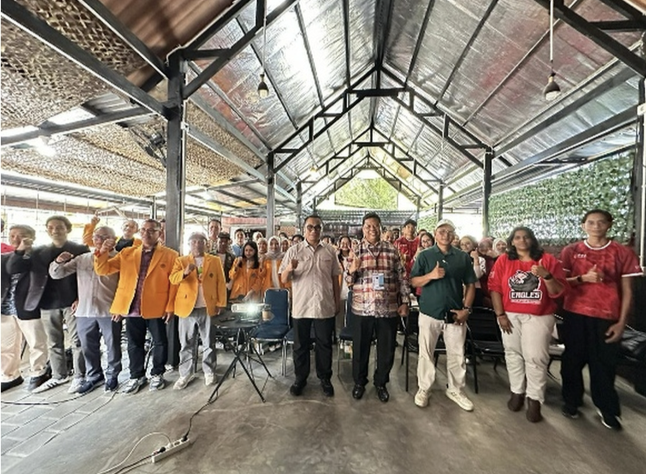
Rammang-Rammang is a community-based nature tourism destination in Maros Regency whose environmental quality, visitor conduct, and local tourism economy are closely interconnected. This community service programme aimed to strengthen the capacity of local tourism actors and community participants through clean tourism education, tourism ethics, Islamic green economy values, and the practical use of a Clean Tourism Briefing. The programme was implemented through needs assessment, preparation of learning materials and evaluation instruments, educational sessions, field-based learning, Clean Tourism Briefing practice, visual campaigning, collaborative activities, and programme evaluation. Approximately 60 individuals were involved across the programme, including local tourism actors, micro, small and medium enterprise participants, community members, Universitas Hasanuddin students, and 15 students from Management and Science University. Learning outcomes were assessed using a 10-item pre-test and post-test. Thirty-five participants completed the pre-test, while 15 participants provided matched pre-test and post-test data. Among the matched participants, the mean score increased from 33.3 to 90.0, representing an average gain of 56.7 points. All 15 matched participants recorded higher post-test scores, and a Wilcoxon signed-rank test indicated a statistically significant increase in scores (W = 0, p < .001). The findings indicate that a short, context-specific communication intervention can complement community-based tourism capacity building, although longer-term behavioural and business impacts require further monitoring.
References
Dewi, I. J., Kurniawati, L., Listyarini, I. Y., & Purwoko, Y. (2026). Exploring environmentally responsible behavioral drivers of green Muslim-friendly tourism. Discover Sustainability, 7, Article 1166. https://doi.org/10.1007/s43621-026-03541-x
Dodds, R., Ali, A., & Galaski, K. (2018). Mobilizing knowledge: Determining key elements for success and pitfalls in developing community-based tourism. Current Issues in Tourism, 21(13), 1547–1568. https://doi.org/10.1080/13683500.2016.1150257
Fenitra, R. M., Premananto, G. C., Sedera, R. M. H., Abbas, A., & Laila, N. (2022). Environmentally responsible behavior and Knowledge-Belief-Norm in the tourism context: The moderating role of types of destinations. International Journal of Geoheritage and Parks, 10(2), 273-288. https://doi.org/10.1016/j.ijgeop.2022.05.001
Ismanto, K., Adinugraha, H. H., & Agoi, M. A. (2026). Bridging sustainability and spirituality: Halal eco-tourism practices in Indonesia. International Journal of Islamic Economics, 8(1), 93-105. https://doi.org/10.32332/ijie.v8i01.13449
Isnandar, I., Samodra, J., Ichwanto, M. A., Irianto, W. S. G., Haq, S. T. N., Hendranawan, R. S., Prasetya, L. A., & Rofiudin, A. (2025). Sustainable tourism development based on local wisdom in Sutojayan Village, Malang Regency: A participatory approach in masterplan planning. Abdimas Pedagogi: Jurnal Ilmiah Pengabdian kepada Masyarakat, 8(2), 117-125. https://doi.org/10.17977/um050v8i22025p117-125
Laori, S., Arifin, M., Sarapang, V. C., Jasman, J., & Madjid, N. (2025). Development of community-based tourism (CBT) at the Rammang-Rammang tourist attraction, Maros Regency: A triple bottom line approach. Quantitative Economics and Management Studies, 6(6), 946-955. https://doi.org/10.35877/454RI.qems4441
Luo, W., Tang, P., Jiang, L., & Su, M. M. (2020). Influencing mechanism of tourist social responsibility awareness on environmentally responsible behavior. Journal of Cleaner Production, 271, 122565. https://doi.org/10.1016/j.jclepro.2020.122565
Mappasomba, Z., Hakim, D. H., Yunus, S., & Yusuf, M. (2024). Sustainability study and management scenarios of Rammang-Rammang Geopark, Maros Regency, South Sulawesi Province. Jurnal Kepariwisataan Indonesia: Jurnal Penelitian dan Pengembangan Kepariwisataan Indonesia, 18(2), 287-314. https://doi.org/10.47608/jki.v18i22024.287-314
Muda, F. (2025). Community participation in Indonesian sustainable tourism: A systematic review of models, impacts, and gaps. Priviet Social Sciences Journal, 5(8), 125-139. https://doi.org/10.55942/pssj.v5i8.462
Novianti, A., Alfianingsih, Ridwan, M., & Hardianti. (2026). Persepsi pengunjung tentang praktik pariwisata berkelanjutan berbasis masyarakat di Rammang-Rammang. ITINERARY: Journal of Travel Operation and Travel Business, 2(1), 1-13. https://doi.org/10.33649/itinerary.v1i1.1268
Okazaki, E. (2008). A community-based tourism model: Its conception and use. Journal of Sustainable Tourism, 16(5), 511-529. https://doi.org/10.1080/09669580802159594
Oktadiana, H., & Rahman, A. F. (2025). Faith in action: Sustainable travel practices among Indonesian Muslim tourists. Current Issues in Tourism. Advance online publication. https://doi.org/10.1080/13683500.2025.2533526
Su, L., Huang, S., & Pearce, J. (2018). How does destination social responsibility contribute to environmentally responsible behaviour? A destination resident perspective. Journal of Business Research, 86, 179-189. https://doi.org/10.1016/j.jbusres.2018.02.011
Downloads
Published
Issue
Section
License
Copyright (c) 2026 The Author(s)

This work is licensed under a Creative Commons Attribution 4.0 International License.
 Indonesia
 Malaysia
 Thailand