
Comparative Thermal Performance Analysis of Nipah Palm Fiber and Expanded Polystyrene as Sustainable Cool Box Insulation for Small-Scale Fisheries
Article Sidebar
Main Article Content
Abstract
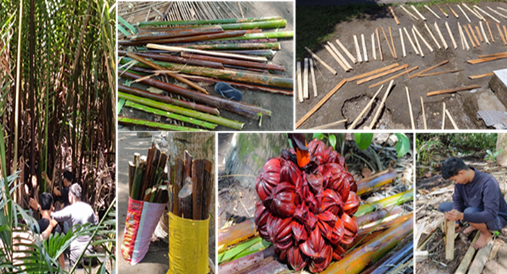
Small-scale fishermen in the Sangihe Islands rely heavily on expanded polystyrene (EPS) cool boxes to preserve fish during transit, yet these synthetic materials are environmentally problematic and economically limiting. This study experimentally evaluates Nipah palm fiber (Nypah fruticans), an abundant coastal biomass waste, as a sustainable insulation alternative for pumpboat-based fisheries. Three cooler box configurations were comparatively tested under controlled tropical conditions (31°C ±2°C ambient temperature) over a 12-hour period: (1) standard EPS insulation (20 mm), (2) raw compressed Nipah fiber (30 mm), and (3) a hybrid composite combining compressed Nipah fiber (30 mm) with a reflective aluminum layer. Thermal performance was assessed through continuous internal, external, and fish-core temperature monitoring at 30-minute intervals. Results demonstrate a clear hierarchy in insulation efficiency. The hybrid Nipah configuration achieved the lowest warming rate (0.167°C/hour), nearly three times slower than the EPS control. After 12 hours, the hybrid system-maintained fish temperature at 0.4°C, compared to 4.8°C in the EPS box. The improved performance is attributed to the dense lignocellulosic fiber structure, which enhances air entrapment and reduces conductive heat transfer, while the aluminum layer minimizes radiant heat gain. These findings confirm that Nipah palm waste provides a cost-effective, locally available, and environmentally sustainable insulation solution tailored to tropical maritime logistics. The adoption of Nipah-based bio-composite insulation has the potential to extend fish shelf life, reduce post-harvest losses, and decrease dependence on non-biodegradable synthetic polymers in traditional fisheries.
Article Details
Issue
Section

This work is licensed under a Creative Commons Attribution 4.0 International License.
How to Cite
References
[1] Sangihe in numbers. Overview of Capture Fisheries Production in the Sangihe Islands Regency. Central Statistics Agency of the Sangihe Islands Regency. 2021.
[2] Taukhid, Daniel D, and S Realino B. Analysis of the Work of the Fish Vendor Refrigeration System. National Marine Journal, Vol. 9, No. 3. 2014.
[3] Lungari F.F and Kumaseh E.I. The Relationship Between Main Size and Propulsion Power of Tuna Hand Line Pumpboats in Sangihe Islands Regency. Scientific Journal of Maritime Technology Vol. 12 No. 1. 2018.
[4] Untung Budiarto, Kiryanto. Optimization of Fishing Hold Insulation Design of KM. Berkah 9 GT to Reduce Heat Transfer Rate. Ship: Journal of Marine Science and Technology, vol. 7, no. 3, Vol 7 No 3. 2012.
[5] Metusalach, Kusmiati, Fahrul and Jaya I. The Effect of Fishing Methods, Handling Facilities and Fish Handling Methods on the Quality of Fish Produced. Jurnal IPTEK PSP Vo 1 No 1. 2014.
[6] Kayoi M, Wanma J. F and Sadsoeitoeboen B.M.G. Technical Potential of Utilizing Nipah Leaf Stems and Their Mixture with Coconut Fiber for Making Medium Density Fiberboard. Journal of Forest Products Research Vol. 30 No. 3. 2012.
[7] Roliadi H, Indrawan D.A, Pari G, and Tampubolon R.M. Technical Potential of Utilizing Nipah Leaf Stems and Their Mixture with Coconut Fiber for Making Medium Density Fiberboard. Journal of Forest Products Research Vol. 30 No. 3. 2012.
[8] Amiruddin, Iskandar B. H, Murdiyanto B, Baskoro S. Mulyo. Density of Polyurethane Insulation on the Hold of Traditional Fishing Vessels in Pekalongan. Journal of Marine Fisheries, Vol. 4, No. 1. 2013.
[9] Nasution P, Fitri S.P, Semin. Physical Characteristics of Coconut Fiber Composite as Fish Hold Insulator. Terubuk Fisheries Periodical Journal, Vol. 42. No. 2. 2014.
[10] Kholis M N, Syofyan I, and Isnaniah. Study use powder as raw materials manufacturing saws insulator cooling box fish (coolbox) used by traditional fishermen. Neliti.com. pdf. https://media.neliti.com/media/publications/202797-study-use-powder-as-raw-materials-manufa.pdf [2] N. A. Nur Rahmat, W. Wahyuddin, and H. Palippui, “Shipbuilding Risk Analysis Using Consequence-Probability Matrix Technique”, zonalaut, vol. 2, no. 3, pp. 1-6, Nov. 2014.
[11] Ouakarrouch M, Bousshine S, Bybi A, Laaroussi N, Garoum M. 2022. Acoustic and thermal performances assessment of sustainable insulation panels made from cardboard waste and natural fibers. Applied Acoustics Journal, Volume 199.
[12] Olivares-Marín M, Roman S, Gomez V, Escobar, Gonzalez C.M, Chaves-Zapata A, Ledesma B. 2023. Thermal Performance and Sound Absorption Capability of Water Hyacinth Stems-Based Materials. Journal of Cleaner Production, Vol 425.
[13] Rahman M.M, Sikandar M.U, Chowdhury P, Roy S, and Khrystoslavenko O. 2025. Toward Sustainable Cold Chain Packaging: A Systematic Review of Insulating Materials and Green Alternatives for Temperature-Sensitive Logistic. International Journal of Multidisciplinary Development, Perspectives & Innovation, Vol 1.
[14] Ghani R. S.M, Osman S.M, and Rani T. A.I.A. 2024. Exploring the potential of Nipah palm frond as sustainable raw material for eco-friendly particleboard production. Journal Cleaner and Circular Bioeconomy, Vol 8.