
Optimization of Maintenance Program and Improvement of Wire Crane Performance by Mitigating Risks in the Loading and Unloading Process of the MV. Hanglima
Article Sidebar
Main Article Content
Abstract
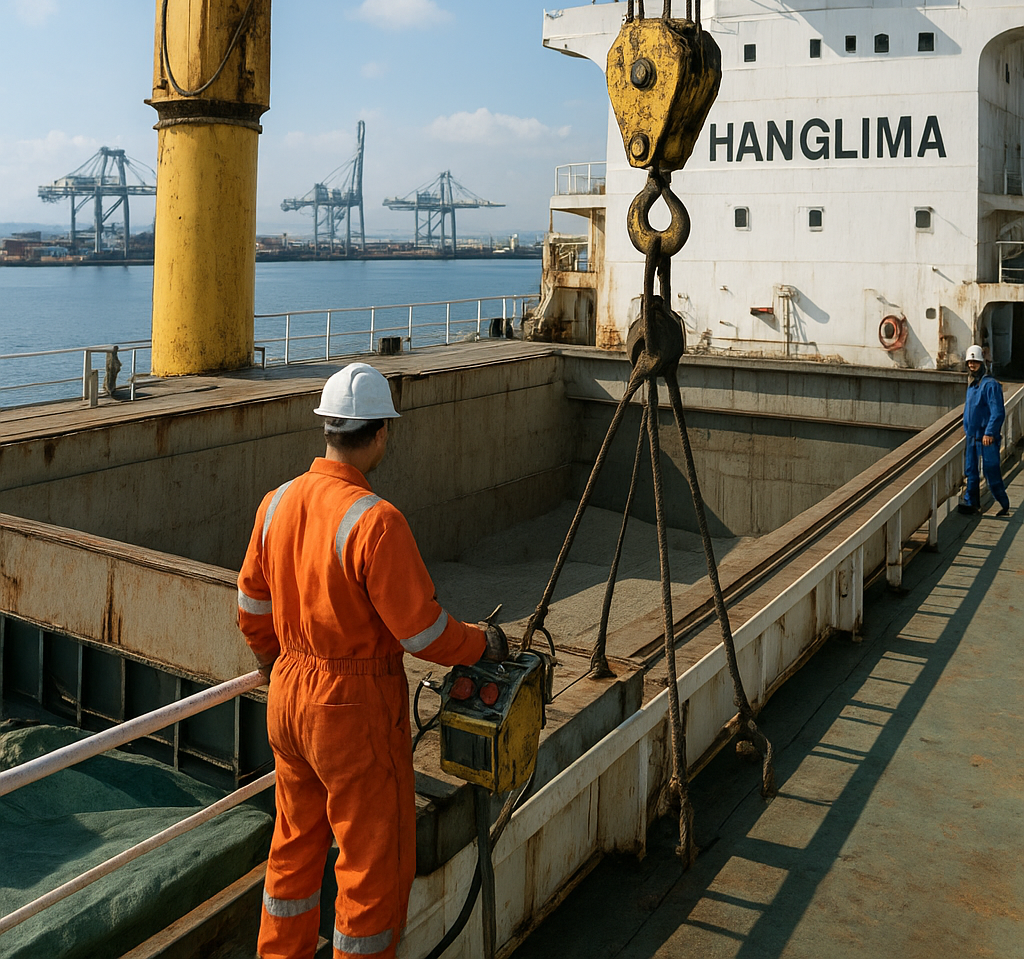
Wire cranes play a crucial role in the loading and unloading process on ships, especially in ports lacking land-based crane facilities. However, several problems were encountered on the MV Hanglima, including wire rope damage, overloading, and poor operational risk mitigation. This study aims to analyze wire crane maintenance, optimize its performance, and identify mitigation strategies for potential damage and accidents. The study employed a case study approach with thematic analysis, through observation, interviews, and documentation on board the MV Hanglima. The results indicate that the frequency of wire crane maintenance depends on the intensity of use and the working environment. Lifting loads exceeding safe limits can accelerate wire rope damage and reduce crane operational efficiency. Furthermore, lack of operator training, negligence in the use of personal protective equipment, and weak communication systems contribute to the increased risk of workplace accidents. Effective mitigation strategies include regular inspections, the use of load sensors, routine lubrication, and the implementation of emergency response standard operating procedures (SOPs). In conclusion, optimizing maintenance programs and integrated risk mitigation can improve wire crane performance and support the smooth and safe loading and unloading process on board.
Downloads
Article Details

This work is licensed under a Creative Commons Attribution 4.0 International License.
Allow anyone to modify, improve, and make derivative works, even for commercial purposes, as long as they credit to you for the original work.
Accepted 2025-10-22
Published 2025-11-03
References
[1] Abotaleb, M. & Mindykowski, J., 2024. Enhancement of Operational Safety in Marine Cargo Cranes on a Container Ship Through the Application of Authenticated Wi-Fi Based Wireless Data Transmission from Multiple Sensors. Sensors, 24(1), pp. 1-28.
[2] Bachri, A., Prasetyo, A. & Fatimah, 2024. Optimalisasi Perawatan Wire Crane pada Proses Muat Bongkar di MV. LGH. PROSPER. Seminar Nasional Transportasi dan Keselamatan, 1(1), pp. 140-149.
[3] Dwisetiono & Fairussihan, J., 2022. Analisis Risiko Keselamatan dan Kesehatan Kerja (K3) Pada Proses Perbaikan Kapal di PT Dock dan Perkapalan Surabaya Menggunakan Metode Hirarc (Hazard Identification, Risk Assessment dan Risk Control). Jurnal Hexagon, 3(1), pp. 10-16.
[4] Fakhrurrozi, 2022. Penanganan, Pengaturan dan Pengamanan Muatan Kapal Untuk Perwira Pelayaran Niaga. 2nd ed. Semarang: Deepublish.
[5] Munir, S., Malik, D. & Anggraeny, E., 2024. Optimalisasi Proses Pemuatan General Cargo Guna Meningkatkan Efisiensi di Kapal MV Hanglima. Jurnal Aplikasi Pelayaran dan Kepelabuhan, 14(2), pp. 181-189.
[6] Ramadhan, R. & Supomo, H., 2024. Analisis Risiko Biaya Terhadap kelanjutan Pembangunan Kapal Yang Lama Dihentikan. Jurnal Teknik ITS, 13(2), pp. 29-35.
[7] Gray, C. (2020). Manajemen Proyek. LPFE, pp. 19-30..
[8] Sugiyono. (2022). Metode Penelitian Kualitatif, Kuantitatif, dan R&D (3rd ed.). Bandung: Alfabeta.
[9] Istopo & Kaarlio, 2020. Kapal dan Muatannya. 1st ed. Jakarta: Trijaya Offset.
[10] Suwinardi, 2020. Manajemen Risiko Proyek. Orbith, pp. 145-151.