
Should drill or shouldn’t drill? Urban and rural dwellers’ acceptance of geothermal power plant in Mount Slamet protection forest, Indonesia
DOI:
https://doi.org/10.24259/fs.v5i2.13400Keywords:
Social acceptance, Renewable energy, Strategic environmental assessment, Logistic regression, Forest utilization policyAbstract
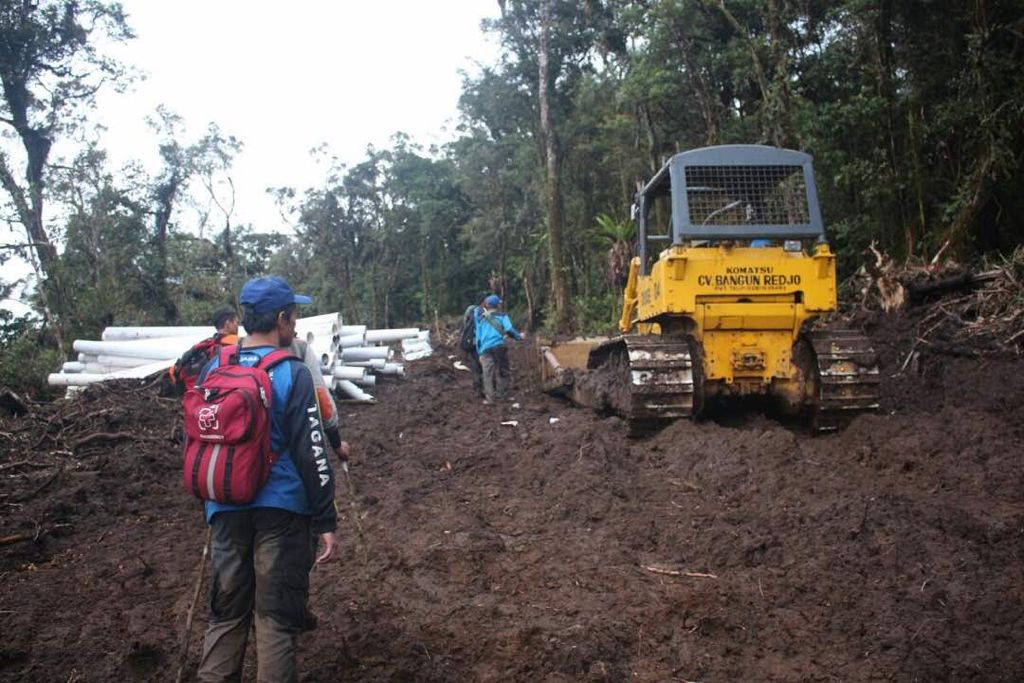
Geothermal is one of the new renewable energy, which is more environmentally friendly than the existing fossil energy and has great potential to become an alternative source of energy in the future. However, the level of social acceptance of geothermal power plants operating in forest areas has not been widely studied. This study aims to reveal the social acceptance of affected residents toward the exploration of Baturaden geothermal power plant, operating in the protection forest area of Mount Slamet. The survey was conducted online to indirectly affected residents living mostly in Banyumas urban areas, while the offline face-to-face survey was administered to the directly affected residents in Sambirata and Karang Tengah villages. A total of 286 samples were analyzed. It was found that the majority of respondents preferred not to continue the establishment of the geothermal power plant, but both rural and urban dwellers have distinctive responses and reasonings. The rural tended to have stronger rejection compared to the urban residents. The acceptance of the project in both groups combined was motivated mainly by the prospect of electricity from more environmentally friendly energy sources and compliance to government policy. Those who refused tend to see from the negative impacts on the disruptions of the daily livelihood in rural areas and environmental damages. Three attitude factors significantly affect the continuation of drilling operation of GPP, namely: economic prospects of geothermal utilization in protection forests, technological optimism to migate the engative impacts, and perceived environmental concerns. To increase the social acceptance, it is suggested that policy makers and energy industry players should integrate the mitigation measures by using more proper technology within the project budget and act harmoniously to increase public awareness of the use of renewable and cleaner energy as well as pay attention to the health, welfare and culture of the local community
References
Ahmad, A., Rashid, M., Omar, A.N., Alam, S.S. (2014). Perceptions on Renewable Energy Use in Malaysia: Mediating Role of Attitude. Jurnal Pengurusan 41, 123 – 131.
Cataldi, R. (1999). Social acceptance: a sine qua non for geothermal development in the 21st century. Bulletin d'Hydrogiologie, 17, 467-476.
Cataldi, R. (2001). Social acceptance of geothermal projects: problems and costs. In Prociding European Summer School on Geothermal Energy Applications. Oradea/RO, 343-351.
Dear, M. (1992). Understanding and overcoming the NIMBY syndrome. Journal of the American planning association, 58(3), 288-300. https://doi.org/10.1080/01944369208975808
de Jesus, A. C. (2016). Environmental benefits and challenges associated with geothermal power generation. In DiPippo, R. (Ed.) Geothermal Power Generation (pp. 477-498). Woodhead Publishing.https://doi.org/10.1016/B978-0-08-100337-4.00017-6.
Dowd, A. M., Boughen, N., Ashworth, P., & Carr-Cornish, S. (2011). Geothermal technology in Australia: Investigating social acceptance. Energy Policy, 39(10), 6301-6307. https://doi.org/10.1016/j.enpol.2011.07.029
Gizawi, A. S., Ritohardoyo, S., & Haryono, E. H. (2017). Kajian ekologi bentanglahan dan persepsi masyarakat terhadap rencana eksplorasi panas bumi. Majalah Geografi Indonesia, 31(1), 1-11. https://doi.org/10.22146/mgi.24223
Hoover, W. S., Girmansyah, D., Wiriadinata, H., & Hunter, J. M. (2009). Exploration of High elevation liana colonies on Mt. Slamet, Central Java, Indonesia. Reinwardtia, 13(1), 45-67. http://dx.doi.org/10.14203/reinwardtia.v13i1.433
Hymans, J. E., & Uchikoshi, F. (2021). To drill or not to drill: determinants of geothermal energy project siting in Japan. Environmental Politics, 1-22. https://doi.org/10.1080/09644016.2021.1918493
Kalima, T. (2007). Keragaman jenis dan populasi flora pohon di hutan lindung Gunung Slamet, Baturraden, Jawa Tengah. Jurnal Penelitian Hutan dan Konservasi Alam, 4(2), 151-160. https://doi.org/10.20886/jphka.2007.4.2.151-160
Karytsas, S., & Polyzou, O. (2021). Social acceptance of geothermal power plants. In C. O. Colpan, M. A. Ezan, & O. Kizilkan (Eds.) Thermodynamic Analysis and Optimization of Geothermal Power Plants (pp. 65-79). Elsevier.
Kępińska, B., and Kasztelewicz, A. 2015. Public Perception of Geothermal Energy in Selected European Countries. In Proceedings World Geothermal Congress, Melbourne, Australia (19-25 April 2015).
Kubota, H., Hondo, H., Hienuki, S., & Kaieda, H. (2013). Determining barriers to developing geothermal power generation in Japan: societal acceptance by stakeholders involved in hot springs. Energy Policy, 61, 1079-1087. https://doi.org/10.1016/j.enpol.2013.05.084
Kusuma, Y.W.C., Astuti, I.P. (2009). Population and Microhabitat Characteristic of Homalomena bellula Schott in Mount Slamet, Central Java, Indonesia. Biodiversitas Journal of Biological Diversity, 10(4), 201-205. https://doi.org/10.13057/biodiv/d100407
Latifah, M., dan Gusmayanti, E. (2012). Optimalisasi Pemanfataan Panas Bumi sebagai Sumber Energi Pembangkit Listrik untuk Mencapai Keamanan Energi. The 2012 ASC Paper Competition Participants. Universitas Indonesia.
Liu, H., Wang, H., Gou, Y., & Li, M. (2018). Investigation on social acceptance of the geothermal energy utilization in China. Geothermal Resources Council Transactions, 42, 812-824.
Miles, M.B., Huberman, A.M., Saldana, J. (2014). Qualitative Data Analysis: A Methods Sourcebook (3rd Edition). SAGE Publication, Inc.
Ministry of Environment (MOE). (2008). Pertimbangan-pertimbangan dalam Penerapan Kajian Lingkungan Hidup Strategis untuk Kebijakan, Rencana dan Program Penataan Ruang. Kementerian Lingkungan.
Ministry of Environment and Forestry (MOEF). (2015). Rencana Strategis Direktorat Pemanfaatan Jasa Lingkungan Hutan Konservasi Tahun 2015-2019. Direktorat Jenderal Konservasi Sumberdaya Alam dan Ekosistem. Kementerian Lingkungan Hidup dan Kehutanan.
Ministry of Energy and Mineral Resources (MEMR). (2015). Rencana Strategis Kementerian Energi dan Sumber Daya Mineral 2015 – 2019. Kementerian Energi dan Sumberdaya Mineral.
Meijaard, E., Dennis, R. A., Saputra, B. K., Draugelis, G. J., Qadir, M. C. A., & Garnier, S. (2019). Rapid environmental and social assessment of geothermal power development in conservation forest areas of Indonesia. PROFOR, The World Bank.
Payera, S. V. (2018). Understanding social acceptance of geothermal energy: Case study for Araucanía region, Chile. Geothermics, 72, 138-144. https://doi.org/10.1016/j.geothermics.2017.10.014
Reith, S., Kölbel, T., Schlagermann, P., Pellizzone, A., & Allansdottir, A. (2013). Public acceptance of geothermal electricity production (Deliverable n° 4.4 Report on public acceptance). GeoElec. http://www.geoelec.eu/wp-content/uploads/2014/03/D-4.4-GEOELEC-report-on-public-acceptance.pdf
Romanach, L., Carr-Cornish, S., & Muriuki, G. (2015). Societal acceptance of an emerging energy technology: How is geothermal energy portrayed in Australian media?. Renewable and Sustainable Energy Reviews, 42, 1143-1150. https://doi.org/10.1016/j.rser.2014.10.088
Setiawan, S. (2012). Energi panas bumi dalam kerangka MP3EI: Analisis terhadap prospek, kendala, dan dukungan kebijakan. Jurnal Ekonomi dan Pembangunan, 20(1), 1-28.
Setiawan, A. R. I. F., Djuwantoko, A. W., Bintari, Y. W. C., Kusuma, S. P., & MA, I. (2007). Populasi dan Distribusi Rekrekan (Presbytis fredericae) di Lereng Selatan Gunung Slamet Jawa Tengah. Biodiversitas Journal of Biological Diversity, 8(4), 305-308. https://doi.org/10.13057/biodiv/d080412
Simon, H. (2000). Pengelolaan Hutan Bersama Rakyat. Bigraf Publishing.
Suara Merdeka. 2017. Perubahan Hutan Lindung di Gunung Slamet Picu Banjir. Suara Merdeka. https://www.suaramerdeka.com/smcetak/baca/45087/perubahan-hutan-lindung-di-gunung-slamet-picu-banjir
Tampubolon, B.I. (2015). Analisis Kebijakan Pemanfaatan Energi Panas Bumi sebagai Alternatif Pembangkit Listrik (Master Thesis). Institut Pertanian Bogor.
Widhiono, I. (2015). Diversity of butterflies in four different forest types in Mount Slamet, Central Java, Indonesia. Biodiversitas Journal of Biological Diversity, 16(2), 196-204. https://doi.org/10.13057/biodiv/d160215
Additional Files
Published
Issue
Section
Categories
License
Copyright (c) 2021 Forest and Society

This work is licensed under a Creative Commons Attribution 4.0 International License.
This is an open access journal which means that all contents is freely available without charge to the user or his/her institution. Users are allowed to read, download, copy, distribute, print, search, or link to the full texts of the articles in this journal without asking prior permission from the publisher or the author. This is in accordance with the BOAI definition of open access.
Submission of an article implies that the work described has not been published previously (except in the form of an abstract or as part of a published lecture or academic thesis), that it is not under consideration for publication elsewhere, that its publication is approved by all authors and tacitly or explicitly by the responsible authorities where the work was carried out, and that, if accepted, will not be published elsewhere in the same form, in English or in any other language, without the written consent of the Publisher. An article based on a section from a completed graduate dissertation may be published in Forest and Society, but only if this is allowed by author's(s') university rules. The Editors reserve the right to edit or otherwise alter all contributions, but authors will receive proofs for approval before publication.
Forest and Society operates a CC-BY 4.0 © license for journal papers. Copyright remains with the author, but Forest and Society is licensed to publish the paper, and the author agrees to make the article available with the CC-BY 4.0 license. Reproduction as another journal article in whole or in part would be plagiarism. Forest and Society reserves all rights except those granted in this copyright notice