
Impacts of Urbanization on the Use of Soil Amendments by Rice Farmers Along a Rural-Urban Continuum in Northeast Thailand
DOI:
https://doi.org/10.24259/fs.v9i2.42137Keywords:
Urban agriculture, Urban-rural gradient, Farmer soil management, Organic agriculture, Chemical fertilizer use, Sustainable agricultureAbstract
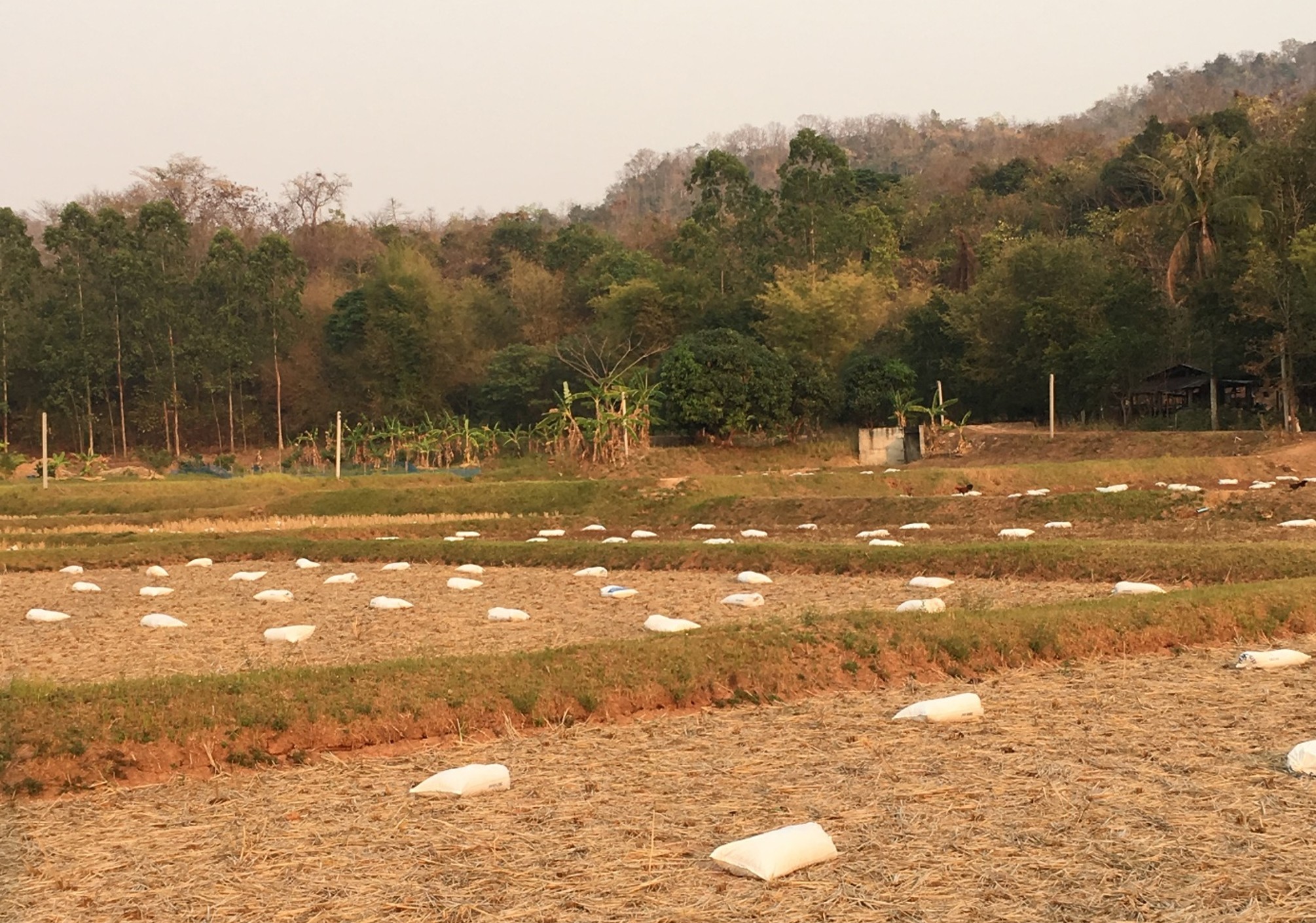
This study investigated the impact of urbanization on use of soil amendment by rice farmers in three villages along a rural–urban continuum in Northeast Thailand. It shows how urbanization influences their use of types and quantities of soil amendments. Data were collected by interviewing 150 farmers, focusing on types, quantities, sources, costs, and perceived effects of nine different amendments, including rice straw, chemical fertilizers, manures, and green manure. Results revealed significant declines in organic amendment use as villages become more urbanized, with rural farmers employing more diverse and greater quantities of organic amendments while periurban and urban farmers predominantly rely on chemical fertilizers. Quantitative analysis shows that livestock manure use diminishes sharply from over 80% of farmers in rural villages to around 30% in more urbanized communities, reflecting reduced livestock numbers. Discriminant analysis compared the three villages in terms of three dependent variables. (area of paddy fields, quantities of chemical fertilizer and organic amendments applied) showed clearly that all the group means were significantly different. Analysis of quantities of chemical fertilizer and organic amendments applied by individual farmers in all three villages revealed that farmers applying higher amounts of organic matter tended to use less chemical fertilizer. Constraints, including limited supplies, high costs, and labor shortages, inhibited organic amendment application among urbanized farmers. These shifts pose a serious threat to long-term soil quality. The findings underscore the urgent need for policy interventions to promote sustainable organic soil management practices in urbanizing communities to improve soil health and food security.
References
Beckers, V., Poelmans, L., Van Rompaey, A., & Dendoncker, N. (2020). The impact of urbanization on agricultural dynamics: a case study in Belgium. Journal of Land Use Science, 15(5), 626–643. https://doi.org/10.1080/1747423X.2020.176 9211
Bren d’Amour, C., Reitsma, F., Baiocchi, G., Barthel, S., Güneralp, B., Erb, K. H., ... & Seto, K. C. (2017). Future urban land expansion and implications for global croplands. Proceedings of the National Academy of Sciences, 114(34), 8939–8944. https://doi.org/10.1073/pnas.1606036114
Cattaneo, A., Adukia, A., Brown, D. L., Christiaensen, L., Evans, D. K., Haakenstad, A., ... & Weiss, D. J. (2022). Economic and social development along the urban–rural continuum: New opportunities to inform policy. World development, 157, 105941. https://doi.org/10.1016/j.worlddev.2022.105941
De Bon, H., Parrot, L., & Moustier, P. (2010). Sustainable urban agriculture in developing countries. A review. Agronomy for Sustainable Development, 30, 21–32. https://doi.org/10.1051/agro:2008062
Follmann, A., Willkomm, M., & Dannenberg, P. (2021). As the city grows, what do farmers do? A systematic review of urban and peri-urban agriculture under rapid urban growth across the Global South. Landscape and Urban Planning, 215,104-186. https://doi.org/10.1016/j.landurbplan.2021.104186
Grandstaff, T.B., Grandstaff, S., Limpinuntana, V., & Supanchaimat, N. (2008). Rainfed revolution in Northeast Thailand. Southeast Asian Studies (Kyoto), 46(3), 289-376. https://doi.org/10.20495/tak.46.3_289
Hallett, S., Hoagland, L., & Emily, T. (2016). Urban Agriculture: Environmental, Economic, and Social Perspectives. Horticultural Reviews, 44, 65-120. https://doi.org/10.1002/9781119281269.ch2
Hamilton, A.J., Burry, K., Mok, H.F., Barker, S.F., Grove, J.R., & Williamson, V.G. (2014). Give peas a chance? Urban agriculture in developing countries. A review. Agronomy for Sustainable Development, 34 (1), 45-73. https://doi.org/10. 1007/s13593-013-0155-8
Jiang, L., & Li, Z. (2016). Urbanization and the change of fertilizer use intensity for agricultural production in Henan Province. Sustainability, 8 (2), 1-12. https://doi.org/10.3390/su8020186
Li, S., Zhu, C., Li, Y., Dong, B., Tan, K., & Deng, X. (2023). Agricultural space function transitions in rapidly urbanizing areas and their impacts on habitat quality: An urban–Rural gradient study. Environmental Impact Assessment Review, 99, March, 107019. https://doi.org/10.1016/j.eiar.2022.107019.
Miner, H. (1952). The folk-urban continuum. American Sociological Review, 17(5), 529-537. https://doi.org/10.2307/2088218
Nansaior, A., Patanothai, A., Rambo, A. T, & Simaraks, S. (2013). The sustainability of biomass energy acquisition by households in urbanizing communities in Northeast Thailand. Biomass and Bioenergy, 52, 113-121. https://doi.org/10.1016/j.biombioe.2013.03.011
Nansaior, A., Patanothai, A., Rambo, A.T., & Simaraks. S. (2011). Climbing the energy ladder or diversifying energy sources? The continuing importance of household use of biomass energy in urbanizing communities in Northeast Thailand. Biomass and Bioenergy, 35(10), 4180-4188. https://doi.org/10.1016/j.biombi oe.2011.06.046
Office of Agricultural Economics. (2017). The Twenty-Year Agriculture and Cooperative Strategy (2017-2036) and the Five-Year Agriculture Development Plan under the Twelfth National Economic and Social Development Plan (2017-2021). Ministry of Agriculture and Agricultural Cooperatives.
Orsini, F., Kahane, R., Nono-Womdim, R., & Gianquinto, G. (2013). Urban agriculture in the developing world: A review. Agronomy for Sustainable Development, 33(4), 695-720. https://doi.org/10.1007/s13593-013-0143-z
Pahl, R.E. (1966). The rural-urban continuum. Sociologia Ruraluis, 6(3), 299-329. https://doi.org/10.1111/j.1467-9523.1966.tb00537.x
Pendleton, R. L. (1943). Land use in northeastern Thailand. Geographical review, 33(1), 15-41. https://doi.org/10.2307/210616
Phupuak, P. (2023). Factors Contributing to the Long-Term Success of Community-Based Tourism in a Phu Thai Village in Northeast Thailand [Master Thesis]. Khon Kaen University.
Preusse, V., Nölke, N., & Wollni, M. (2024). Urbanization and adoption of sustainable agricultural practices in the rural-urban interface of Bangalore, India. Canadian Journal of Agricultural Economics, 72(2), 167-198. https://doi.org/10.11 11/cjag.12355
Pribadi, D. O., & Pauleit, S. (2015). The dynamics of peri-urban agriculture during rapid urbanization of Jabodetabek Metropolitan Area. Land use policy, 48, 13-24. https://doi.org/10.1016/j.landusepol.2015.05.009
Rambo, A.T. (2017). The Agrarian Transformation in Northeastern Thailand: A Review of Recent Research. Southeast Asian Studies, 6(2), 211 – 245. https://doi.org/10.2 0495/seas.6.2_211
Ratanawaraha, A. (2023). Thailand: An urban country. Kyoto Review of Southeast Asia (38). Accessed at https://kyotoreview.org/issue-38/thailand-an-urban-country/
Redfield, R. (1941). The Folk Culture of Yucatan. University of Chicago Press.
Redfield, R. (1947). The folk society. American Journal of Sociology, 52, 293–308. https://doi.org/10.1086/220015
Shirai, Y., Leisz, S., J. & Rambo, A.T. (2017). Rural household characteristics and agricultural activities in relation to local non-farm employment: A comparative study of two wet-rice-growing villages in Northeast Thailand. Khon Kaen Agriculture Journal, 45(4): 721-730.
Simaraks, S., Subhadhira, S., & Srila, S. (2003). The shifting role of large livestock in Northeast Thailand. Southeast Asian Studies, 41(3), 316-329.
Taramuel-Taramuel, J. P., Montoya-Restrepo, I. A., & Barrios, D. (2023). Drivers linking farmers’ decision-making with farm performance: A systematic review and future research agenda. Heliyon, 9(10), 1-12. https://doi.org/10.1016/j.heliyon.2023.e20820
United Nations Division of Social and Economic Affairs. (2018). 68% of the world population projected to live in urban areas by 2050, says UN. Retrieved from https://data.worldbank.org/indicator/SP.URB.TOTL.IN.ZS
Vagneron, I. (2009). Economic appraisal of profitability and sustainability of peri-urban agricultue in Bangkok. Ecological Economics, 61(2-3),516-529. https://doi.org/ 10.1016/j.ecole zcon.2006.04.006
Vicker, A.H., Freddy, N.O., & Asamoah, T.Y. (2016). Awareness and adoption of common soil amendments for urban horticulture. International Journal of Horticulture and Floriculture, 4(2), 217-223.
Vityakon, P. (1993). The traditional trees-in-paddy-fields agroecosystem of Northeast Thailand: Its potential for agroforestry development. Regional Development Dialogue, 14(1), 125-148.
Watanabe, M., Vityakon, P., & Rambo, A. T. (2014). Can’t See the Forest for the Rice: Factors Influencing Spatial Variations in the Density of Trees in Paddy Fields in Northeast Thailand. Environmental Management, 53(2), 343–356. https://doi.org/10.1007/s00267-013-0206-6
Watanabe, M., Vityakon, P., & Rambo, A. T. (2017). Factors Influencing Variations in the Density, Extent of Canopy Cover, and Origin of Trees in Paddy Fields in a Rainfed Rice-Farming Village in Northeast Thailand. Southeast Asian Studies, 6(2), 307-324. https://doi.org/10.20495/seas.6.2_307
World Bank Data. (2023). Urban population as share of total population. Retrieved from https://data.worldbank.org/indicator/SP.URB.TOTL.IN.ZS
Yodda, S., Laohasiriwong, S., & Rambo, A.T. (2021). Use of Organic Materials to Maintain Soil Quality by Thai-Lao Rice Farmers in Northeast Thailand. Forest and Society, 5(2), 543-558. https://doi.org/10.24259/fs.v5i2.14044
Yodda, S., Laohasiriwong, S., Lawongsa, P., Sukitprapanon, T. & Rambo, A.T. (2025). The use of soil amendments by rice farmers in an urbanizing village in Northeast Thailand. Agroecology and Sustainable Food Systems, 28 April 2025, 1-18. https://doi.org/10.1080/21683565.2025.2498551
Additional Files
Published
Issue
Section
Categories
License
Copyright (c) 2025 Forest and Society

This work is licensed under a Creative Commons Attribution 4.0 International License.
This is an open access journal which means that all contents is freely available without charge to the user or his/her institution. Users are allowed to read, download, copy, distribute, print, search, or link to the full texts of the articles in this journal without asking prior permission from the publisher or the author. This is in accordance with the BOAI definition of open access.
Submission of an article implies that the work described has not been published previously (except in the form of an abstract or as part of a published lecture or academic thesis), that it is not under consideration for publication elsewhere, that its publication is approved by all authors and tacitly or explicitly by the responsible authorities where the work was carried out, and that, if accepted, will not be published elsewhere in the same form, in English or in any other language, without the written consent of the Publisher. An article based on a section from a completed graduate dissertation may be published in Forest and Society, but only if this is allowed by author's(s') university rules. The Editors reserve the right to edit or otherwise alter all contributions, but authors will receive proofs for approval before publication.
Forest and Society operates a CC-BY 4.0 © license for journal papers. Copyright remains with the author, but Forest and Society is licensed to publish the paper, and the author agrees to make the article available with the CC-BY 4.0 license. Reproduction as another journal article in whole or in part would be plagiarism. Forest and Society reserves all rights except those granted in this copyright notice