
The Effect of Changes in the Storage Temperature and Acceptability of Animal-Based Food Ingredients in the Refrigerated Room of HODASCO 19
Article Sidebar
Main Article Content
Abstract
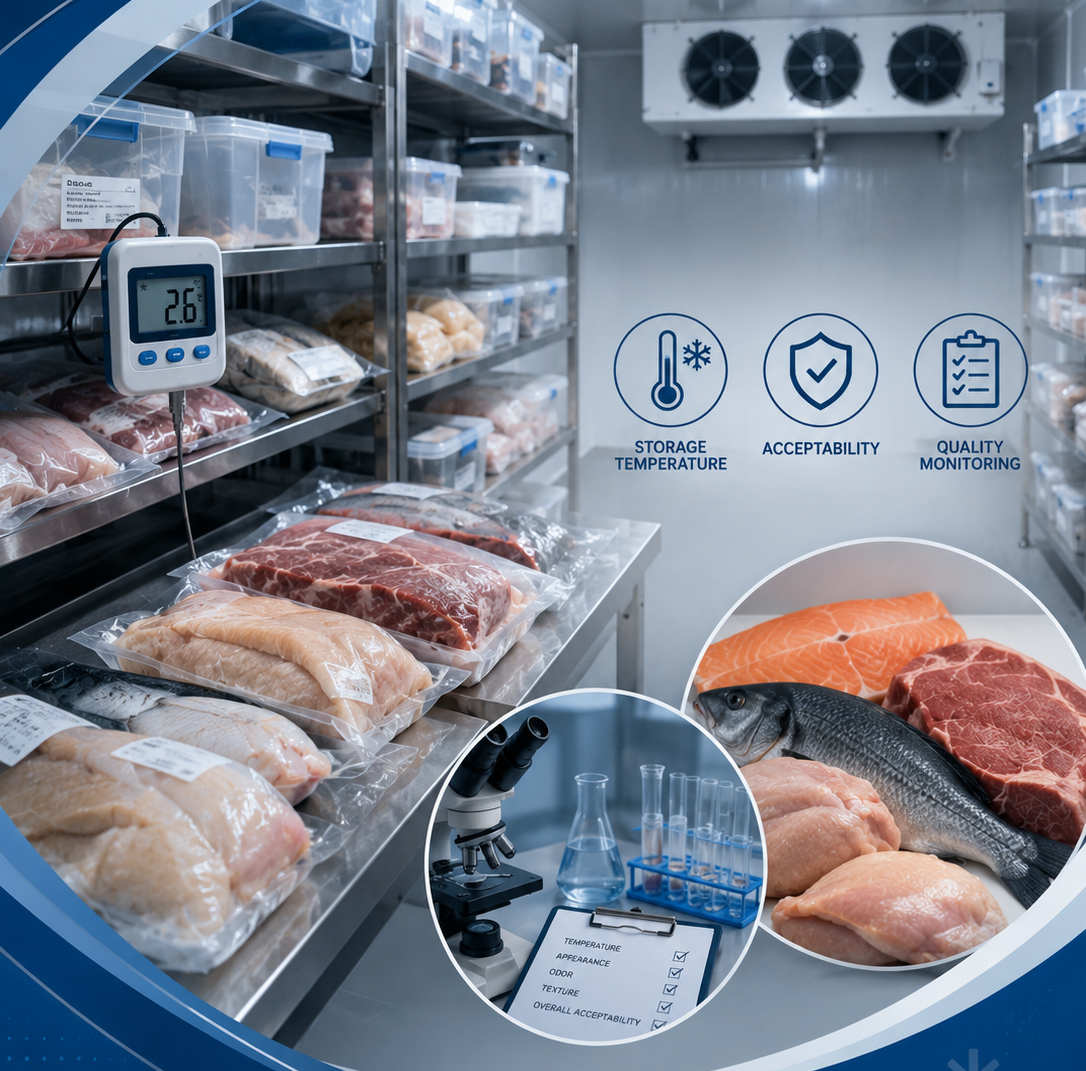
This study examined how refrigerated-room temperature affected the acceptability of animal-based food ingredients (chicken, beef, and fish) stored on board HODASCO 19. The study used a descriptive quantitative design based on organoleptic observation. Five assessors evaluated odour, colour, and texture using a five-point Likert scale for samples stored at −18 °C, 0 °C, and 4 °C over four weeks. Mean scores were calculated and interpreted using fixed acceptability intervals. The results show a clear temperature effect. Storage at −18 °C maintained the highest acceptability throughout the observation period, with mean scores remaining in the very acceptable category (4.86–5.00). Storage at 0 °C showed the sharpest decline, dropping from very acceptable at week 0 to unacceptable by week 2 and highly unacceptable by weeks 3–4. Storage at 4 °C performed better than 0 °C in this onboard dataset but still declined from very acceptable at week 1 to moderately acceptable at week 3 and unacceptable at week 4. The findings confirm that low and stable storage temperatures are essential for preserving the quality of perishable animal-based food ingredients on board ships. Practically, the refrigerated room should be maintained as close as possible to −18 °C for longer storage, while short-term storage at higher temperatures requires stricter monitoring.
Article Details
Issue
Section

This work is licensed under a Creative Commons Attribution 4.0 International License.
How to Cite
References
[1] S. M. Leygonie, T. J. Britz, and L. C. Hoffman, “Crystallization behavior and quality of frozen meat,” Foods, vol. 10, no. 11, Art. no. 2707, 2021, doi: 10.3390/foods10112707.
[2] A. D. Szczepaniak et al., “Microbial and sensory quality changes in broiler chicken breast meat during refrigerated storage,” Foods, vol. 13, no. 24, Art. no. 4063, 2024.
[3] C. M. Martinsdóttir, M. N. Pires, and M. L. Nunes, “Quality assessment of chilled and frozen fish: A mini review,” Foods, vol. 9, no. 12, Art. no. 1739, 2020, doi: 10.3390/foods9121739.
[4] G. Zhang et al., “Effect of storage period on the quality characteristics of frozen beef and mechanisms of change from the corresponding physical and microstructural perspectives,” Journal of Food Measurement and Characterization, vol. 17, pp. 813–823, 2023, doi: 10.1007/s11694-022-01650-5.
[5] M. R. Gunarti and R. Sugiharto, “The effect of the implementation of ISM Code Rule 10 on maintenance of ship and its equipment on sea transport safety: An empirical study at PT Pelni (Persero),” 7 Samudra, vol. 4, no. 1, 2019.
[6] M. G. Akbar, “The effect of refrigeration machine maintenance in supporting the performance and freshness of food ingredients on the MV Intan Baruna,” B.S. thesis, Semarang Maritime Polytechnic, Semarang, Indonesia, 2022.
[7] Y. Suryaman and D. Prayogo, “Optimizing the refrigeration machine to maintain the quality of food ingredients on board the MT Pujawati Ship,” Jurnal Dinamika Bahari, vol. 9, no. 1, pp. 2165–2171, 2018.
[8] T. W. Setiawan, “Inability to reach temperature in food storage room on MV Pan Flower,” B.S. thesis, Semarang Maritime Polytechnic, Semarang, Indonesia, 2023.
[9] B. V. Sembel, R. Santoso, and Nurfadhlina, “Optimization of cooling machine performance on the MV Strait Mas ship,” Jurnal Maritim Indonesia, vol. 5, pp. 45–52, 2023.
[10] Sugiyono, Quantitative, Qualitative, and R&D Research Methods. Bandung, Indonesia: Alfabeta, 2014.
[11] S. Arikunto, Research Procedures: A Practical Approach. Jakarta, Indonesia: Rineka Cipta, 2013.
[12] N. Purwanto, “Variables in educational research,” Jurnal Teknodik, pp. 196–215, 2019, doi: 10.32550/teknodik.v0i0.554.
[13] S. Haryadi, “Analysis of the effect of maintenance on the performance of ship refrigeration cooling systems,” Journal of Science and Technology of Maritime Transportation, vol. 2, no. 1, pp. 30–35, 2020, doi: 10.51578/j.sitektransmar.v2i1.16.