
Combination of Bonding, Bridging and Linking Social Capital in a Livelihood System: Nomadic Duck Herders Amid the Covid-19 Pandemic in South Sulawesi, Indonesia
DOI:
https://doi.org/10.24259/fs.v5i1.11813Keywords:
social capital, livelihood system, vulnerability context, covid-19 pandemic, nomadic duck herderAbstract
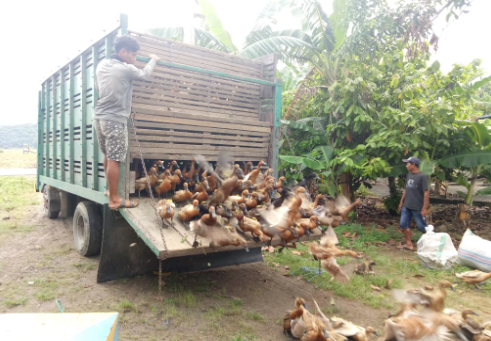
Livelihood systems of nomadic duck herders make a unique study subject due to the livelihood assets, strategies, and outcomes they manage, which involve interactions with various actors that keep moving around. Social capital the duck herders build in their interaction with other actors, namely rice farmers, play an important role to face different vulnerability context, including those brought by the Covid-19 pandemic. This study aims to characterize components of bonding, bridging and linking social capital in the context of relationships between duck herders and other actors, and seeks to find the essential role of the combination of the three types of social capital for livelihood outcomes, particularly in facing vulnerabilities due to the pandemic. The method of grounded theory research was applied for its ability to allow researchers to reveal processual relationships between duck herders and other actors. Data were collected through semi structured interviews, analyzed by open, axial, and selective coding. The duck herders combine components of bonding, bridging, and linking social capital selectively depending on the interests behind each interaction with different actors. The bridging and linking role that social capital plays in herders’ interactions with farmers and irrigation officials is undertaken in order to gain access to natural capital (rice fields and irrigated water), while in their interaction with egg traders, they utilize bridging social capital to gain access to financial capital (in the form of cash and loans). The vulnerability context due to the pandemic has shaken the livelihood system of the duck herders by upsetting the egg supply chain due to social restriction policies. Social capital therefore plays an important role in facing vulnerability, in the context of forming good will among egg traders that continued to buy eggs from the duck herders, which served as a kind of pay back for the loyalty of the duck herders. We find that social capital plays a vital role in a livelihood system, within which the access to livelihood assets depend on social relations. This study also explored the impact of the Covid-19 pandemic as it resonates more on supply chains than production processes.
References
Ayuttacorn, A. (2019). Social networks and the resilient livelihood strategies of Dara-ang women in Chiang Mai, Thailand. Geoforum, 101, 28-37. https://doi.org/10.1016/j.geoforum.2019.02.022
Bertolozzi-Caredio, D., Bardaji, I., Coopmans, I., Soriano, B., & Garrido, A. (2020). Key steps and dynamics of family farm succession in marginal extensive livestock farming. Journal of Rural Studies, 76, 131-141. https://doi.org/10.1016/j.jrurstud.2020.04.030
Brian, K (2007). OECD Insights Human Capital: How what you know shapes your life. OECD Publishing.
Cofré-Bravo, G., Klerkx, L., & Engler, A. (2019). Combinations of bonding, bridging, and linking social capital for farm innovation: How farmers configure different support networks. Journal of Rural Studies, 69, 53-64. https://doi.org/10.1016/j.jrurstud.2019.04.004
Carney, D. (1998). Implementing the sustainable rural livelihoods approach. In D. Carney (Ed.), Sustainable rural livelihoods: what contribution can we make?. London, UK: DFID.
Chambers, R., & Conway, G. (1992). Sustainable rural livelihoods: practical concepts for the 21st century. Institute of Development Studies (UK).
Charmaz, K., 2005. Grounded Theory in the 21st Country: Applications for Advancing Social Justice Studies, N.K. Denzin and Y.S. Lincoln (Eds), The Sage Handbook of Qualitative Research (Third Edition). London: Sage Publication.
Coleman, J. S. (1988). Social capital in the creation of human capital. American journal of sociology, 94, S95-S120.
Corbin, J. M., & Strauss, A. (1990). Grounded theory research: Procedures, canons, and evaluative criteria. Qualitative sociology, 13(1), 3-21. https://doi.org/10.1007/BF00988593
Denzin, N.K., Lincoln, Y.S (2008). Collecting and Interpreting Qualitative Materials. Sage Publications, Thousand Oaks, California.
Ellis, F. (1998). Household strategies and rural livelihood diversification. The Journal of Development Studies, 35(1), 1–38. https://doi.org/10.1080/00220389808422553
Fukuyama, F. (1995). Trust: The social virtues and the creation of prosperity (Vol. 99). New York: Free press.
Furuno, T. (2009). Traditional and modern matters on rice cultivation associated with duck. Paper presented at the 6th International Rice–Duck Conference held 23– 27 February 2009, Cebu, the Philippines
Gaillard, J. C. (2010). Vulnerability, capacity and resilience: perspectives for climate and development policy. Journal of International Development: The Journal of the Development Studies Association, 22(2), 218-232. https://doi.org/10.1002/jid.1675
Hanifan, L. J. (1916). The rural school community center. The Annals of the American Academy of Political and Social Science, 67(1), 130-138.
Jiaen, Z., Guoming, Q., Benliang, Z., Kaiming, L., & Zhong, Q. (2017). Rice–Duck Co-Culture in China and Its Ecological relationships and Functions. Agroecology in China: Science, Practice, and Sustainable Management, 111.
Kasim,K, D. Salman, A. R. Siregar, R. A. Nadja, Rahmadani, Hastang (2020). The Dynamics of Livelihood Assets on Moving Duck Farmers. International Journal of Advance Science, Engineering and Information Technology, 10(2), 782-788. https://doi.org/10.18517/ijaseit.10.2.11109
Kasim, K., Salman, D., Siregar, A. R., Nadja, R. A., & Ahmad, A. (2019, February). Vulnerability and adaptive strategies on duck breeder in Pinrang District, Indonesia. In IOP Conference Series: Earth and Environmental Science (Vol. 235, No. 1, p. 012046). IOP Publishing. https://doi.org/10.1088/1755-1315/235/1/012046
Kaufmann, J. C. (2009). The sediment of nomadism. History in Africa, 36, 235-264.
Klerkx, L., Proctor, A. (2013). Beyond fragmentation and disconnect: networks for knowledge exchange in the English land management advisory system. Land Use Policy, 30, 13–24. https://doi.org/10.1016/j.landusepol.2012.02.003
Konecki, K. T. (2018). Classic Grounded Theory—The Latest Version: Interpretation of Classic Grounded Theory as a Meta‐Theory for Research. Symbolic Interaction, 41(4), 547-564. https://doi.org/10.1002/symb.361
Kuang, F., Jin, J., He, R., Ning, J., & Wan, X. (2020). Farmers' livelihood risks, livelihood assets and adaptation strategies in Rugao City, China. Journal of environmental management, 264, 110463. https://doi.org/10.1016/j.jenvman.2020.110463
Long, N. (1997). Agency and constraint, perceptions and practices. A theoretical position. In Images and realities of rural life. Wageningen perspectives on rural transformations (pp. 1-20). van Gorcum.
Malherbe, W., Sauer, W., & Aswani, S. (2020). Social capital reduces vulnerability in rural coastal communities of Solomon Islands. Ocean & Coastal Management, 191, 105186. https://doi.org/10.1016/j.ocecoaman.2020.105186
Mallik, C. (2016). Sociology of land dispossession: Social capital and livelihoods in transition in Peri-urban Kolkata, India. World Development Perspectives, 4, 38-47. https://doi.org/10.1016/j.wdp.2016.12.006
Maryudi, A., & Fisher, M. R. (2020). The power in the interview: A practical guide for identifying the critical role of actor interests in environment research. Forest and Society, 4(1), 142-150. https://doi.org/10.24259/fs.v4i1.9132
Mbiba, M., Collinson, M., Hunter, L., & Twine, W. (2019). Social capital is subordinate to natural capital in buffering rural livelihoods from negative shocks: Insights from rural South Africa. Journal of rural studies, 65, 12-21. https://doi.org/10.1016/j.jrurstud.2018.12.012
Morton, J. (2020). On the susceptibility and vulnerability of agricultural value chains to COVID-19. World development, 136, 105132. https://doi.org/10.1016/j.worlddev.2020.105132
Nambi, V. A. (2001). Modern technology and new forms of nomadism: duck herders in southern India. Nomadic Peoples, 5(1), 155-167.
Putnam, R. D., & Leonardi, R. (1993). Making democracy work: Civic traditions in modern Italy. Princeton university press.
Rahman, H. T., Robinson, B. E., Ford, J. D., & Hickey, G. M. (2018). How do capital asset interactions affect livelihood sensitivity to climatic stresses? Insights from the northeastern floodplains of Bangladesh. Ecological Economics, 150, 165-176. https://doi.org/10.1016/j.ecolecon.2018.04.006
Ribot, J. (2014). Cause and response: vulnerability and climate in the Anthropocene. The Journal of Peasant Studies, 41(5), 667-705. https://doi.org/10.1080/03066150.2014.894911
Szreter, S., & Woolcock, M. (2004). Health by association? Social capital, social theory, and the political economy of public health. International journal of epidemiology, 33(4), 650-667. https://doi.org/10.1093/ije/dyh013
Scoones, I. (2009). Livelihoods perspectives and rural development. The journal of peasant studies, 36(1), 171-196. https://doi.org/10.1080/03066150902820503
Speranza, C. I., Wiesmann, U., & Rist, S. (2014). An indicator framework for assessing livelihood resilience in the context of social–ecological dynamics. Global Environmental Change, 28, 109–119. https://doi.org/10.1016/j.gloenvcha.2014.06.005
Suh, J. (2014). Theory and reality of integrated rice–duck farming in Asian developing countries: A systematic review and SWOT analysis. Agricultural Systems, 125, 74-81. https://doi.org/10.1016/j.agsy.2013.11.003
Thulstrup, A. W. (2015). Livelihood resilience and adaptive capacity: Tracing changes in household access to capital and central Vietnam. World Development, 74, 352–362. https://doi.org/10.1016/j.worlddev.2015.05.019
Vervisch, T. G., Vlassenroot, K., & Braeckman, J. (2013). Livelihoods, power, and food insecurity: adaptation of social capital portfolios in protracted crises—case study Burundi. Disasters, 37(2), 267-292. https://doi.org/10.1111/j.1467-7717.2012.01301.x
Woolcock, M., & Narayan, D. (2000). Social capital: Implications for development theory, research, and policy. The world bank research observer, 15(2), 225-249.
Additional Files
Published
Issue
Section
Categories
License
Copyright (c) 2021 Forest and Society

This work is licensed under a Creative Commons Attribution 4.0 International License.
This is an open access journal which means that all contents is freely available without charge to the user or his/her institution. Users are allowed to read, download, copy, distribute, print, search, or link to the full texts of the articles in this journal without asking prior permission from the publisher or the author. This is in accordance with the BOAI definition of open access.
Submission of an article implies that the work described has not been published previously (except in the form of an abstract or as part of a published lecture or academic thesis), that it is not under consideration for publication elsewhere, that its publication is approved by all authors and tacitly or explicitly by the responsible authorities where the work was carried out, and that, if accepted, will not be published elsewhere in the same form, in English or in any other language, without the written consent of the Publisher. An article based on a section from a completed graduate dissertation may be published in Forest and Society, but only if this is allowed by author's(s') university rules. The Editors reserve the right to edit or otherwise alter all contributions, but authors will receive proofs for approval before publication.
Forest and Society operates a CC-BY 4.0 © license for journal papers. Copyright remains with the author, but Forest and Society is licensed to publish the paper, and the author agrees to make the article available with the CC-BY 4.0 license. Reproduction as another journal article in whole or in part would be plagiarism. Forest and Society reserves all rights except those granted in this copyright notice