
The Importance of Being Political: Emergence of a Multi-stakeholder Forum at the Lake Malili Complex, South Sulawesi
DOI:
https://doi.org/10.24259/fs.v4i1.7442Keywords:
Lake Malili Complex, multi-stakeholder platform, land use, conservationAbstract
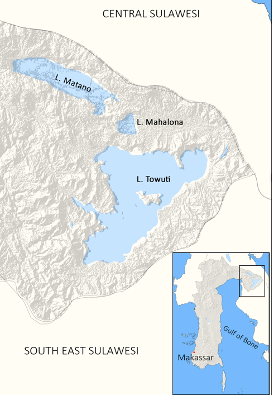
Multi-stakeholder forums are considered an essential element of landscape approaches for sustainable development and integrated ecosystem management. Such forums are widely adopted in environmental management policies and introduced as precursors for novel institutional arrangements for collective action in complex landscapes. However, while they are often held up as a mechanism for greater inclusion and representation, they can also further marginalize less powerful stakeholders. In this respect, the importance of politics in shaping the success of a multi-stakeholder forum is often overlooked. This article examines different multi-stakeholder mechanisms for governing the Lake Malili Complex in Sulawesi, Indonesia —a landscape characterized by competing land use interests and the presence of threatened endemic species. The case highlights a successful bottom-up multi-stakeholder approach that became a model for collaboration, and which was subsequently scaled up to cover the broader Lake Malili Complex area.. The research is based on longstanding participation in the politics of decision-making processes at the Lake Malili Complex, complemented by in-depth examination of the establishment of the multi-stakeholder forum. The findings show that strong, locally-based initiatives provide an avenue for generating greater participation in achieving mutual goals for conserving the Lake Malili Complex. However, participation in the multi-stakeholder platform is not enough to push for decision making at the district level, where more powerful management decisions take place. We therefore note that outcomes of community-based resource management are limited when they are not backed by more political approaches to influence decision making
References
Bastos-Lima, M. G., Visseren-Hamakers, I. J., Braña-Varela, J., & Gupta, A. (2017). A reality check on the landscape approach to REDD+: Lessons from Latin America. Forest Policy and Economics, 78, 10-20. doi: https://doi.org/10.1016/j.forpol.2016.12.013
Burung Indonesia. (2014). “Ecosystem Profile: Wallacea Biodiverisity Hotspots.” Unpublished Report.
Estrada-Carmona, N., Hart, A. K., DeClerck, F. A., Harvey, C. A., & Milder, J. C. (2014). Integrated landscape management for agriculture, rural livelihoods, and ecosystem conservation: An assessment of experience from Latin America and the Caribbean. Landscape and Urban Planning, 129, 1-11. doi: https://doi.org/10.1016/j.landurbplan.2014.05.001
García-López, G. (2013). Scaling up from the grassroots and the top down: The impacts of multi-level governance on community forestry in Durango, Mexico. International Journal of the Commons, 7(2). doi: http://doi.org/10.18352/ijc.437
Köhne, M. (2014). Multi-stakeholder initiative governance as assemblage: Roundtable on Sustainable Palm Oil as a political resource in land conflicts related to oil palm plantations. Agriculture and human values, 31(3), 469-480. doi: https://doi.org/10.1007/s10460-014-9507-5
Kusters, K., Buck, L., de Graaf, M., Minang, P., van Oosten, C., & Zagt, R. (2018). Participatory planning, monitoring and evaluation of multi-stakeholder platforms in integrated landscape initiatives. Environmental management, 62(1), 170-181. doi: https://link.springer.com/article/10.1007/s00267-017-0847-y
Myers, R., Larson, A. M., Ravikumar, A., Kowler, L. F., Yang, A., & Trench, T. (2018). Messiness of forest governance: How technical approaches suppress politics in REDD+ and conservation projects. Global Environmental Change, 50, 314-324. doi: https://doi.org/10.1016/j.gloenvcha.2018.02.015
National Geographic Indonesia. (2008). Edition November.
Palopopos, “PT Vale suntik Rp282 M ke Pemda”, 17 July 2019.
Ravikumar, A., Larson, A. M., Myers, R., & Trench, T. (2018). Inter-sectoral and multilevel coordination alone do not reduce deforestation and advance environmental justice: Why bold contestation works when collaboration fails. Environment and Planning C: Politics and Space, 36(8), 1437-1457. doi: https://doi.org/10.1177/2399654418794025
Reed, M. G., & Bruyneel, S. (2010). Rescaling environmental governance, rethinking the state: A three-dimensional review. Progress in human geography, 34(5), 646-653. doi: https://doi.org/10.1177/0309132509354836
Reed, M. S., Graves, A., Dandy, N., Posthumus, H., Hubacek, K., Morris, J., ... & Stringer, L. C. (2009). Who's in and why? A typology of stakeholder analysis methods for natural resource management. Journal of environmental management, 90(5), 1933-1949. doi: https://doi.org/10.1016/j.jenvman.2009.01.001
Riggs, R. A., Langston, J. D., Margules, C., Boedhihartono, A. K., Lim, H. S., Sari, D. A., ... & Sayer, J. (2018). Governance challenges in an Eastern Indonesian forest landscape. Sustainability, 10(1), 169. doi: https://doi.org/10.3390/su10010169
Sahide, M. A. K., & Giessen, L. (2015). The fragmented land use administration in Indonesia–Analysing bureaucratic responsibilities influencing tropical rainforest transformation systems. Land Use Policy, 43, 96-110. doi: https://doi.org/10.1016/j.landusepol.2014.11.005
Sarmiento Barletti, J.P., and Larson A.M. (2019). “The role of multi-stakeholder forums in subnational jurisdiction.” Occasional Paper 194. CIFOR
Sayer, J., Margules, C., Boedhihartono, A.K, Dale, A., Sunderland, T., Supriatna, J., Saryanthi, R. (2014). “Landscape approaches: what are pre-conditions for success?” Sustain Sci. doi: https://doi.org/10.1007/s11625-014-0281-5 .
Shohibuddin, M., Cahyono, E., & Bahri, A. D. Undang-Undang Desa dan Isu Sumberdaya Alam: Peluang Akses atau Ancaman Eksklusi?. Wacana: Jurnal Transformasi Sosial, 17, 36.
Ostrom, E. (2010). Beyond markets and states: polycentric governance of complex economic systems. American economic review, 100(3), 641-72. doi: https://doi.org/10.1257/aer.100.3.641
Additional Files
Published
Versions
- 2020-04-26 (2)
- 2020-04-26 (1)
Issue
Section
Categories
License
Copyright (c) 2020 Forest and Society

This work is licensed under a Creative Commons Attribution 4.0 International License.
This is an open access journal which means that all contents is freely available without charge to the user or his/her institution. Users are allowed to read, download, copy, distribute, print, search, or link to the full texts of the articles in this journal without asking prior permission from the publisher or the author. This is in accordance with the BOAI definition of open access.
Submission of an article implies that the work described has not been published previously (except in the form of an abstract or as part of a published lecture or academic thesis), that it is not under consideration for publication elsewhere, that its publication is approved by all authors and tacitly or explicitly by the responsible authorities where the work was carried out, and that, if accepted, will not be published elsewhere in the same form, in English or in any other language, without the written consent of the Publisher. An article based on a section from a completed graduate dissertation may be published in Forest and Society, but only if this is allowed by author's(s') university rules. The Editors reserve the right to edit or otherwise alter all contributions, but authors will receive proofs for approval before publication.
Forest and Society operates a CC-BY 4.0 © license for journal papers. Copyright remains with the author, but Forest and Society is licensed to publish the paper, and the author agrees to make the article available with the CC-BY 4.0 license. Reproduction as another journal article in whole or in part would be plagiarism. Forest and Society reserves all rights except those granted in this copyright notice

